Visual comprehension Addition Worksheets for Ages 3-9
7 filtered results
-
From - To
Discover our engaging Visual Comprehension Addition Worksheets designed for children aged 3 to 9! These worksheets help young learners develop essential math skills through vibrant visuals and interactive exercises. Our resources focus on enhancing visual literacy, enabling kids to comprehend addition concepts easily. The worksheets incorporate fun illustrations and relatable scenarios, making math enjoyable and accessible for early learners. Perfect for classroom use or at-home practice, our addition worksheets encourage critical thinking and problem-solving. Find the ideal tools to support your child's math journey and boost their confidence as they tackle numbers with excitement! Explore our collection today for a brighter learning experience.
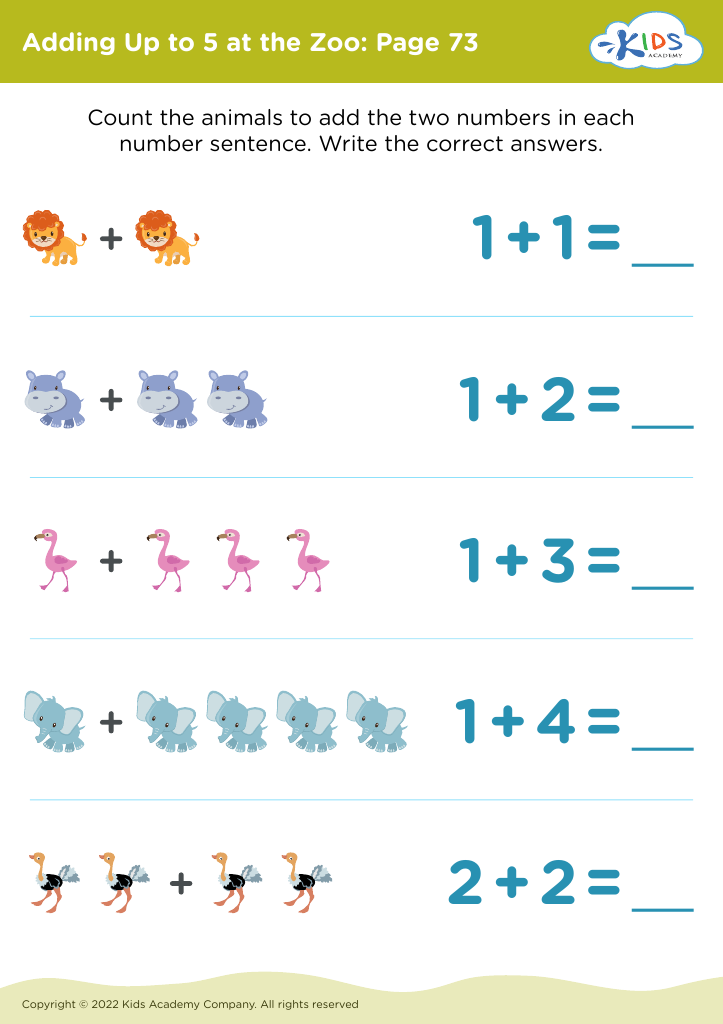
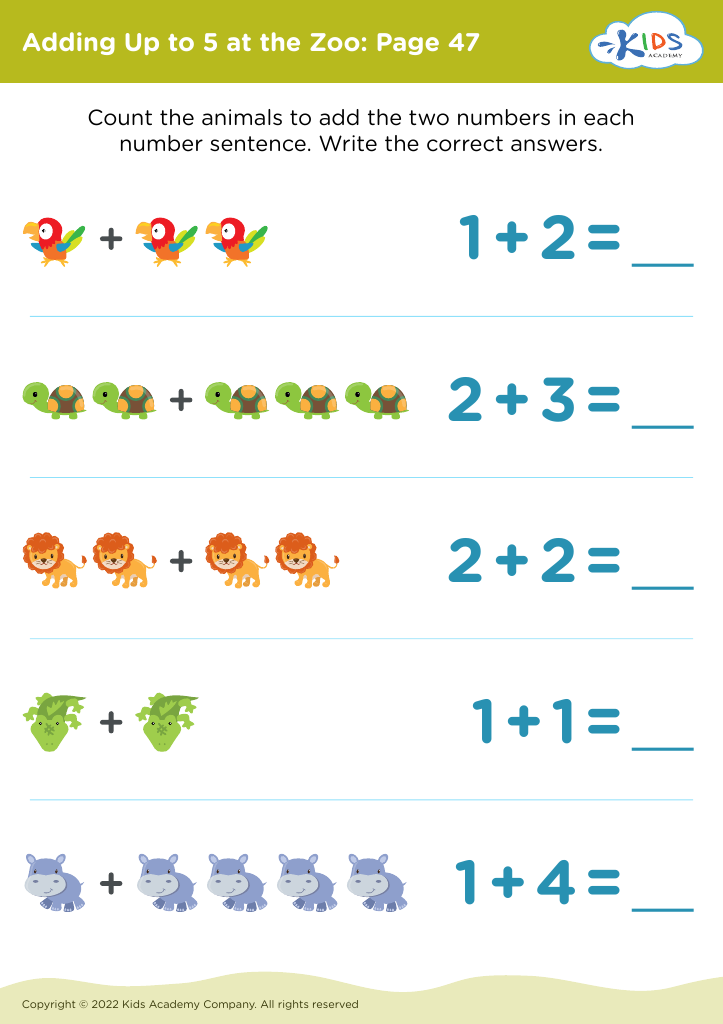
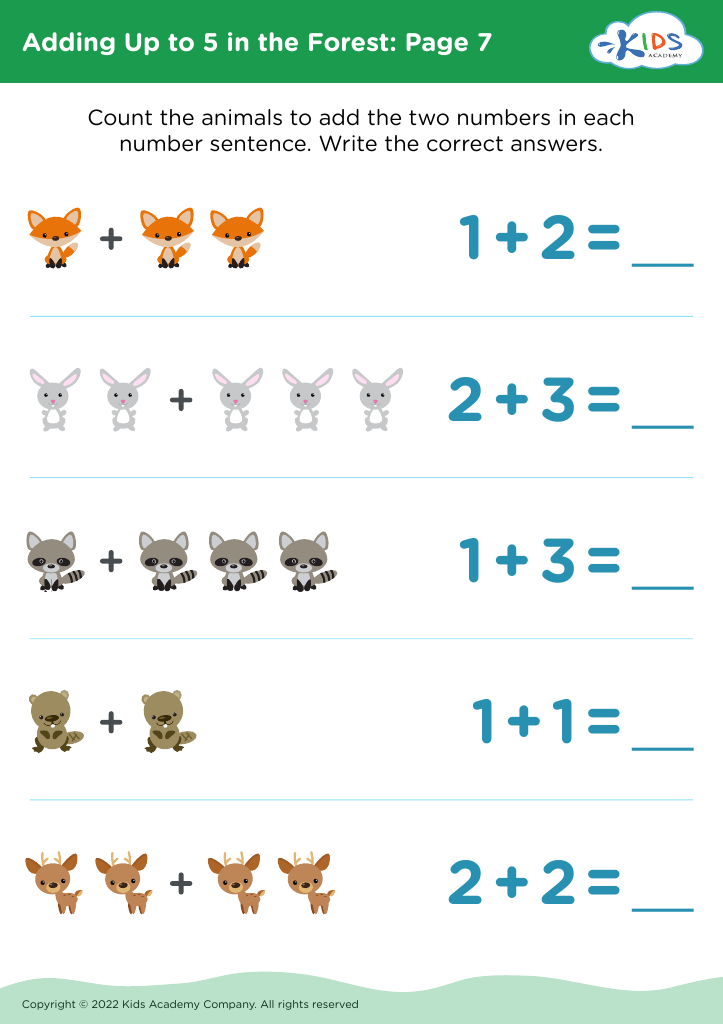
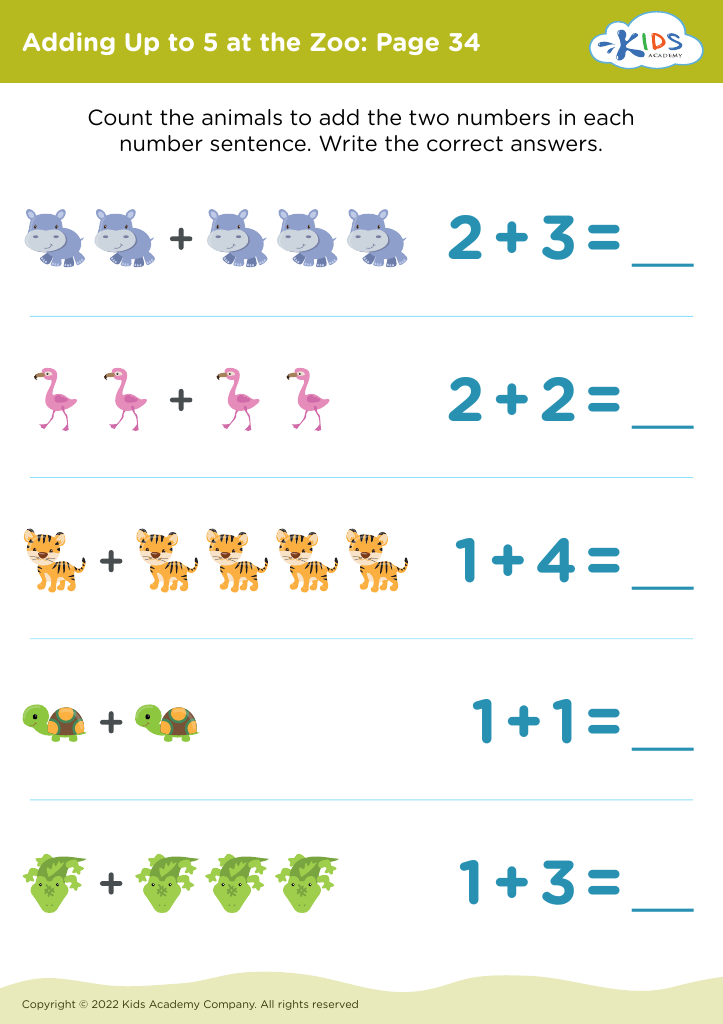
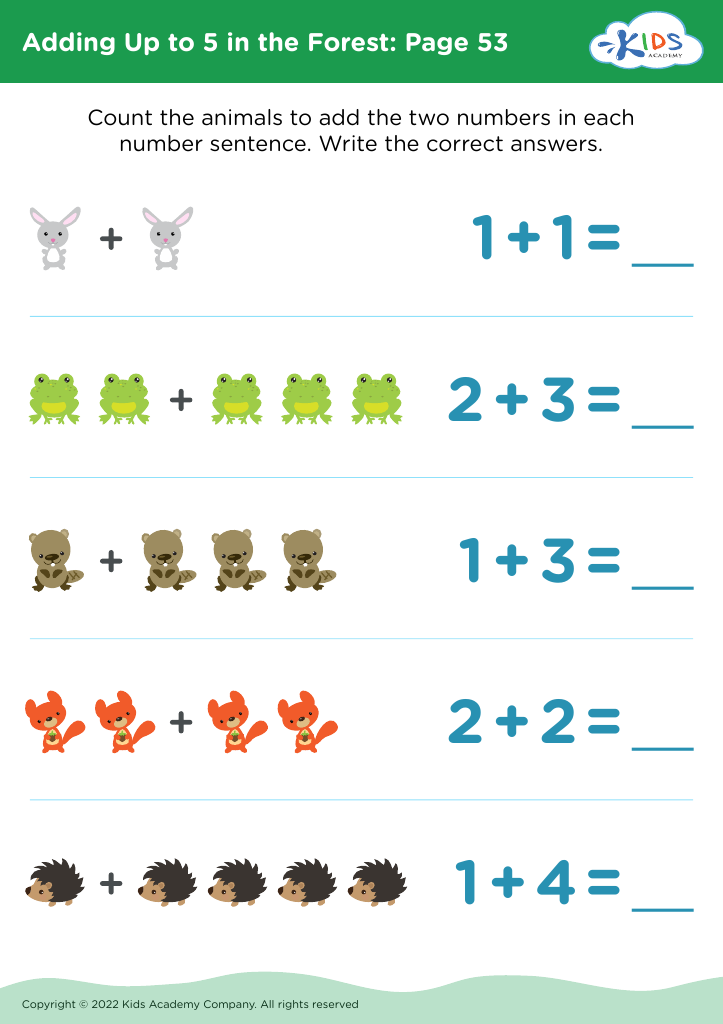
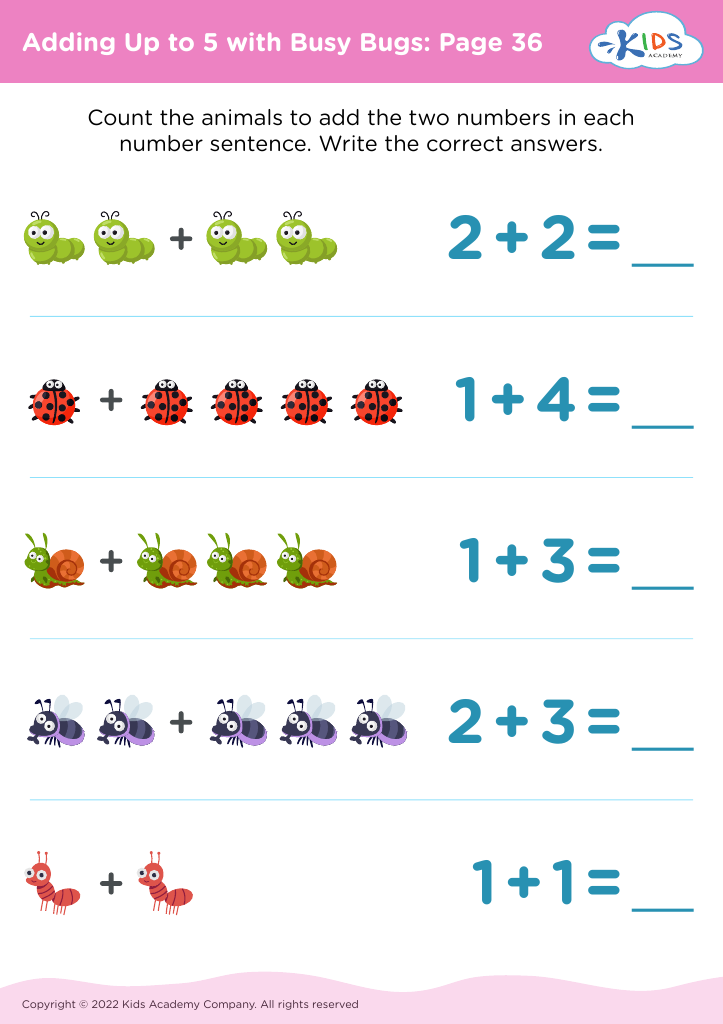
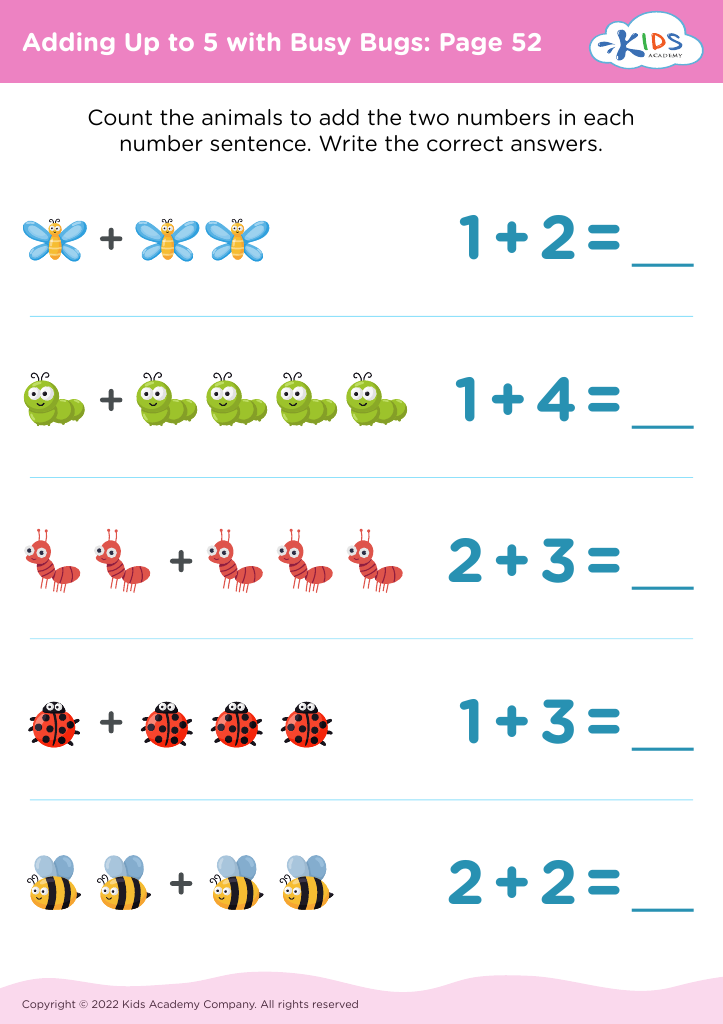








Visual comprehension in addition is crucial for children ages 3-9 as it forms the foundation for their mathematical understanding. At this stage, children learn not only to recognize numbers but to grasp the concept of quantity and relationships between objects. Visual aids—like counting blocks, number lines, and drawings—play a pivotal role in helping young learners visualize mathematical concepts. This multisensory approach is essential because it aids memory retention and bridges the gap between concrete and abstract thinking.
When parents and teachers invest in developing visual comprehension in addition, they are fostering critical problem-solving skills. Children can better understand the 'why' behind mathematical operations, promoting a deeper, lasting comprehension rather than rote memorization. This foundational competence also contributes to holistic cognitive development, honing reasoning skills that extend beyond math.
Furthermore, early success in math builds confidence and a positive attitude towards learning. When kids struggle to visualize or comprehend concepts, frustration can lead to math anxiety, affecting their future performance. By emphasizing visual comprehension in addition, parents and teachers nurture a supportive learning environment that encourages exploration, curiosity, and a lifelong love for learning in mathematics. Thus, it's paramount for adults to prioritize this aspect of early education.








