Visual representation comprehension Addition Worksheets for Ages 3-9
5 filtered results
-
From - To
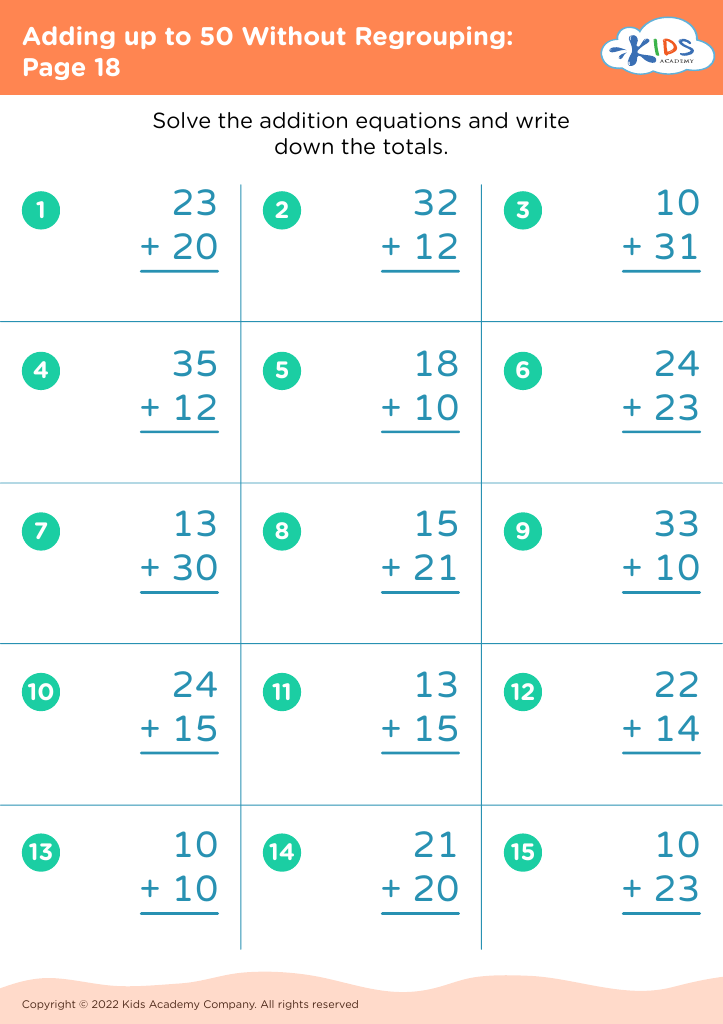
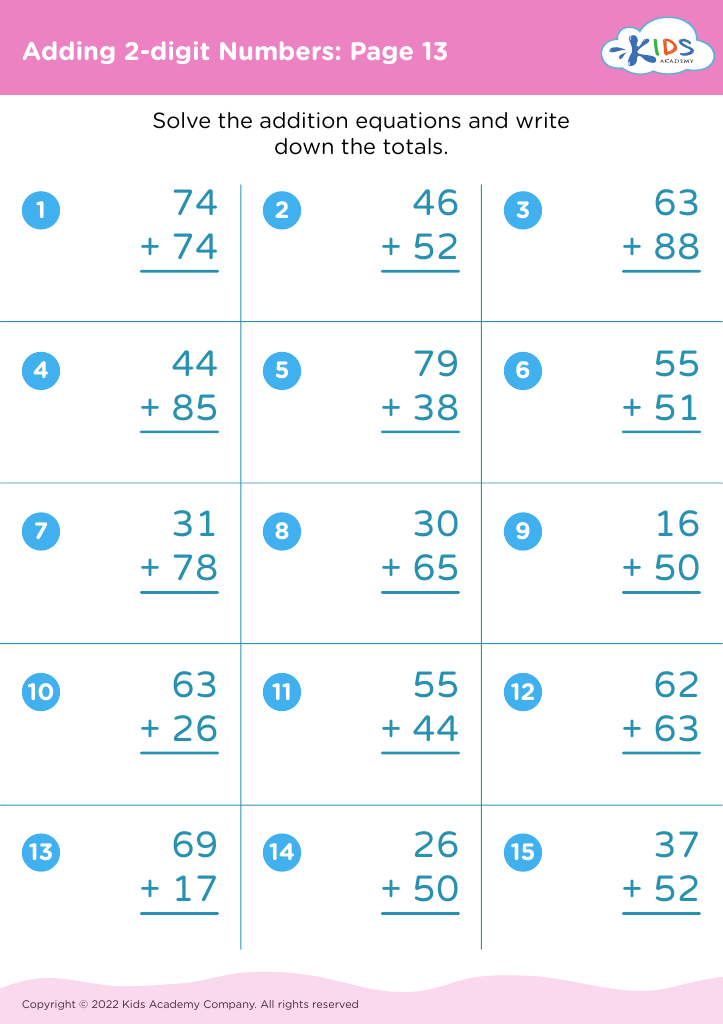
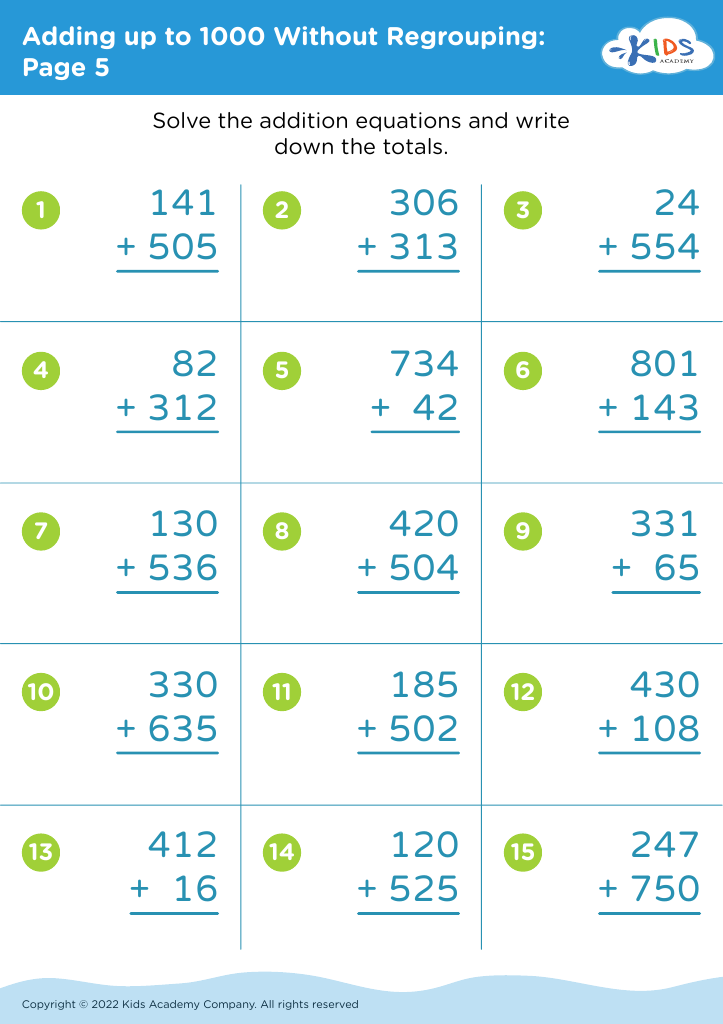
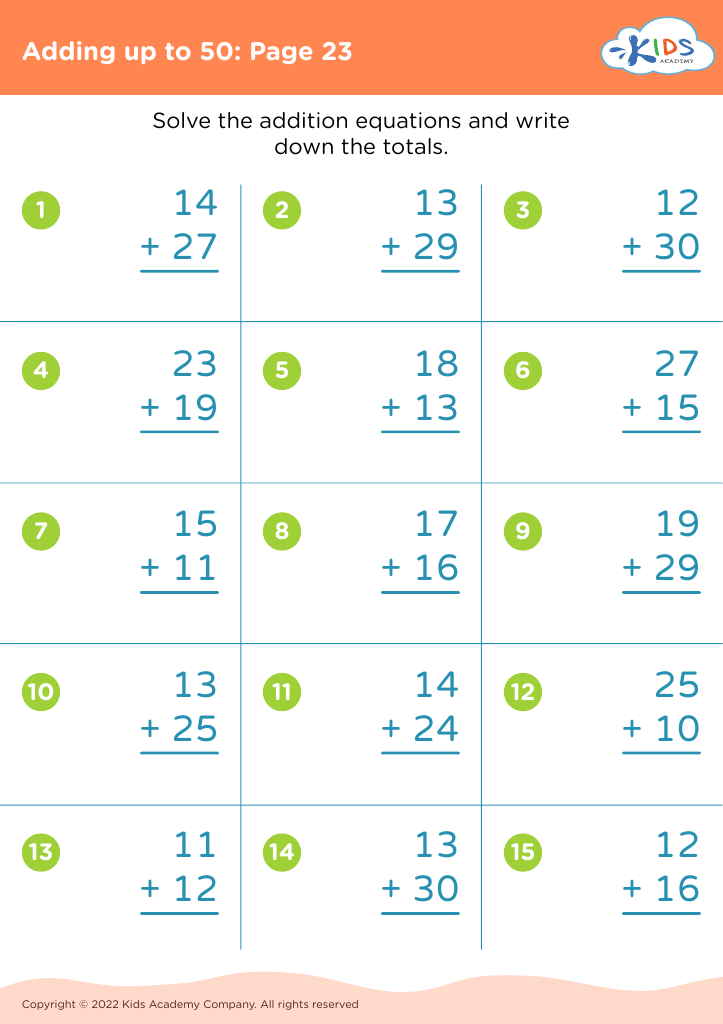
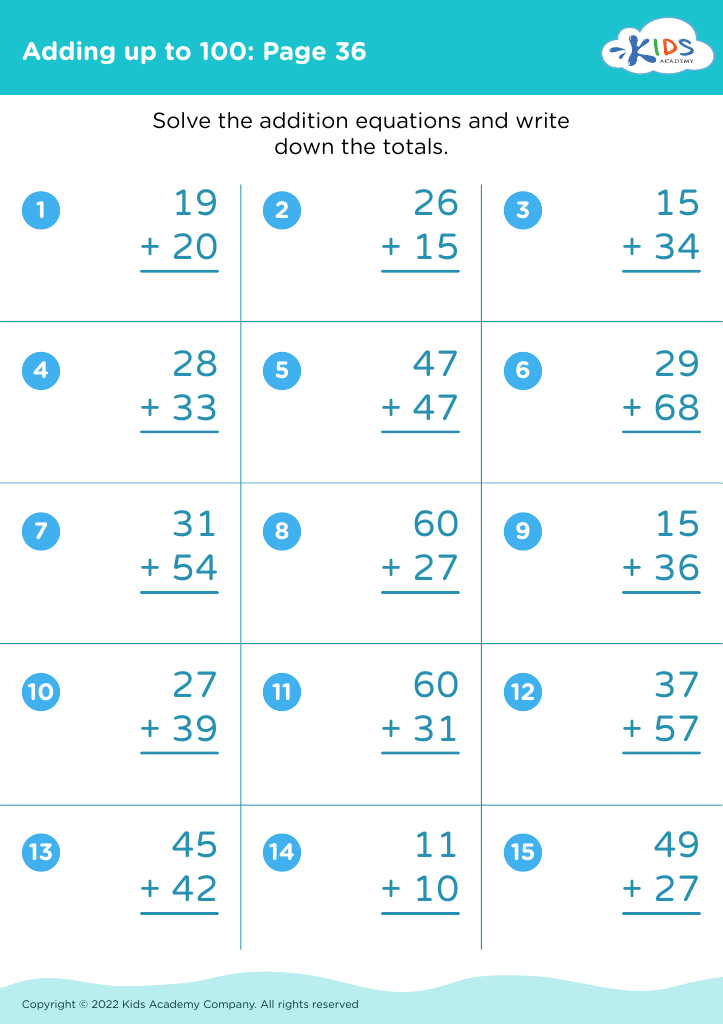
Enhance your child’s math skills with our Visual Representation Comprehension Addition Worksheets, designed for ages 3-9. These engaging resources help young learners grasp fundamental addition concepts through colorful visuals and interactive activities. Children can connect numbers to real-life scenarios, strengthening their understanding and retention. Our worksheets promote critical thinking by encouraging kids to visualize math problems, making learning both fun and effective. Whether in the classroom or at home, these skill-building printables support early math literacy and prepare your child for future academic success. Explore our collection today and watch your little ones flourish in their mathematical journey!


.jpg)




.jpg)
Visual representation comprehension in addition is crucial for children ages 3-9 because it forms the foundation for their mathematical understanding. Early learners best grasp abstract concepts through concrete visuals, such as counters, number lines, and illustrated stories. These tools not only make addition tangible but also cultivate critical thinking skills, enabling children to visualize problems and solutions.
When children are exposed to visual aids, they can better understand relationships between numbers, see patterns, and explore the idea of "more" and "less." This comprehension enhances their ability to carry out basic addition operations, promoting confidence as they progress in their math skills. Furthermore, incorporating visual representations caters to diverse learning styles; thus, all children, including visual learners, achieve better outcomes.
When parents and teachers prioritize visual representation comprehension, they are setting children up for future academic success, as a solid foundation in early math is closely linked to later proficiency in more advanced concepts. Engaging children with enriching visual experiences makes learning fun and motivates them to explore mathematics creatively, resulting in lifelong learners who are enthusiastic about problem-solving. This supportive approach fosters not only cognitive development but also emotional well-being, as children gain confidence in their abilities.








