Financial literacy Coins Worksheets for Ages 3-9
4 filtered results
-
From - To
Boost your child's financial savvy with our engaging Financial Literacy Coins Worksheets for ages 3-9 from Kids Academy! Designed to make learning about money fun, these colorful and interactive worksheets help children recognize and understand coins, their values, and basic financial concepts. Through a variety of age-appropriate activities, young learners will develop essential skills such as counting, sorting, and making simple purchases. Whether at home or in the classroom, these worksheets serve as a valuable resource for nurturing financial awareness and confidence from an early age. Start building their foundation for financial literacy today!
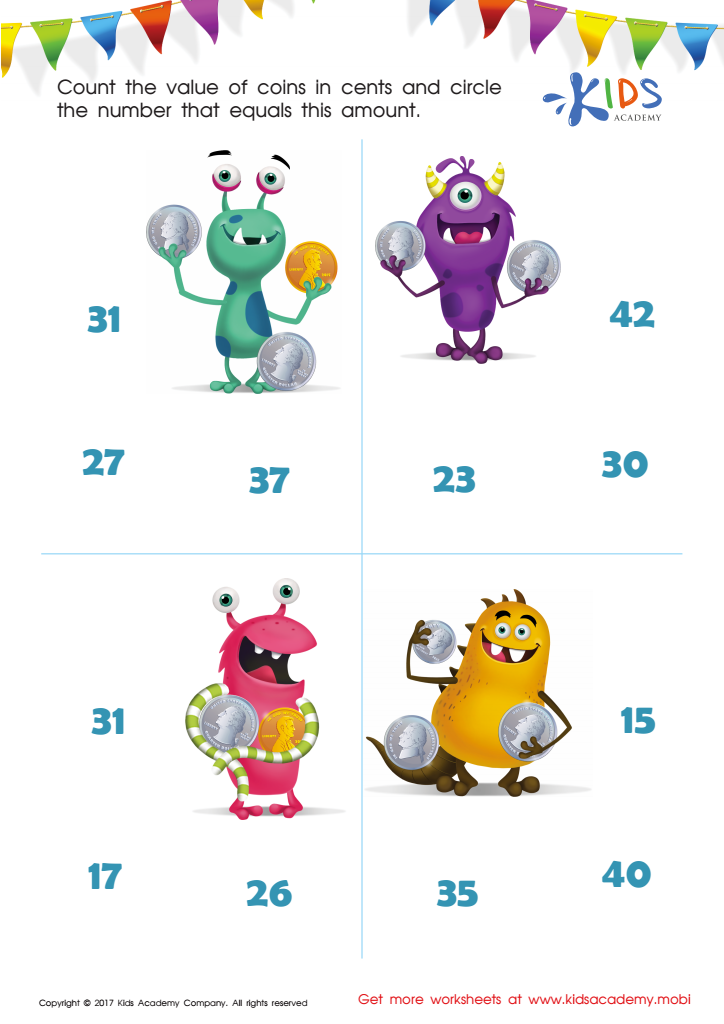
How Many Coins Money Worksheet
 Assign to My Students
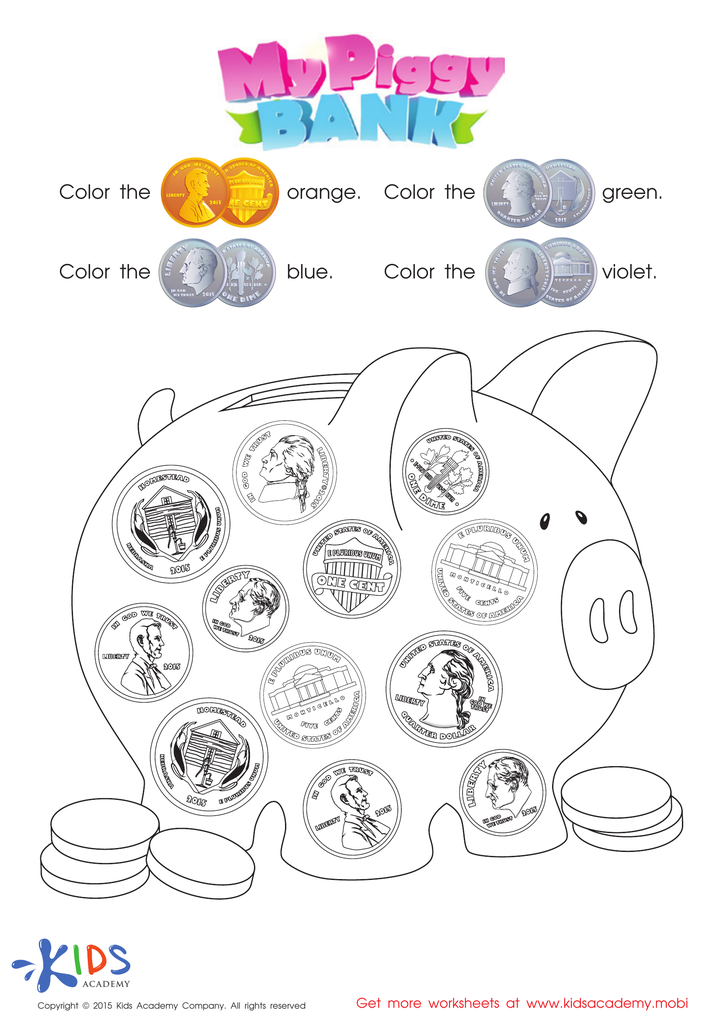
Recognizing Money Money Worksheet
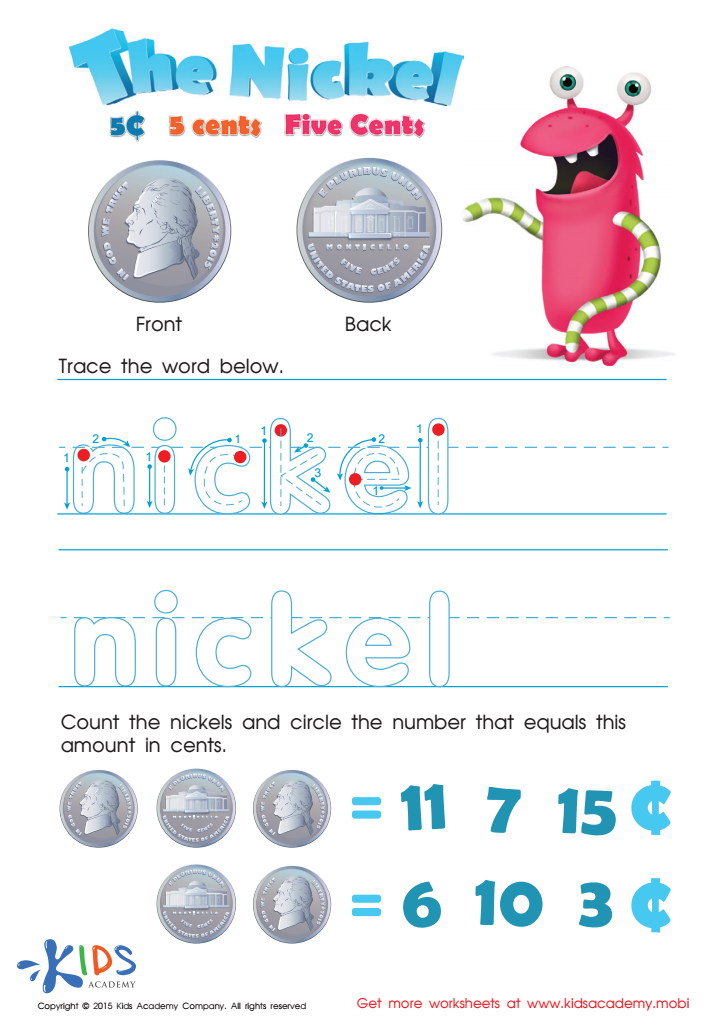
Five Cents or the Nickel Money Worksheet
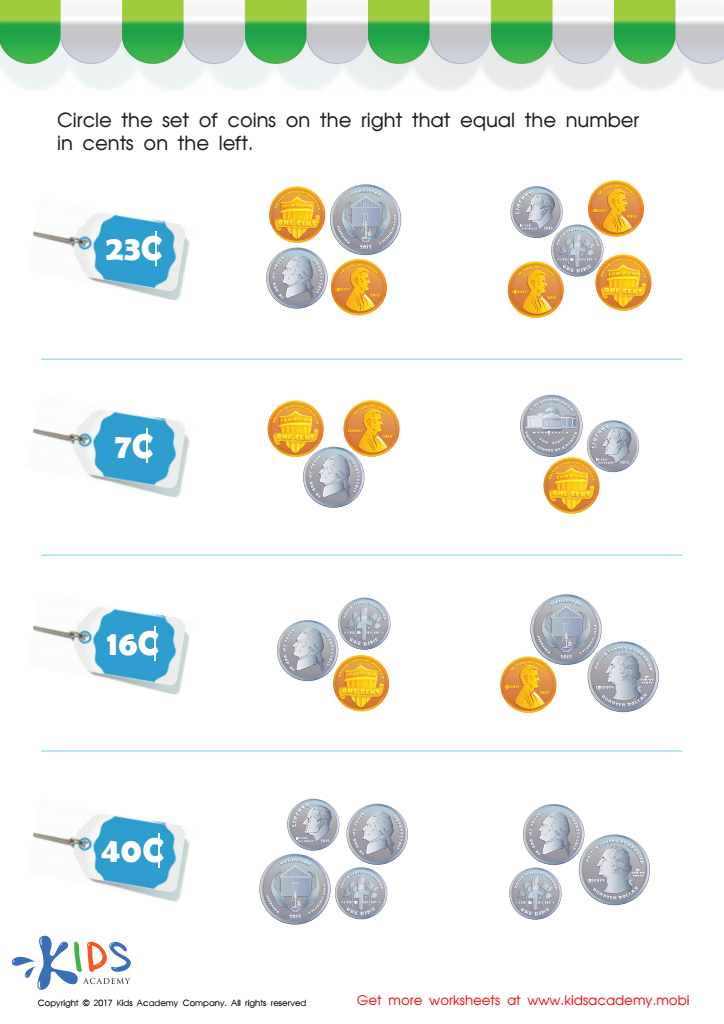
Picking the Coins You Need Money Worksheet








Financial literacy, often overlooked in early education, is crucial for establishing a strong foundation for children aged 3-9. Introducing concepts like coins and currency at this young age can have a profound impact on their understanding of money and financial responsibility as they grow. By learning about coins, children begin to grasp the value of money, basic math skills, and the importance of saving versus spending.
Firstly, financial literacy promotes numeracy. When kids recognize different coins and their values, they practice counting, addition, and subtraction, thereby enhancing their math skills in a practical context. Secondly, understanding money can lead to early lessons in sharing, saving, and budgeting. For example, kids can use piggy banks to save coins, visually reinforcing the benefits of saving.
Equipping young children with basic financial knowledge fosters responsible money habits. As they grow, they can build on this foundation to make informed financial decisions, avoid debt, and cultivate a healthy relationship with money. Parents and teachers play a critical role in this developmental stage, providing the tools and guidance necessary for lifelong financial competence. Integrating financial literacy into early education supports personal responsibility, self-confidence, and preparation for real-world financial challenges. Investing in financial education early on is akin to investing in a child’s future stability and success.








