Basic Math Skills Money Worksheets for Ages 3-9
3 filtered results
-
From - To
Develop essential math skills with our "Basic Math Skills Money Worksheets for Ages 3-9". Tailored for young learners, these engaging printables make learning about money fun and interactive. Kids will enjoy activities that teach them to identify, count, and handle money, laying a solid foundation for financial literacy. Each worksheet offers different challenges that promote critical thinking, problem-solving, and practical life skills. Ideal for parents and educators, our resources ensure children grasp fundamental concepts while having fun. Enhance your child's math proficiency and confidence with our carefully crafted worksheets. Start exploring today!
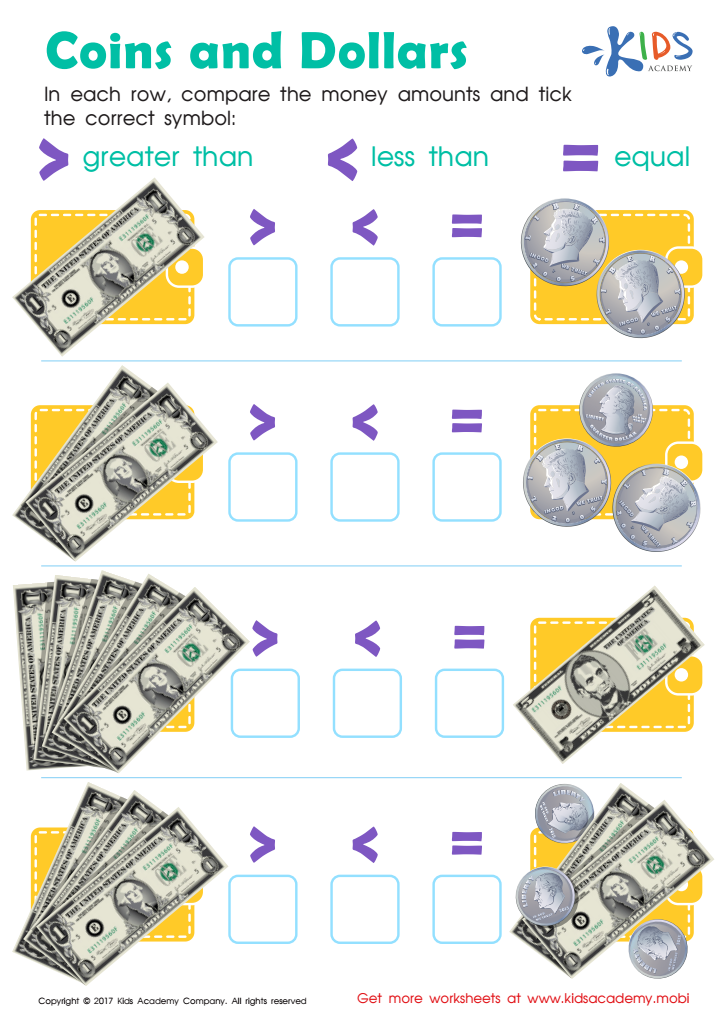
Money: Coins Dollars Printable
 Assign to My Students
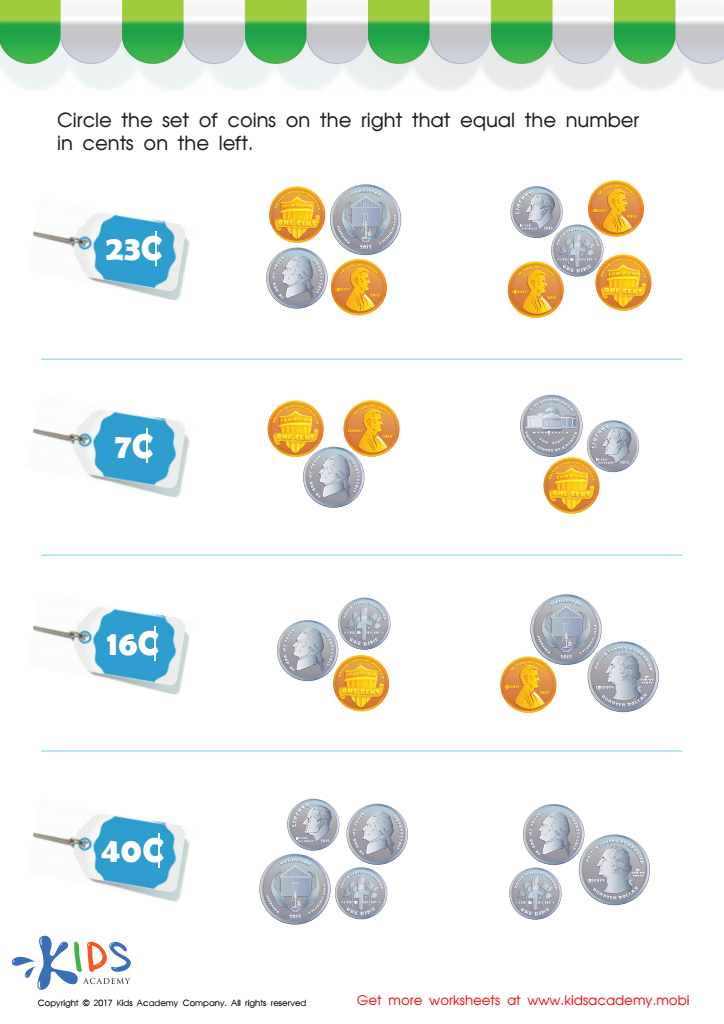
Picking the Coins You Need Money Worksheet
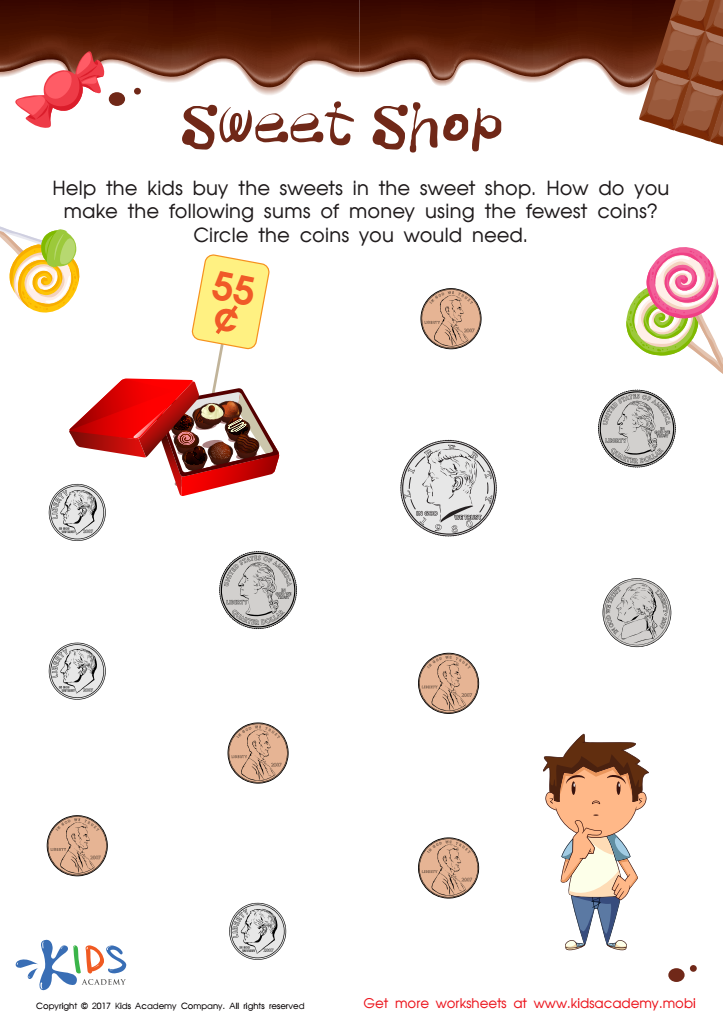
Sweet Shop – Counting Coins Worksheet








Basic math skills, particularly those related to money, play a crucial role in a child's cognitive and practical development between the ages of 3 to 9. First, comprehension of money aids in familiarizing children with numbers and basic arithmetic operations such as addition, subtraction, multiplication, and division. Learning to count coins and bills and making simple transactions can sharpen their numerical understanding and foster problem-solving skills.
Additionally, introducing money concepts at an early age teaches crucial life skills. Children begin to understand the value of money, spending, saving, and budgeting, which are important cornerstones for financial literacy. This foundational knowledge can translate into responsible financial behaviors in adulthood, helping to prevent significant mistakes such as debt accumulation due to poor financial understanding.
Promoting money-related math skills also cultivates critical thinking and decision-making abilities. When children are tasked with calculating change or comparing prices, they learn to think logically and make informed choices. Moreover, this education promotes independence, as mastering these concepts boosts their confidence in handling real-world tasks.
By investing time in teaching these skills, parents and teachers equip children with the necessary tools for both academic progress and everyday life management. Thus, caring about these foundational skills is not merely about improving academic performance but about steering children towards a successful and independent future.








