Mathematical reasoning Counting Worksheets for Ages 3-9
3 filtered results
-
From - To
Introduce your child to the exciting world of numbers with our Mathematical Reasoning Counting Worksheets designed for kids aged 3-9. These thoughtfully crafted worksheets from Kids Academy reinforce counting skills, enhance numerical understanding, and promote critical thinking through engaging activities. Suitable for various learning stages, our resources cater to young learners beginning with basic counting, progressing through advanced mathematical reasoning challenges. Each exercise is fun, interactive, and aligned with educational standards to foster a love for math early on. Explore our extensive collection of worksheets and give your child the tools they need for future success in mathematics!
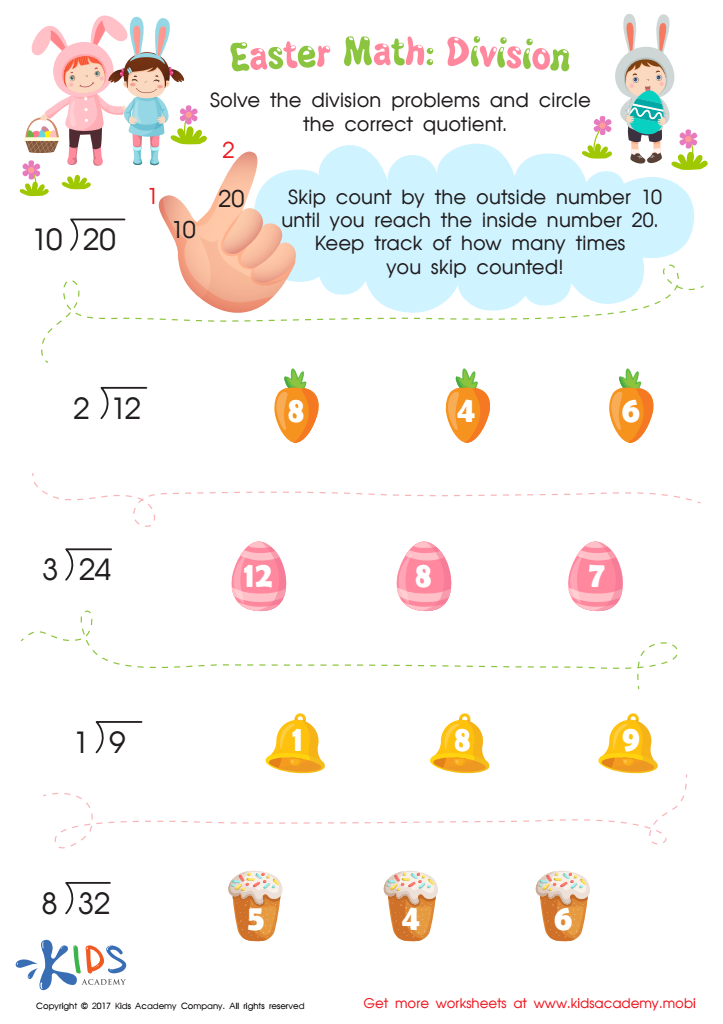
Division Worksheet
 Assign to My Students


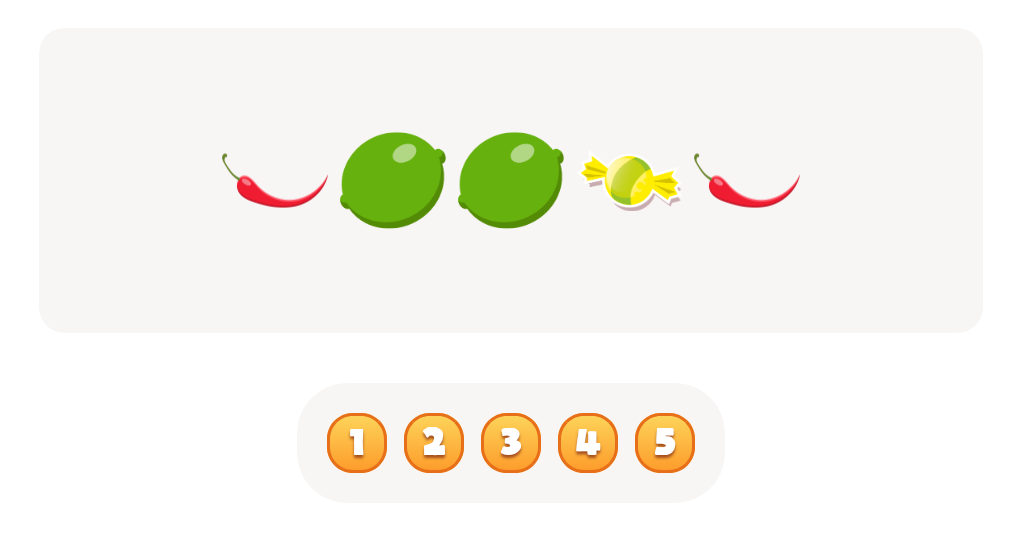
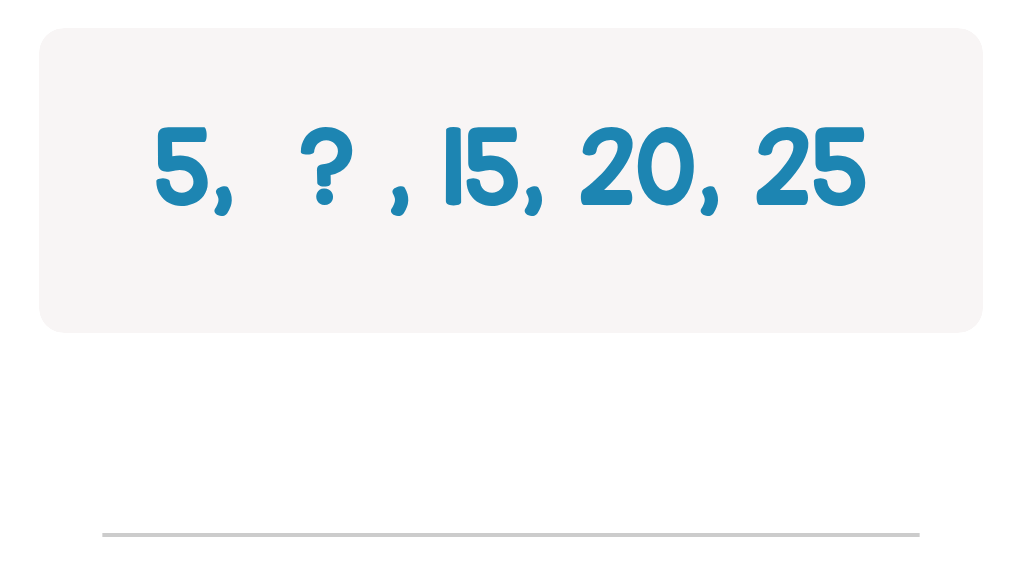
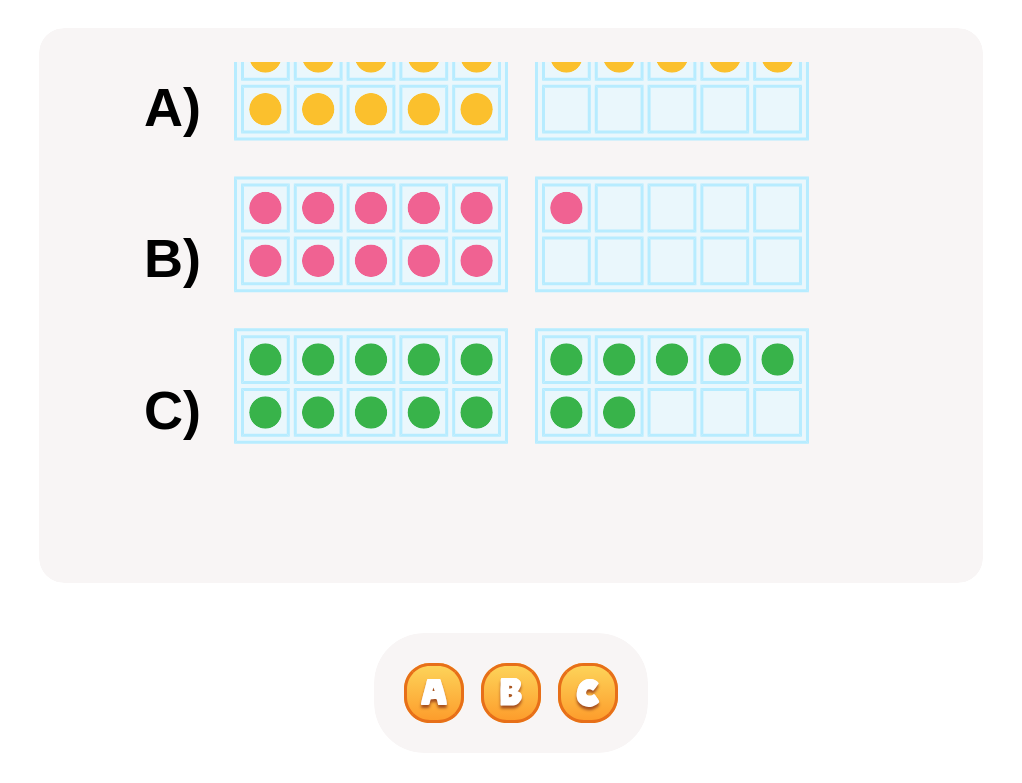
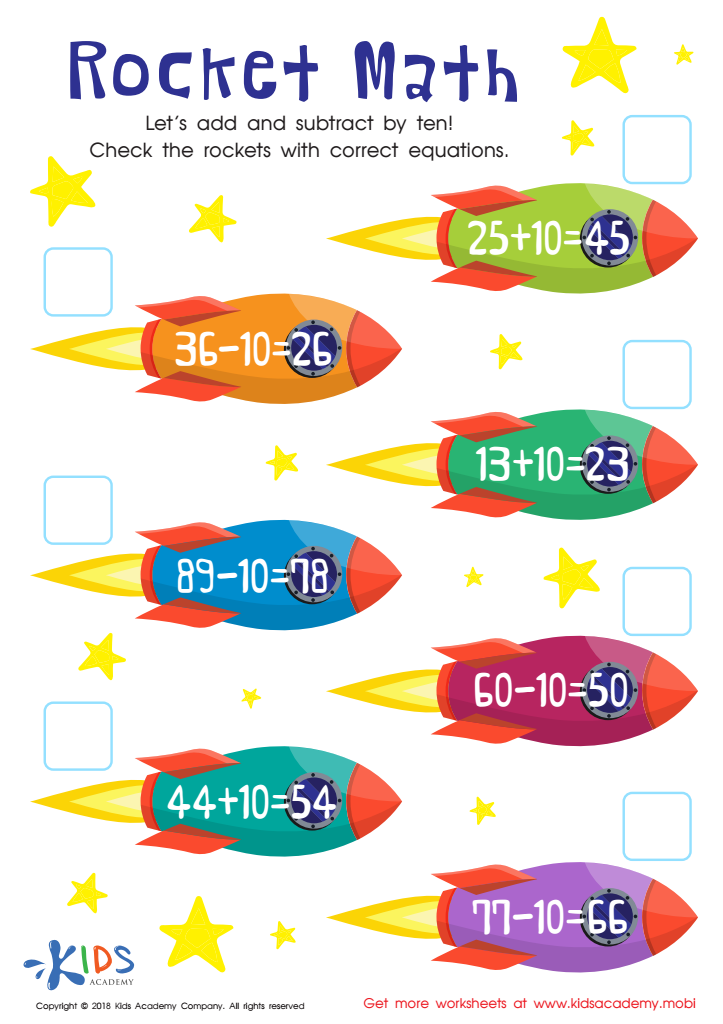
Rocket Math Worksheet
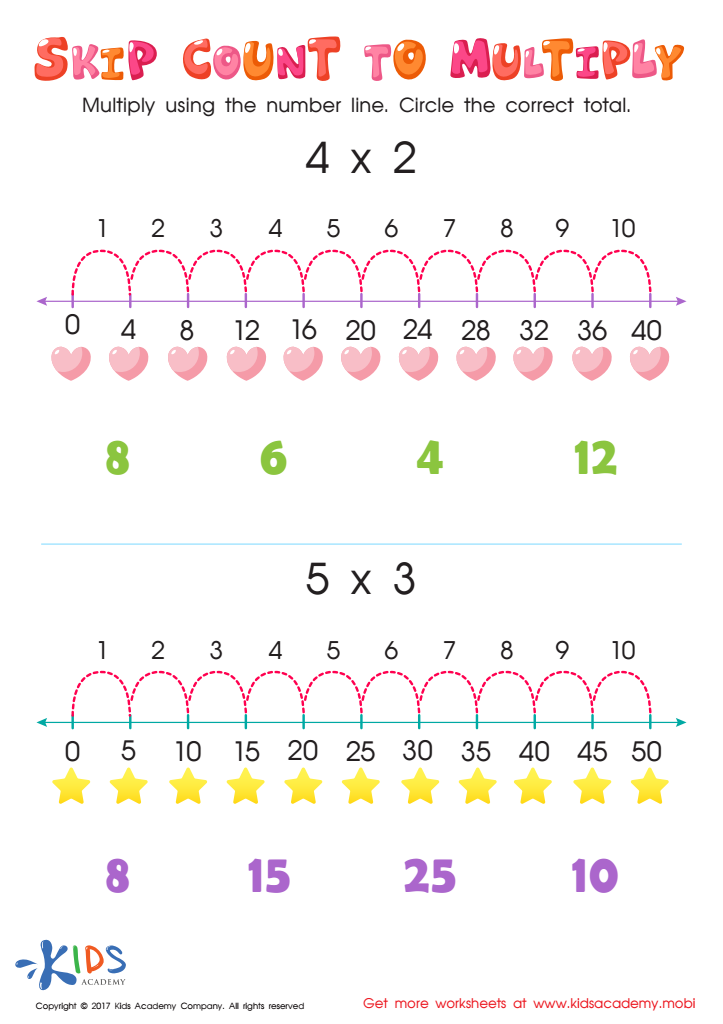
Skip Count Multiplication Worksheet








Mathematical reasoning and counting are fundamental building blocks in early childhood education, providing a critical foundation for future academic success and real-world problem-solving skills. For ages 3-9, developing these skills is essential for several reasons.
Firstly, early math skills are strong predictors of later academic achievement, not just in mathematics but across various subjects. Mathematical reasoning encourages logical thinking, pattern recognition, and the ability to make connections between different concepts. Importantly, these cognitive abilities are transferable to other domains, fostering a well-rounded intellectual development.
Secondly, numeracy skills are indispensable in everyday life. Counting and understanding numbers help children navigate the world around them, from simple tasks like counting toys to more complex ones like managing time or money. Early familiarity with these skills ensures children are better prepared for practical challenges.
Additionally, early math activities foster curiosity and excitement around learning. When children engage in counting games, puzzles, or other math-related activities, they develop a positive attitude toward learning, setting the stage for lifelong curiosity and resilience in the face of challenges.
Furthermore, engaging parents and teachers in fostering these skills creates a supportive learning environment. When adults emphasize the importance of mathematical reasoning, they encourage a culture of learning and intellectual growth in the child’s life, both at home and in the classroom.








