
Basic geometry knowledge Geometry Worksheets for Ages 3-9
3 filtered results
Difficulty Level
Grade
Age
-
From - To
Subject
Activity
Standards
Introducing our "Basic Geometry Knowledge" worksheets, designed specifically for children aged 3-9. These engaging activities help young learners explore fundamental geometric concepts through fun shapes, sizes, and spatial reasoning. Our printable worksheets encourage kids to identify, sort, and categorize various shapes, fostering critical thinking and a solid foundation in geometry. Perfect for parents and educators, these resources promote interactive learning and support early math skills in a playful, supportive environment. Enhance your child's understanding of geometry while keeping them entertained! Discover the joy of learning with our thoughtfully crafted worksheets that make basic geometry fun and accessible for every young learner.
Favorites
With answer key
Interactive
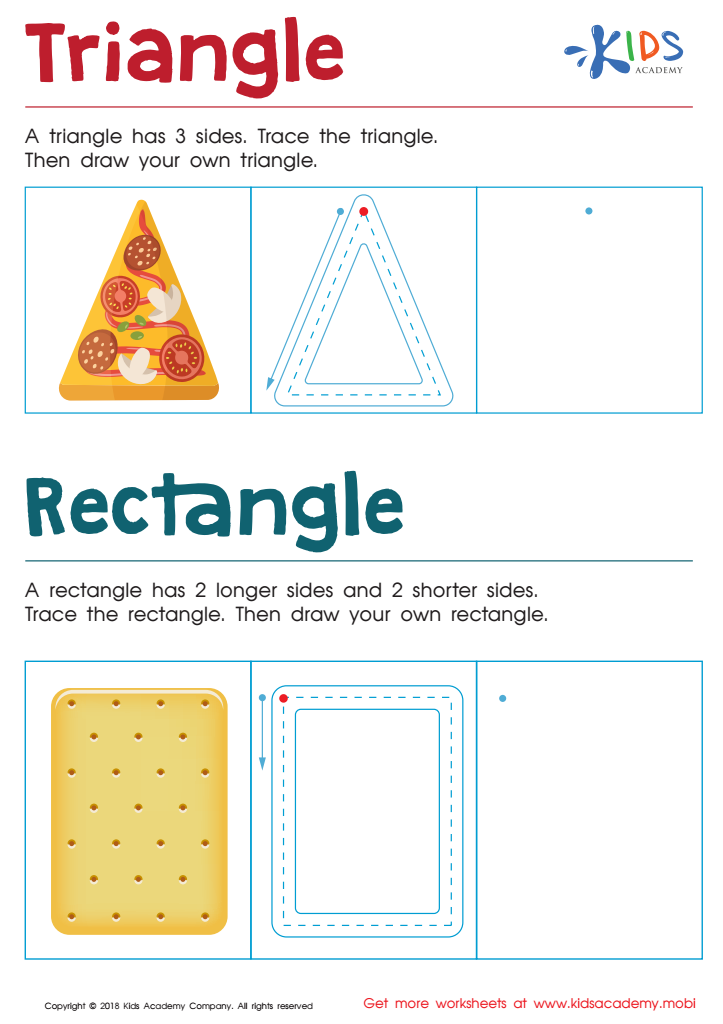
Triangle Rectangle Worksheet
This printable worksheet helps kids draw rectangles and triangles. Have your child trace the pizza and cracker shapes to become familiar, then try their own. Perfect for second graders! Coloring and creativity make this fun and educational.
 Assign to My Students
Triangle Rectangle Worksheet
Worksheet











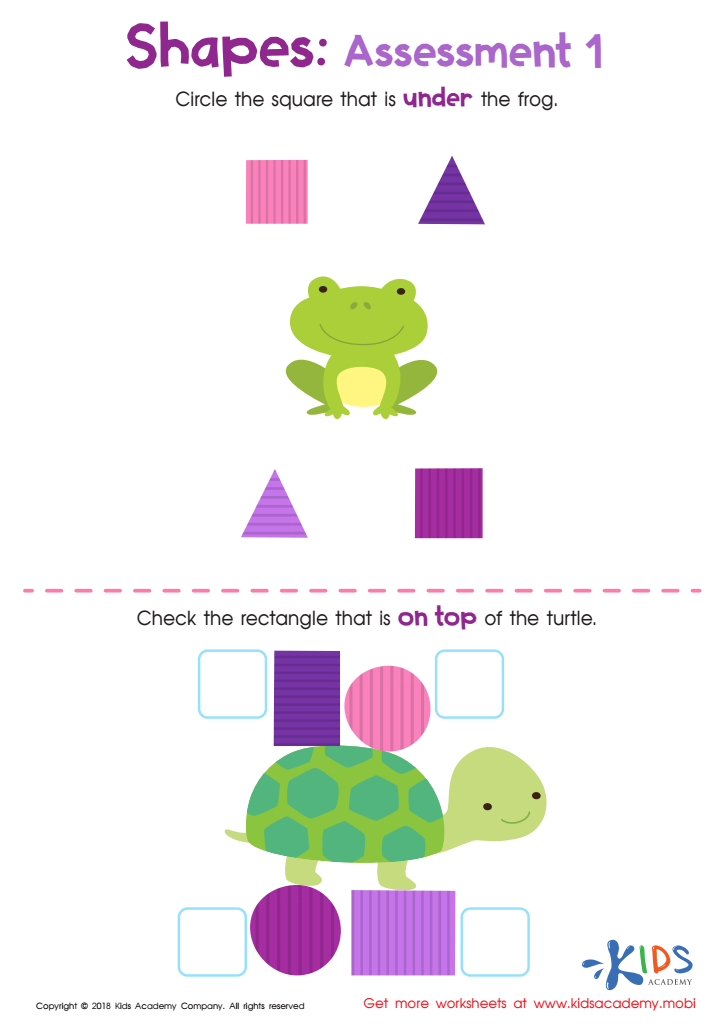
Geometry – Assessment 1 Worksheet
This activity helps preschoolers find shapes "on top of" and "under" animals. They must identify the correct shapes assigned to them. It's a great way to learn geometry and placements of objects.
Geometry – Assessment 1 Worksheet
Worksheet
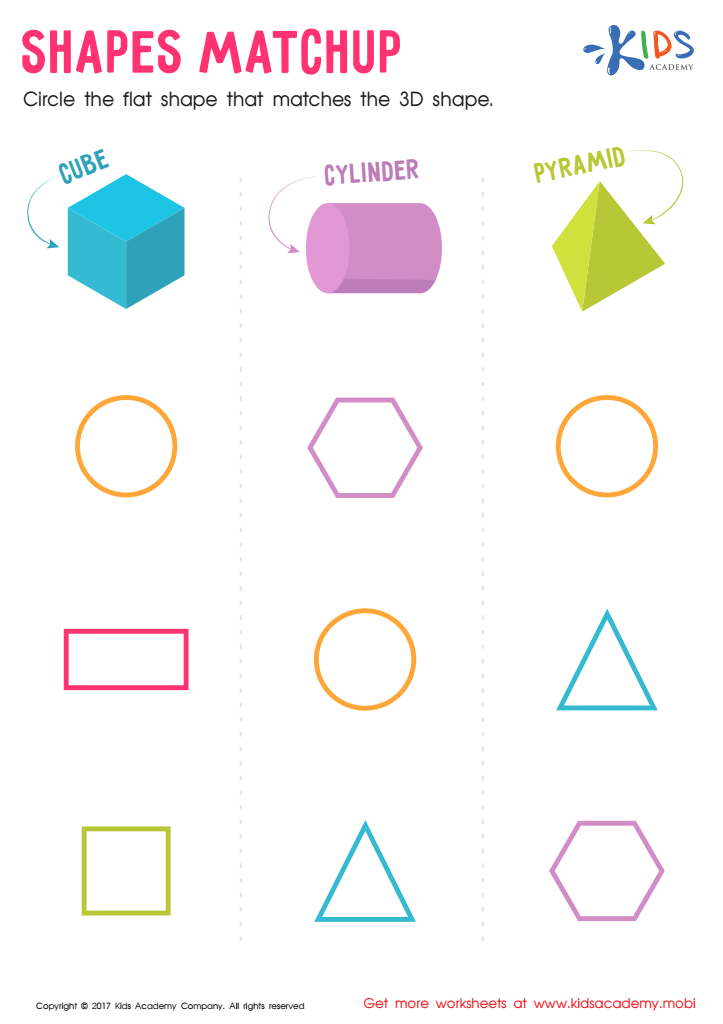
Shapes Matchup Worksheet
Explain to your kids that 3D shapes are the view from another angle, offering depth, height and width. This worksheet encourages them to match the 3D shapes to their 2D form. They can circle the flat shapes that match the 3D shapes in the printout.
Shapes Matchup Worksheet
Worksheet
Join Kids Academy for Free
Who is primarily going to use this learning content?








Basic geometry knowledge is crucial for children aged 3-9 for several reasons. First, it forms the foundation for critical thinking and problem-solving skills. Through exploring shapes, sizes, and spatial relationships, children learn to analyze and make sense of the world around them. This early exposure cultivates a sense of curiosity and encourages them to ask questions.
Understanding geometry enhances a child's ability to recognize patterns and relationships, which are essential skills in both math and everyday situations. For instance, recognizing shapes helps in activities such as building blocks, drawing, or even navigating through their environment, such as knowing where to place furniture.
Furthermore, geometry supports the development of fine motor skills through hands-on activities like tracing and constructing shapes. When children engage with tangible materials, they retain knowledge better and foster creativity.
In the long run, a solid grasp of basic geometry prepares children for more complex mathematical concepts, ensuring they are equipped for future academic success. By prioritizing geometric knowledge early on, parents and educators cultivate a foundational skill set that benefits not only mathematics but also critical real-world problem-solving abilities. Thus, making geometry a pivotal aspect of early childhood education is vital for holistic development.








