Categorization skills Geometry Worksheets for Ages 3-9
6 filtered results
-
From - To
Enhance your child's geometry skills with our comprehensive Categorization Skills Geometry Worksheets, designed specifically for ages 3-9. These engaging worksheets help young learners identify, sort, and categorize various shapes and objects, laying a solid foundation for future mathematical learning. Promoting critical thinking and problem-solving abilities, each worksheet offers age-appropriate activities that cater to varying skill levels. With vibrant illustrations and interactive approaches, children will find joy in exploring the world of geometry. Foster creativity and spatial awareness while ensuring essential math skills are developed early. Download now to make learning geometry a fun and rewarding experience for your little ones!
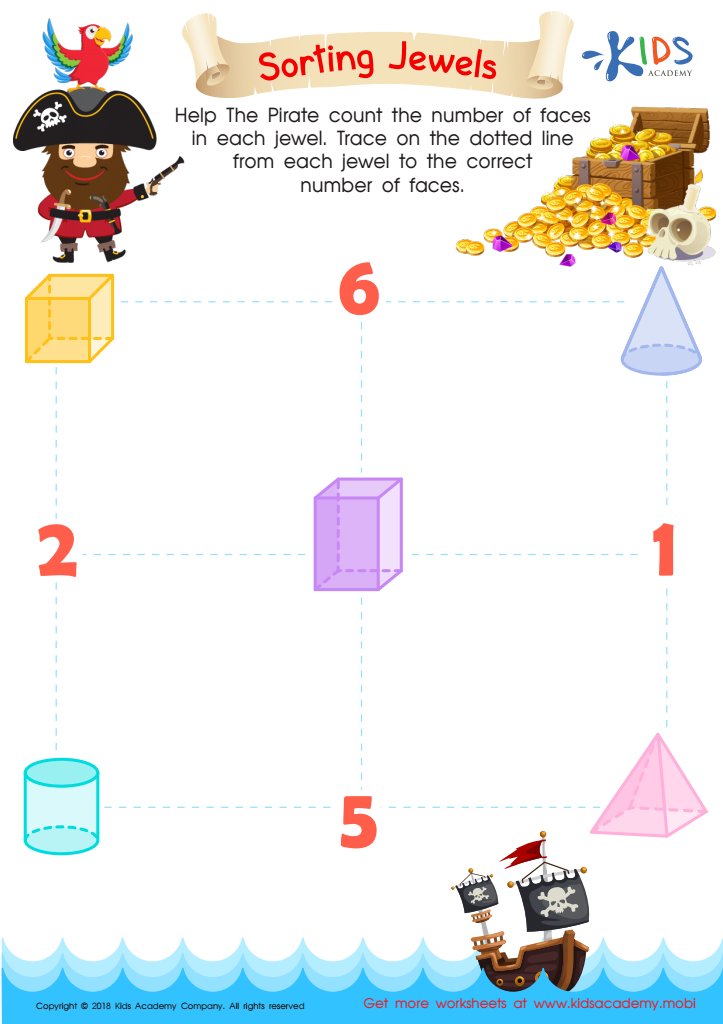
Sorting Jewels Worksheet
 Assign to My Students











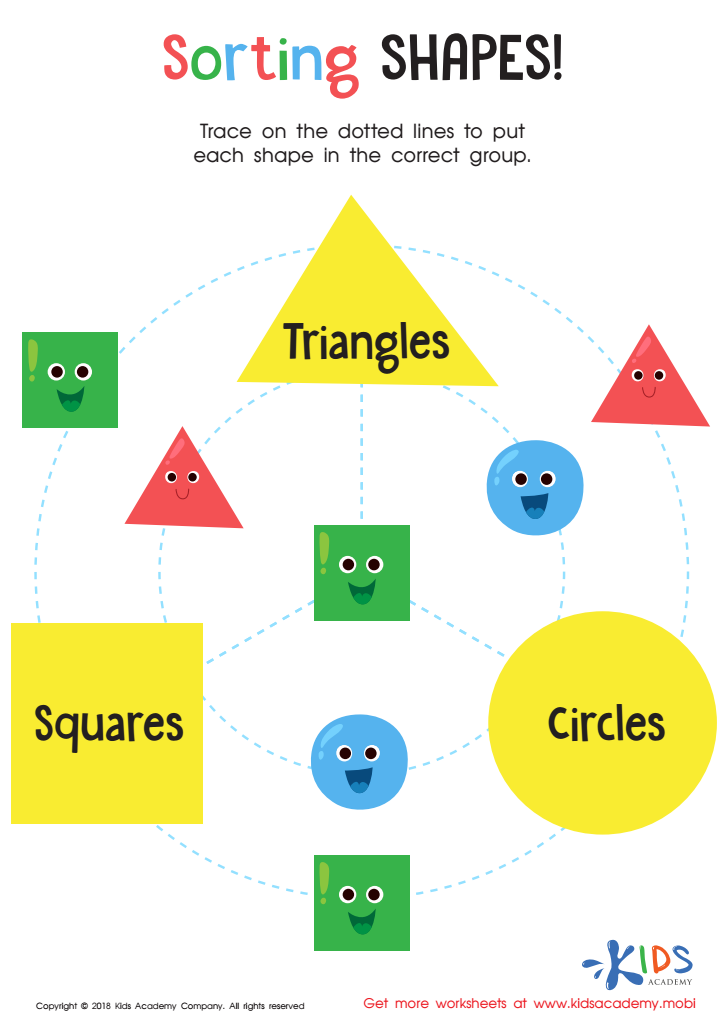
Sorting Shapes - Part 3 Worksheet
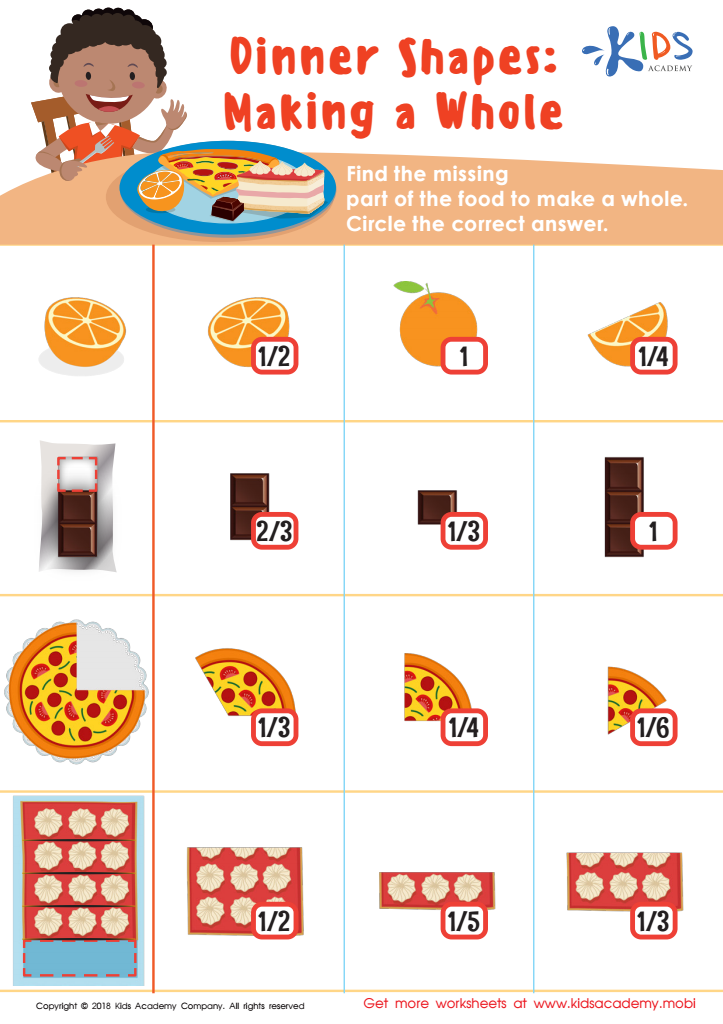
Dinner Shapes: Making a Whole Worksheet
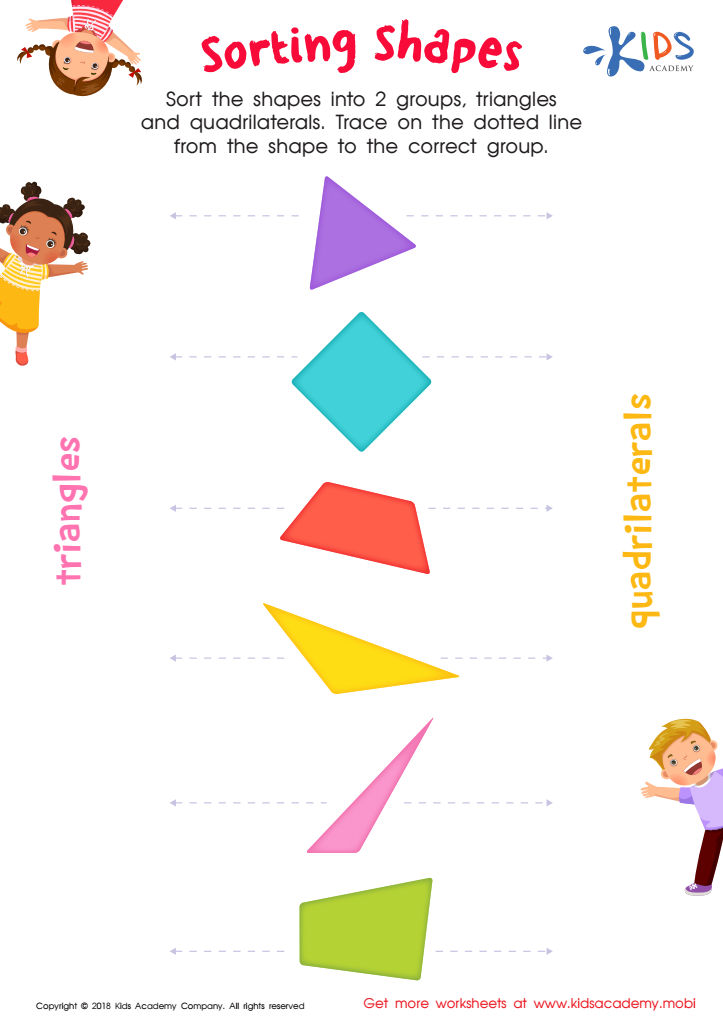
Sorting Shapes Worksheet
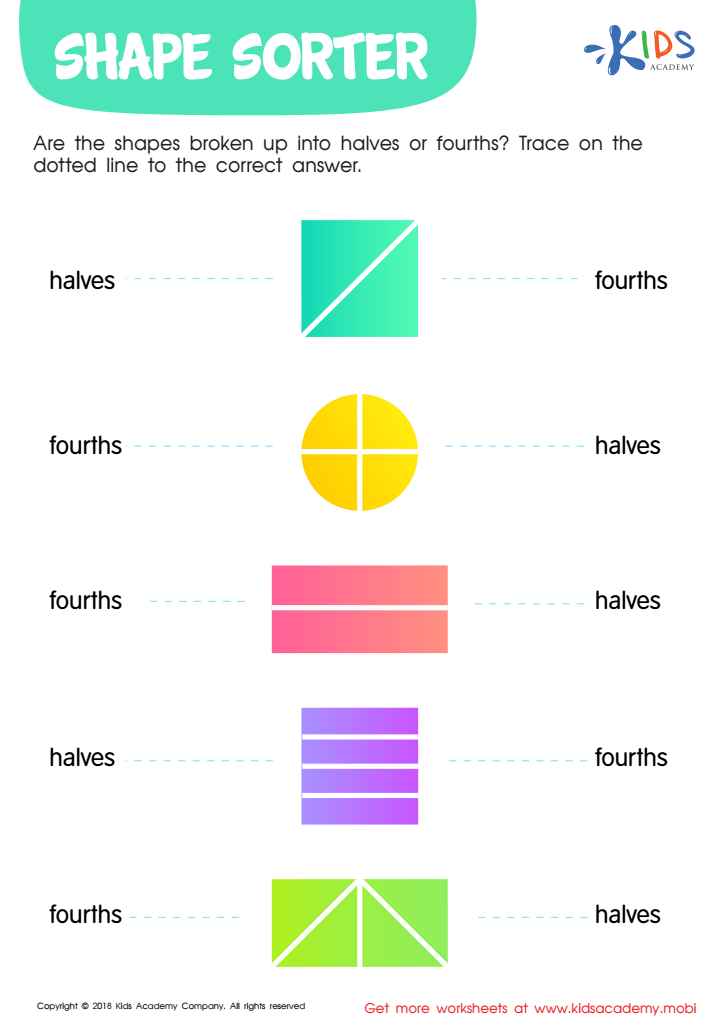
Shape Sorter Worksheet
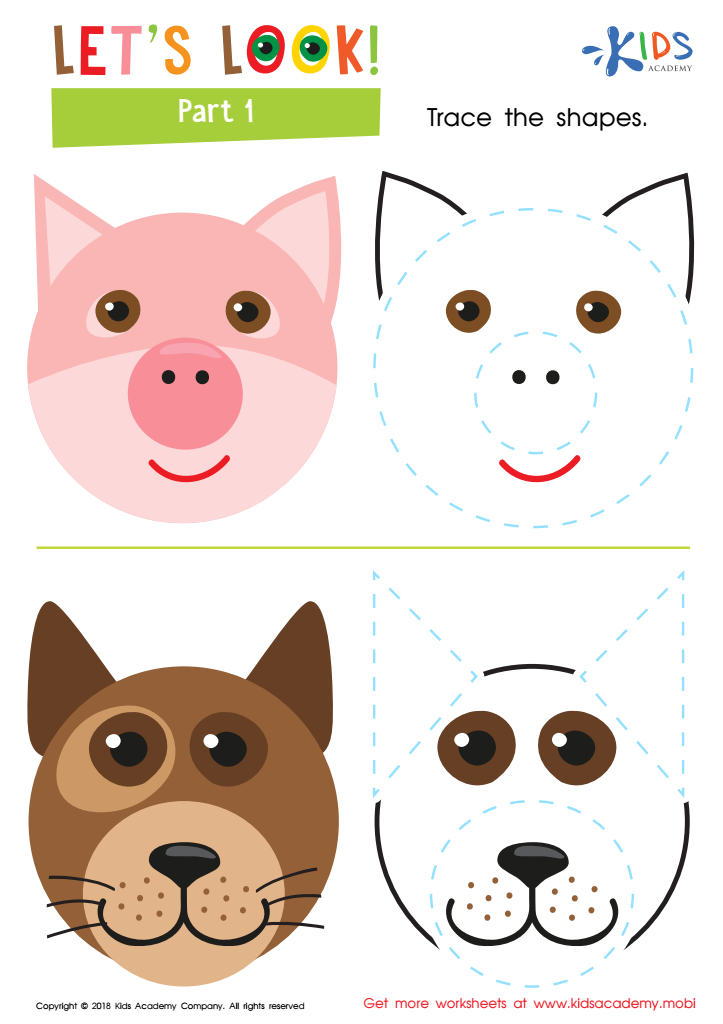
Let's Look! Part 1 Worksheet








Categorization skills in geometry are crucial for children aged 3-9 as they lay the foundation for critical thinking and problem-solving. At this developmental stage, children begin to explore shapes and spatial relationships, which are essential for understanding more complex mathematical concepts later. By learning to categorize shapes, such as identifying circles, squares, and triangles, children develop observational skills and notice similarities and differences, fostering cognitive growth.
Teachers and parents should invest in nurturing these skills because they enhance not only mathematics proficiency but also cognitive and linguistic abilities. Engaging in activities that promote categorization encourages children to articulate their thought processes, enhancing their communication skills. Furthermore, these skills support the development of organizational skills, which are vital throughout their education.
Moreover, strong categorization skills in geometry promote creativity and spatial reasoning, enabling children to visualize problems and find solutions flexibly. Research indicates a strong link between early mathematical skills and later academic success. Therefore, prioritizing the development of categorization in geometry equips children with necessary tools for future learning, empowering them to approach challenges with confidence and initiative. In sum, fostering these skills is essential for nurturing well-rounded, capable learners who are prepared for future academic pursuits.








