Differentiating shapes Geometry Worksheets for Ages 3-9
3 filtered results
-
From - To
Explore our engaging Differentiating Shapes Geometry Worksheets designed specifically for children ages 3-9. These fun and interactive worksheets help young learners identify and understand various shapes, enhancing their spatial awareness and cognitive skills. With vibrant illustrations and age-appropriate activities, children will enjoy sorting, matching, and coloring different shapes, building a strong foundation in geometry. Our worksheets cater to diverse learning styles, ensuring every child can thrive while developing essential math skills. Perfect for classroom use or at-home learning, these resources make geometry exciting and accessible for early learners. Download today and help your child become a shape expert!
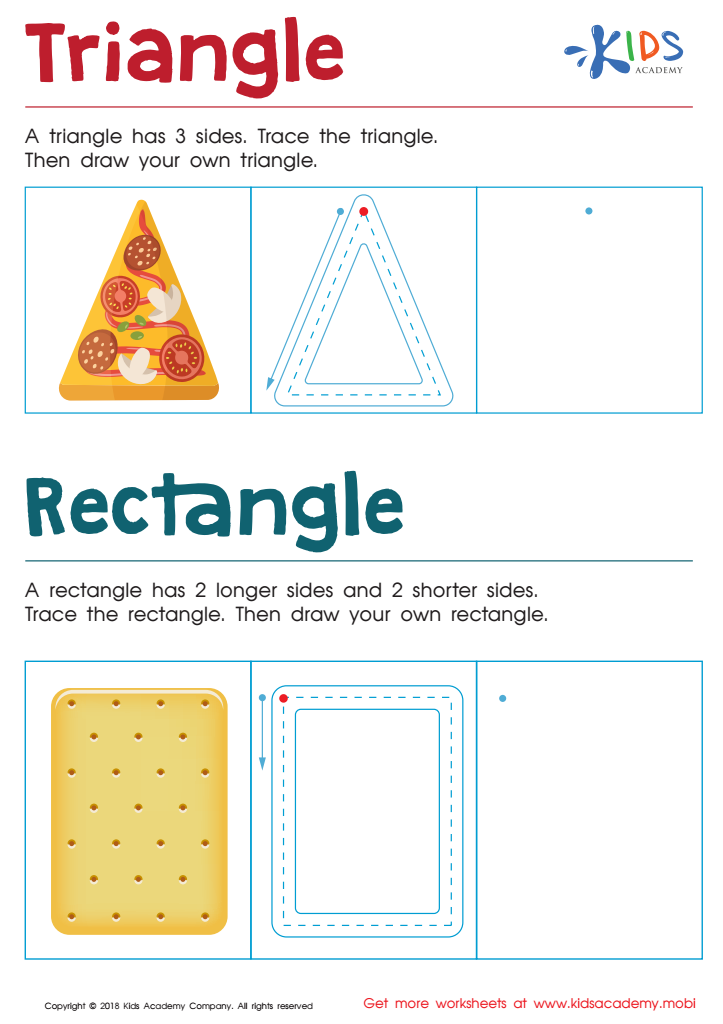
Triangle Rectangle Worksheet
 Assign to My Students











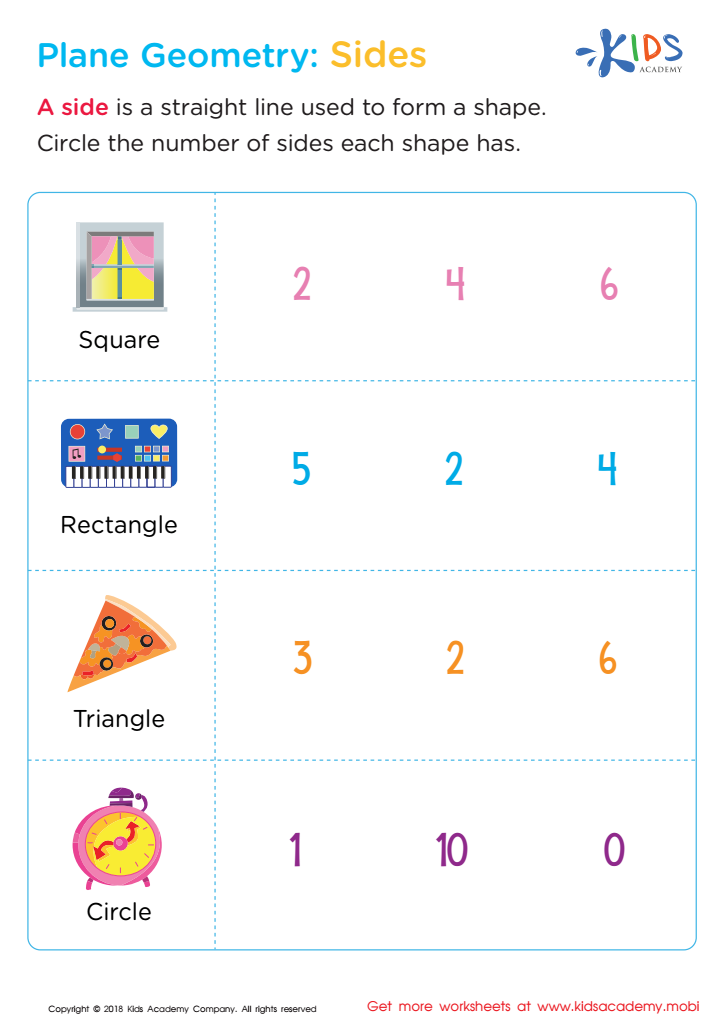
Plane Geometry: Sides Worksheet
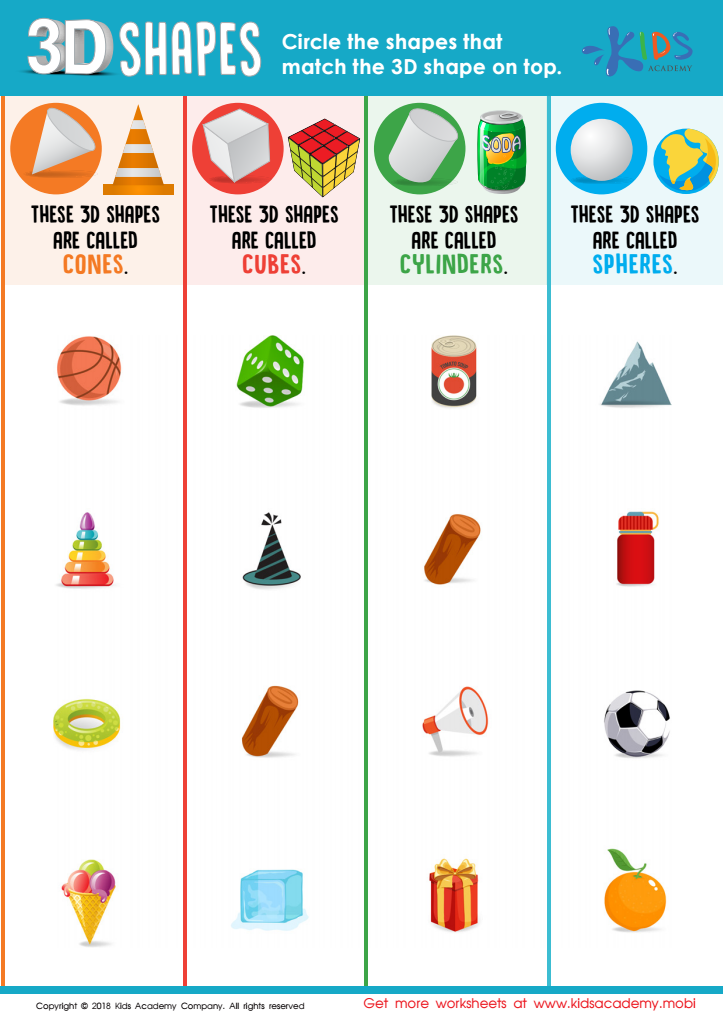
3D Shapes Worksheet








Differentiating shapes in geometry is essential for children aged 3-9, as it lays the foundation for spatial awareness and logical reasoning skills crucial for their overall cognitive development. At this exploratory age, children are naturally curious about the world and engaged in hands-on learning. By exposing them to various shapes – such as circles, squares, triangles, and more complex forms – parents and teachers can enhance their understanding of visual patterns and relationships.
Moreover, differentiating shapes allows children to build essential math skills that are integral for future academic success. Recognizing shapes fosters problem-solving abilities and boosts creativity by encouraging kids to explore the world through geometric concepts. Engaging children in activities that involve identifying, comparing, and manipulating shapes enhances their fine motor skills and reinforces critical thinking.
Additionally, when parents and teachers actively differentiate the learning based on a child's individual needs, it promotes inclusivity, helping all learners engage with math concepts in meaningful ways at their own pace. This builds confidence and a positive attitude toward learning. In summary, recognizing and understanding shapes is not merely an academic exercise; it is a vital part of a child's developmental journey, impacting their future success in science, technology, engineering, arts, and mathematics (STEAM).








