Sorting skills Geometry Worksheets for Ages 3-9
5 filtered results
-
From - To
Discover engaging Sorting Skills Geometry Worksheets designed for children ages 3-9! These worksheets help young learners develop essential sorting and categorization skills through fun, interactive geometry concepts. By exploring shapes, sizes, and patterns, children enhance their critical thinking and problem-solving abilities while gaining a solid foundation in geometry. Our carefully crafted activities feature vibrant illustrations and age-appropriate challenges to keep kids entertained and motivated. Perfect for home or classroom use, these worksheets make learning math enjoyable and effective. Help your child build confidence in their sorting skills and shape recognition today! Explore our collection and ignite their passion for learning!
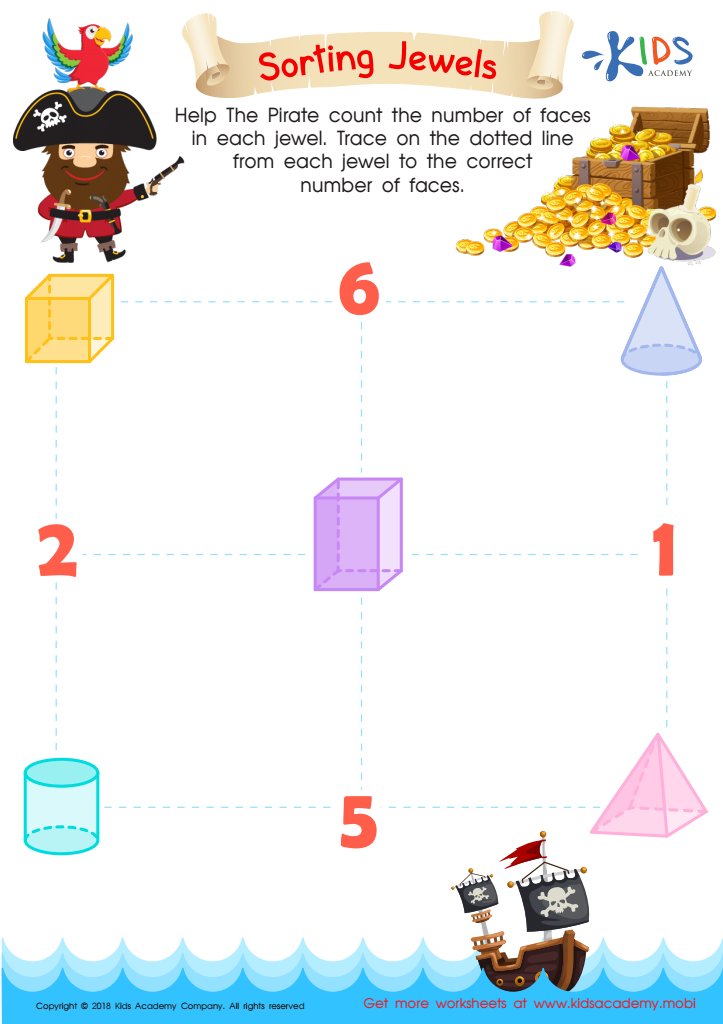
Sorting Jewels Worksheet
 Assign to My Students











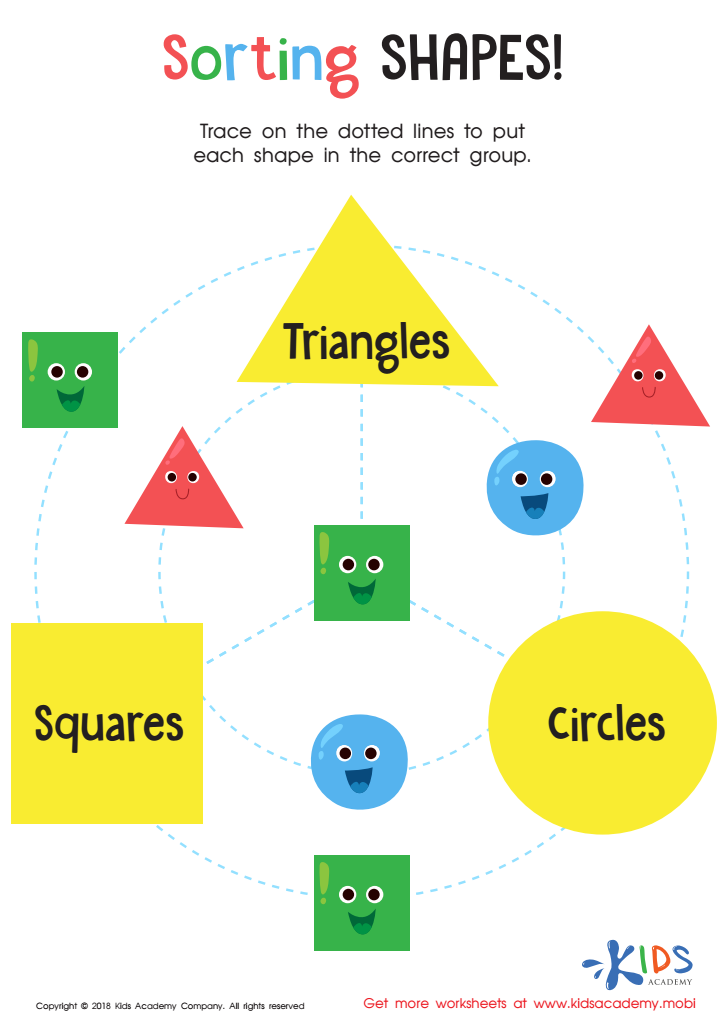
Sorting Shapes - Part 3 Worksheet
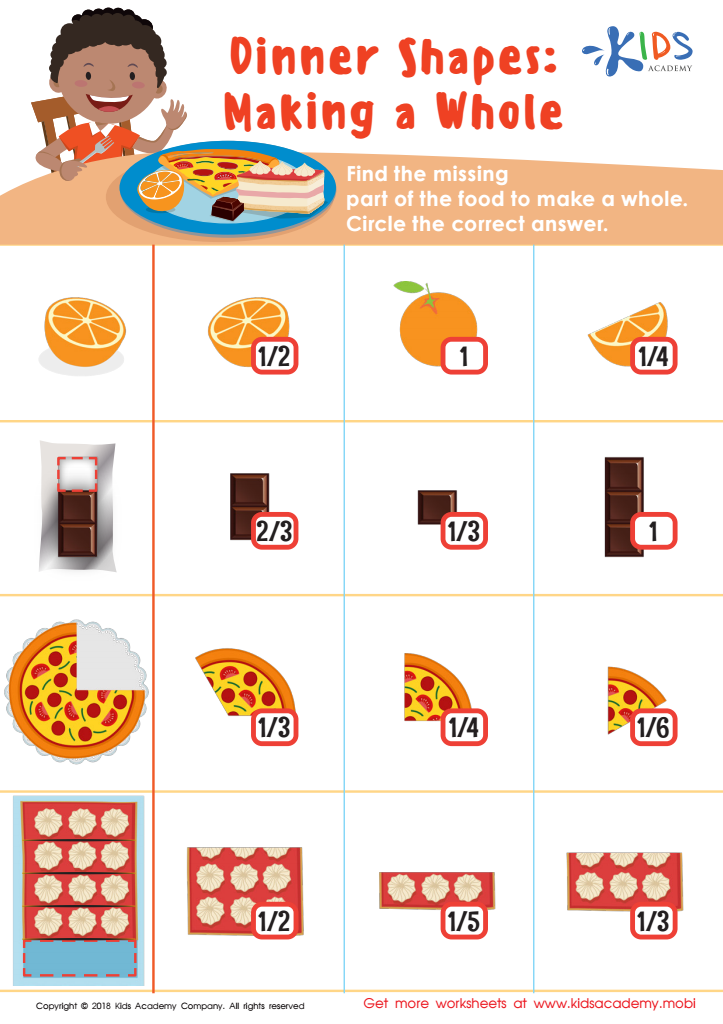
Dinner Shapes: Making a Whole Worksheet
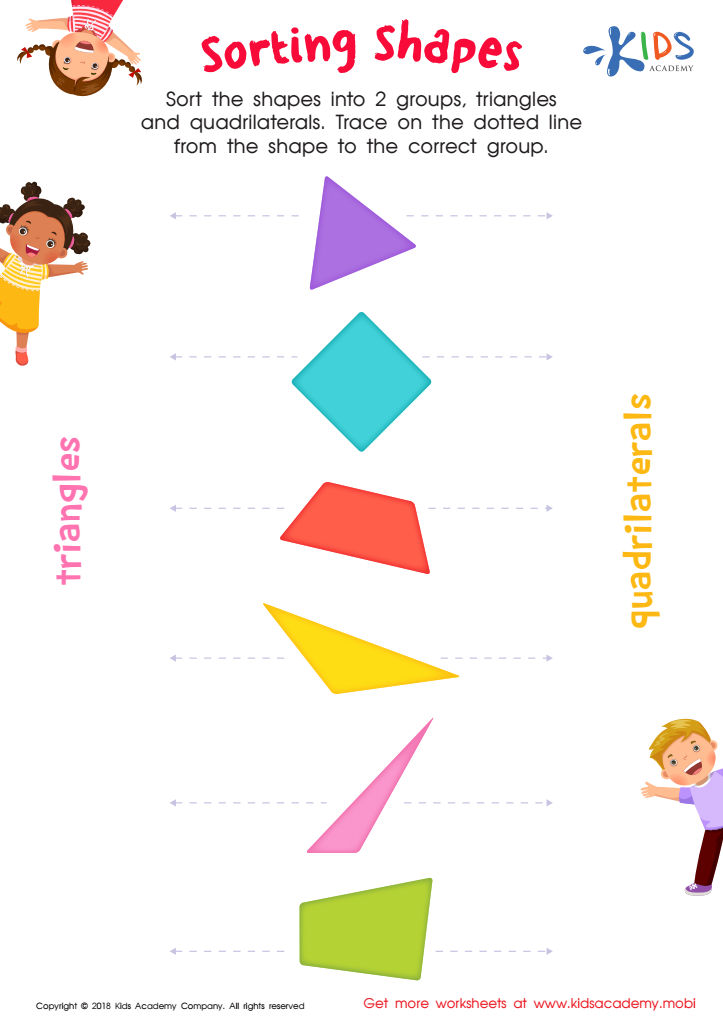
Sorting Shapes Worksheet
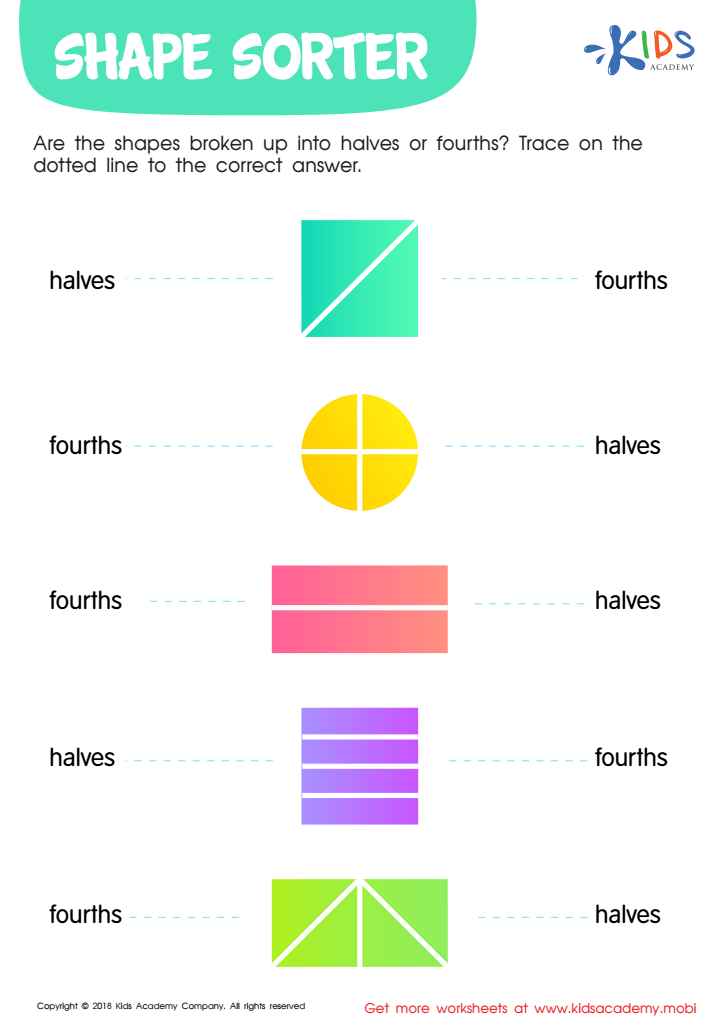
Shape Sorter Worksheet








Sorting skills in geometry are essential for children aged 3-9 as they lay the groundwork for critical thinking, problem-solving, and mathematical concepts. When parents and teachers promote sorting activities, they encourage children to recognize shapes, patterns, and spatial relationships, fostering a strong foundation for future learning. Sorting helps develop cognitive skills by challenging children to think about similarities and differences, organize information, and make connections between concepts.
At this early age, sorting geometric shapes fosters recognition and understanding of basic concepts, such as symmetry, size, and orientation. These skills also play a vital role in building vocabulary related to mathematics and geometry, further enhancing communication skills. As children sort shapes, they not only practice their fine motor skills by manipulating objects but also engage in cooperative play, enhancing their social skills.
Moreover, these foundation skills are crucial for later academic success in mathematics. Educators and parents should create engaging sorting activities that incorporate colors, sizes, and shapes, encouraging exploration and discovery. Ultimately, attention to sorting skills during these formative years equips children with the necessary tools and confidence to excel in more complex mathematical challenges in the future. Understanding geometry and sorting lays essential groundwork for lifelong learning and cognitive development.








