
Shape identification Numbers Worksheets for Ages 3-9
3 filtered results
Difficulty Level
Grade
Age
-
From - To
Subject
Activity
Standards
The "Shape Identification Numbers Worksheets for Ages 3-9" are designed to make learning fun and engaging for young children. These resources help kids recognize and understand various shapes while simultaneously learning to identify numbers. Perfect for preschool through early elementary grades, these worksheets incorporate colorful visuals and interactive activities that foster analytical skills and creativity. By using playful and educational exercises, children can develop their spatial awareness and strengthen their number recognition abilities. Ideal for both classroom and home settings, these worksheets support foundational math skills that are essential for lifelong learning. Download them today and watch your child thrive!
Favorites
With answer key
Interactive
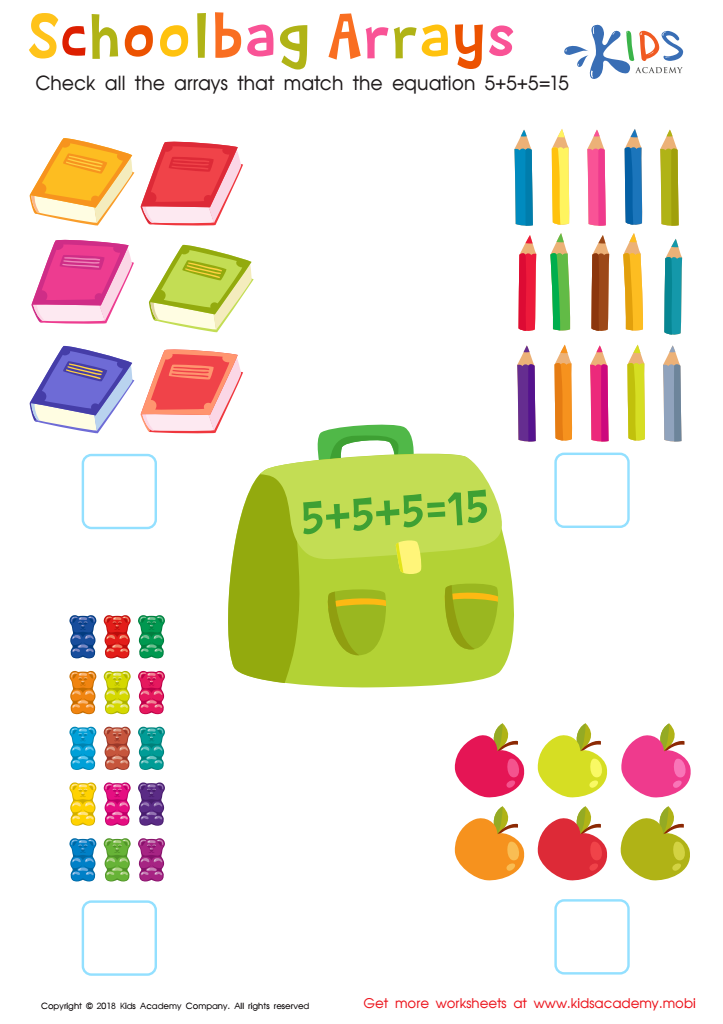
Schoolbag Arrays Worksheet
Help your child spot the correct arrays in this worksheet: having them count the items in each and check the boxes for the ones with 15 objects. Ask them to differentiate between rows and columns and explain which ones match the equation 5+5+5=15.
Schoolbag Arrays Worksheet
Worksheet
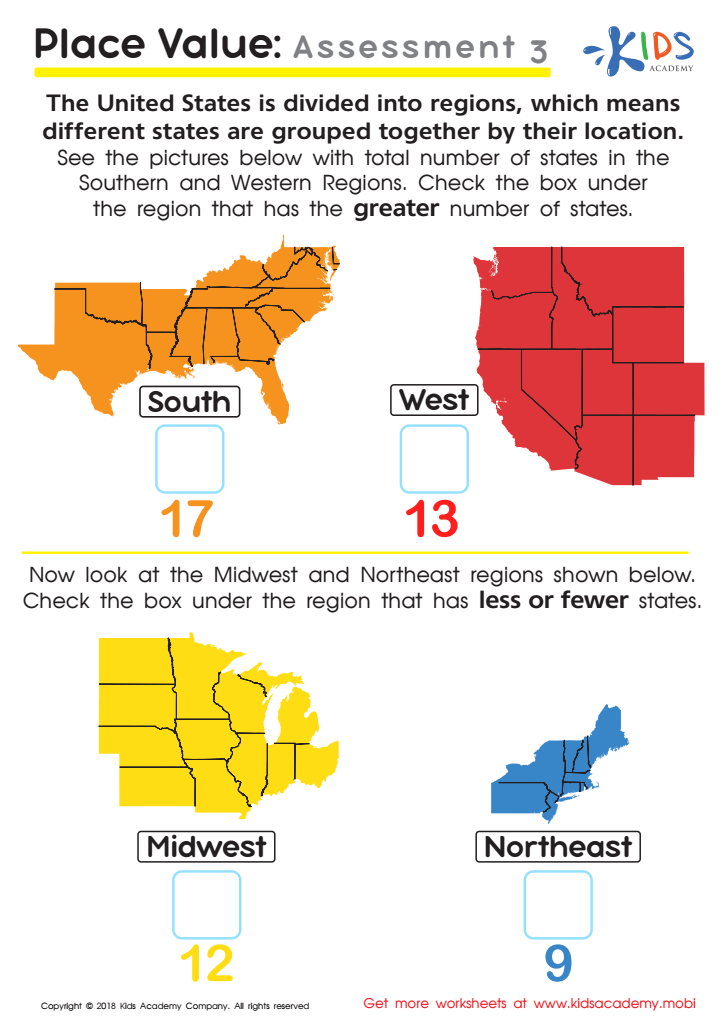
Place Value: Assessment 3 Worksheet
Test your child's math skills without them realizing it! This fun worksheet looks at the states and regions of the U.S. and your child can compare numbers greater or lesser than the other. It's the perfect way to assess your child's number sense without them knowing.
Place Value: Assessment 3 Worksheet
Worksheet
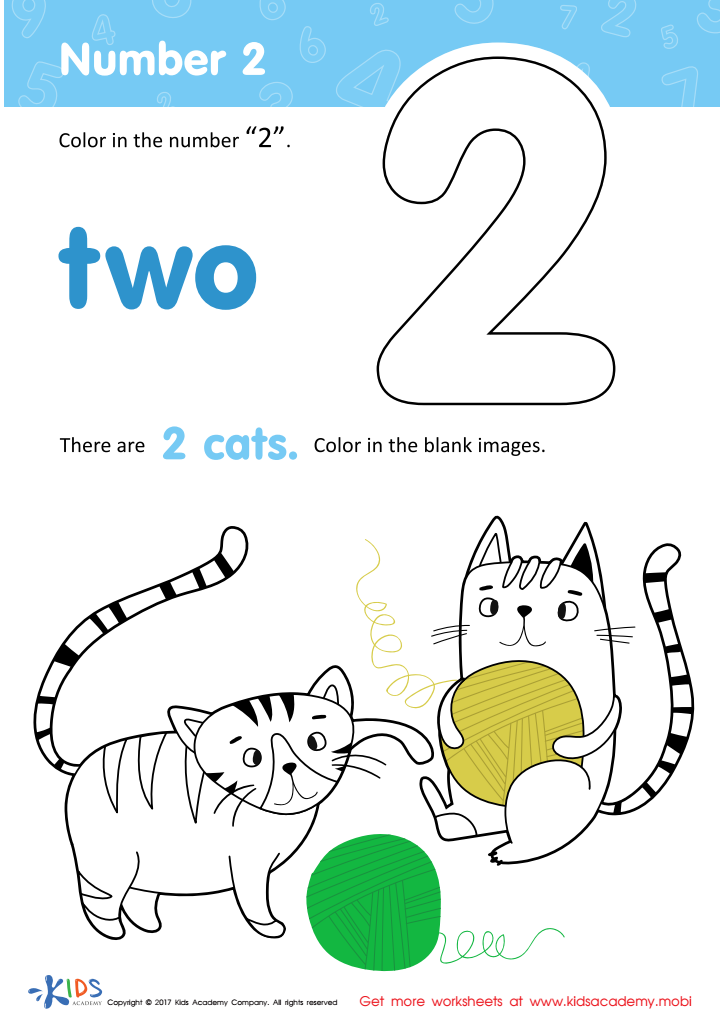
Number 2 Printable
Help your child learn to recognize the number two with these cats and their yarn balls. Print this coloring page – it's great for counting and coloring fun! Your child will develop basic numeracy skills as they visually see numbers in action.
Download (PDF)
 Assign to My Students
Assign to My Students
Number 2 Printable
Worksheet
Join Kids Academy for Free
Who is primarily going to use this learning content?








Shape identification is crucial for children aged 3-9 as it forms the foundation for various cognitive and academic skills. First, recognizing shapes enhances spatial awareness, enabling children to understand how objects relate to one another in space. This understanding is fundamental for activities such as drawing, building, and even navigating their environment.
Furthermore, shape identification supports early math development. Children who can accurately recognize and describe shapes are better prepared for concepts like measurement, geometry, and symmetry. These skills become increasingly important as they progress in their mathematical education.
Moreover, engaging with shapes fosters critical thinking and problem-solving abilities. When children categorize and differentiate shapes, they learn to analyze and observe their surroundings, skills that are invaluable across all areas of learning.
Finally, shape recognition promotes language development. Describing shapes involves vocabulary use and comprehension, which aids in enhancing their communication skills.
For parents and teachers, incorporating shape identification into play and learning activities encourages holistic development. By prioritizing this foundational skill, they can help children build confidence and competence in both academic and everyday contexts, laying the groundwork for lifelong learning and exploration.








