Analog Clock Understanding Math Worksheets for Ages 3-9
3 filtered results
-
From - To
Discover exciting "Analog Clock Understanding Math Worksheets" designed for children aged 3-9 at Kids Academy! Our engaging resources encourage young learners to delve into the concepts of time and enhance their math skills through fun activities. Each worksheet is crafted to help kids recognize clock faces, understand hour and minute hands, and grasp the significance of time in daily life. With vibrant visuals and interactive practices, your child will enjoy mastering time-telling in a playful way. Perfect for preschoolers and early grade schoolers, our worksheets foster independent learning and boost confidence in math while building a solid foundation in time management. Start exploring now!
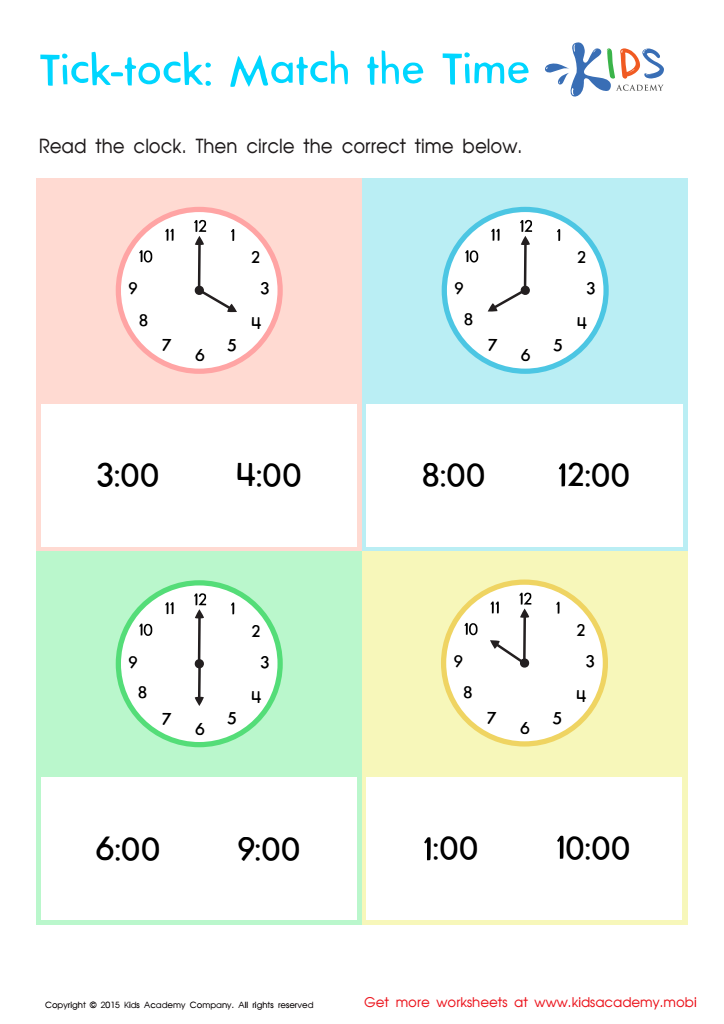
Telling The Time Worksheet: Part 4
 Assign to My Students
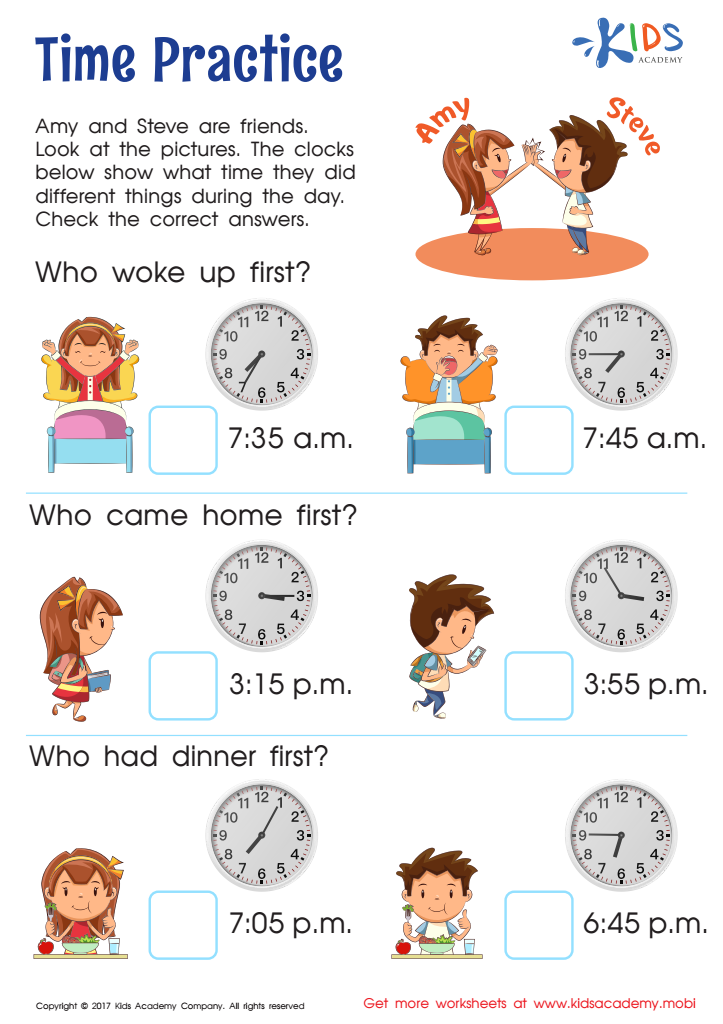
Time Practice Worksheet
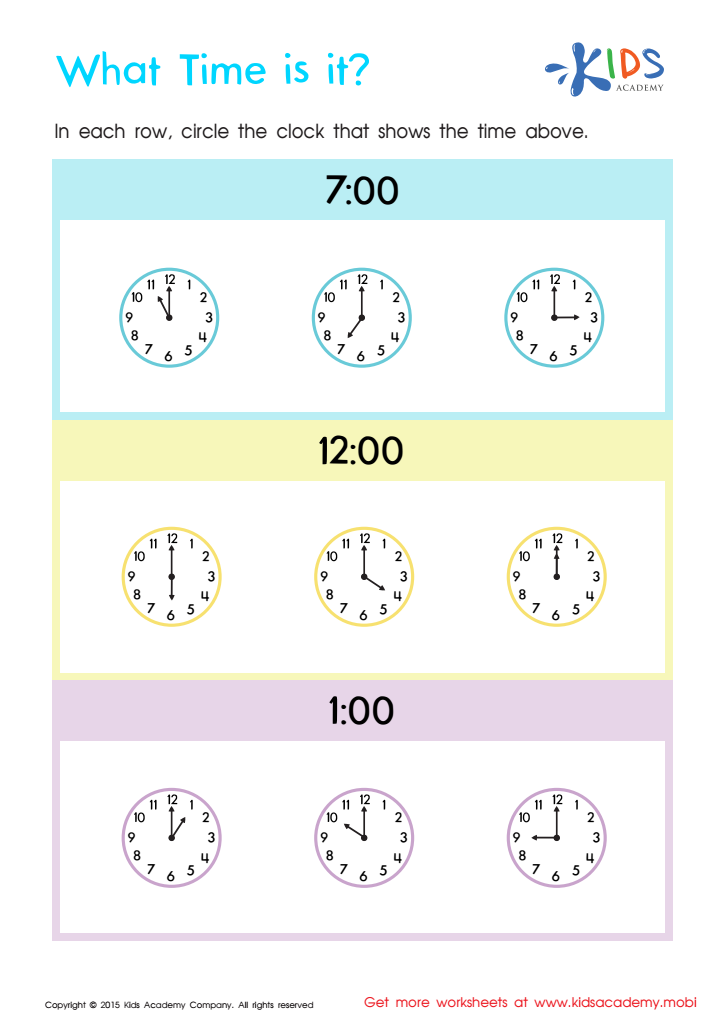
Telling The Time Worksheet: Part 3






.jpg)
Understanding how to read an analog clock is crucial for children aged 3-9 as it lays the foundation for their mathematical skills and time management abilities. First, learning to tell time promotes a strong grasp of numbers and their relationships, which are key components in early mathematics. By recognizing the placement of numbers on a clock face, children enhance their counting skills and learn about the concept of intervals, particularly as they relate to the minute and hour hands.
Moreover, analog clocks encourage children to visualize movement and patterns, fostering critical thinking and problem-solving skills. They learn to interpret and visualize time even when looking at other aspects of life. This can also integrate lessons about daily activities, helping them understand the importance of schedules and routines, which ultimately aids in their time management skills.
Additionally, analog clocks can serve as conversation starters about math-related concepts such as symmetry and division, making learning interactive and engaging. While digital clocks prevail in modern technology, understanding analog time fosters resilience and adaptability. For parents and teachers alike, focusing on analog clock understanding equips children not only with essential math skills but also with the life skills necessary for navigating daily tasks and responsibilities with confidence.








