Applying math concepts Math Worksheets for Ages 3-9
3 filtered results
-
From - To
Explore our engaging "Applying Math Concepts Math Worksheets" designed specifically for children ages 3-9. These worksheets provide a fun and interactive way for young learners to develop essential math skills, from foundational counting to more advanced problem-solving techniques. Each worksheet is crafted to make learning enjoyable, fostering a deeper understanding of mathematical concepts through hands-on activities and colorful illustrations. Ideal for both classroom and home use, our resources help kids grasp the importance of math in everyday life while building confidence in their abilities. Start your child’s math journey today with our thoughtfully designed worksheets that encourage learning through play!
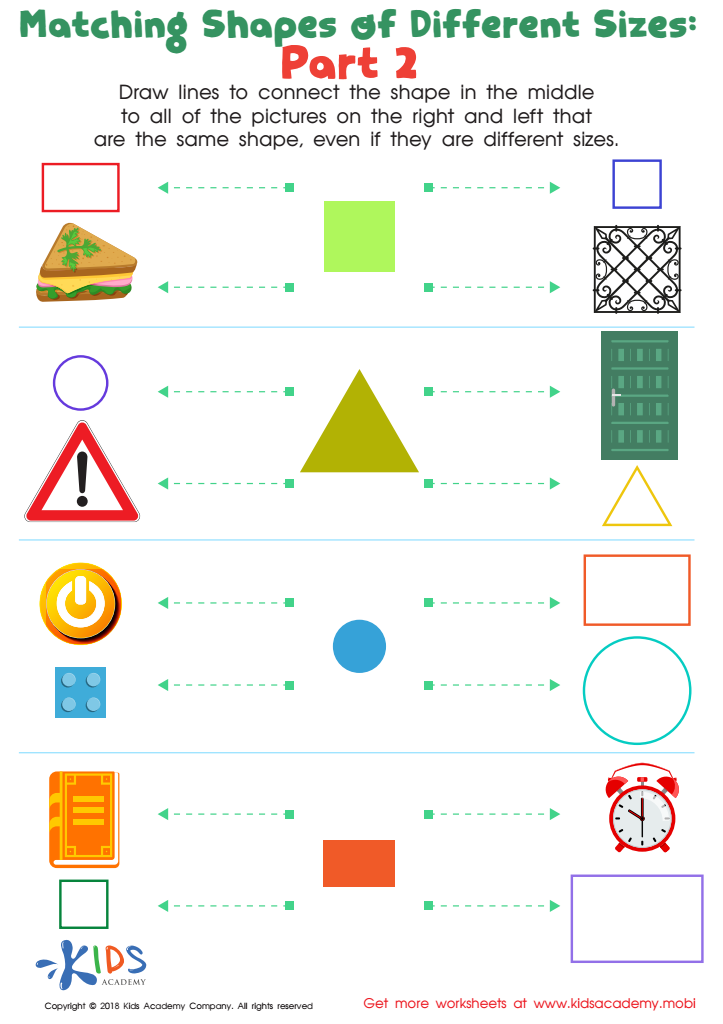
Geometry: Part 2 Worksheet
 Assign to My Students
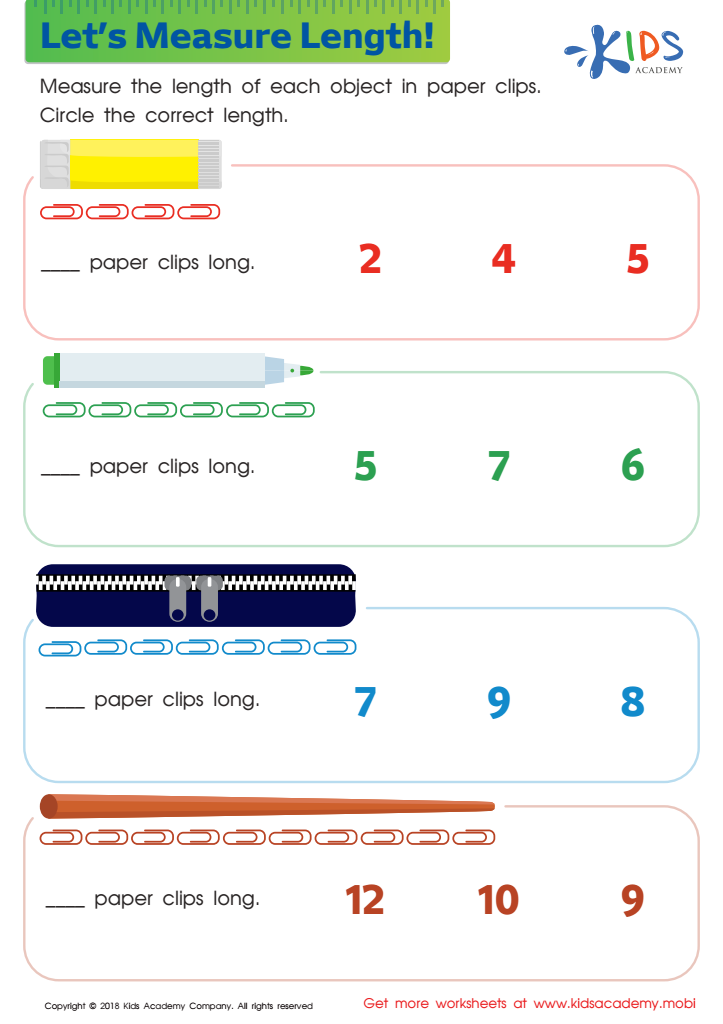
Lets Measure Length Worksheet
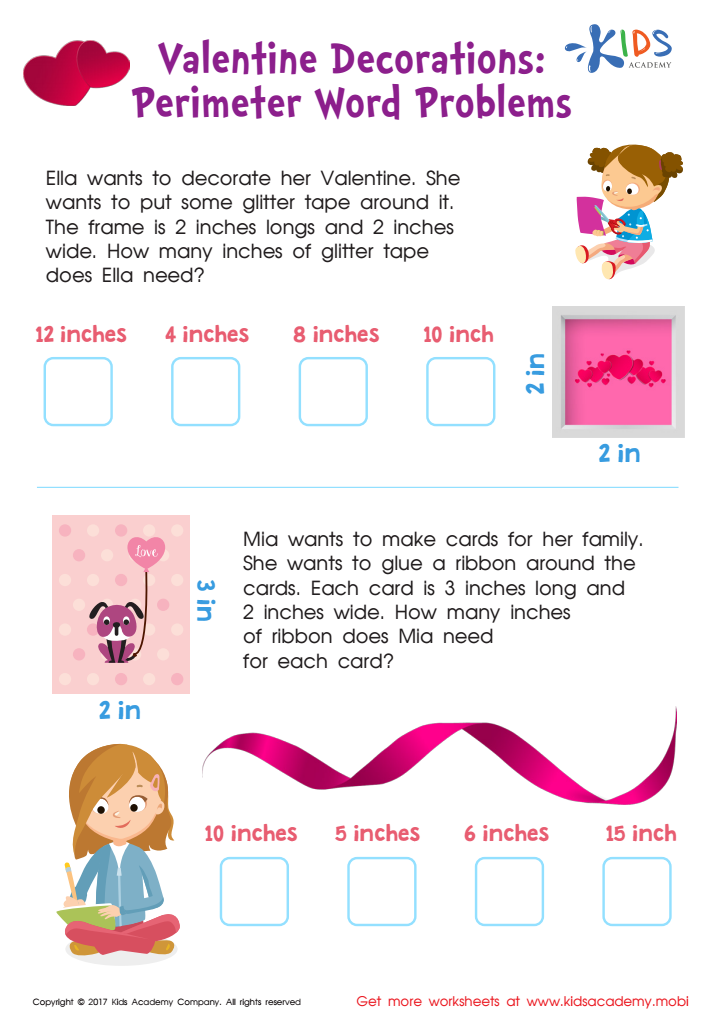
Perimeter Word Problems Worksheet








Parents and teachers should prioritize applying math concepts for children aged 3-9 because early mathematical understanding lays the foundation for future academic success and critical thinking skills. During these formative years, children are naturally curious and eager to explore the world around them. Introducing math concepts through hands-on activities, games, and everyday situations makes learning both engaging and meaningful.
Math is not just about numbers and operations; it is about problem-solving, pattern recognition, and logical reasoning. By applying math concepts in real life—such as counting objects, measuring ingredients for a recipe, or noticing shapes in the environment—children learn to see the relevance and usefulness of math in everyday activities. This contextual learning fosters a positive attitude towards math, reducing anxiety and building confidence.
Moreover, early exposure to math helps in developing cognitive skills that contribute to overall literacy and success across subjects. It encourages creativity and exploration as children make connections and discover relationships between numbers and the world. In a world increasingly driven by technology and data, equipping young learners with solid math skills will prepare them for the complex challenges of tomorrow. Therefore, parents and teachers play a crucial role in nurturing these essential skills through intentional and playful math learning experiences.








