Basic math abilities Math Worksheets for Ages 3-9
3 filtered results
-
From - To
Discover the perfect resources to boost your child's basic math skills with our comprehensive collection of math worksheets tailored for ages 3-9. Designed to enhance learning, these worksheets cover essential concepts like number recognition, counting, addition, subtraction, and problem-solving. Through engaging and interactive exercises, children build a strong mathematical foundation while developing critical thinking and analytical skills. Ideal for both home and classroom use, our worksheets provide a fun and effective way to support math proficiency, ensuring children enjoy learning and build confidence in their math abilities. Prepare your child for academic success with our expert-crafted materials.
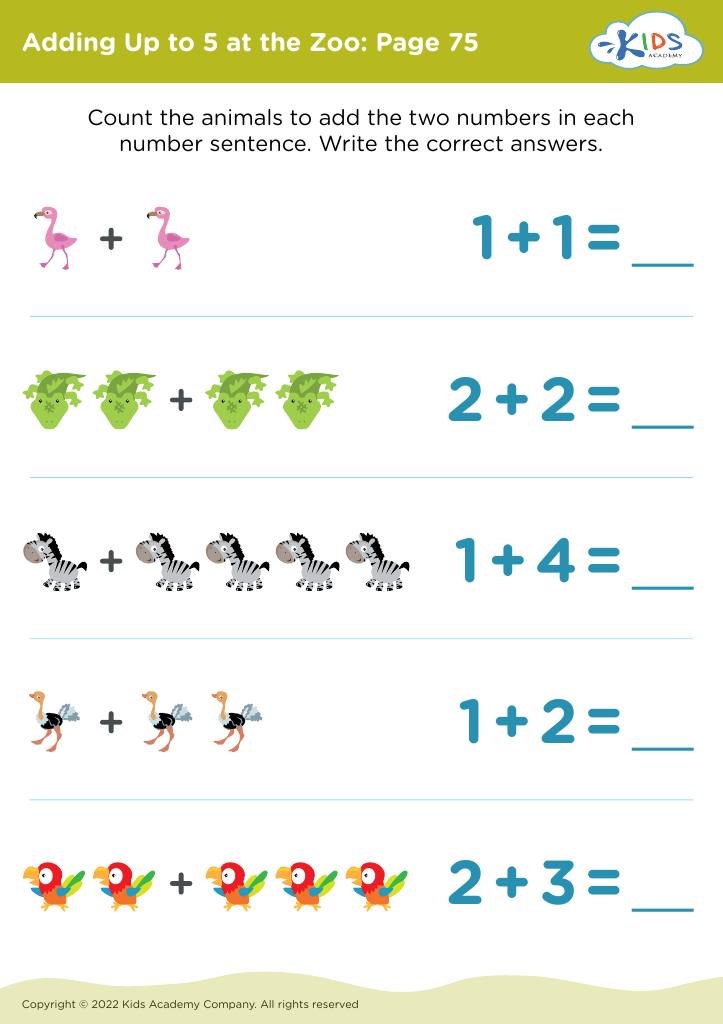
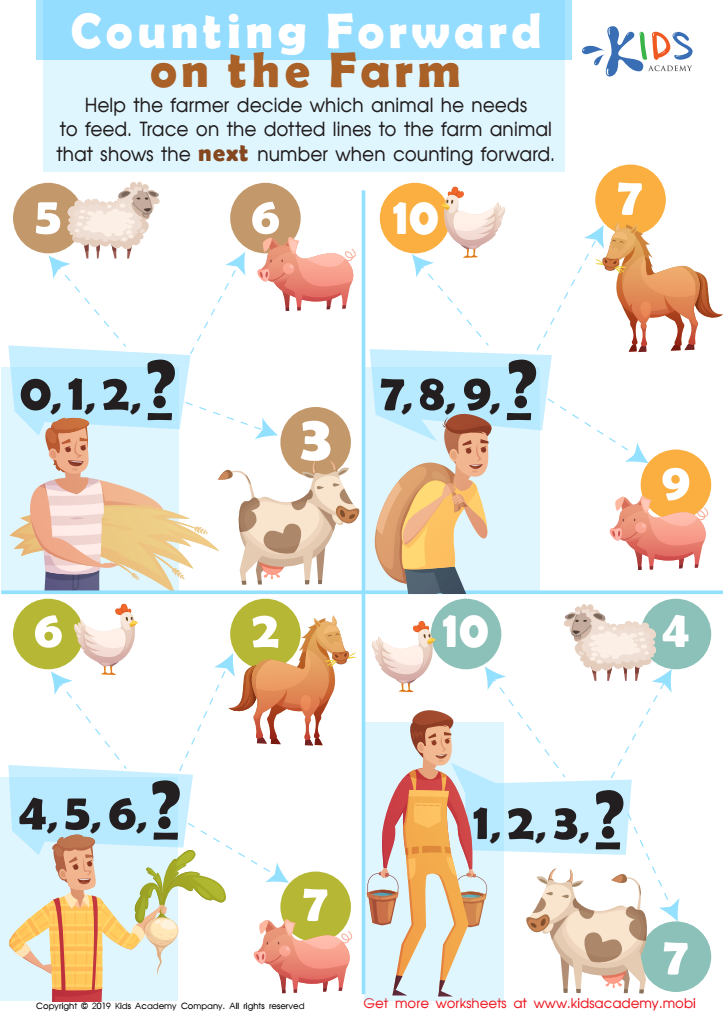
Counting Forward On the Farm Worksheet
 Assign to My Students
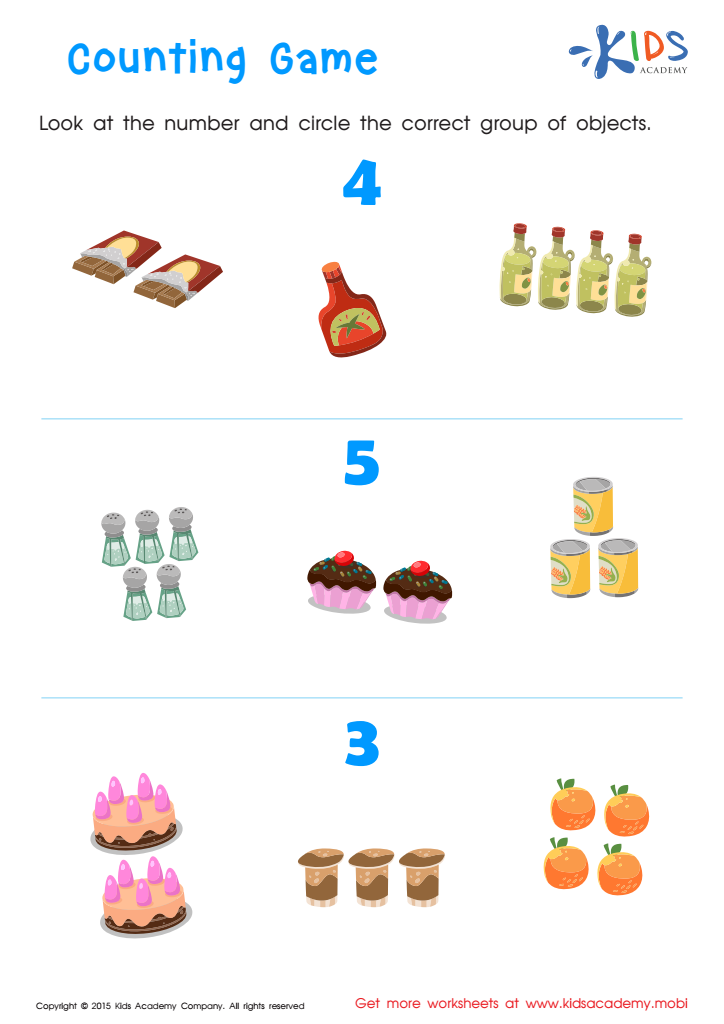
Counting Worksheet


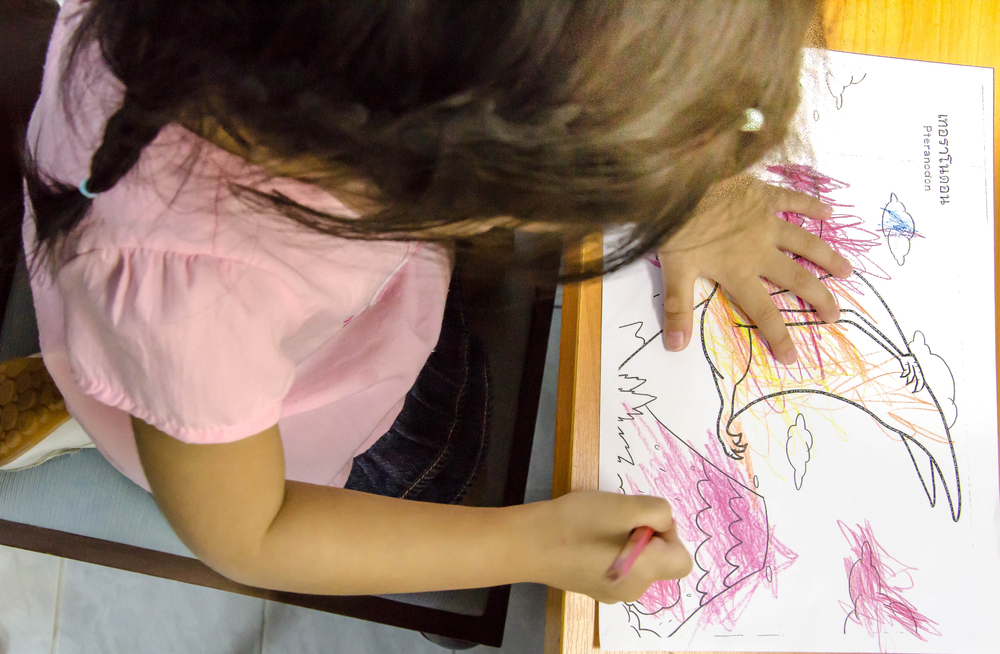





Basic math abilities are essential for children aged 3-9 because they form the foundation for all future mathematical learning and critical thinking skills. During these formative years, children develop key concepts such as number sense, pattern recognition, and basic arithmetic, which influence not only their academic success but also their everyday problem-solving abilities.
First, understanding basic math helps build confidence. When children grasp simple concepts early, they are more likely to approach more complex problems with a positive attitude. Confidence with numbers can translate into confidence in other subjects, promoting a well-rounded education.
Second, math promotes logical thinking and reasoning. Skills such as identifying patterns, sequencing, and spatial awareness are all critical in developing a child's ability to think clearly and make connections between ideas. These abilities are invaluable in fostering an analytical mindset that will benefit them throughout life.
Lastly, math is omnipresent in daily life. From counting money and telling time to understanding shapes and measuring ingredients in a recipe, basic math skills are continuously applied. Parents and teachers who emphasize early mathematical learning equip children with practical tools they will use forever.
Therefore, investing time and resources into cultivating basic math abilities during the early years is crucial for a child's overall development and future academic and life success.








