Boost critical thinking Math Worksheets for Ages 3-9
4 filtered results
-
From - To
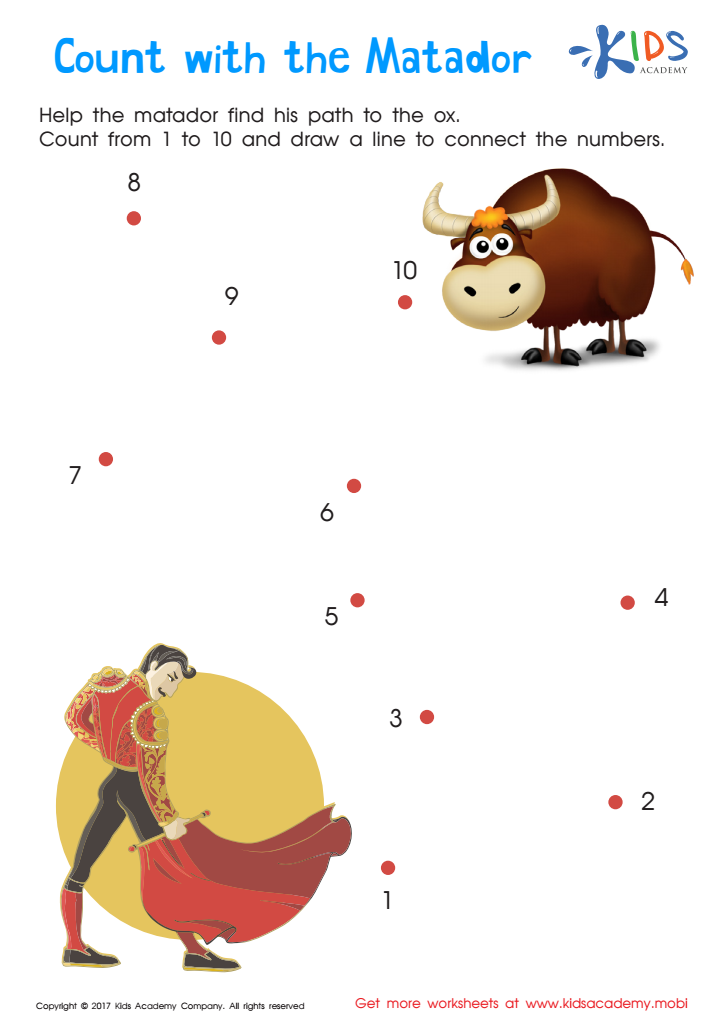
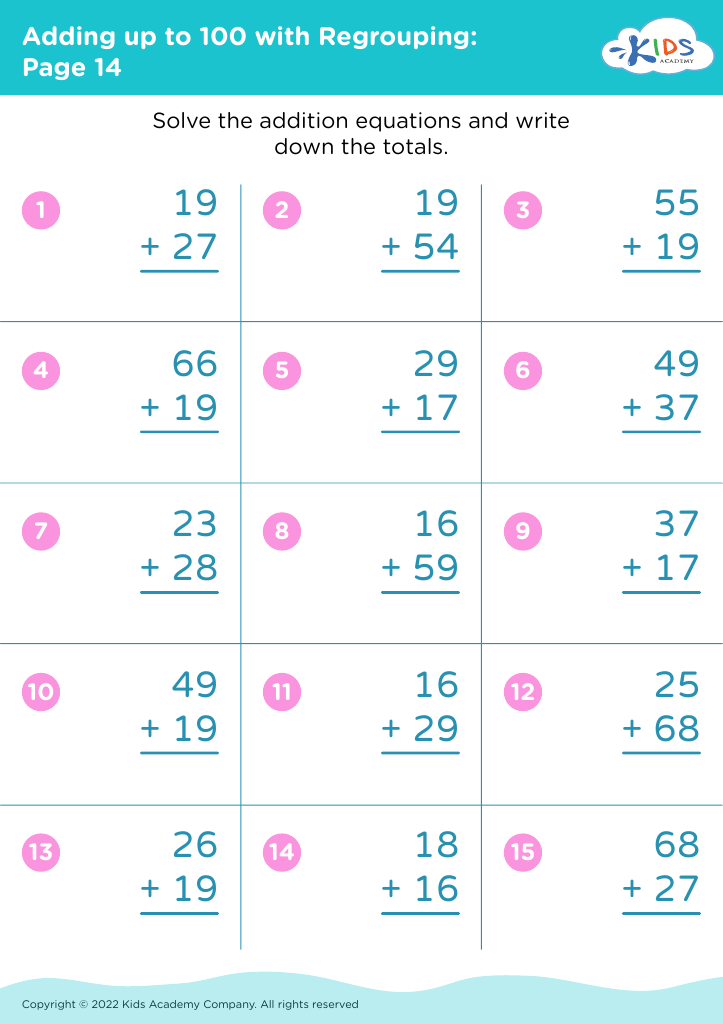
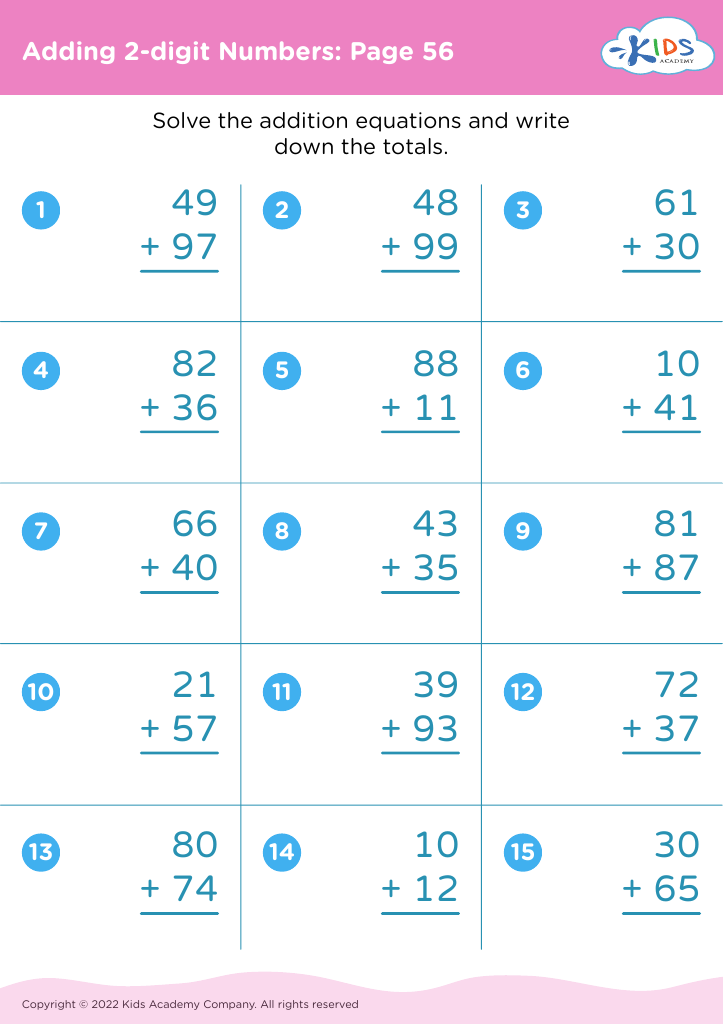
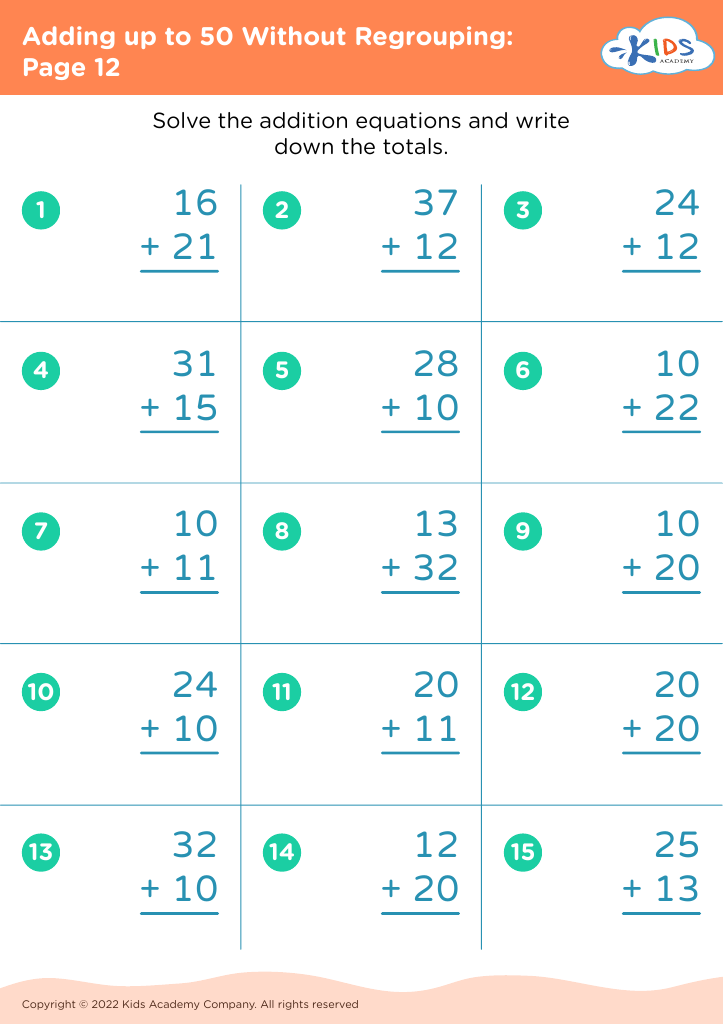
Unlock your child's potential with our "Boost Critical Thinking Math Worksheets for Ages 3-9"! Designed to engage young minds, these worksheets encourage analytical skills through fun and interactive math activities. Your child will explore patterns, problem-solving, and logical reasoning while enjoying colorful illustrations and relatable themes. Tailored for age-specific learning, our materials promote cognitive development, enhancing their ability to think critically about numbers and relationships. Whether at home or in the classroom, these worksheets are perfect for fostering a love of learning in math. Start your child's critical thinking journey today and watch them thrive in their mathematical understanding!
 Assign to My Students







.jpg)
Parents and teachers should care about Boost Critical Thinking Math for ages 3-9 because fostering critical thinking skills in early childhood is essential for developing lifelong learners. At this stage, children are like sponges, eagerly absorbing information and forming the foundation for future academic success. Critical thinking encourages them to analyze, evaluate, and synthesize information rather than merely memorizing facts.
Boost Critical Thinking Math promotes problem-solving skills, enabling children to tackle math concepts and real-world challenges confidently. Engaging children in activities that require them to think critically about numbers, patterns, and relationships enhances their logical reasoning, which is vital in all areas of learning.
Moreover, these skills are foundational for STEM (Science, Technology, Engineering, and Mathematics) education, which is becoming increasingly important in today’s technology-driven world. By integrating critical thinking into early math education, parents and teachers can instill a growth mindset, encouraging children to embrace challenges and learn from mistakes.
Ultimately, prioritizing critical thinking in math not only enhances children's cognitive abilities but also equips them with the tools they need to navigate and succeed in a complex world, laying the groundwork for a brighter, more adaptable future.








