Welcome to our collection of "Comparing Objects" Math Worksheets designed for children ages 3-9! These engaging worksheets offer a fun and interactive way for young learners to develop essential math skills by comparing sizes, lengths, weights, and quantities of various objects. Each activity is crafted to encourage critical thinking, visual discrimination, and basic analytical skills through colorful illustrations and relatable scenarios. Perfect for home or classroom use, our worksheets cater to various learning styles, ensuring every child finds joy in math. Explore the vibrant world of comparing objects and watch your child's confidence soar in their mathematical abilities!
Check out this FREE Trial Lesson on Math for age 3-9!

Name the Shape Regardless of Size

Favorites
With answer key
Interactive
  • 3-9
  • Comparing objects
  • Math
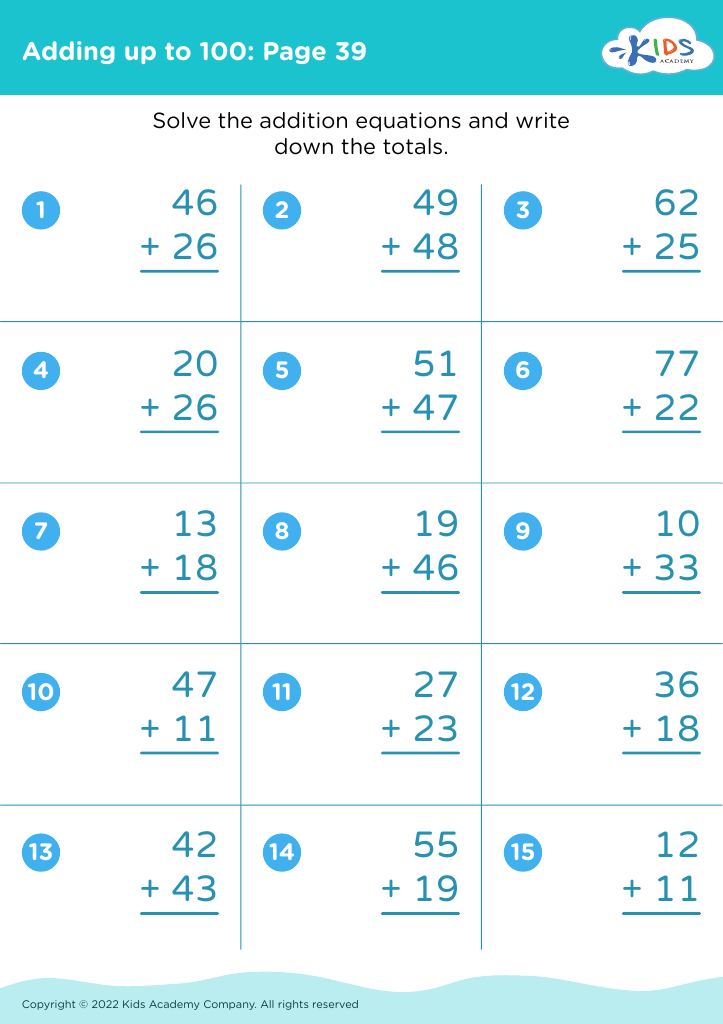
Adding up to 100: Page 39

Adding up to 100: Page 39

Adding up to 100: Page 39
Worksheet
Ordering Size Worksheet

Ordering Size Worksheet

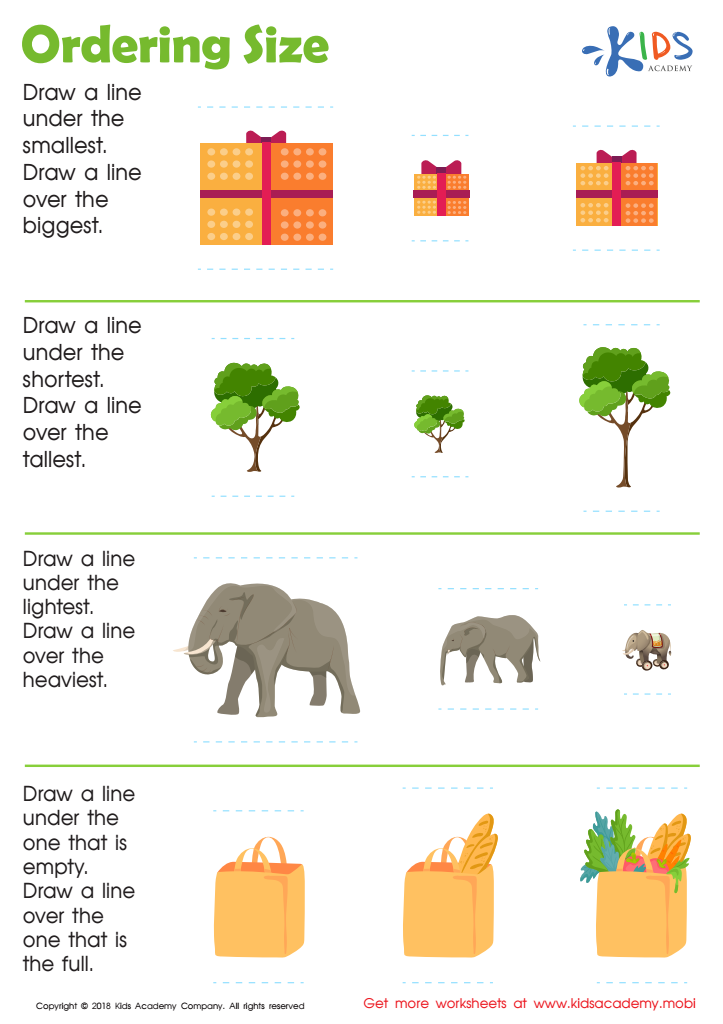
This worksheet helps students practice mathematical vocabulary related to size and quantity. Children look at pictures and draw a line to the objects that are taller, shorter, big, small, light, heavy, empty or full. The teacher can quickly check students' understanding of these measurement terms and then ask for examples of their own.
Ordering Size Worksheet
Worksheet
Shapes of All Sizes Worksheet

Shapes of All Sizes Worksheet

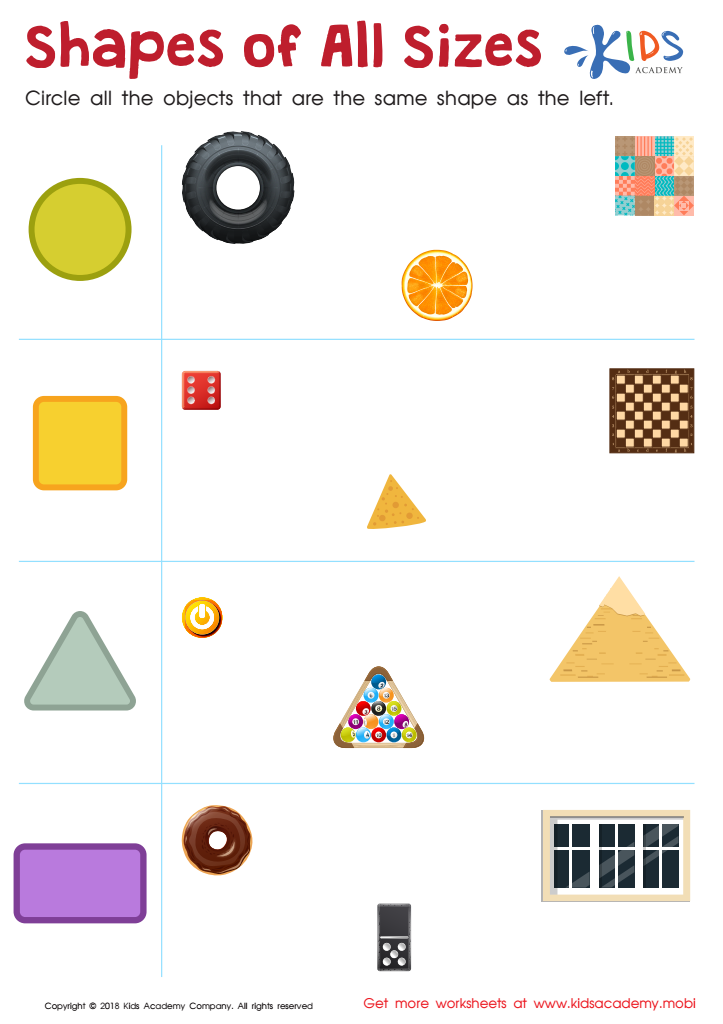
Students will have fun comparing basic shapes to familiar objects with this worksheet. It's an excellent way to help them recognize similarities in geometric shapes, building strong foundations for understanding congruence and similarity.
Shapes of All Sizes Worksheet
Worksheet
Which one is heavier worksheet

Which One Is Heavier Worksheet
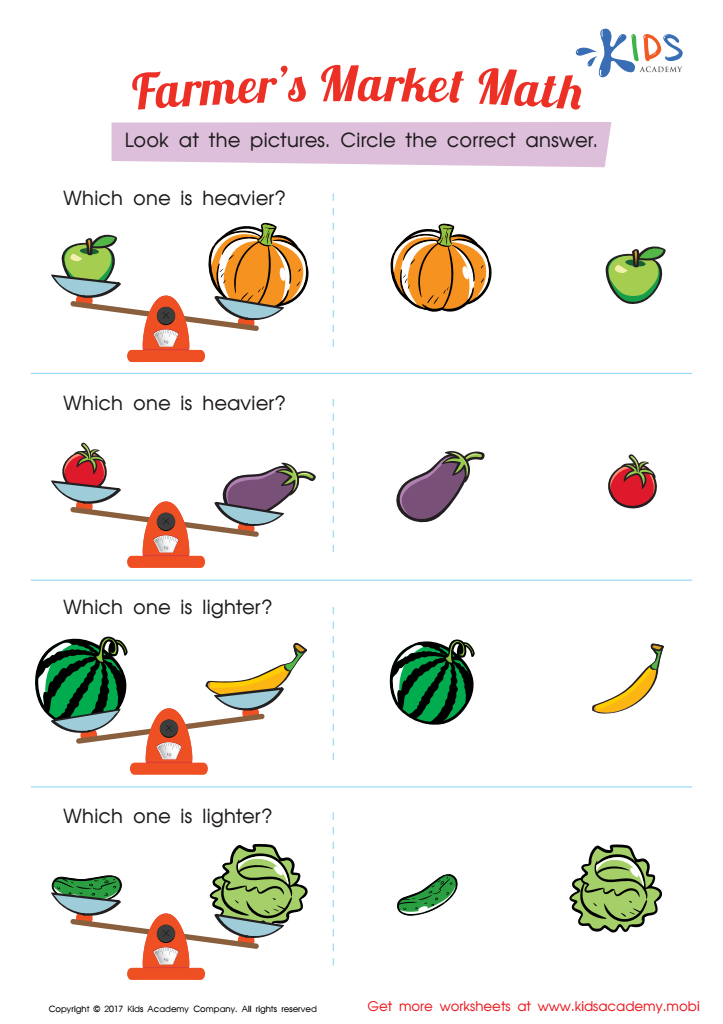
Kindergartners can learn weight easily with this worksheet, featuring images of familiar fruits and veggies. Comparing which one is heavier helps them understand the concept better.
Which One Is Heavier Worksheet
Worksheet
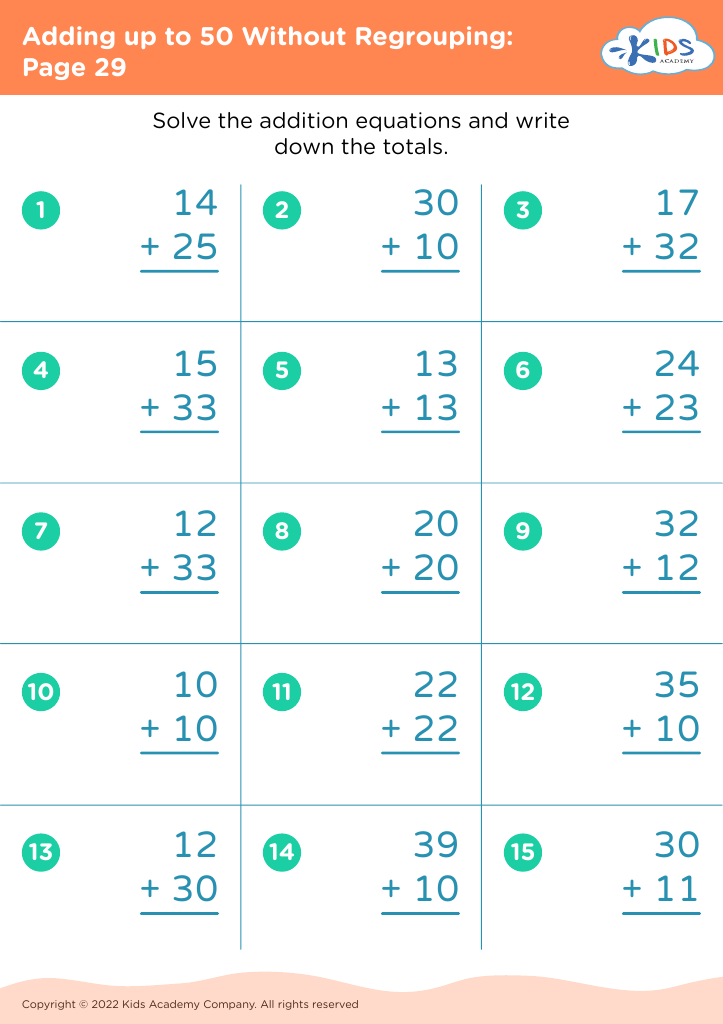
Adding up to 50 Without Regrouping: Page 29
Worksheet
Matching 2D and 3D Shapes Worksheet

Matching 2D and 3D Shapes Worksheet

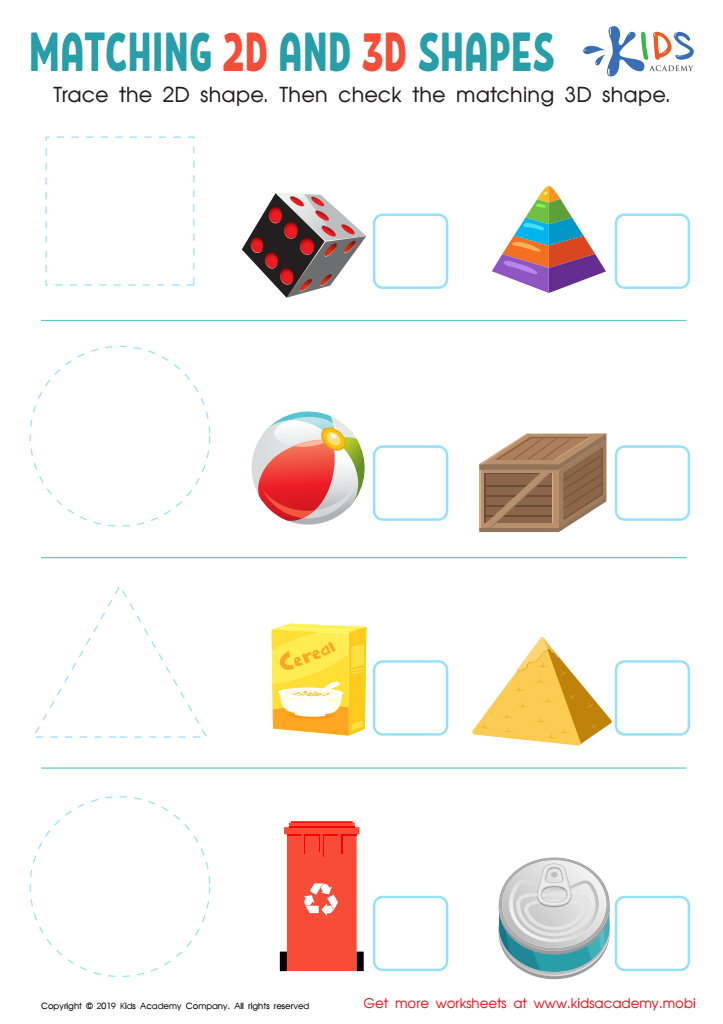
Before starting this worksheet, ask your kids what shapes they know and point out the 2D and 3D shapes on it. Help your kids trace the 2D shapes and then match them to the 3D versions. It'll be a fun new world for your kids to explore!
Matching 2D and 3D Shapes Worksheet
Worksheet
Heavier or Lighter? Worksheet

Heavier or Lighter? Worksheet

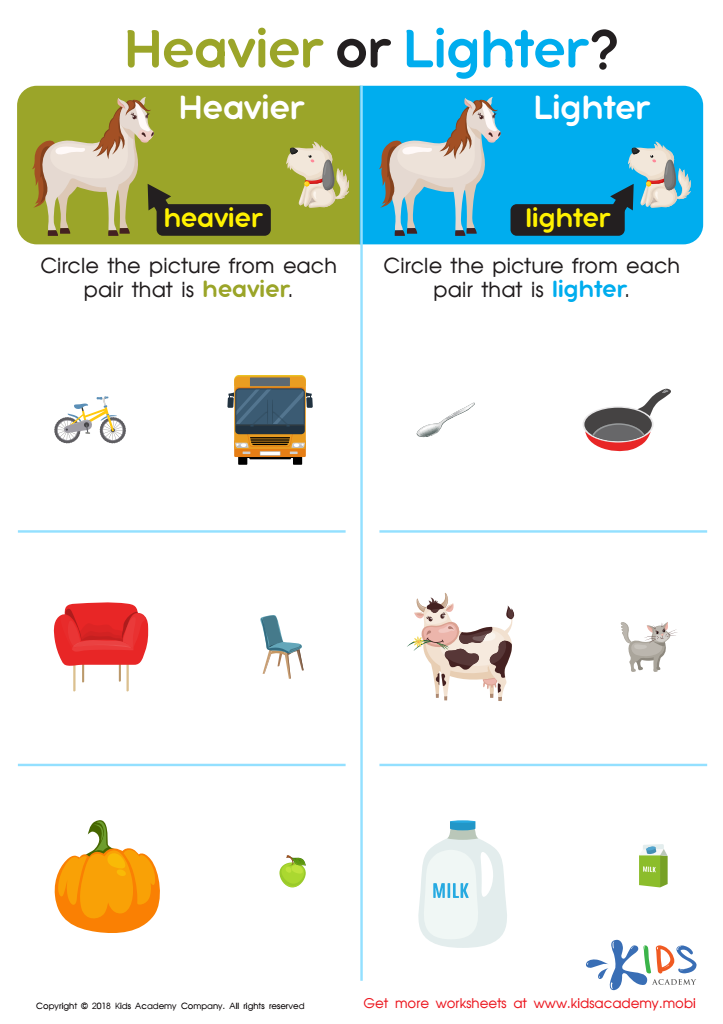
This PDF provides children an opportunity to practice concepts of heavier and lighter with familiar pictures. They must use fine-motor skills to circle the heavier or lighter item in each pair. Picture clues help build a foundation for future, harder concepts. Kids will love this fun worksheet!
Heavier or Lighter? Worksheet
Worksheet
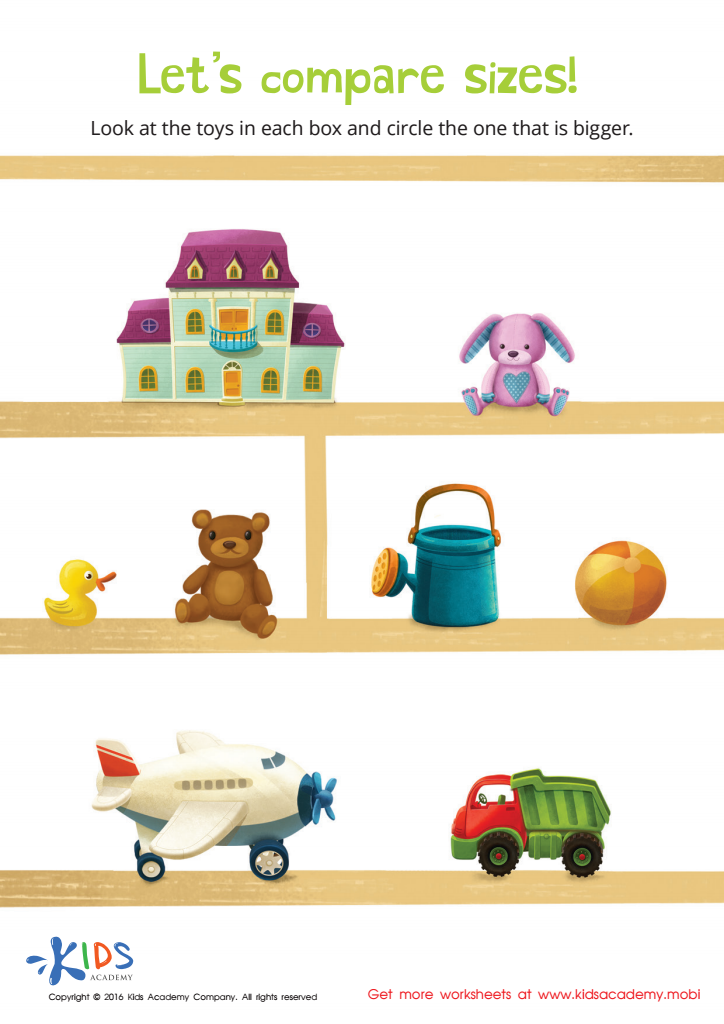
Size Comparison Worksheet

Classifying by Size Sorting Worksheet

Help your preschooler recognize differences in size using this fun worksheet! Your child will engage in important spatial recognition and problem-solving skills while talking with you about objects that can be small or large. Enjoy the vibrant pictures together!
Classifying by Size Sorting Worksheet

Worksheet


Comparing objects is a fundamental mathematical skill that lays the groundwork for early mathematical understanding in children aged 3 to 9. This practice helps children develop critical cognitive skills, such as reasoning, problem-solving, and logical thinking.

When children compare objects by size, weight, length, or quantity, they enhance their ability to notice differences and similarities, which ultimately fosters their observational skills. These comparisons teach concepts like greater than, less than, and equality, essential for grasping more complex mathematical operations later on.

Furthermore, engaging in comparing activities encourages language development as children articulate their findings, using vocabulary related to measurements and comparisons. This interactivity with peers or adults builds communication skills, allowing children to express their thoughts confidently.

For parents and teachers, promoting comparison exercises at home or in the classroom cultivates a love for learning and exploration, making math more tangible and relatable. Beyond academics, these activities contribute to everyday life skills, such as making informed decisions based on size or quantity. In nurturing these foundational skills early on, we’re investing in the children’s future academic success, allowing them to approach more complex challenges with confidence and competence.