Data analysis Math Worksheets for Ages 3-9
4 filtered results
-
From - To
Our "Data Analysis Math Worksheets for Ages 3-9" offer children an engaging way to explore essential math skills. Featuring vibrant, kid-friendly illustrations, these worksheets help young learners grasp concepts such as sorting, pattern recognition, graph reading, and basic probability. Each activity is designed to promote critical thinking and problem-solving abilities. Suitable for early learners beginning with basic data interpretation to more advanced exercises, our collection ensures that children from preschool to third grade benefit from structured and enjoyable math practice. Foster your child's analytical abilities with our expertly crafted worksheets perfect for home or school.
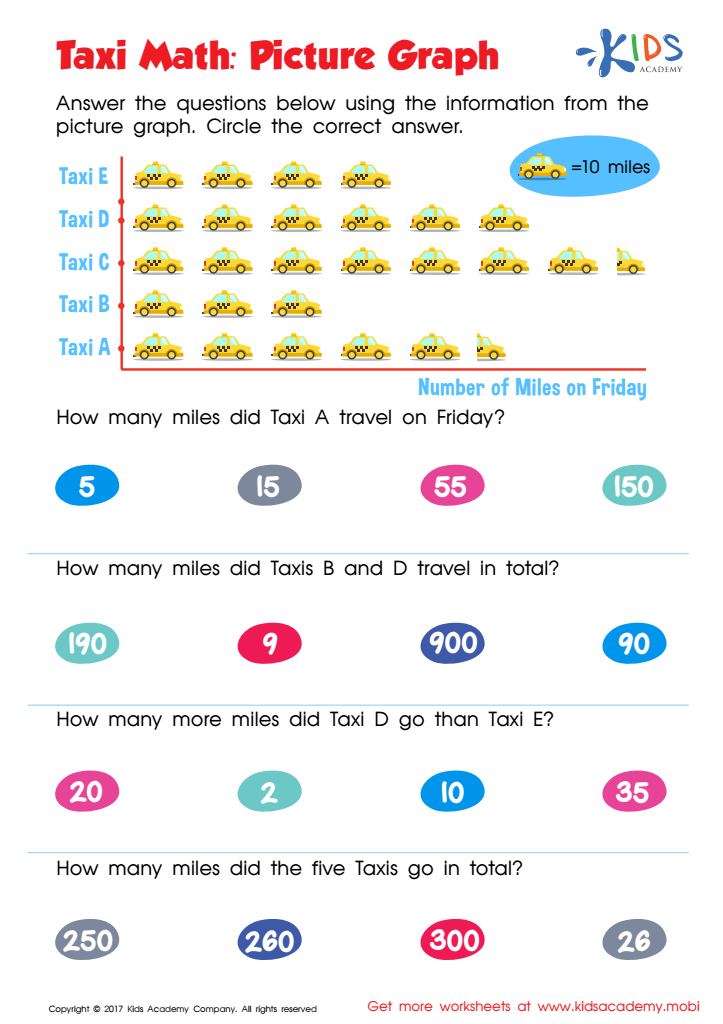
Taxi Math Worksheet
 Assign to My Students
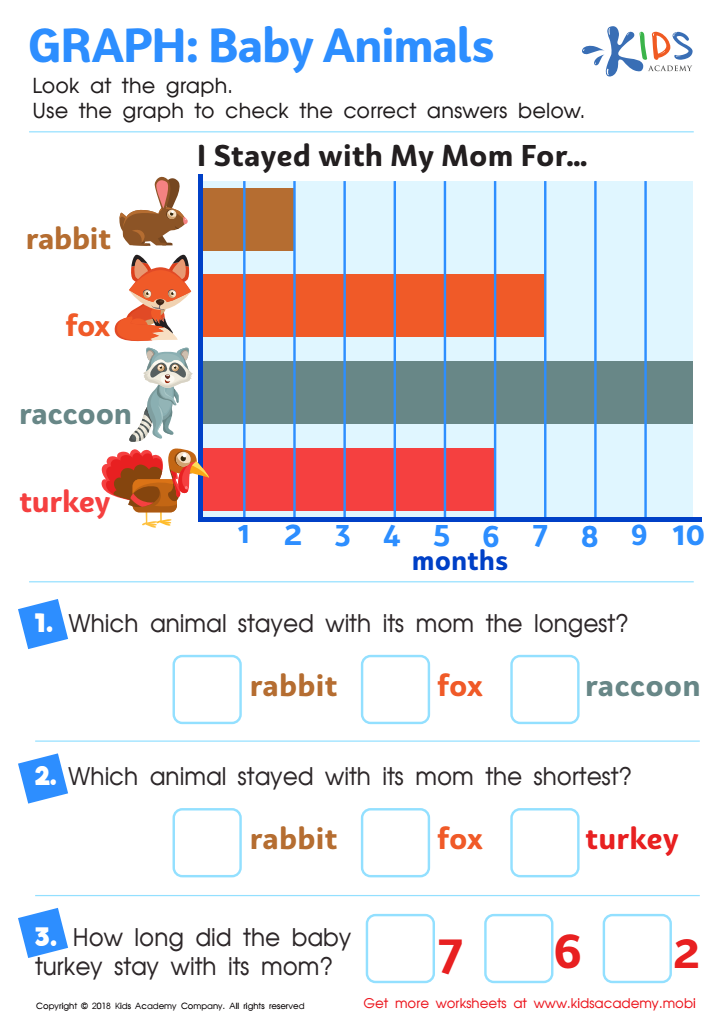
Graph: Baby Animals Worksheet
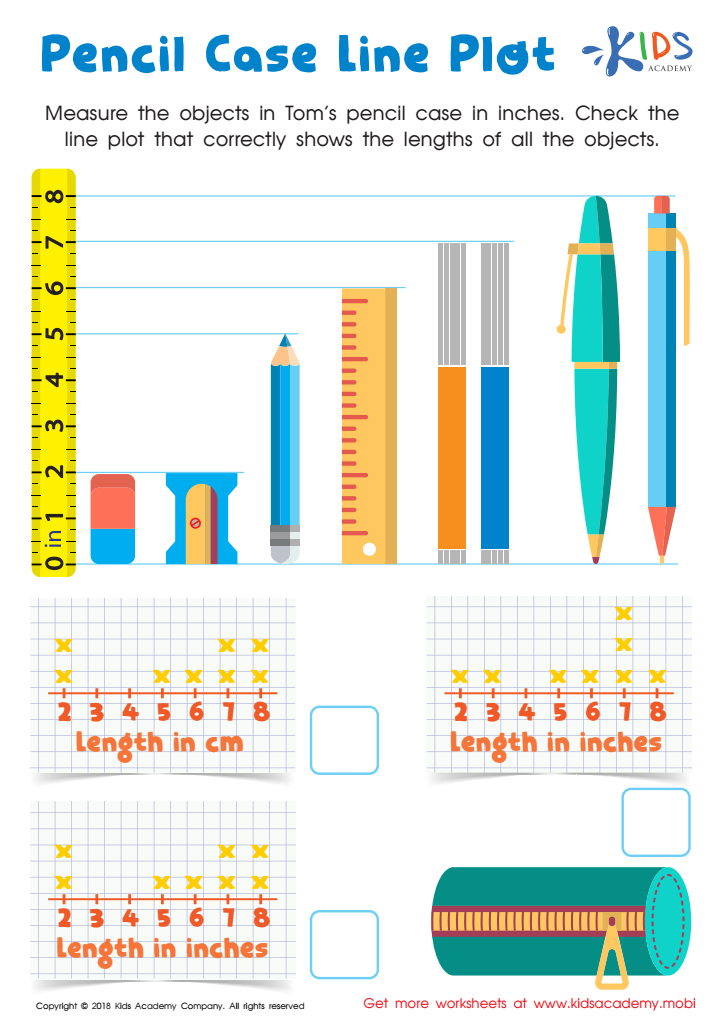
Pencil Case Line Plot Worksheet
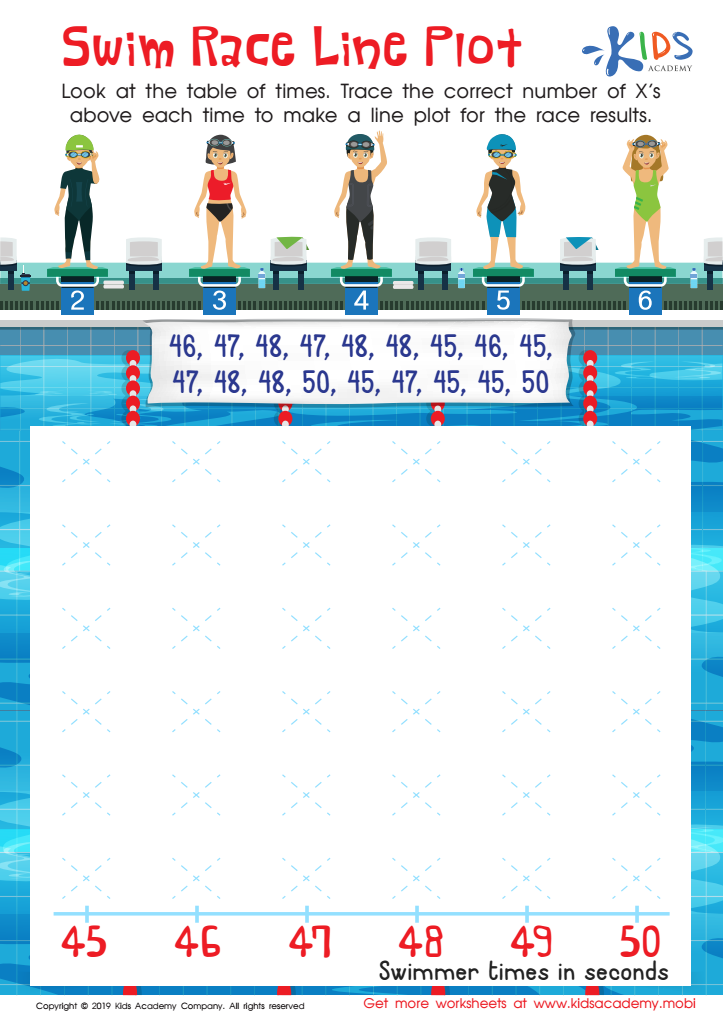
Swim Race Line Plot Worksheet



.jpg)




Understanding data analysis is crucial for young children, as it lays the foundation for logical thinking, problem-solving, and decision-making skills. For ages 3-9, introducing basic concepts of data analysis—such as sorting, categorizing, and interpreting simple graphs or charts—can seem like play, but it fosters critical cognitive development.
Parents and teachers should care about data analysis for several reasons. Firstly, early exposure helps children develop numerical literacy. They learn to recognize patterns, compare quantities, and understand labels. This knowledge extends beyond math, enhancing reading and writing skills informed by logical structuring and sequence.
Furthermore, data analysis skills empower children to make sense of the world around them. Whether they're arranging their toys by color, counting the number of sunny days in a week, or comparing the sizes of different objects, they actively engage in understanding and organizing information. These activities nurture curiosity and teach children to question, investigate, and draw conclusions—essential skills for lifelong learning.
Lastly, as our society becomes increasingly data-driven, these skills gain paramount importance. Early familiarity ensures children are not just passive consumers of information but active, critical thinkers who can navigate a world rich with data. Investing in teaching data analysis at a young age, therefore, prepares children for academic success and informed citizenship.








