Develop counting skills Math Worksheets for Ages 3-9
6 filtered results
-
From - To
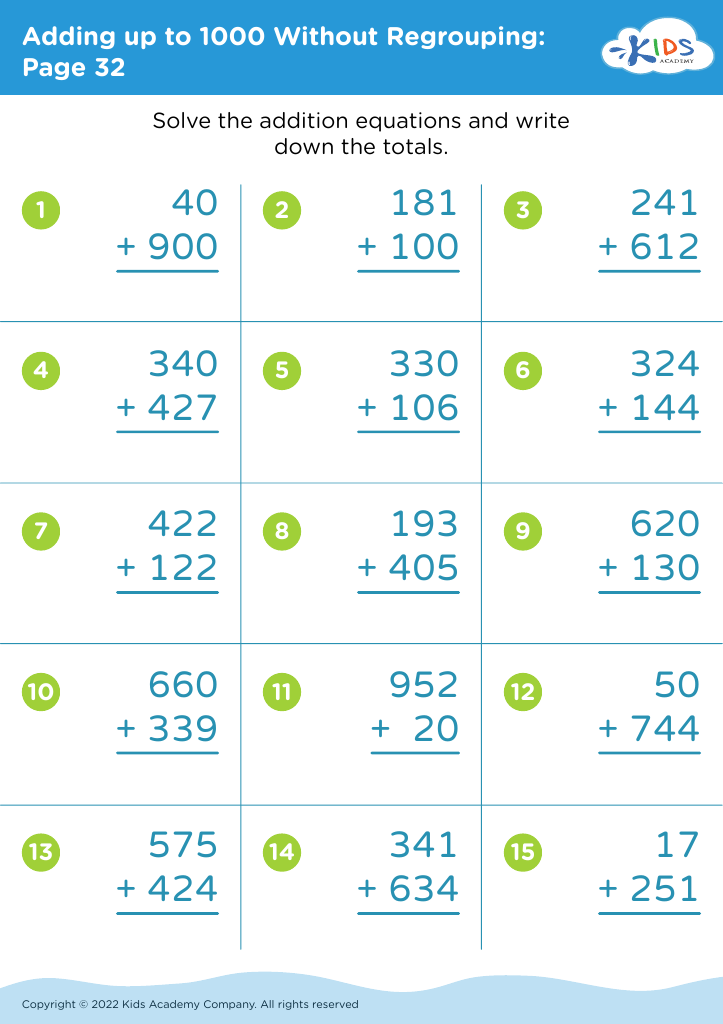
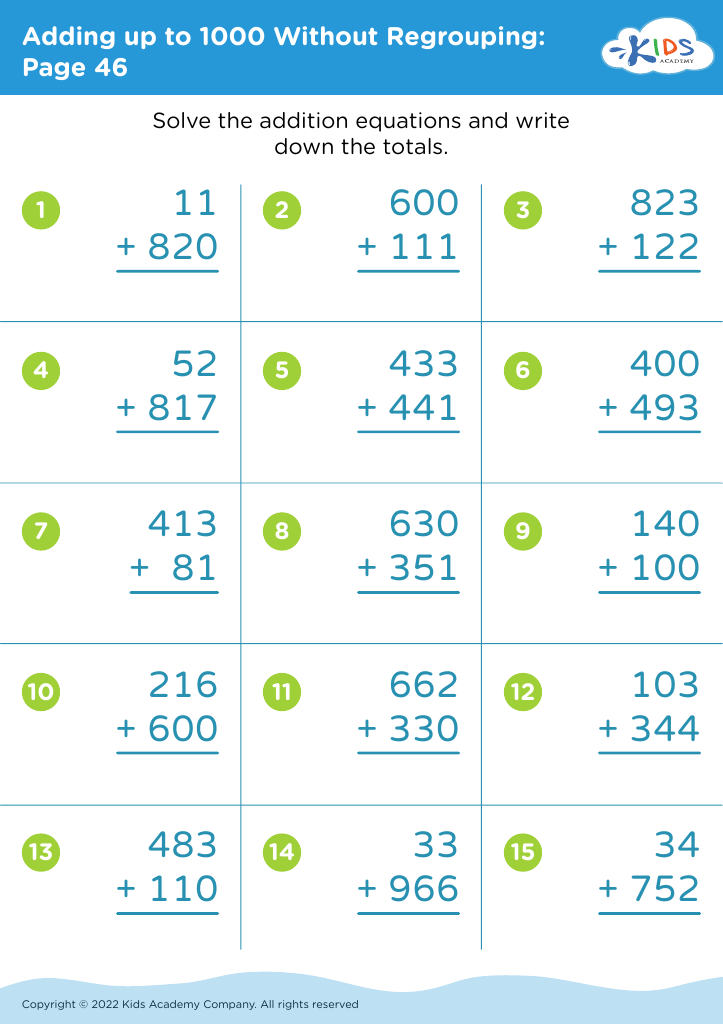
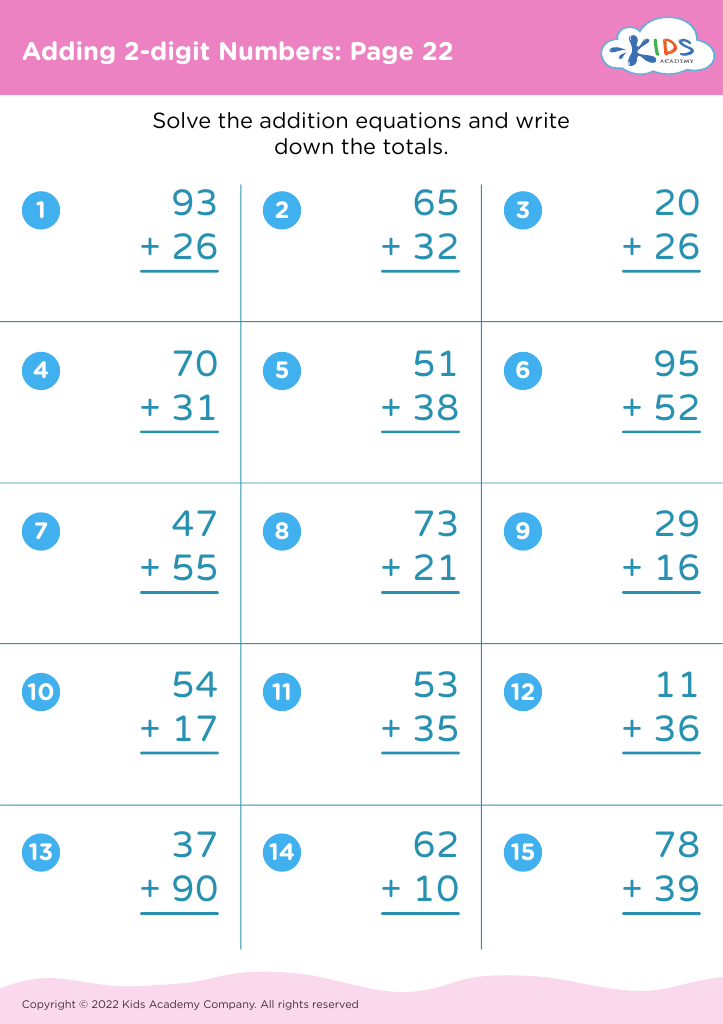
Boost your child's numerical prowess with our Develop Counting Skills Math Worksheets for Ages 3-9. Designed to nurture essential counting techniques, these worksheets offer a fun, engaging way for kids to practice and master counting from 1 to 100. Our resources include colorful illustrations, exciting puzzles, and interactive activities that cater to various learning styles. Whether your child is just starting or looking to reinforce their abilities, these worksheets provide the perfect balance of challenge and enjoyment. Inspire confidence and build a solid math foundation from a young age with our expertly crafted counting practice sheets.
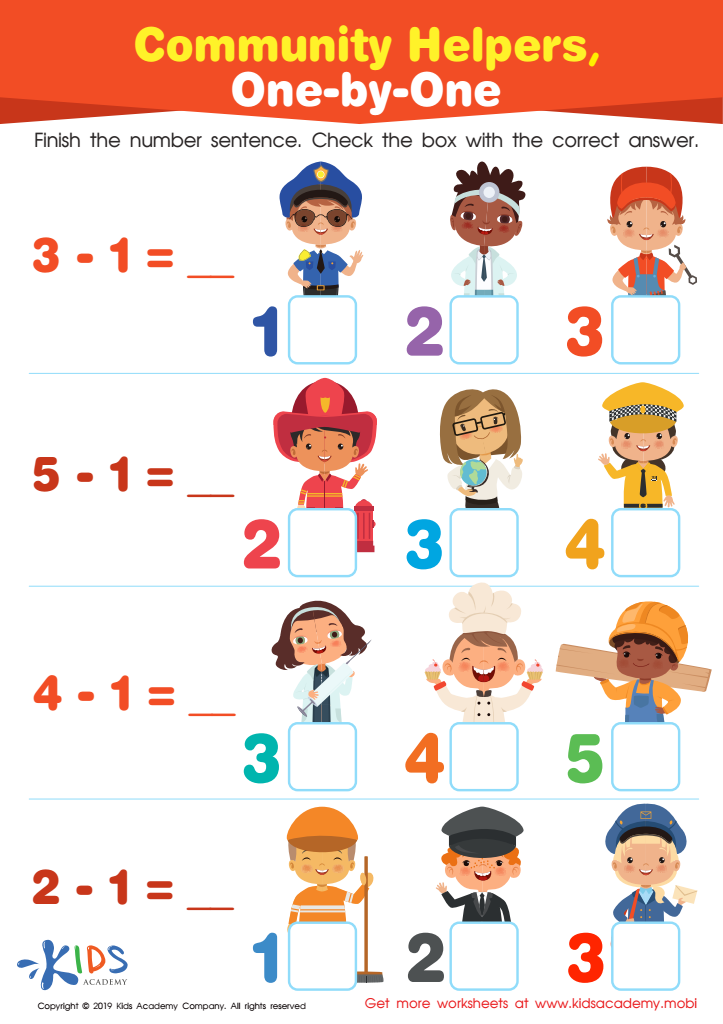
Community Helpers, One-by-One Worksheet
 Assign to My Students






Developing counting skills in children aged 3-9 is crucial for several reasons. First and foremost, counting serves as a foundational mathematical concept that supports further learning in more advanced areas like addition, subtraction, multiplication, and division. Young children who are proficient in counting are more likely to excel in these subsequent mathematical topics.
Secondly, counting skills are directly tied to problem-solving abilities. By learning to count, children enhance their cognitive development, particularly in areas related to logic, reasoning, and spatial awareness. These skills are not only important for math-related tasks but also for everyday activities, such as following a recipe or determining the amount of change received when making a purchase.
Additionally, proficiency in counting can bolster a child's confidence and academic self-esteem. Mastering this fundamental skill can lead to a positive attitude towards mathematics and learning in general, creating a more engaged and curious learner.
Lastly, counting is a practical life skill. It helps children understand the world around them by quantifying objects and experiences, from counting toys and snack portions to telling time and understanding dates. This practical application of counting underscores its importance and shows children the relevance of math in daily life, reinforcing their learning and retention of these skills.
In summary, developing counting skills in early childhood sets up a strong mathematical foundation, enhances cognitive development, builds confidence, and equips children with essential life skills.








