
Develop problem-solving skills Math Worksheets for Ages 3-9
10 filtered results
Difficulty Level
Grade
Age
-
From - To
Subject
Activity
Standards
Unlock your child's potential with our problem-solving math worksheets, designed for ages 3-9! Crafted by educational experts, these engaging printables focus on building critical thinking and analytical skills. Each worksheet offers fun, age-appropriate challenges that inspire young learners to explore different strategies and find solutions independently. Colorful and interactive, our worksheets cover various math concepts, promoting both foundational knowledge and confidence. Perfect for home or classroom use, our resources turn problem-solving into an exciting adventure. Set your child on the path to math success with our comprehensive and enjoyable worksheets!
Favorites
With answer key
Interactive
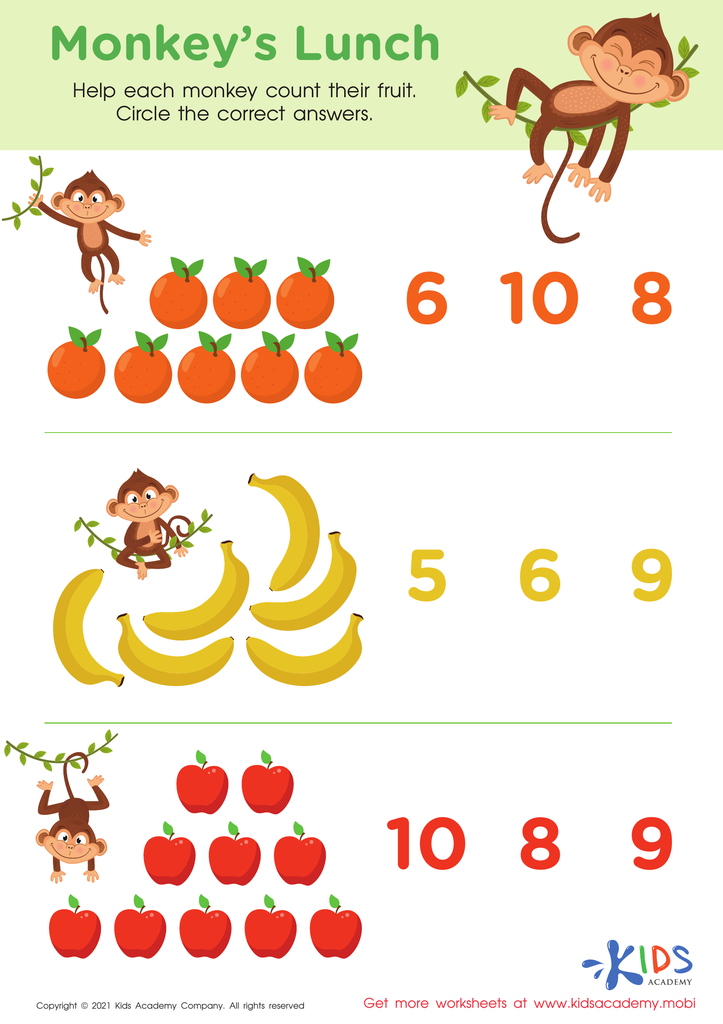
Monkey’s Lunch Worksheet
Download this free worksheet to help your kindergartner perfect their counting skills! Have your child circle the correct answers and count the fruits for the monkeys. It'll seem like fun, but your child is really learning how to count, group objects, and identify numbers.
Monkey’s Lunch Worksheet
Worksheet
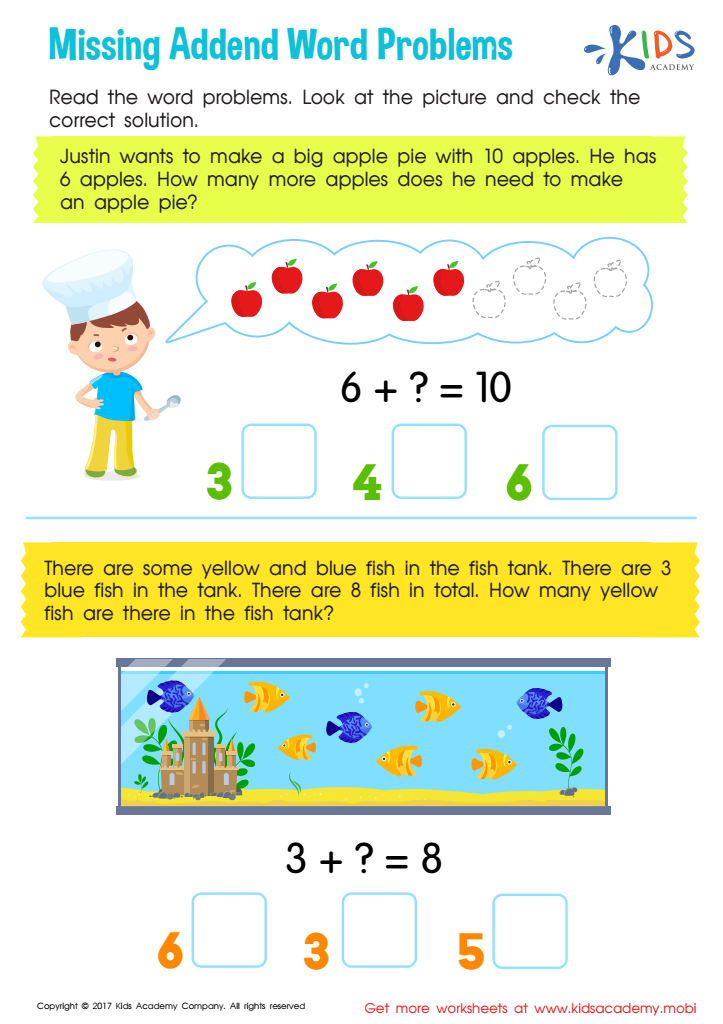
Missing Addend Word Problems Worksheet
Doing many addition and subtraction problems is key for fluency and mastery. Word problems can help kids understand how math works in everyday life. Our math worksheet uses fun scenarios and pictures to teach how to find the missing addend. It's the perfect tool to help kids understand math better!
 Assign to My Students
Missing Addend Word Problems Worksheet
Worksheet
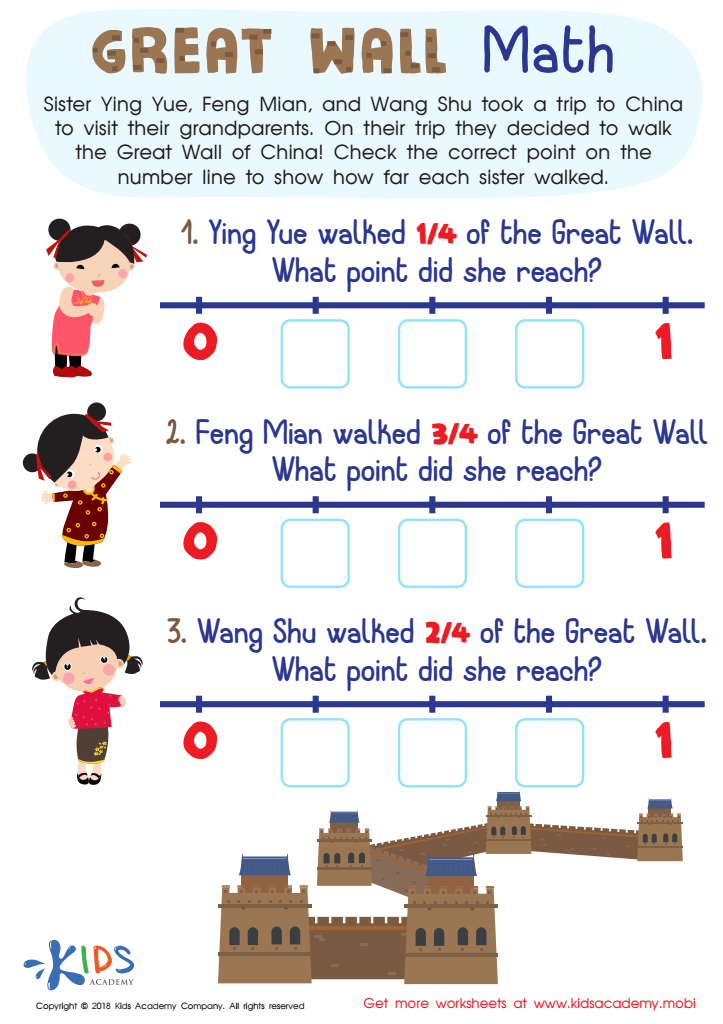
Great Wall Math Worksheet
Let your kids learn about fraction and history with this printout about the Great Wall of China. Three sisters take a trip to China to visit their grandparents and decide to walk the Great Wall. Ask them to study the pictures and pick the correct point on the number line to show how far each sister went. How about you: has your child ever been to China?
Great Wall Math Worksheet
Worksheet
Join Kids Academy for Free
Who is primarily going to use this learning content?



.jpg)



.jpg)
Developing problem-solving skills in math for children ages 3-9 is crucial as it lays a strong foundation not just for their academic success but for their overall cognitive development. At this formative stage, young children's brains are incredibly receptive, and introducing them to problem-solving in math promotes critical thinking, logical reasoning, and analytical skills. These skills are transferable and can enhance their understanding and performance in other subjects and everyday life.
When parents and teachers emphasize problem-solving, they encourage children to approach challenges creatively and persistently. For instance, tackling simple puzzles or basic word problems helps children learn to break tasks into manageable parts and devise strategies for finding solutions. This can foster a positive attitude toward challenges, leading to perseverance and resilience.
Moreover, mathematical problem-solving activities often involve collaborative tasks, promoting social skills like communication and teamwork. They learn to express their thought processes, listen to others, and refine their ideas collaboratively. These experiences cultivate valuable interpersonal skills and self-confidence.
In summary, nurturing problem-solving skills in math for young children equips them with essential cognitive and social tools, setting them up for continuous learning and adaptability, which are vital in today’s dynamic world.








