Developing critical thinking Math Worksheets for Ages 3-9
4 filtered results
-
From - To
Ignite your child’s analytical mind with our critical thinking math worksheets designed for ages 3-9. Each worksheet thoughtfully balances fun and education, fostering problem-solving skills, logical reasoning, and creativity. Through engaging activities, puzzles, and games, kids not only practice fundamental math concepts but also enhance their ability to think critically. Perfect for at-home practice or classroom use, these worksheets support cognitive development, preparing your child for future academic challenges. Boost confidence and encourage a love for learning with challenging, interactive exercises, carefully crafted by experts to meet educational standards and suit various learning styles.
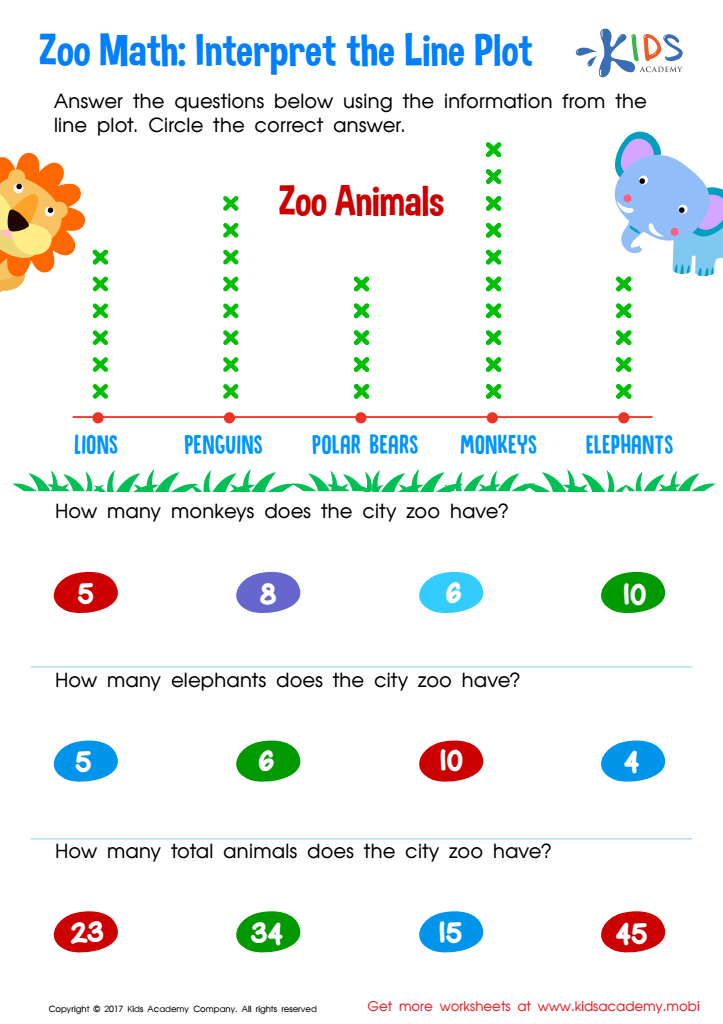
Interpret Line Plot Worksheet
 Assign to My Students
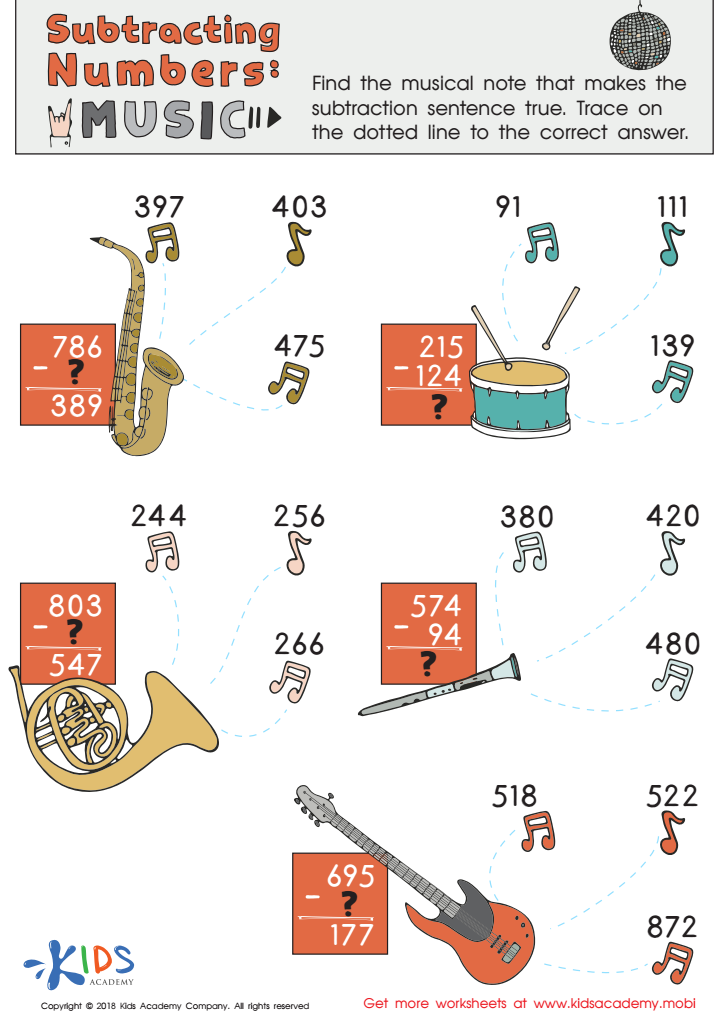
Subtracting Numbers: Music Worksheet








Developing critical thinking skills in mathematics for children aged 3-9 is crucial for several reasons. First and foremost, critical thinking equips young learners with the ability to analyze and solve problems systematically. These foundational skills enable them to approach unfamiliar situations with confidence and creativity, which is essential not just in mathematics but in daily life.
When parents and teachers invest in nurturing these skills from an early age, they foster a growth mindset that encourages curiosity and persistence. Children learn to think deeply about problems, ask insightful questions, and explore multiple solutions rather than relying on rote memorization. This ability to critically analyze information and make informed decisions is invaluable across all academic disciplines and real-world scenarios.
Moreover, early exposure to critical thinking in math helps in developing cognitive abilities such as pattern recognition, logical reasoning, and spatial awareness. These skills are not only fundamental to succeeding in higher-level math but are also transferable to other subjects, enhancing overall academic performance.
Engaging children in activities that promote critical thinking also strengthens their communication skills. They learn to articulate their thought processes clearly and justify their reasoning, which is vital for collaborative learning environments.
In essence, fostering critical thinking in math for young children lays the groundwork for a lifetime of analytical thinking, problem-solving, and intellectual resilience, making it an essential focus for both parents and teachers.








