Developing spatial awareness Math Worksheets for Ages 3-9
3 filtered results
-
From - To
Unlock your child's potential with our Developing Spatial Awareness Math Worksheets for Ages 3-9! These thoughtfully designed worksheets engage young learners in fun and interactive exercises that promote critical spatial skills, essential for foundational math concepts. Through activities such as shape recognition, puzzles, and spatial relations games, children will enhance their understanding of how objects relate in space while boosting problem-solving abilities. Ideal for home or classroom use, our worksheets cater to varying proficiency levels, providing an effective resource for early grade teachers and parents alike. Start fostering your child's spatial awareness and set them up for future math success today!
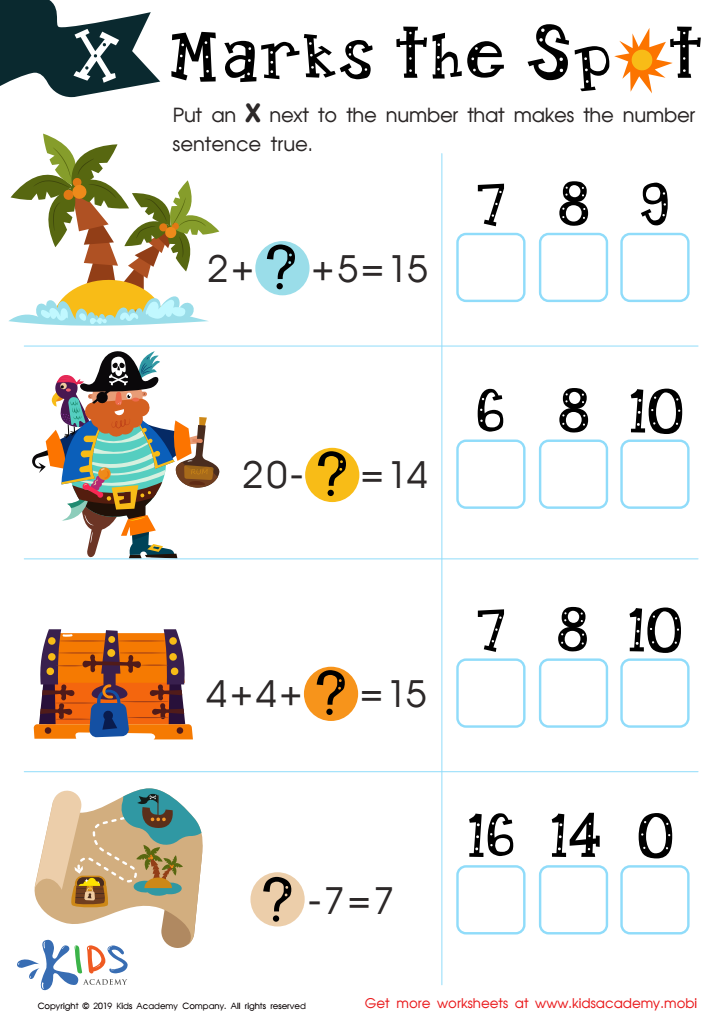
X Marks the Spot Worksheet
 Assign to My Students
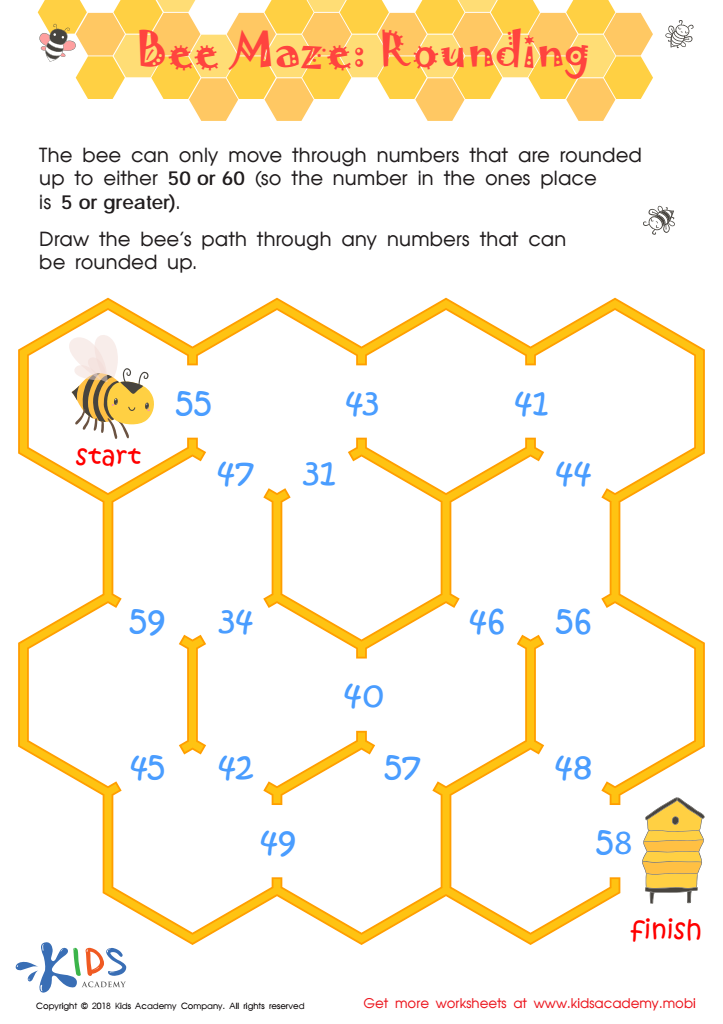
Bee Maze Rounding Worksheet
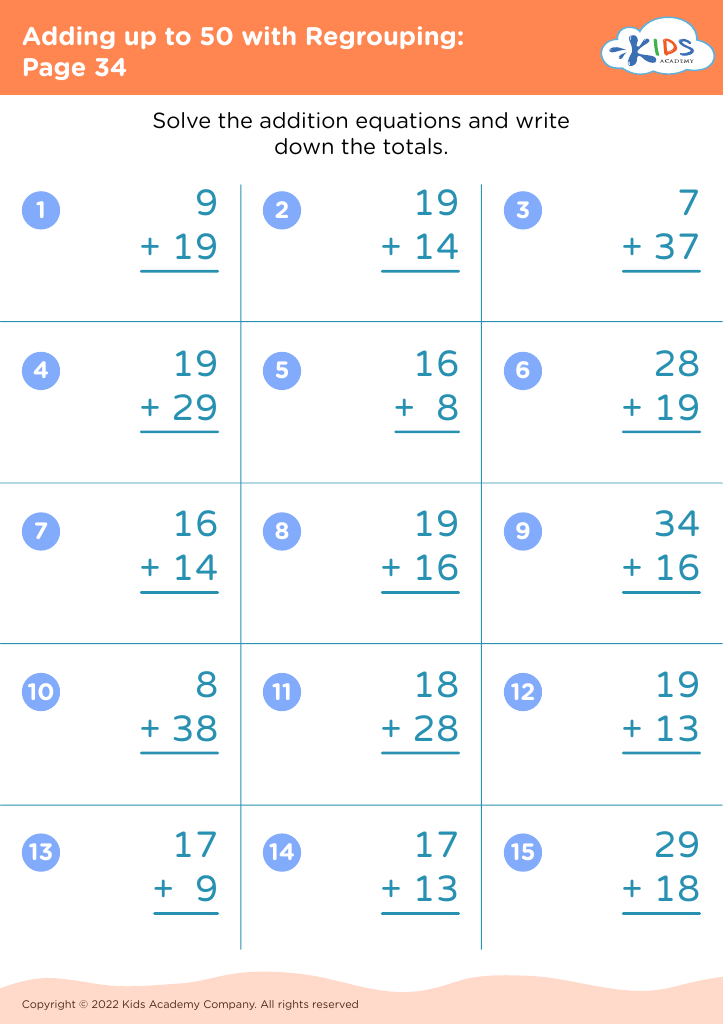








Developing spatial awareness in young children, particularly those aged 3-9, is crucial for their overall cognitive development and future success in mathematics and science. Spatial awareness involves understanding how objects relate to each other in space, which is foundational for problem-solving, critical thinking, and creativity.
Children with strong spatial skills are likely to excel in math, as spatial reasoning underpins concepts such as geometry, measurement, and problem-solving. For instance, children who can visualize shapes and understand relations like above, below, or between are better equipped to tackle mathematical tasks and puzzles.
Fostering spatial awareness through engaging activities—like building with blocks, drawing, or playing with spatial games—also enhances fine motor skills and encourages imaginative play, both vital for brain development. Furthermore, these activities can support language development, as parents and teachers explain concepts related to space during play.
In the long term, strong spatial skills have been linked to higher academic achievement and career opportunities in STEM (science, technology, engineering, and mathematics) fields. Therefore, parents and teachers should prioritize activities that develop spatial awareness, as they provide a strong foundation for future learning and success in an increasingly complex world.








