Identifying Animals Math Worksheets for Ages 3-9
5 filtered results
-
From - To
Discover engaging Identifying Animals Math Worksheets designed for kids ages 3-9. Our delightful, educational tools combine animal recognition with foundational math skills, making learning fun and interactive. Perfect for preschoolers and early elementary students, these worksheets enhance counting, sorting, and basic addition/subtraction abilities through vibrant animal-themed activities. Encourage your child’s curiosity and love for learning by exploring our expertly crafted materials that promote cognitive development and fine motor skills. Ideal for both classroom settings and at-home practice, our resources foster a dynamic educational experience tailored to young learners. Visit us now to transform your child’s math journey!
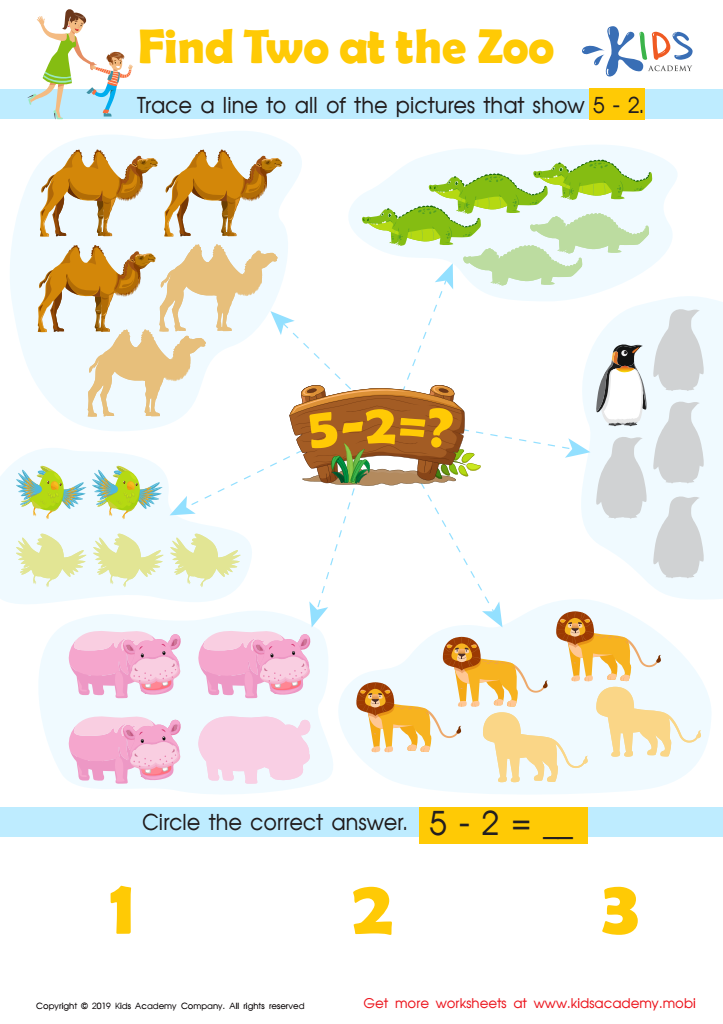
Find Two at the Zoo Worksheet
 Assign to My Students
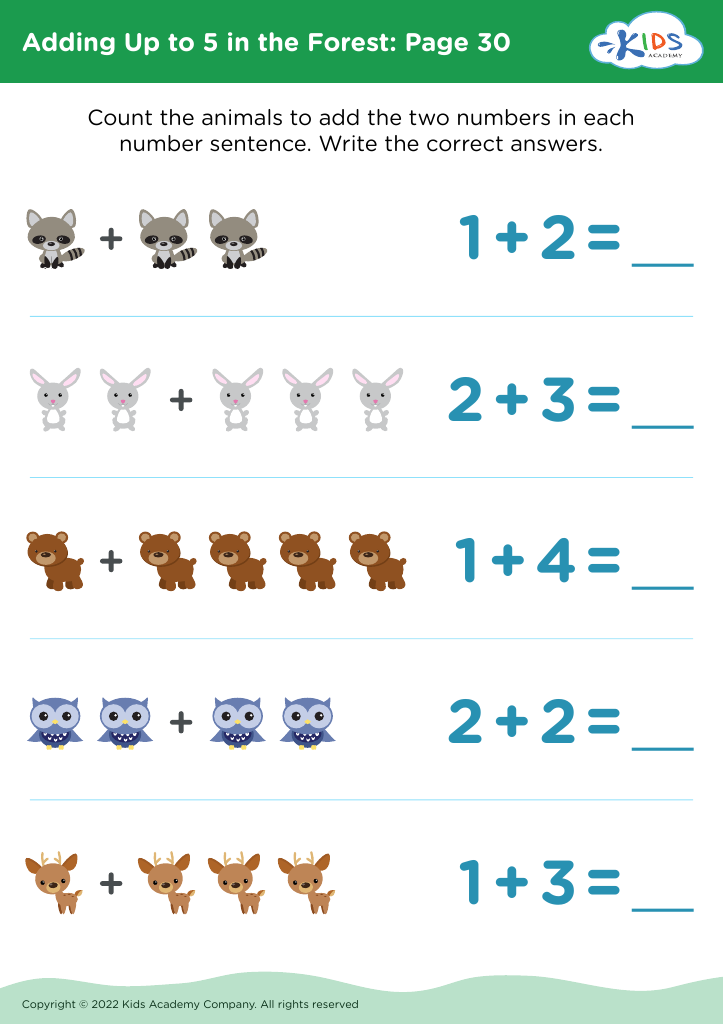







Identifying Animals Math for ages 3-9 is a fantastic educational activity for young learners, offering vital developmental benefits. Firstly, it integrates basic math skills such as counting, comparing, and sorting with an engaging and relatable context, fostering a more profound interest in learning. When children count animals, compare their sizes, or sort them by characteristics, they practice essential math skills in a fun, contextual way.
Secondly, this activity enhances cognitive development by improving memory and observation skills. As kids identify various animals and remember their names and features, they improve their recall and attention to detail, critical for academic success.
Social and emotional development is another benefit. Collaborative activities involving Identifying Animals Math encourage teamwork, patience, and communication among peers, crucial social skills at this developmental stage.
Moreover, it fosters a connection to the natural world. Understanding and appreciating animals instill in children a sense of responsibility towards living organisms and their environment, nurturing future advocates for wildlife preservation.
Lastly, Identifying Animals Math can identify individual learning preferences and competencies, allowing parents and teachers to personalize educational strategies to fit each child's strengths and weaknesses. This tailored approach not only makes learning more effective but also more enjoyable and rewarding for young children.








