Math fluency development Math Worksheets for Ages 3-9
3 filtered results
-
From - To
Foster essential math skills with our engaging Math Fluency Development Worksheets designed for ages 3-9. These printable resources enhance children's number recognition, addition, subtraction, and basic problem-solving abilities through fun activities tailored to captivate young learners. Each worksheet encourages creativity while reinforcing foundational math concepts, making learning both enjoyable and effective. Perfect for parents and educators, our worksheets support early math education in a seamless, accessible way. Watch as your child builds confidence and a love for mathematics, paving the way for future academic success. Explore our diverse collection and empower your child’s learning journey today!
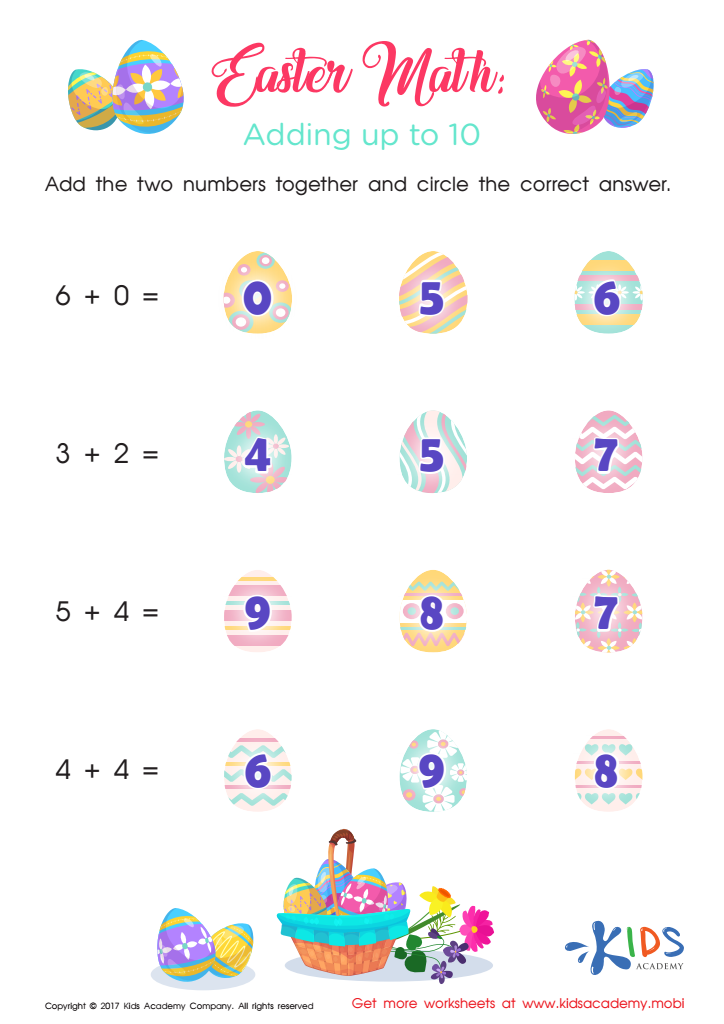
Addition Up To 10 Worksheet
 Assign to My Students
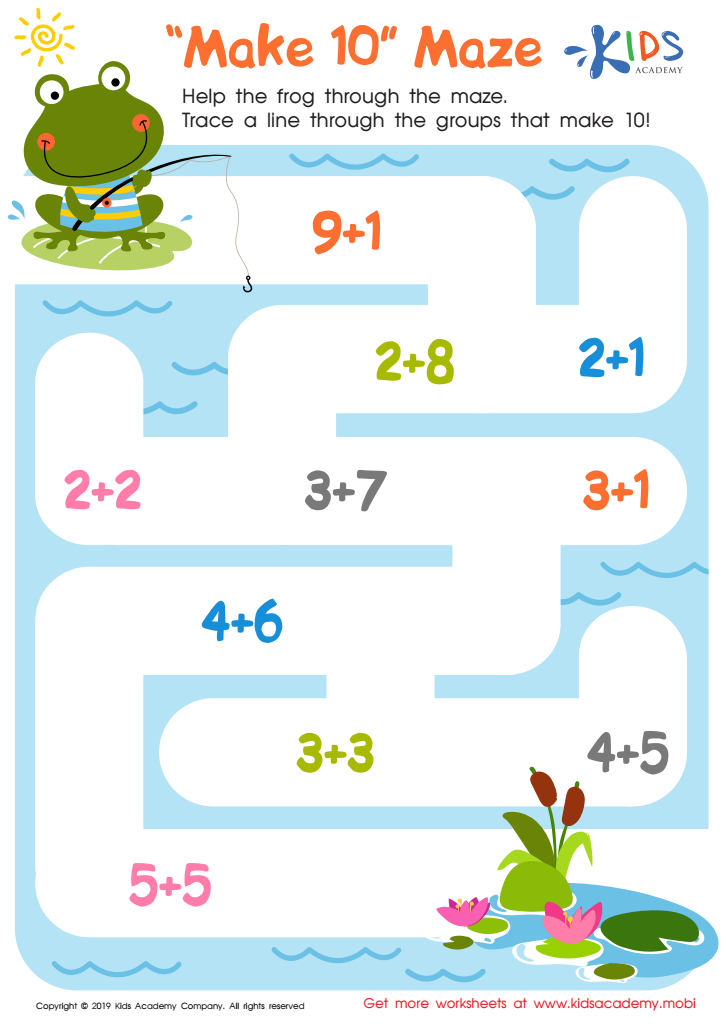
Make 10 Maze Worksheet








Math fluency development in children ages 3-9 is crucial for several reasons that should interest both parents and teachers. First, foundational math skills built at a young age support overall academic success across subjects. Fluency in basic concepts, such as counting, addition, and subtraction, promotes problem-solving abilities essential for more complex math later on.
Second, early math fluency enhances children's confidence and positive attitude towards math. When children feel competent in math, they are more likely to engage actively and take risks in their learning, fostering a growth mindset. Conversely, gaps in early math skills may lead to frustration and aversion to the subject, influencing their future educational pathways.
Additionally, research highlights the correlation between early math skills and later reading achievements and cognitive development. Regular exposure to math concepts through engaging activities can significantly enhance children's logic, reasoning, and critical-thinking skills.
Finally, strong math fluency sets the stage for lifelong learning and adaptability in a world increasingly reliant on technology and quantitative skills. Parents and teachers play a pivotal role in this developmental phase by incorporating fun, interactive, and relevant mathematical experiences into children’s play and daily routines, nurturing not just math skills but a love for learning.








