
Mental arithmetic Math Worksheets for Ages 3-9
6 filtered results
Difficulty Level
Grade
Age
-
From - To
Subject
Activity
Standards
Boost your child’s math confidence with our engaging Mental Arithmetic Math Worksheets, designed specifically for ages 3-9! These interactive worksheets foster essential math skills, helping young learners master addition, subtraction, and basic problem-solving in a fun and relaxed environment. Our user-friendly resources encourage independent practice, making it easy for kids to build a solid foundation in mathematics. With vibrant illustrations and age-appropriate challenges, each worksheet ensures your child stays motivated and focused. Perfect for at-home learning or classroom use, our Mental Arithmetic worksheets are a valuable tool to enhance your child's learning journey. Start building math proficiency today!
Favorites
With answer key
Interactive
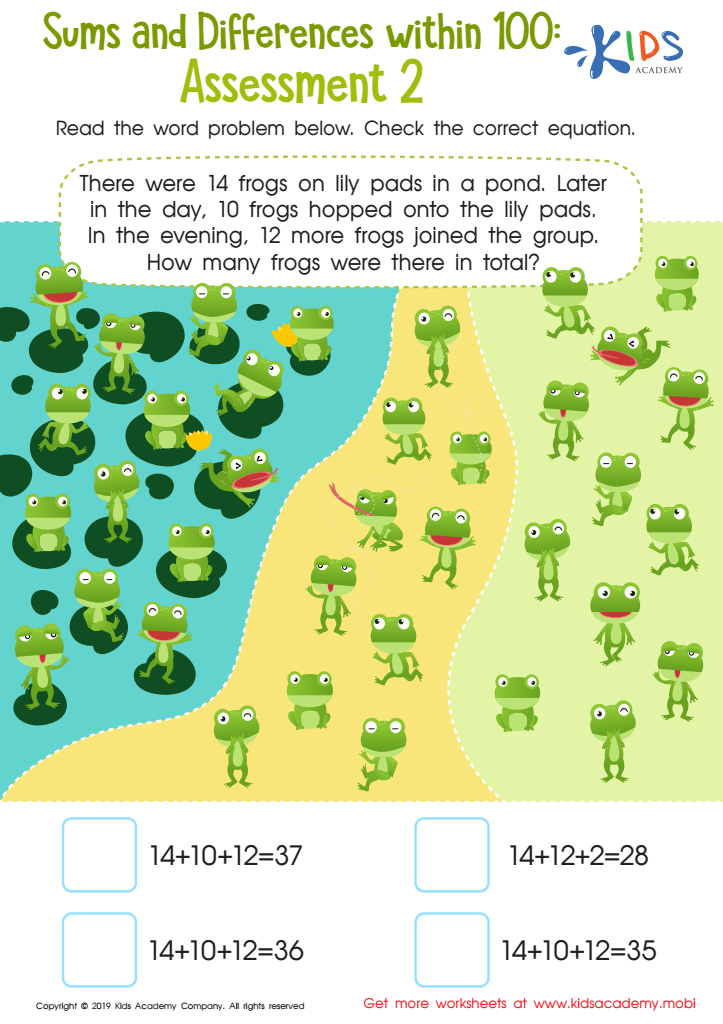
Sums and Differences Within 1 - Assessment 2 Worksheet
Help your kids practice math with these simple word problems. Read the question, discuss with them to form the equation and then check the answer. Give them a chance to sharpen their math skills!
 Assign to My Students
Sums and Differences Within 1 - Assessment 2 Worksheet
Worksheet
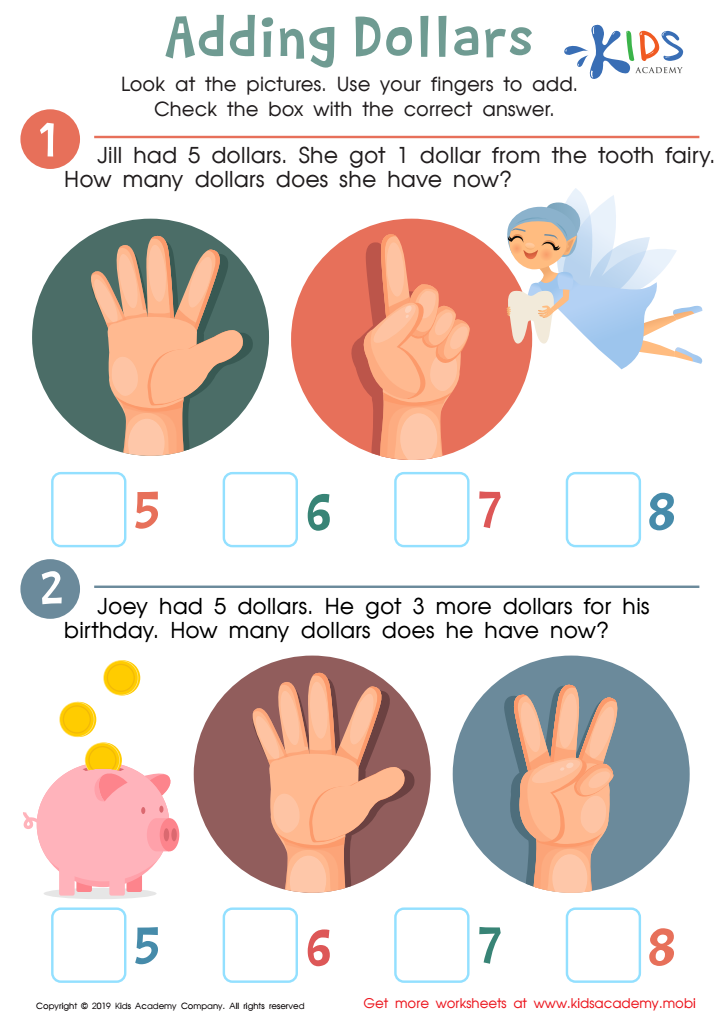
Tooth Fairy Addition Worksheet
Kids know of the tooth fairy and may have experienced visits. Kids love counting the money left in exchange for their teeth under the pillow. In this worksheet, help Jill and Joey count the tooth fairy's dollars. Ask your kids to use their fingers to add the numbers and check the box with the correct answer.
Tooth Fairy Addition Worksheet
Worksheet
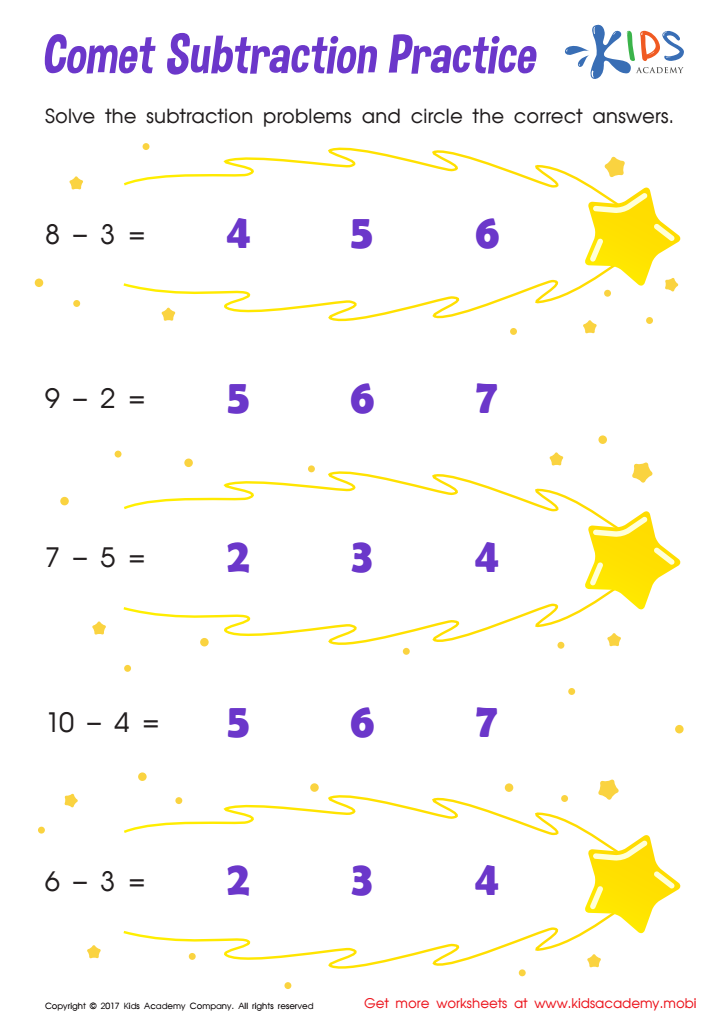
Comet Subtraction Practice Substraction Worksheet
This versatile 2nd grade math worksheet is perfect for parents wanting to get creative! It allows for practicing subtraction using different strategies, such as a number line, and provides answer choices for the child. Enjoy fun pictures in outer space to motivate your child and strengthen their problem-solving skills. It's the perfect way to learn!
Comet Subtraction Practice Substraction Worksheet
Worksheet
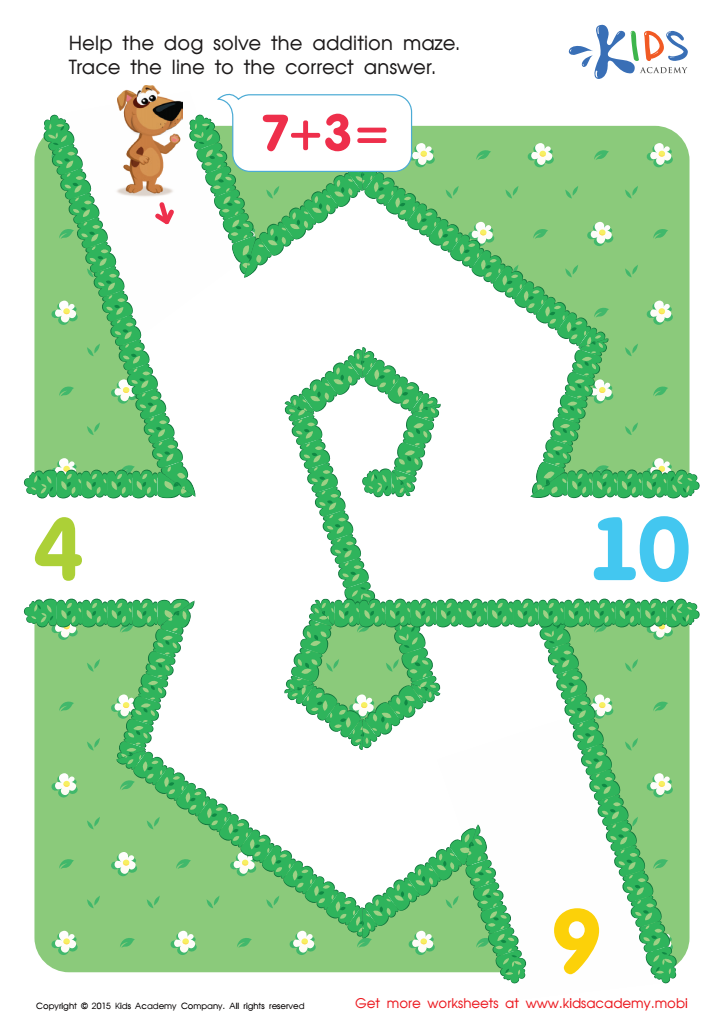
Seven Plus Three Worksheet
Practice addition and subtraction with your kids, help them out and make learning math an enjoyable activity.
Seven Plus Three Worksheet
Worksheet
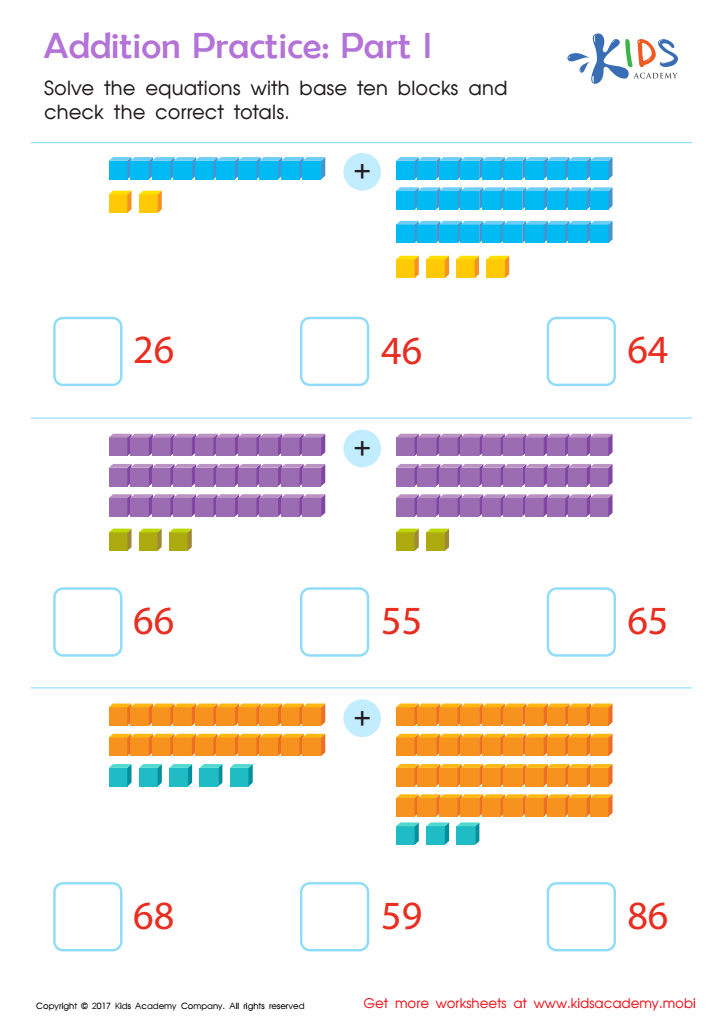
Addition Practice Sheet: Part 1
Kids Academy offers a free worksheet to help kids learn addition with base ten blocks, with or without actual manipulatives. Help your Kindergarten or First Grader flex and increase their knowledge of place value and understand math more deeply. Download this useful page for images that will promote success.
Addition Practice Sheet: Part 1
Worksheet
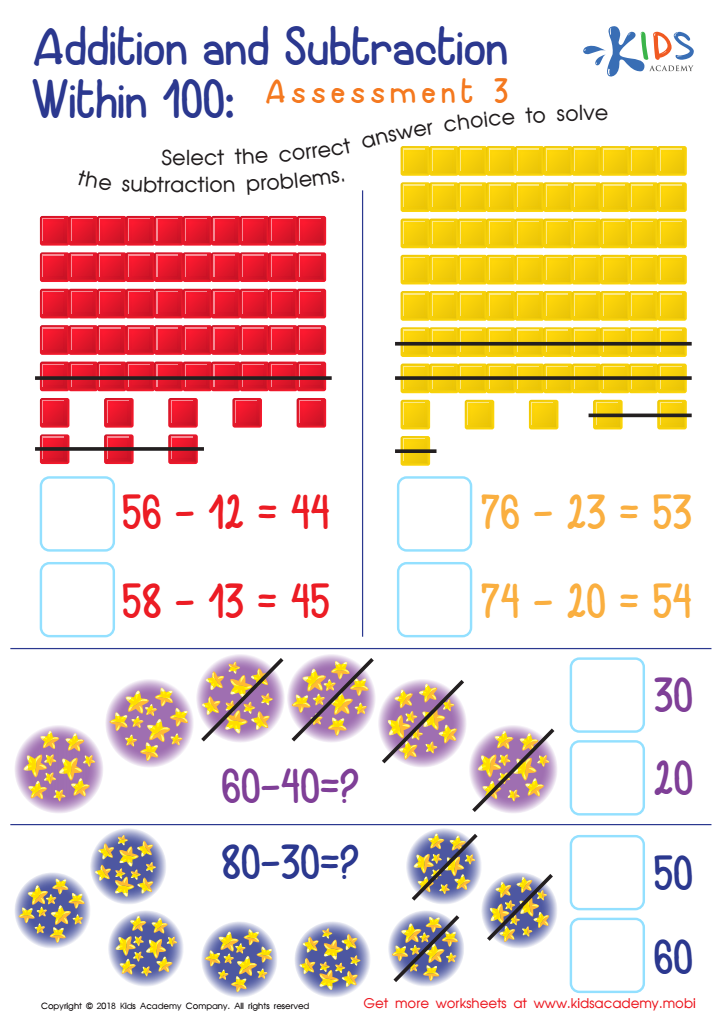
Addition and Subtraction Within 1: Assessment 3 Worksheet
Help your kids count the base ten blocks in the picture. Then, count how many have been marked off. Ask them to select the correct answer choice to solve the subtraction problems based on the blocks counted. 80 words
Addition and Subtraction Within 1: Assessment 3 Worksheet
Worksheet
Join Kids Academy for Free
Who is primarily going to use this learning content?








Mental arithmetic is crucial for children aged 3-9 as it lays the foundation for their mathematical understanding and cognitive development. During these formative years, children's brains are especially receptive to learning and predisposed to grasping abstract concepts. Engaging in mental math enhances their problem-solving and critical thinking skills, which are vital not just in math but across all areas of learning.
Moreover, mastering mental arithmetic boosts confidence in young learners. When children practice quick calculations and number manipulations, they develop a sense of accomplishment, leading to a positive attitude towards math. This confidence can reduce math anxiety later on and foster a lifelong enjoyment of learning.
From a practical perspective, mental arithmetic prepares students for real-world situations, promoting numerical fluency in everyday life, whether it be estimating grocery bills or understanding time. Additionally, by nurturing these skills, parents and teachers help children cultivate faster reflexes in reasoning, improving their performance in standardized assessments.
Ultimately, prioritizing mental arithmetic supports comprehensive brain development, equipping children with essential skills that transcend math, fostering resilience, and enhancing overall academic success. Investing in this early education strategy is key to harnessing a child's potential effectively.








