Mental math enhancement Math Worksheets for Ages 3-9
3 filtered results
-
From - To
Unlock your child’s potential with our engaging Mental Math Enhancement Worksheets, specifically designed for ages 3 to 9. These worksheets cultivate essential mathematical skills through fun, age-appropriate activities that promote critical thinking and problem-solving. Children will boost their numerical fluency while exploring concepts like addition, subtraction, and patterns in an enjoyable manner. Our resource is perfect for both in-class learning and homeschooling environments. As kids work through the exercises, they will build confidence and a strong foundation in math, setting the stage for future academic success. Dive into the world of mental math and watch your child's skills flourish!
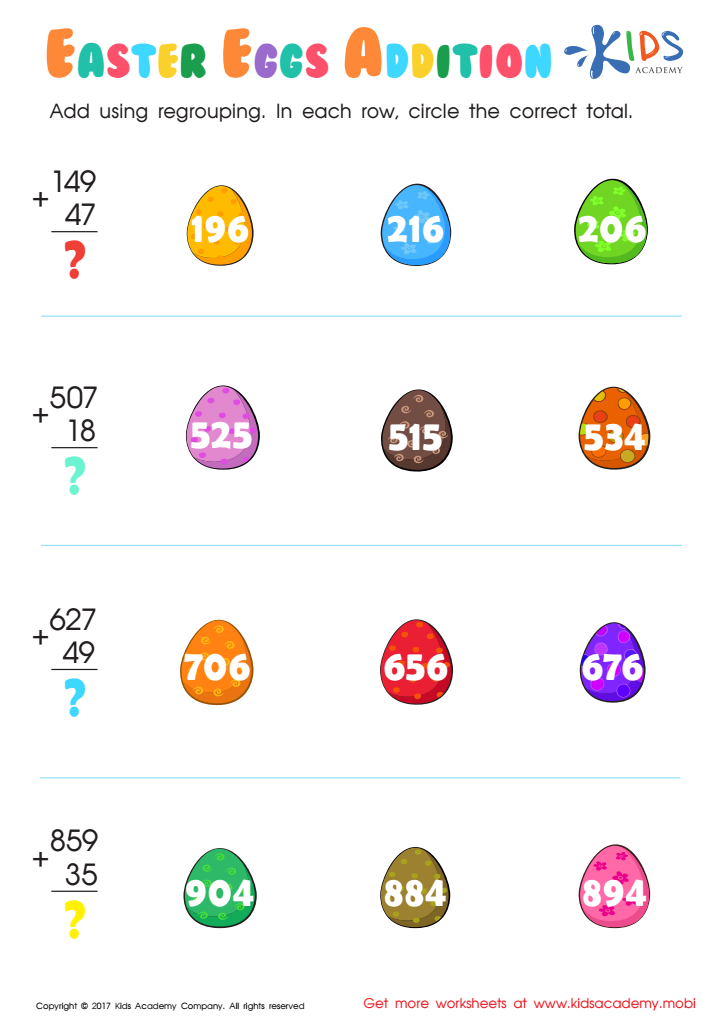
Addition with Regrouping Worksheet
 Assign to My Students
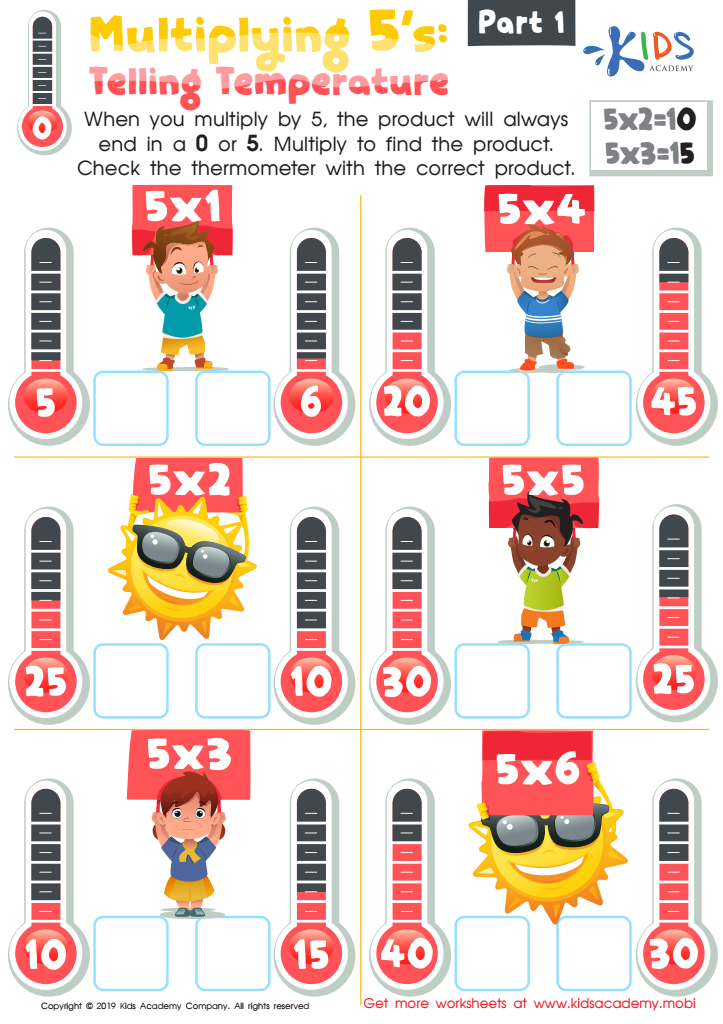
Multiplying 5’s: Telling Temperature Worksheet
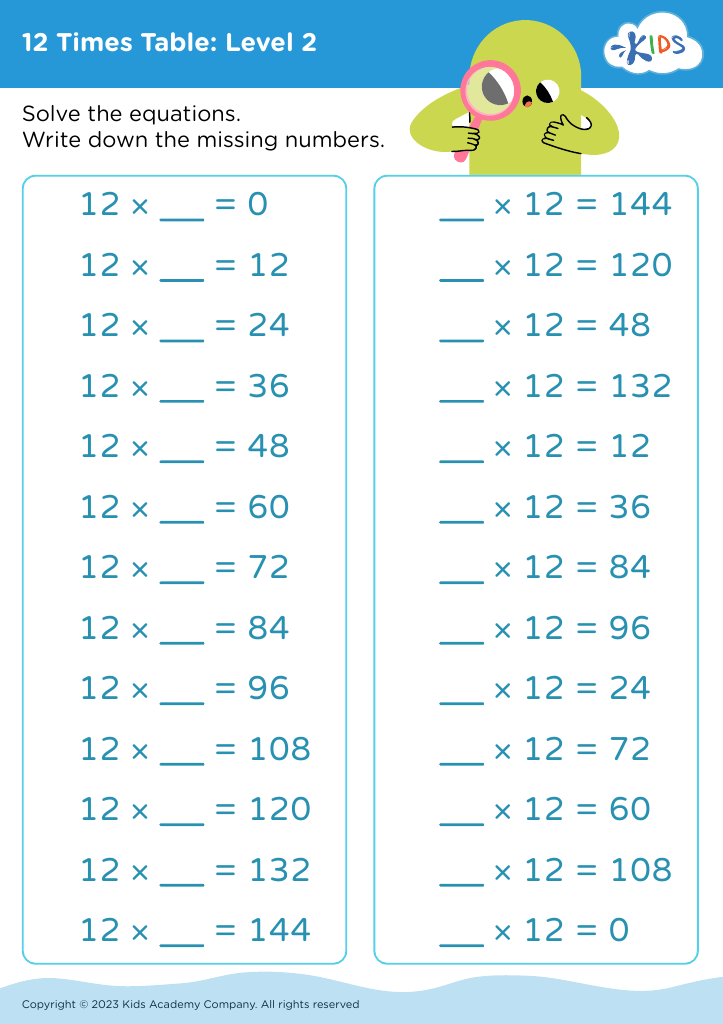








Parents and teachers should prioritize mental math enhancement for children ages 3-9 because it lays a strong foundation for future mathematical understanding and problem-solving skills. Mental math encourages students to perform calculations in their heads, fostering number sense and flexibility with numbers. This early development cultivates critical thinking and enhances cognitive skills essential for everyday life.
Additionally, mastering mental math builds confidence in children's abilities. When students can solve problems quickly without reliance on calculators or paper, they are more likely to participate in math-related activities and engage enthusiastically in their learning process. This confidence also translates to improved performance in standardized tests and overall academic achievement.
Furthermore, mental math has significant implications for early social interactions and independence; children can handle basic transactions, time management, and measurements without help. Encouraging mental math also supports the development of perseverance, as students learn to explore multiple strategies for arriving at solutions.
By emphasizing mental math in educational settings and home environments, parents and teachers can nurture a positive attitude toward mathematics, create a lifelong interest in the subject, and equip children with vital skills that will benefit them in their education and beyond.








