Motor skills development Math Worksheets for Ages 3-9
7 filtered results
-
From - To
Elevate your child's learning with our Motor Skills Development Math Worksheets designed for ages 3-9. Our expertly crafted worksheets blend foundational math concepts with engaging activities that enhance fine motor skills. With colorful and interactive exercises, children practice counting, addition, and subtraction while honing their hand-eye coordination, pencil control, and spatial awareness. Perfect for home or classroom use, these worksheets provide a joyful learning experience that fosters cognitive and physical growth. Empower your child's mathematical journey and motor skills development with Kids Academy – where education meets fun. Visit us for a wide array of dynamic resources!
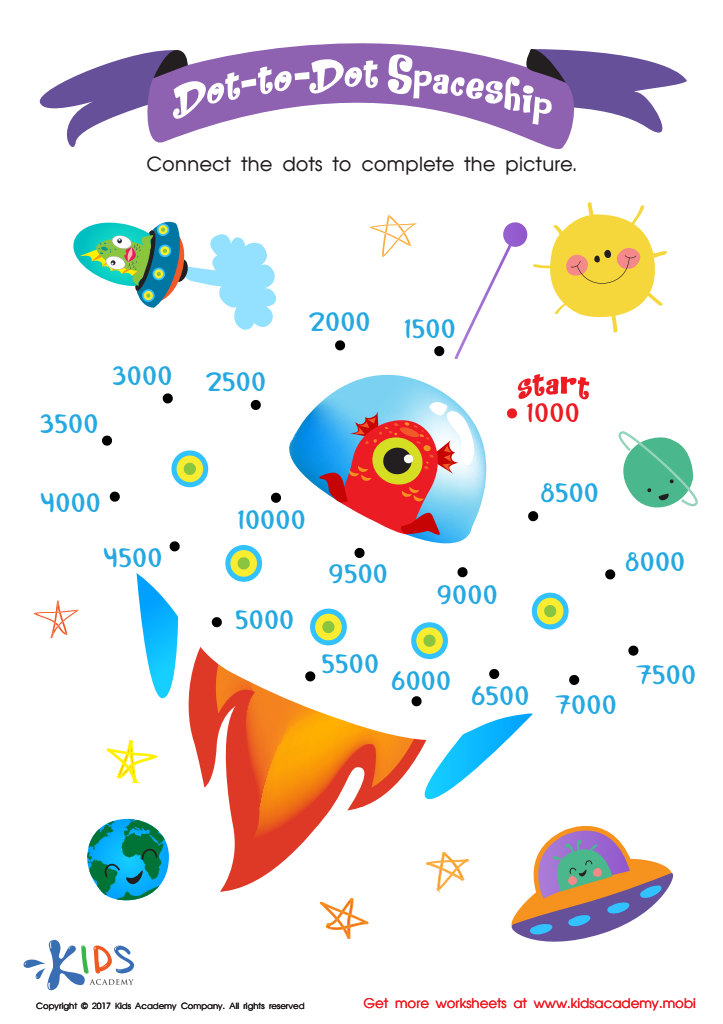
Dot to Dot Worksheet for 3rd Grade
 Assign to My Students
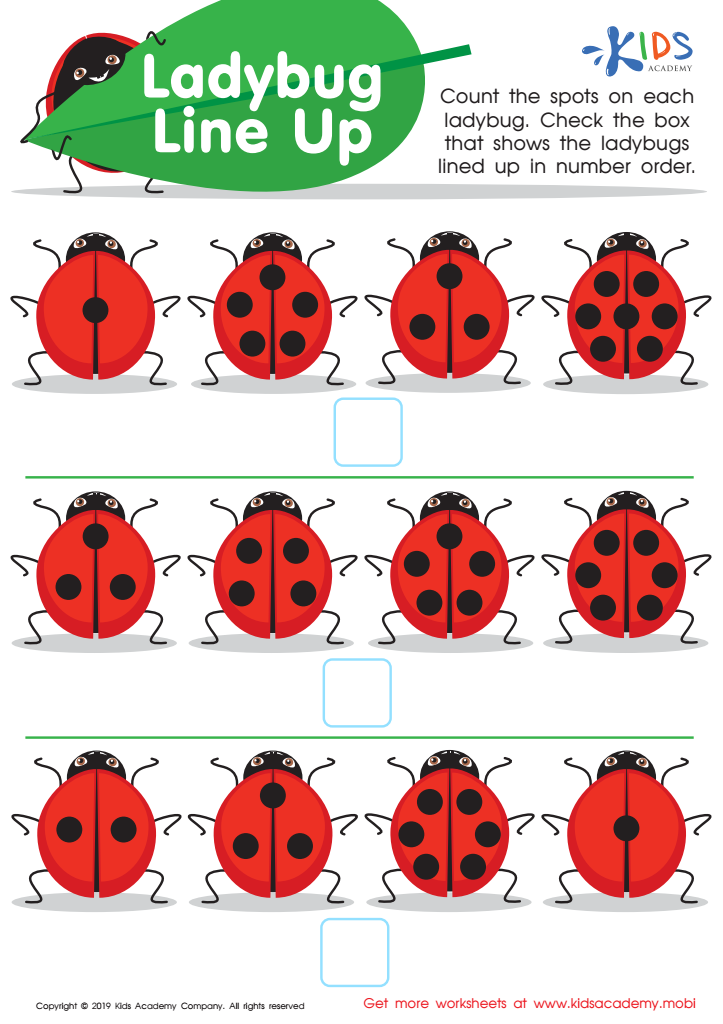
Ladybug Line Up Worksheet








Motor skills development in children ages 3–9 is crucial not only for their physical health but also for their cognitive growth and academic future, including mathematics. Motor skills can be divided into two categories: fine motor skills (small movements, like using fingers) and gross motor skills (large movements, like walking or jumping). Developing these skills through activities such as puzzles, drawing, or playing sports enhances hand-eye coordination, balance, and overall body awareness.
In mathematics, motor skills are surprisingly integral. For instance, tasks such as writing numbers, drawing shapes, or positioning objects require fine motor expertise. Manipulating objects helps children understand abstract math concepts like quantity, size, and spatial awareness. Activities like sorting objects, handling building blocks, or completing math-based crafts refine skills essential for mathematical problem-solving and logical thinking.
Moreover, well-developed motor skills contribute to self-confidence and independence, traits vital for engaging with and persevering in learning math. Physical reactions to learning environments also affect emotional well-being, readiness to engage, and sustained attention – all critical components for mastering foundational mathematics.
Therefore, whether you're a parent or a teacher, focusing on motor skills builds the groundwork not just for physical development, but for mathematical and broader academic success, empowering children to explore, interact, and excel in varied facets of learning.








