Observation skills Math Worksheets for Ages 3-9
5 filtered results
-
From - To
Unlock your child's potential with our engaging Observation Skills Math Worksheets tailored for ages 3-9. Designed to sharpen critical thinking and attention to detail, these worksheets make learning math fun and interactive. From identifying patterns to solving puzzles, each activity enhances focus and observation skills foundational for mathematical understanding. Crafted by educators, they adapt seamlessly into both classrooms and at-home learning environments. Give your preschool to elementary-aged learners the resources they need to develop keen observation in an enjoyable way. Visit our printable worksheets section and discover how these activities can support your child’s early math success today!
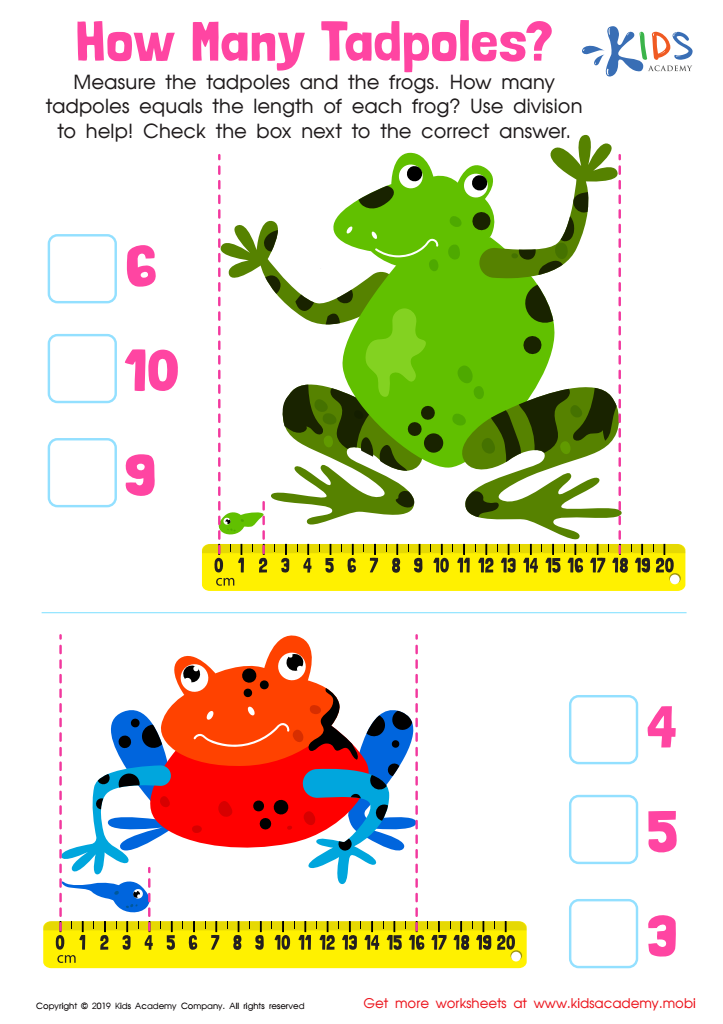
How Many Tadpoles Worksheet
 Assign to My Students
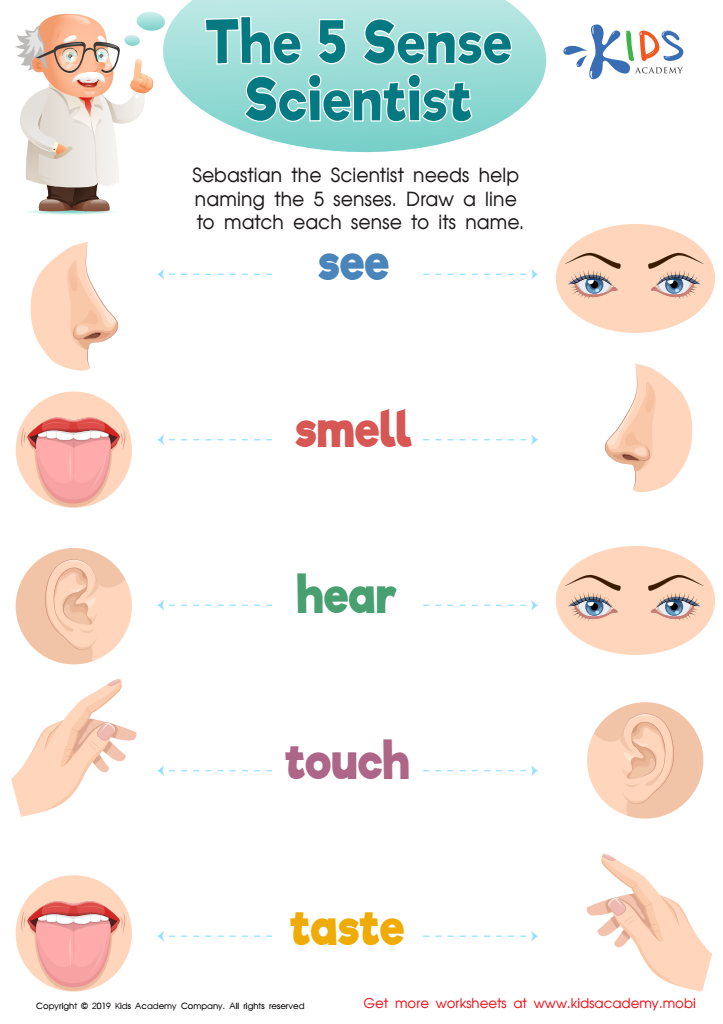
The 5 Sense Scientist Worksheet
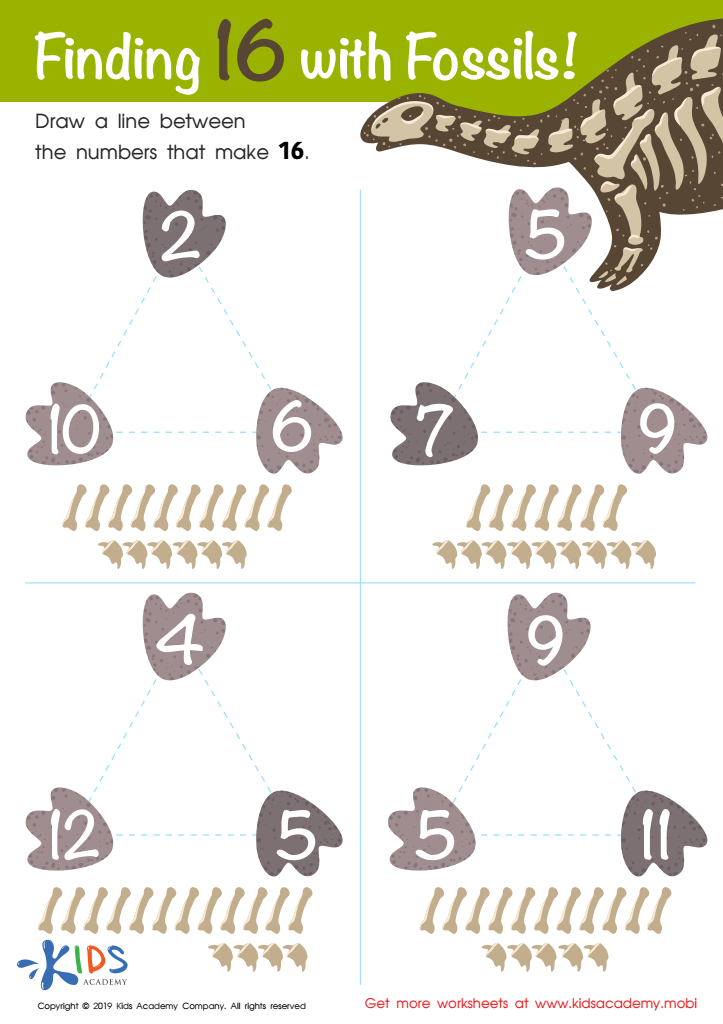
Finding 16 With Fossils Worksheet
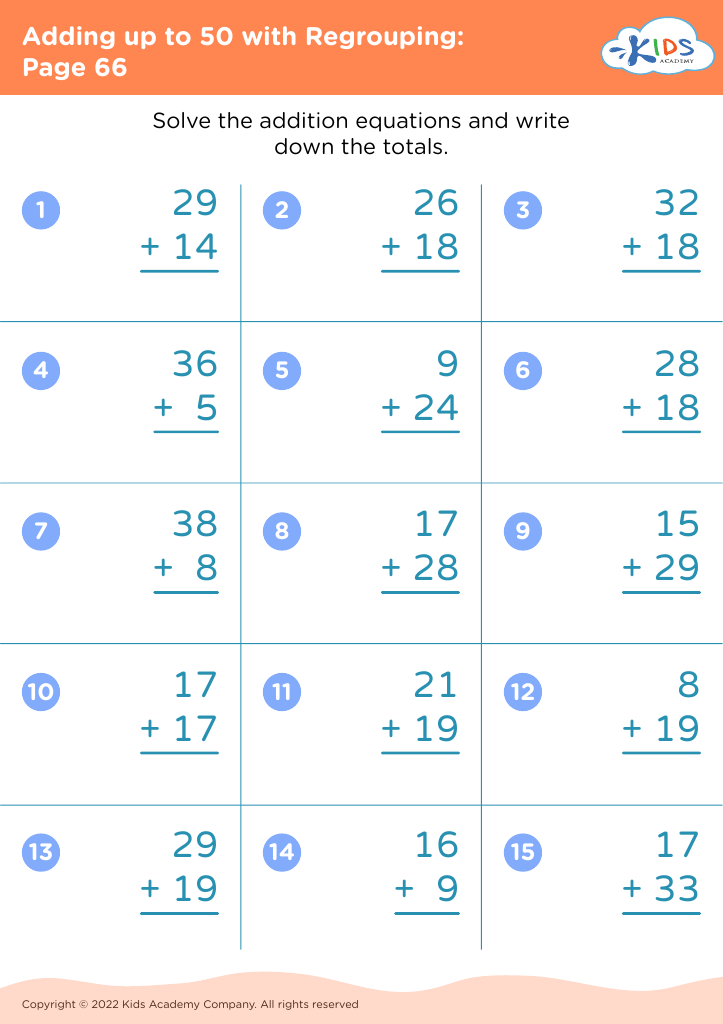



.jpg)



Observation skills are foundational for young children's mathematical development, particularly for ages 3-9 when cognitive and sensory skills are rapidly advancing. For parents and teachers, fostering these skills is crucial as they underpin a child's ability to recognize patterns, categorize objects, and understand spatial relationships—cornerstones of mathematical thinking.
Firstly, observation helps children notice and identify differences and similarities among objects—skills essential for number recognition, counting, and basic arithmetic. By keenly observing their environment, children learn to differentiate between shapes, compare sizes, and sort items, which are all primary concepts in geometry and number sense.
Furthermore, honing these skills enhances critical thinking and problem-solving abilities. Observant children tend to ask more questions and make connections, thereby deepening their understanding of mathematical concepts through practical, real-world examples. For instance, recognizing patterns in daily routines or nature helps build the foundation for more complex mathematical operations like addition, subtraction, and even fractions.
In a classroom or at home, encouraging activities like sorting games, puzzles, or simple newsprint to identify numbers and shapes can make math fun and interactive. Parents and teachers play a key role in guiding children to sharpen these observational skills, paving the way for a lifelong love and understanding of mathematics. They transform mundane environments into dynamic learning landscapes, where math becomes an exciting, observable, and integral part of daily life.








