
Reading clocks Math Worksheets for Ages 3-9
7 filtered results
Difficulty Level
Grade
Age
-
From - To
Subject
Activity
Standards
Introduce your child to the world of time-telling with our engaging Reading Clocks Math Worksheets designed for ages 3-9. These printable worksheets from Kids Academy offer a fun and interactive way for young learners to grasp the concept of reading analog and digital clocks. With colorful visuals and age-appropriate exercises, kids progressively develop their skills in telling time to the hour, half-hour, quarter-hour, and minutes. Ideal for both classroom and home use, these worksheets make learning to read clocks an enjoyable and rewarding experience. Build your child’s confidence and mastery in time-telling today with Kids Academy!
Favorites
With answer key
Interactive
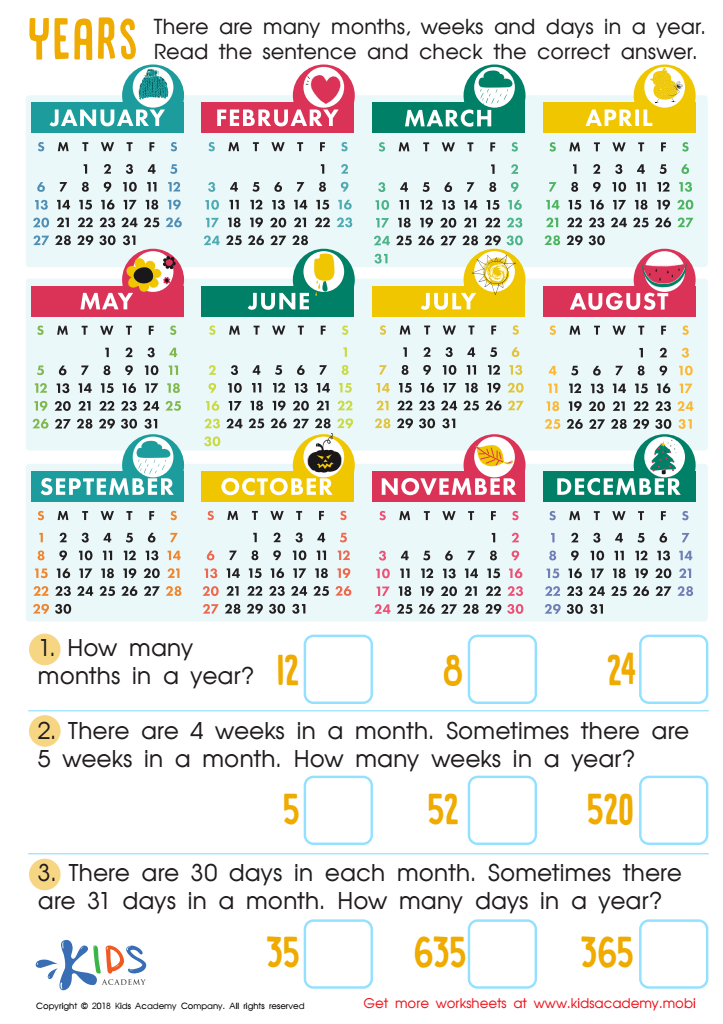
Years Worksheet
This worksheet is a great way to test your children's knowledge of the calendar. Ask them if they can name the days of the week and months in a year. Read and discuss the questions with them and help them find the right answers. Encourage them to check their answers.
 Assign to My Students
Years Worksheet
Worksheet
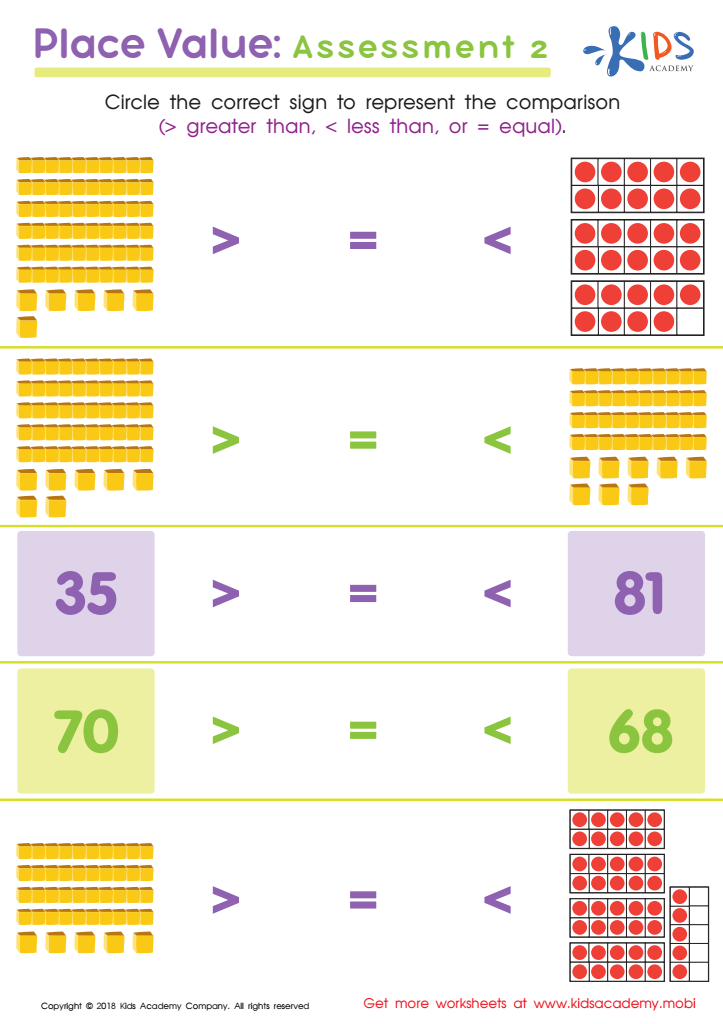
Place Value: Assessment 2 Worksheet
Children must learn to recognize the value of numbers and break them into chunks of ten. They must also be able to compare numbers to know if one is greater, less than or equal to another. The Place Value Assessment PDF is a great tool to assess their skills and identify what requires more practice.
Place Value: Assessment 2 Worksheet
Worksheet
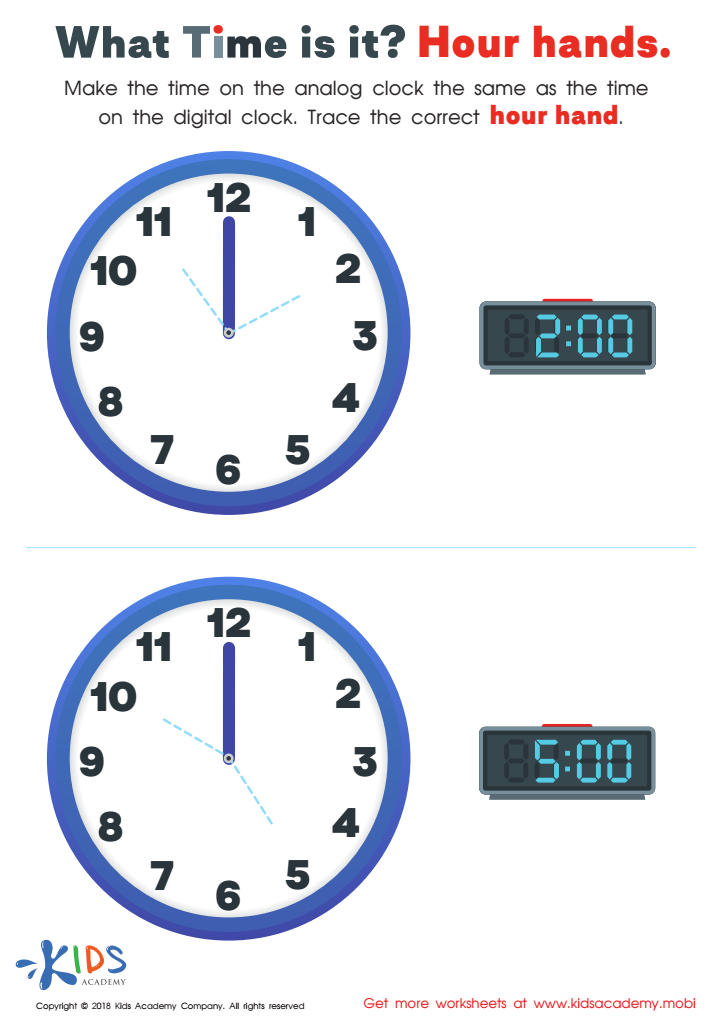
What Time Is it? Hour Hands Worksheet
Does your child know how to read analogue and digital clocks? This worksheet will help them learn. Trace the correct hour hand to match the time on a digital clock to the analogue clock. Help them read the time correctly, both on analogue and digital clocks.
What Time Is it? Hour Hands Worksheet
Worksheet
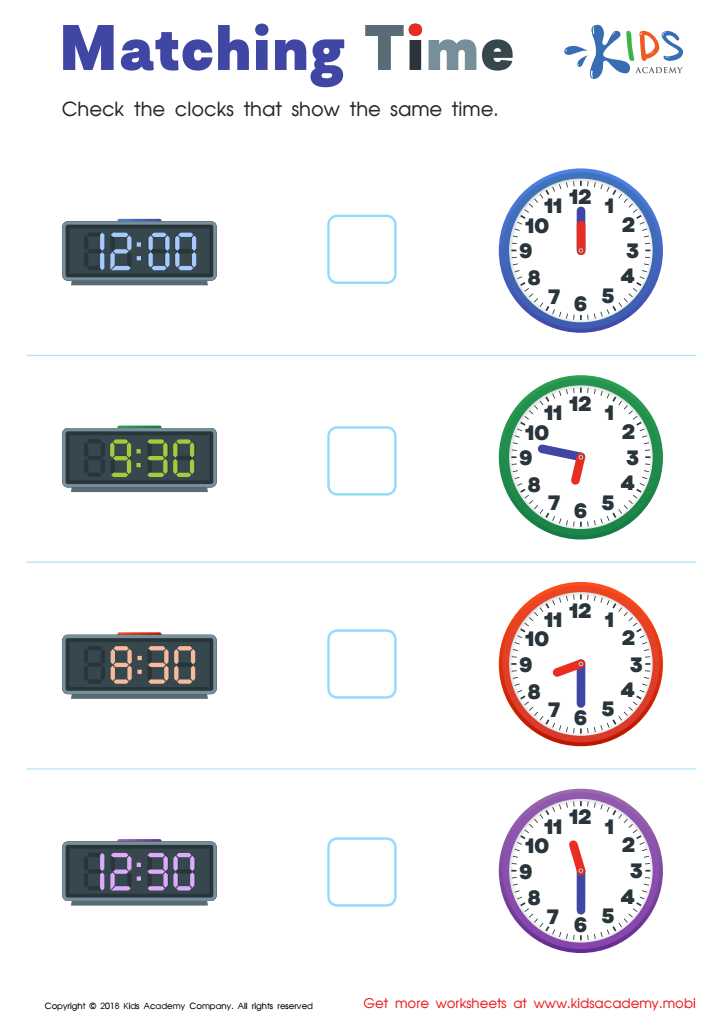
Matching Time Worksheet
Teach your child to read time in both digital and analog formats with this helpful printout. They'll identify clocks that match in both formats and check them off. Colorful and engaging, it's a great way to help your child understand the concept of time-telling.
Matching Time Worksheet
Worksheet
Join Kids Academy for Free
Who is primarily going to use this learning content?








Reading clocks and understanding the concept of time is a vital skill for children aged 3-9. It forms the foundation for punctuality, time management, and routine building, which are crucial life skills. Learning to read both analog and digital clocks helps young children develop their numerical skills and understand the abstract concept of time passage.
At a developmental level, telling time enhances cognitive skills such as memory, attention to detail, and sequencing. These abilities are not only foundational for math but also crucial for problem-solving in everyday scenarios. By learning to associate specific times with daily routines (like bedtime, meal times, or school hours), children gain a sense of security and independence.
Furthermore, mastering clock reading boosts children's confidence. Successfully tracking time allows them to take ownership of daily tasks, fostering responsibility and self-reliance. This skill also has long-term educational benefits; it prepares children for more complex math topics they will encounter in later schooling.
Also, consider the integration of technology: many modern devices utilize digital and analog time displays. Understanding both formats ensures that children are versatile and adaptable.
In summary, teaching children aged 3-9 to read clocks intertwines educational growth with essential life skills, setting the stage for academic success and effective personal management.








