Understanding currency Math Worksheets for Ages 3-9
4 filtered results
-
From - To
Introducing our "Understanding Currency Math Worksheets for Ages 3-9," designed to teach young learners the basics of money! This collection features engaging activities that help children identify coins and bills, understand their values, and apply this knowledge in practical scenarios. Aligned with age-appropriate learning standards, these worksheets make complex concepts easy and fun through colorful visuals and interactive exercises. Perfect for parents and teachers who aim to build strong mathematical foundations in kids, these resources support the development of essential life skills in financial literacy. Empower your child to become confident in handling everyday transactions with our comprehensive currency math worksheets!
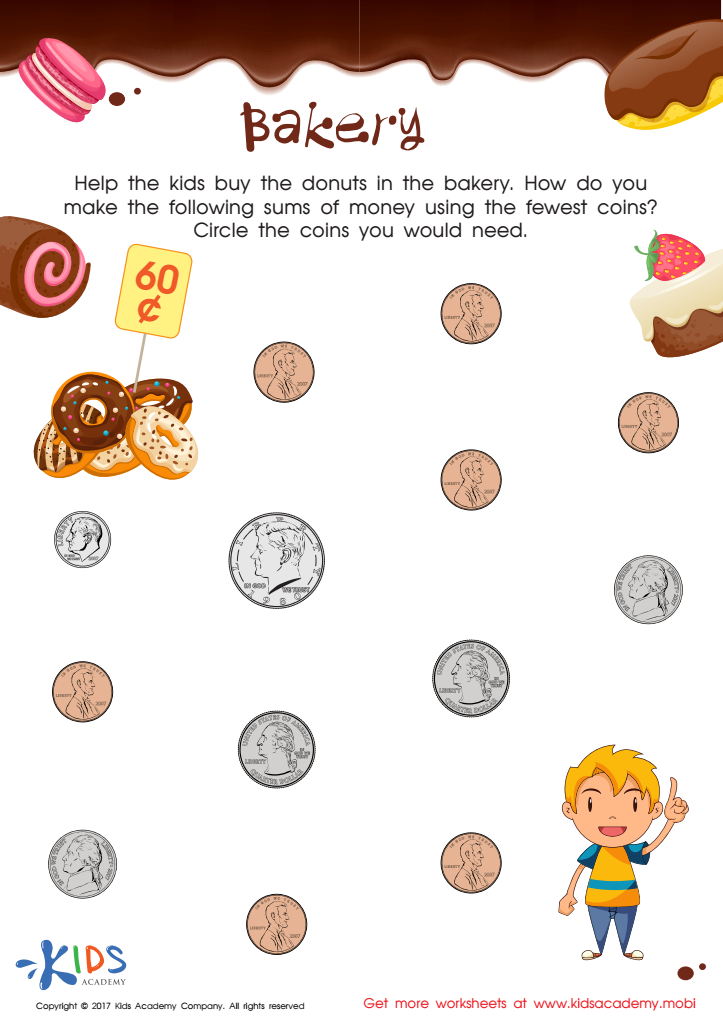
Counting Coins Worksheet
 Assign to My Students
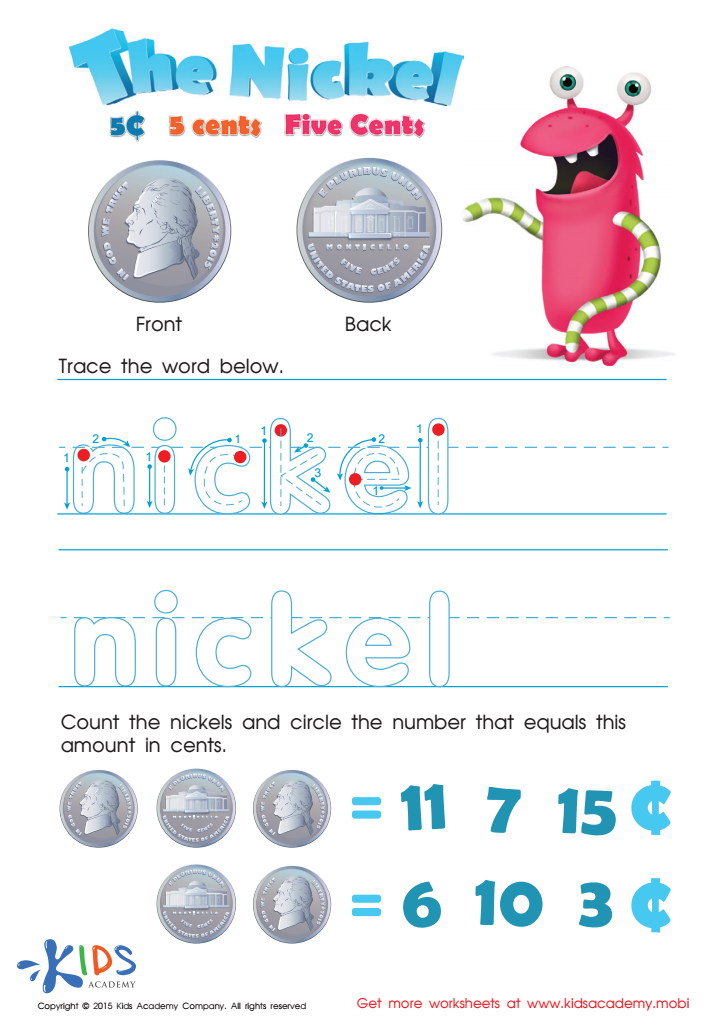
Five Cents or the Nickel Money Worksheet
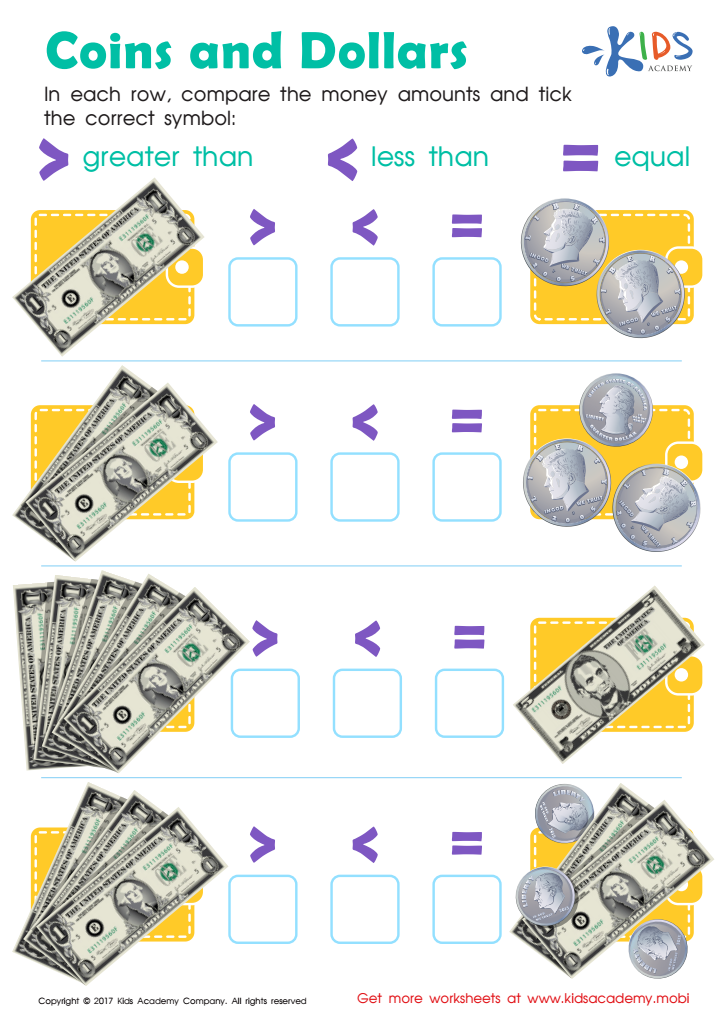
Money: Coins Dollars Printable
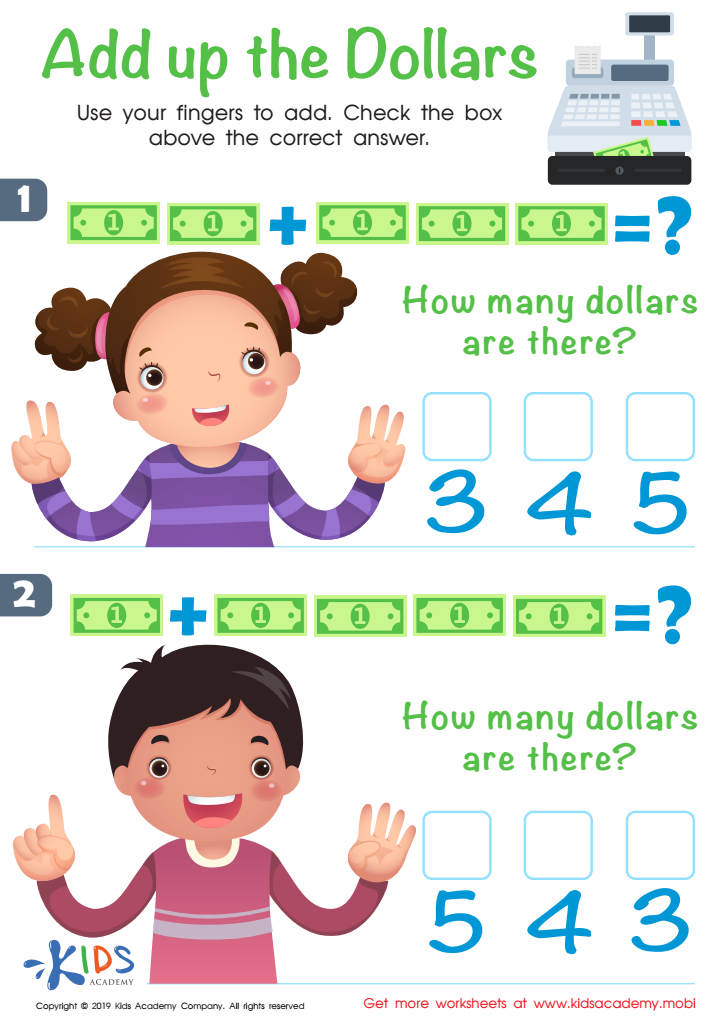
Add up the Dollars Worksheet




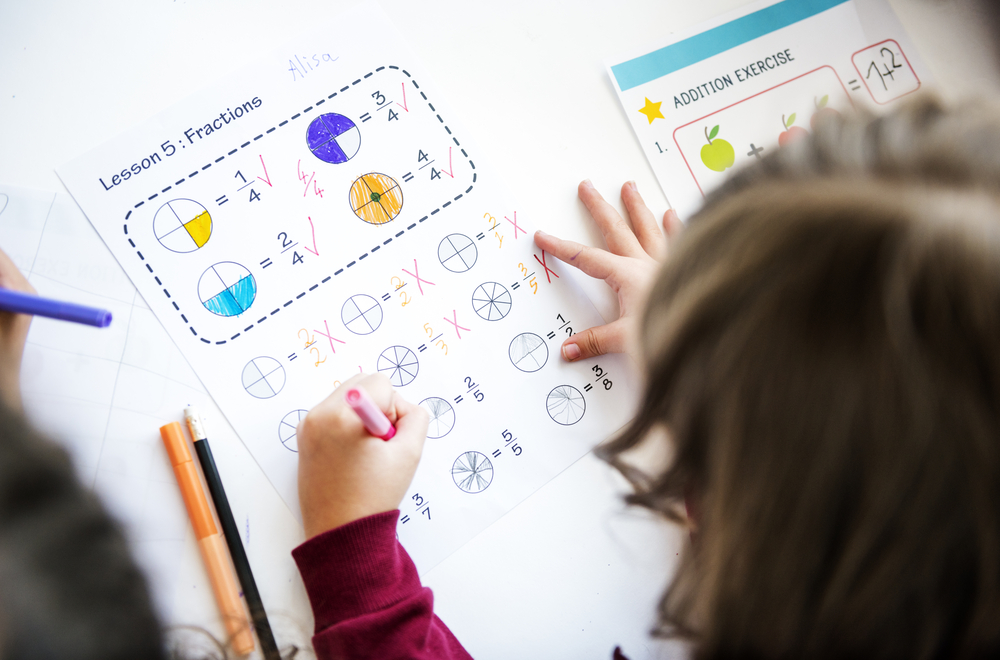


Understanding currency math at a young age is crucial because it builds foundational skills that children will need for everyday life. Introducing children between the ages of 3-9 to currency concepts helps them develop a variety of essential mathematical abilities, such as counting, addition, subtraction, and making comparisons. These skills are often reinforced through practical, hands-on activities that also promote critical thinking and problem-solving.
Moreover, familiarizing young learners with currency teaches them the value of money, fostering financial literacy from an early age. This understanding encourages responsible spending and saving habits as children recognize the concept of exchange and the worth of different items. Learning about currency also supports the development of budgeting skills, helping children understand that financial resources are finite and must be managed wisely.
By integrating currency math into early education, parents and teachers set the stage for more complex financial education later on. It also offers real-world applications for abstract mathematical concepts, making learning more relatable and engaging for young children. This not only solidifies their numerical skills but also instills confidence, preparing them for future academic challenges and responsible adult decision-making. Therefore, fostering currency understanding in young children is an investment in their long-term academic and personal success.








