Understanding number sequences Math Worksheets for Ages 3-9
7 filtered results
-
From - To
Enhance your child's math skills with our "Understanding Number Sequences" worksheets designed for ages 3-9! These engaging resources help young learners grasp the concept of number patterns and progressions while making learning fun. With a variety of activities tailored to different age groups, children will explore visual aids, fill-in-the-blank exercises, and exciting games that nurture their problem-solving abilities. Our worksheets encourage critical thinking and reinforce numerical order, setting a solid foundation for future mathematical concepts. Perfect for both classroom and home use, they offer an enjoyable and educational way to develop early number sense. Unlock your child's potential in mathematics today!
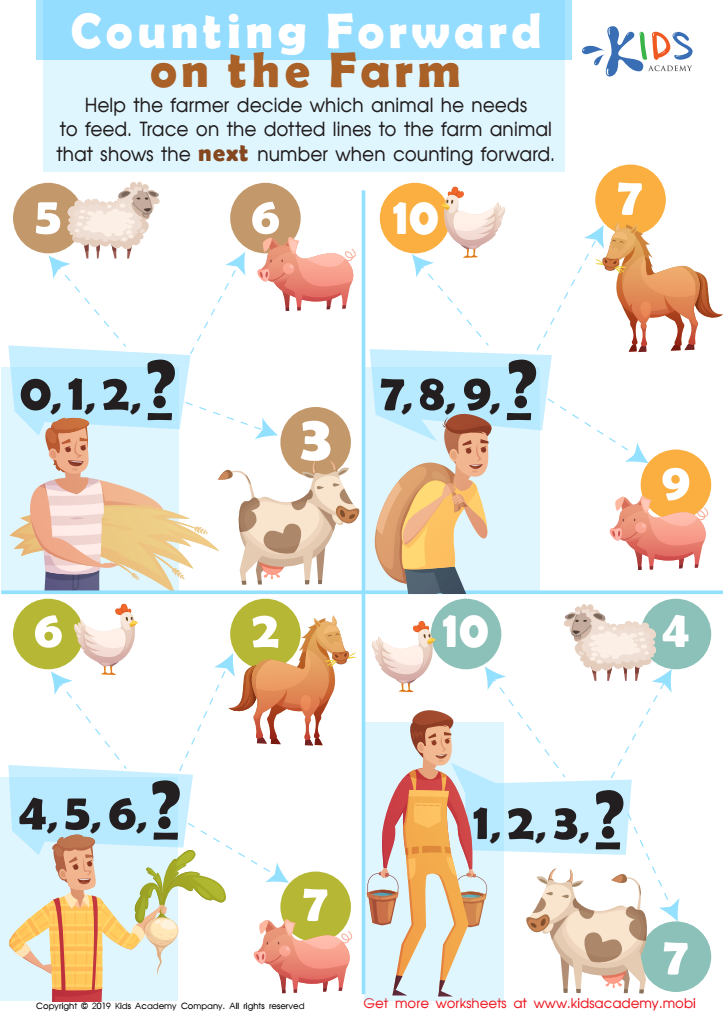
Counting Forward On the Farm Worksheet
 Assign to My Students
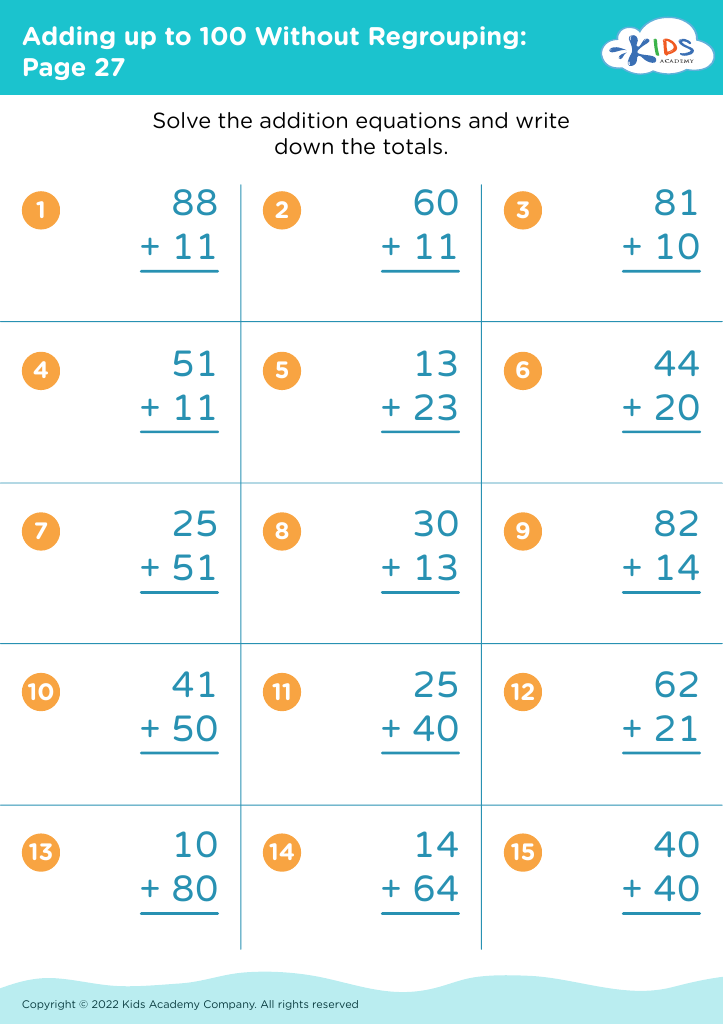
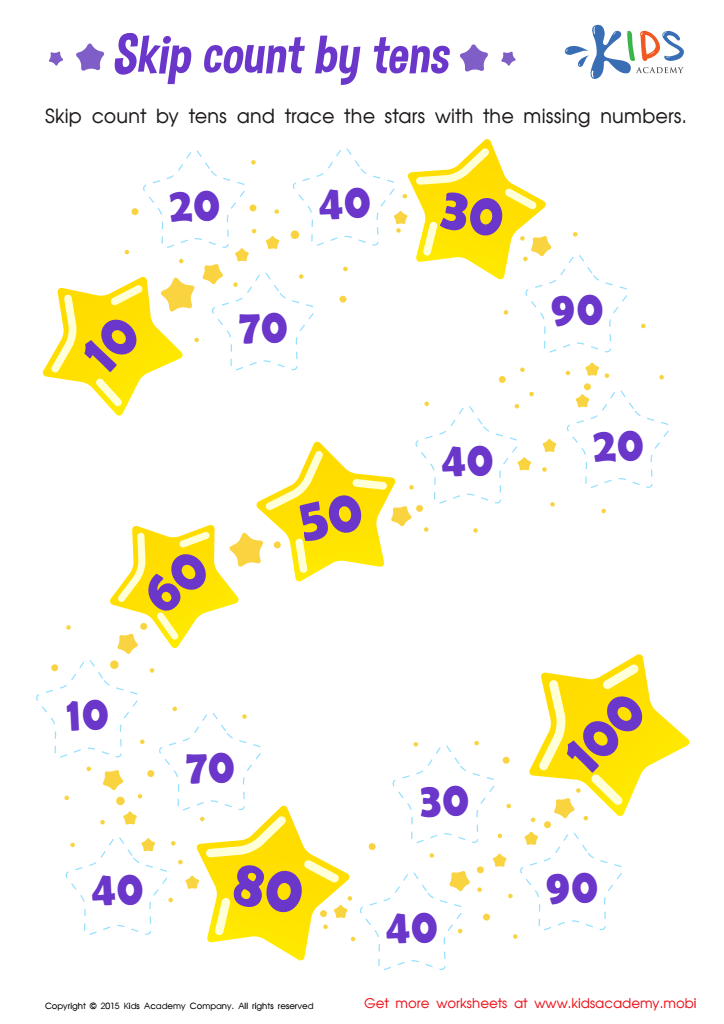
Learn dozens: Skip Count by Tens Printable
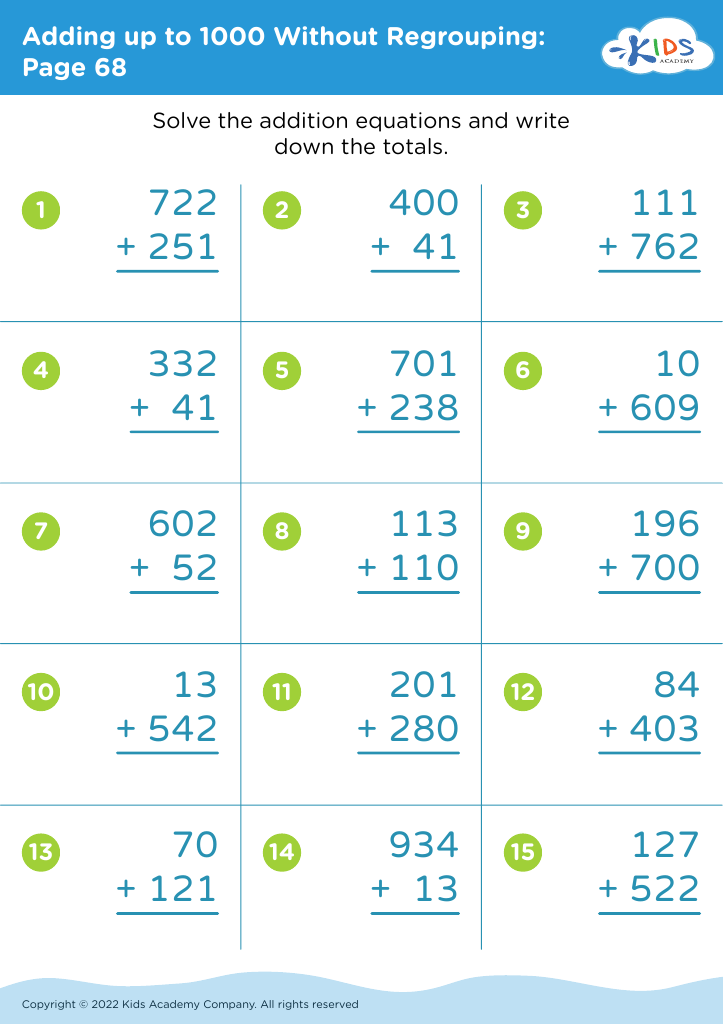
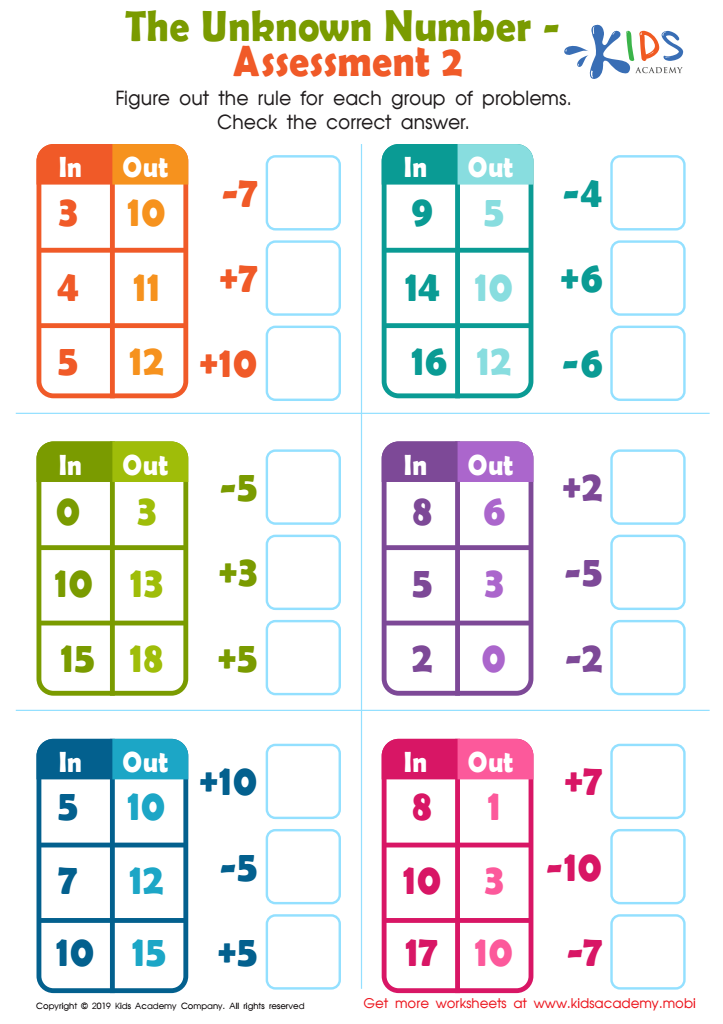
The Unknown Number - Assessment 2 Worksheet
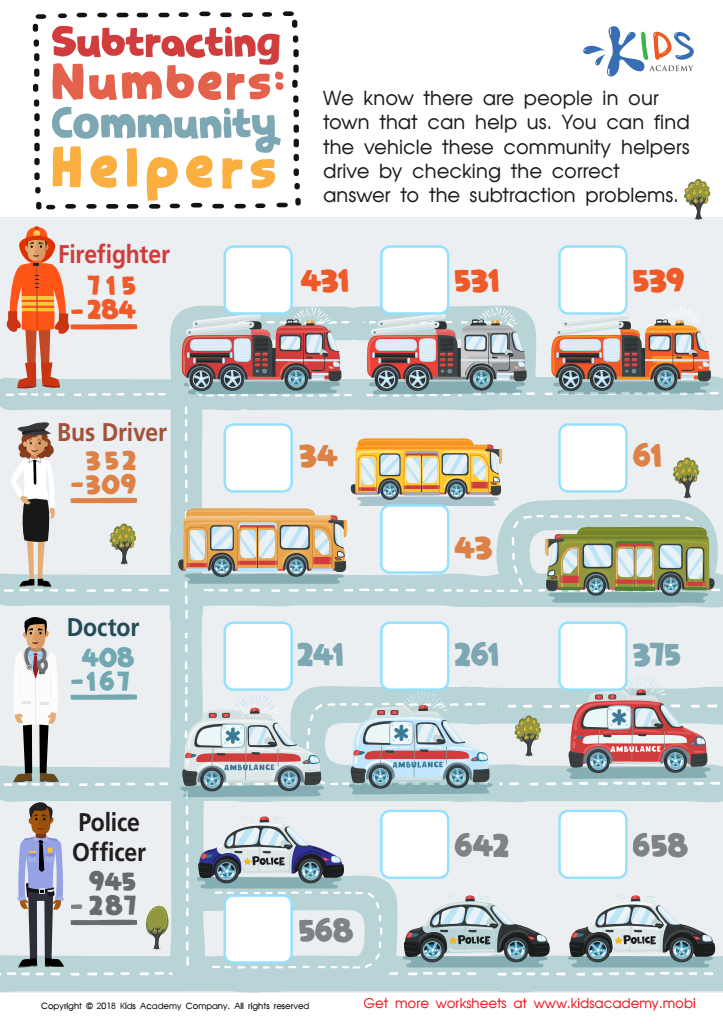
Subtracting Numbers: Community Helpers Worksheet







Understanding number sequences is essential for children aged 3-9 as it lays the foundation for their mathematical development. Number sequences help children grasp the concept of counting and developing numeracy skills, which are critical for more complex mathematical concepts later on. By engaging with sequences, children learn to recognize patterns, which enhances their problem-solving abilities and critical thinking skills.
Moreover, comprehension of number sequences fosters early mathematical intuition. For instance, counting objects in a sequence trains children’s ability to progress logically, embrace mathematical operations, and understand relationships between numbers. This knowledge aids in early addition and subtraction, shapes the understanding of greater and lesser relationships, and promotes organization and categorization skills that are useful in everyday life.
For parents and teachers, emphasizing number sequences encourages effective collaborative learning moments. Engaging activities, games, and manipulatives can bring these concepts to life, enhancing a child's enthusiasm for mathematics. Early involvement in number sequences ultimately equips children with the confidence to tackle more advanced math in the future, establishing a positive attitude and a strong foundation that helps ensure their ongoing success in education. Thus, nurturing their understanding of number sequences is vital for comprehensive cognitive and academic growth.








