Understanding patterns Math Worksheets for Ages 3-9 - Page 3
52 filtered results
-
From - To
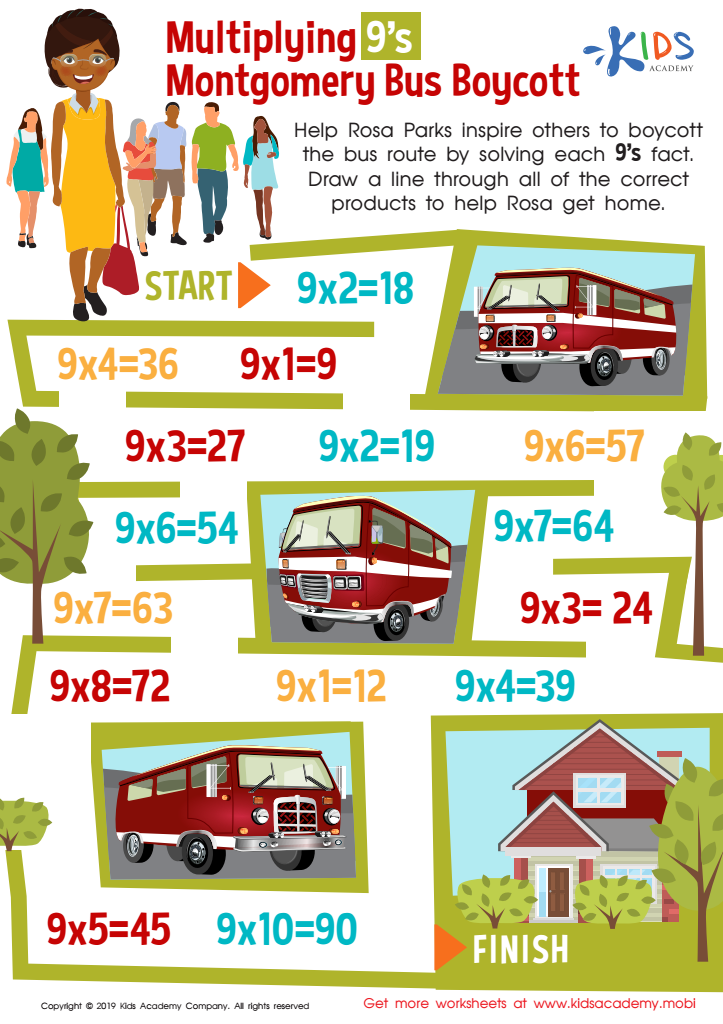
Multiplying 9’s Montgomery Bus Boycott Worksheet
 Assign to My Students
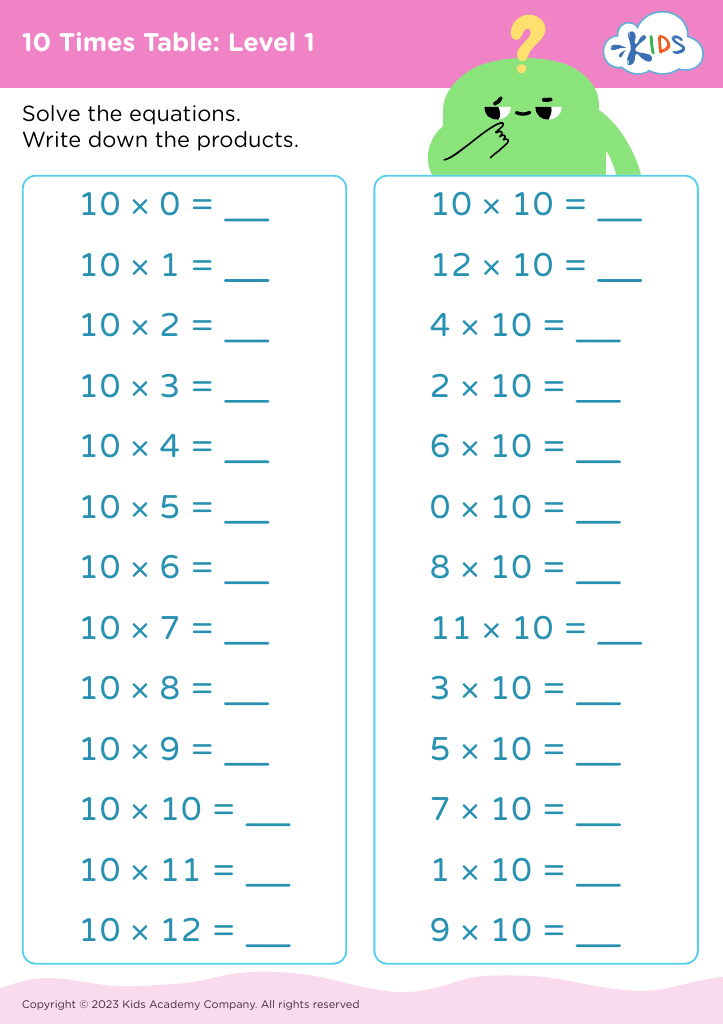
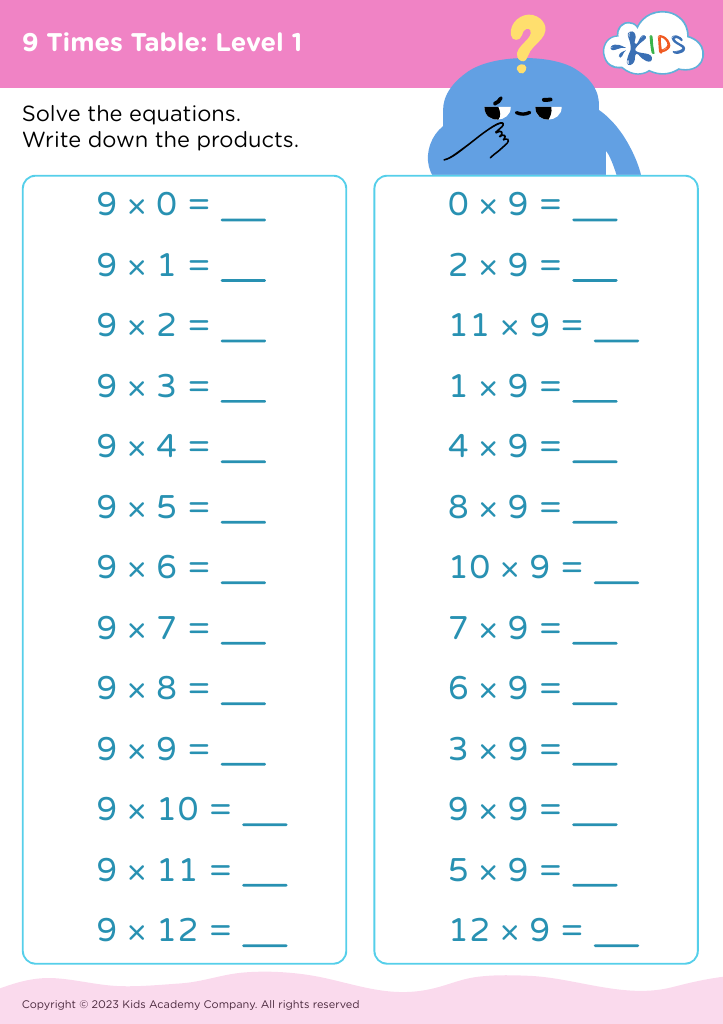
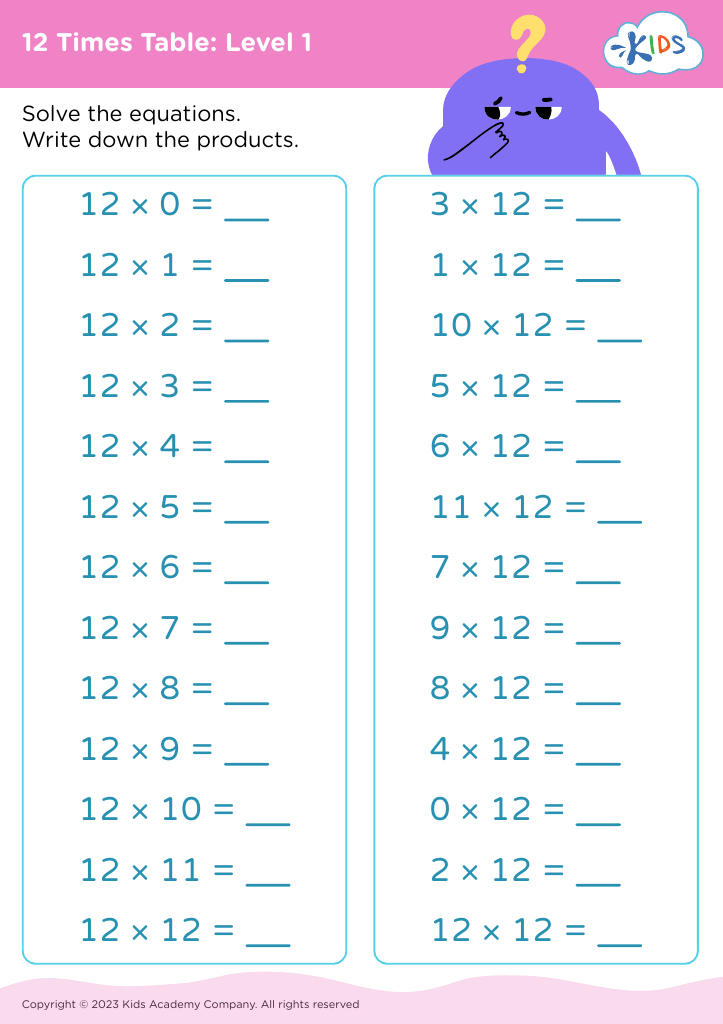







Understanding patterns in math is essential for children aged 3-9 as it lays the groundwork for critical thinking and problem-solving skills that are vital throughout their education and life. Recognizing and creating patterns help children make connections between concepts, fostering a deeper understanding of mathematical principles. When students grasp patterns, they can better predict outcomes, identify relationships, and approach complex problems with confidence.
For parents and teachers, promoting pattern recognition can enhance children’s cognitive development and fine-tune their analytical skills. Patterns are prevalent in numeracy, geometry, and algebra, establishing a strong foundation for future mathematical learning. Moreover, engaging with patterns can make learning fun, encouraging creativity and participation through games and interactive activities.
By fostering pattern awareness, parents and teachers can also cultivate a child's capacity for logical reasoning, enabling them to approach challenges systematically. This skill transcends math; it applies to science, literacy, and everyday decision-making. Furthermore, early exposure to patterns can lead to higher academic achievement in later years and instill a lifelong love for learning. Ultimately, investing in the understanding of patterns equips children with the tools they need to navigate an increasingly complex world.








