
Visual recognition Math Worksheets for Ages 3-9
6 filtered results
Difficulty Level
Grade
Age
-
From - To
Subject
Activity
Standards
Discover engaging Visual Recognition Math Worksheets designed for children ages 3-9 at Kids Academy. These fun, printable activities help young learners enhance their math skills through visual recognition of numbers, shapes, and patterns. Our expertly crafted worksheets encourage early math proficiency, critical thinking, and problem-solving abilities while keeping children entertained. Perfect for parents and teachers, these resources support hands-on learning and cater to various skill levels. Boost your child's confidence and enjoyment in math with our interactive and educational worksheets today! Visit us for more details and access to endless learning possibilities.
Favorites
With answer key
Interactive
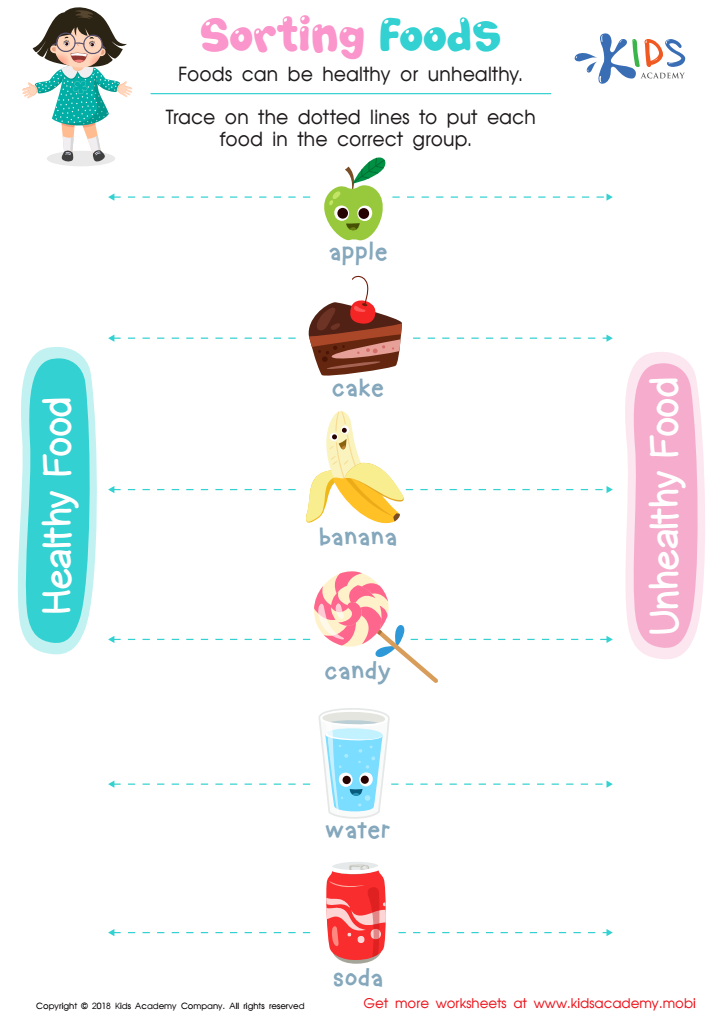
Sorting Food Worksheet
This delightful worksheet boosts critical thinking and fine motor skills. Kids use prior knowledge and pictures to sort foods into healthy and unhealthy groups. Tracing lines support accurate sorting and matching. Enjoy fun and free learning!
 Assign to My Students
Sorting Food Worksheet
Worksheet
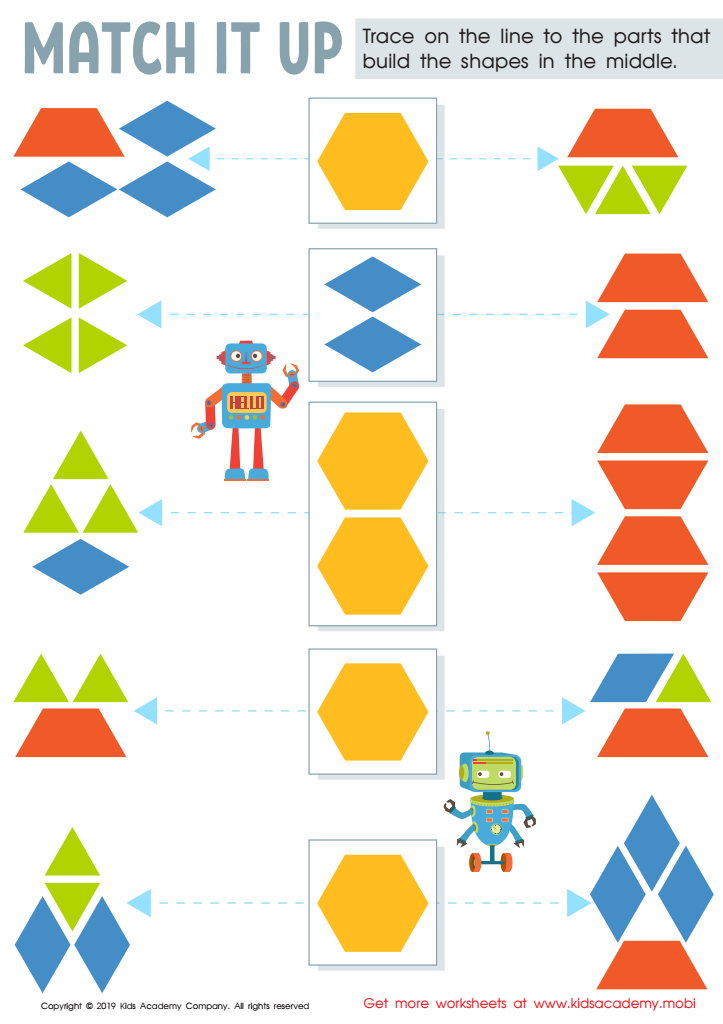
Match It up Worksheet
If your kids are into robots, they'll be thrilled to work on this worksheet. Ask them to name shapes they know, and help them draw and identify these shapes. Look at the shapes in the middle, and the sides. Finally, help your kids trace the lines to build the shapes in the middle.
Match It up Worksheet
Worksheet
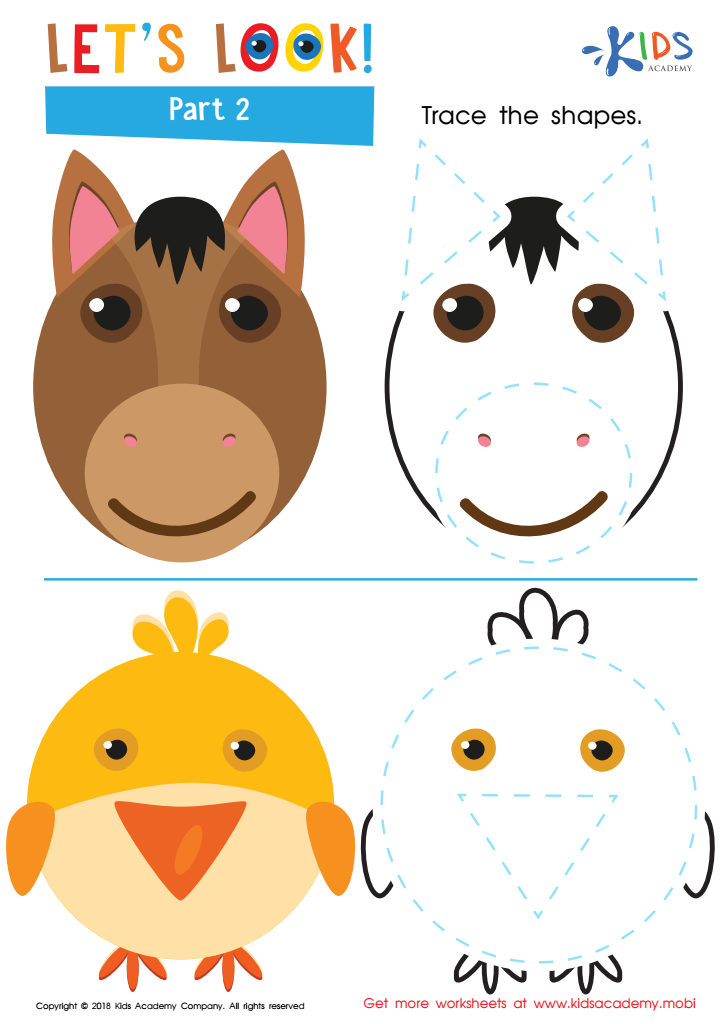
Let's Look! Part 2 Worksheet
This tracing sheet helps your little ones develop their skills. Ask them to identify the animals, then trace the shapes in the space provided, following the dotted lines. It's a simple task that can help them grow and have fun!
Let's Look! Part 2 Worksheet
Worksheet
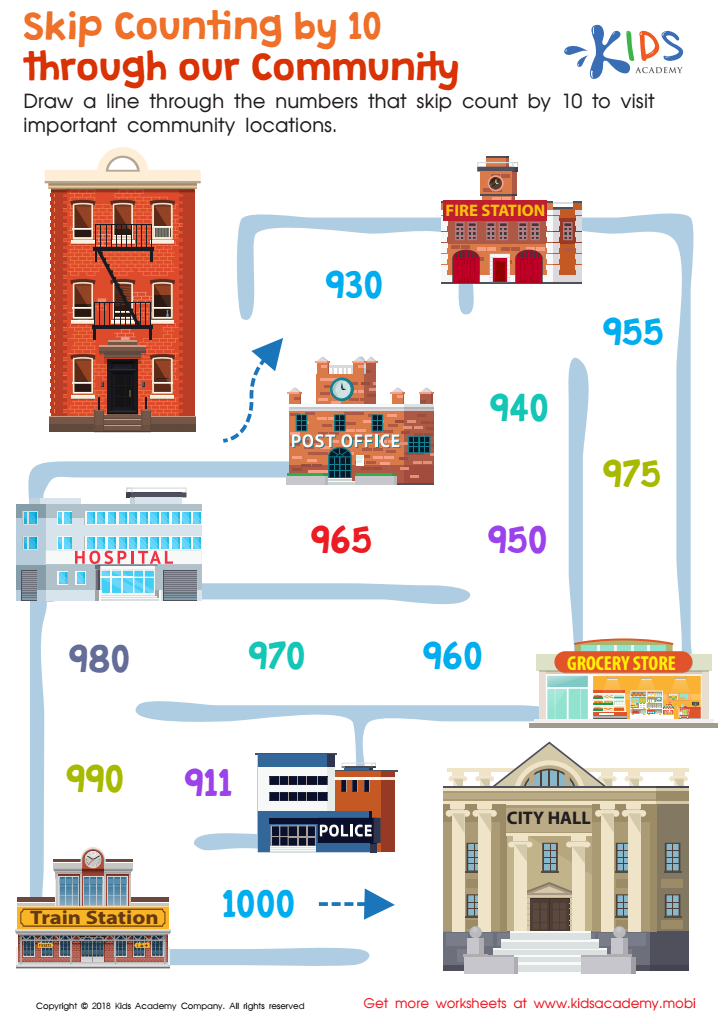
Skip Counting by 10 Through Our Community Worksheet
Our kids need to 'make a ten' and skip count by tens to boost their speed and accuracy in math. This cool, free worksheet takes them on a journey through their local community to practice counting by tens. They'll work on social studies and fine motor skills while having fun with the maze they get to count by tens in!
Skip Counting by 10 Through Our Community Worksheet
Worksheet
The Four Seasons Worksheet
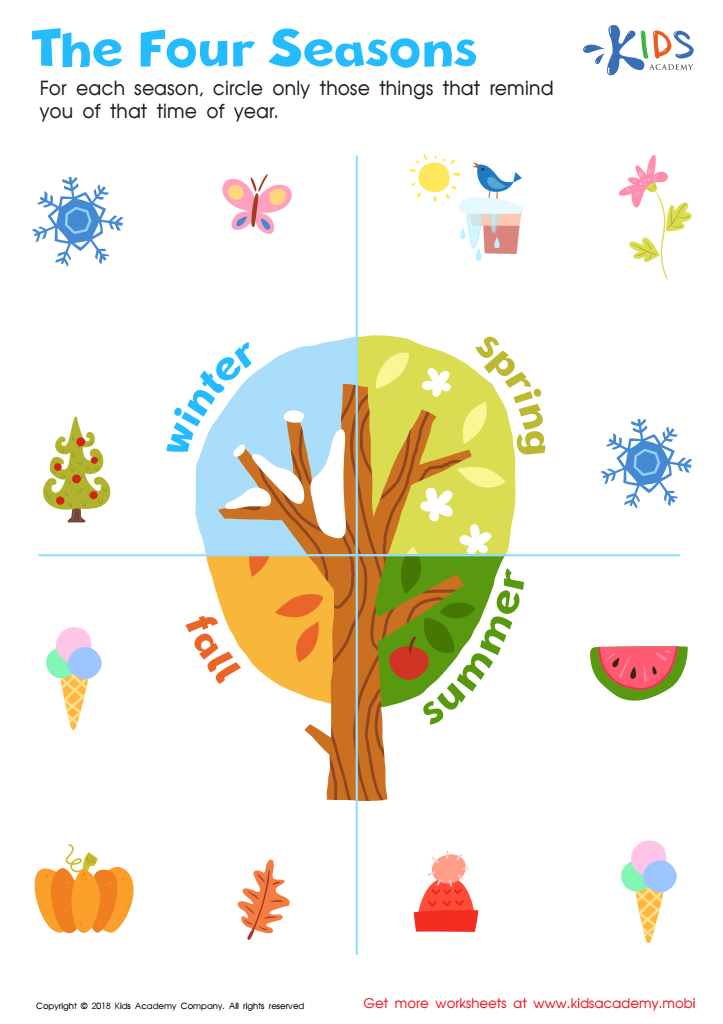
Tell your child to circle things that remind them of each season. The tree has four squares, one for each season. Some things in each square match the season, others don't. Ask if any are out of place. Help them circle only items that remind them of that season.
The Four Seasons Worksheet
Worksheet
Join Kids Academy for Free
Who is primarily going to use this learning content?




.jpg)



Visual recognition in math for children ages 3 to 9 is a critical element in fostering an understanding of mathematical concepts. At this early developmental stage, young minds are naturally inclined towards images and patterns rather than abstract numbers and symbols. Visual math tools—such as counting blocks, number lines, geometric shapes, and pictorial problems—help bridge the gap between concrete objects and abstract numerical concepts, making learning intuitive and engaging.
Investing in visual recognition math concepts offers numerous cognitive benefits. It enhances a child's ability to recognize patterns, which is fundamental to problem-solving and logical reasoning. Engaging with visual math also improves spatial awareness, aiding not only in math but in other subjects like science and technology. These visual tools allow abstract concepts to be broken down into manageable, easily comprehensible parts. For example, using images to demonstrate addition and subtraction helps young learners grasp the concept of quantity and the effects of operations.
Moreover, visual recognition fosters confidence and reduces math anxiety—a common issue that can impede future learning. Children who can visualize problems are often more successful and enthusiastic about math, creating a positive foundation for future education. Parents and teachers who emphasize visual recognition in math provide children with versatile, foundational skills that are applicable throughout their academic journey and daily life.








