Visual representation comprehension Math Worksheets for Ages 3-9
8 filtered results
-
From - To
Unlock your child's mathematical potential with our Visual Representation Comprehension Math Worksheets designed for ages 3-9. These engaging, age-appropriate resources help young learners grasp fundamental math concepts through visual aids and interactive activities. Each worksheet focuses on enhancing comprehension skills by connecting visuals to mathematical ideas, making learning both fun and effective. With a variety of themes and progressive difficulty levels, these worksheets cater to different learning styles. Ideal for both classroom and home use, they empower children to build confidence and develop critical thinking in math. Start your child's journey to math mastery today!
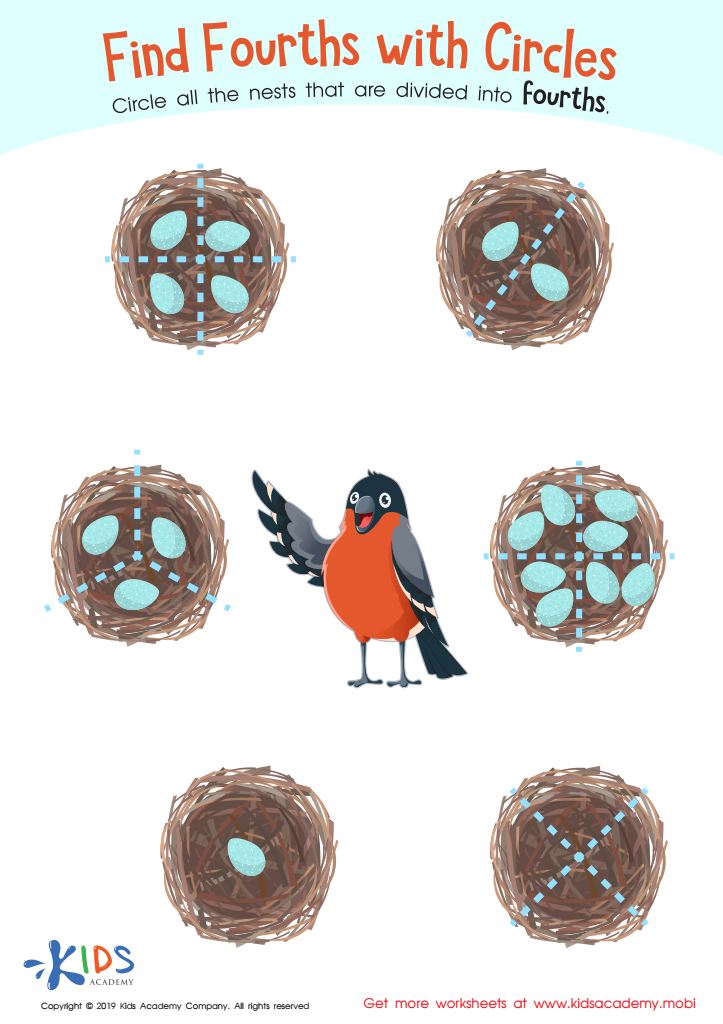
Find Fourths Circles Worksheet
 Assign to My Students
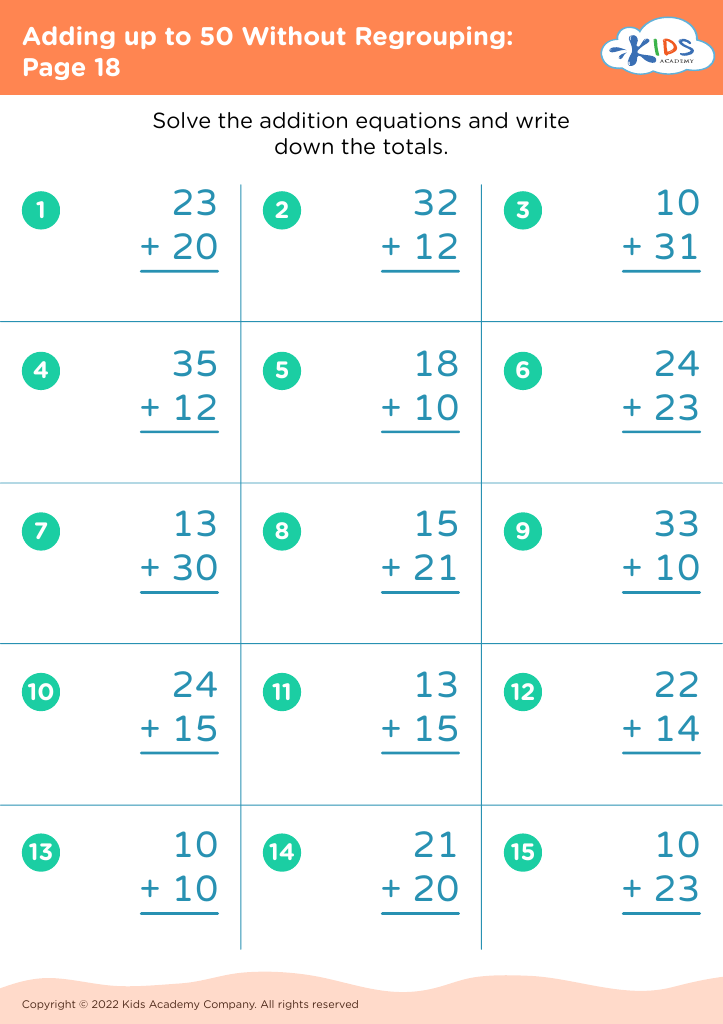
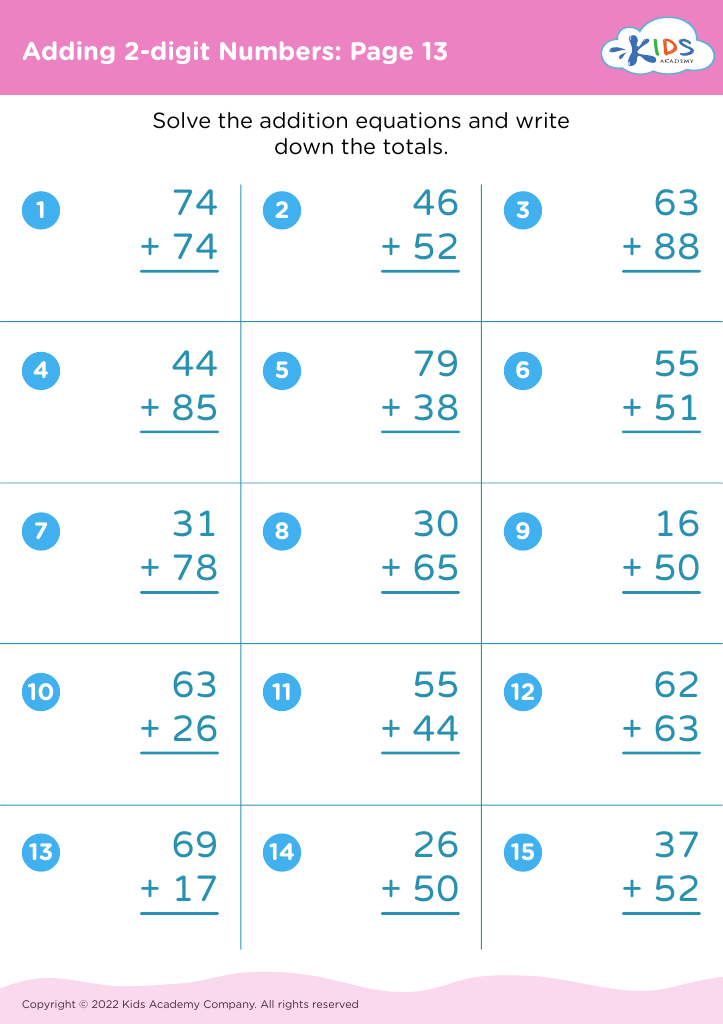
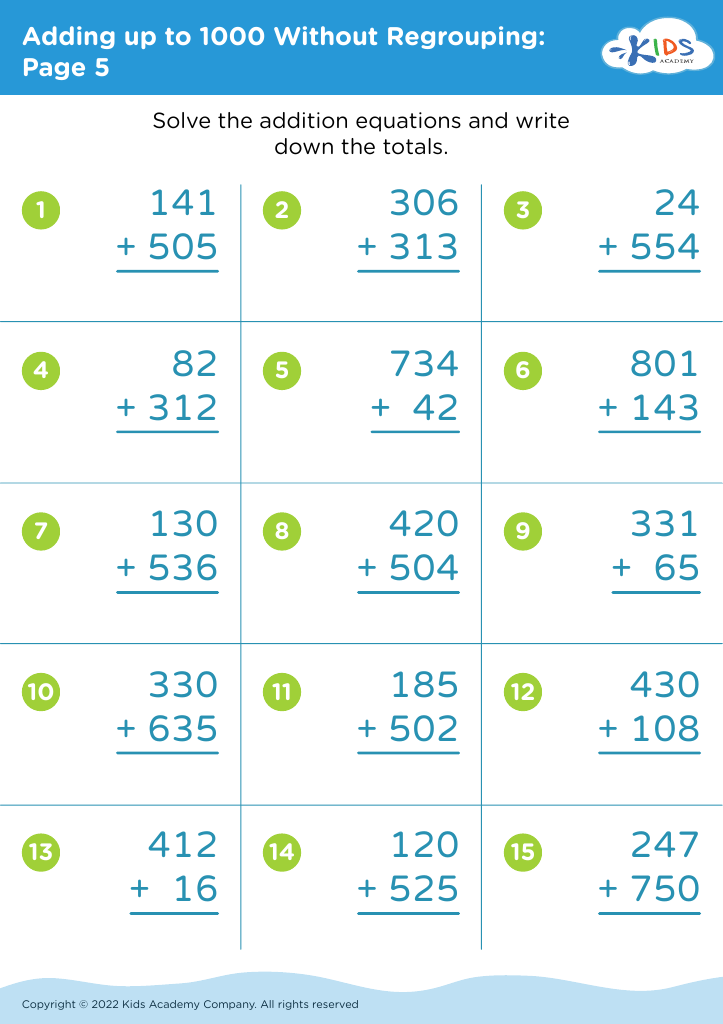
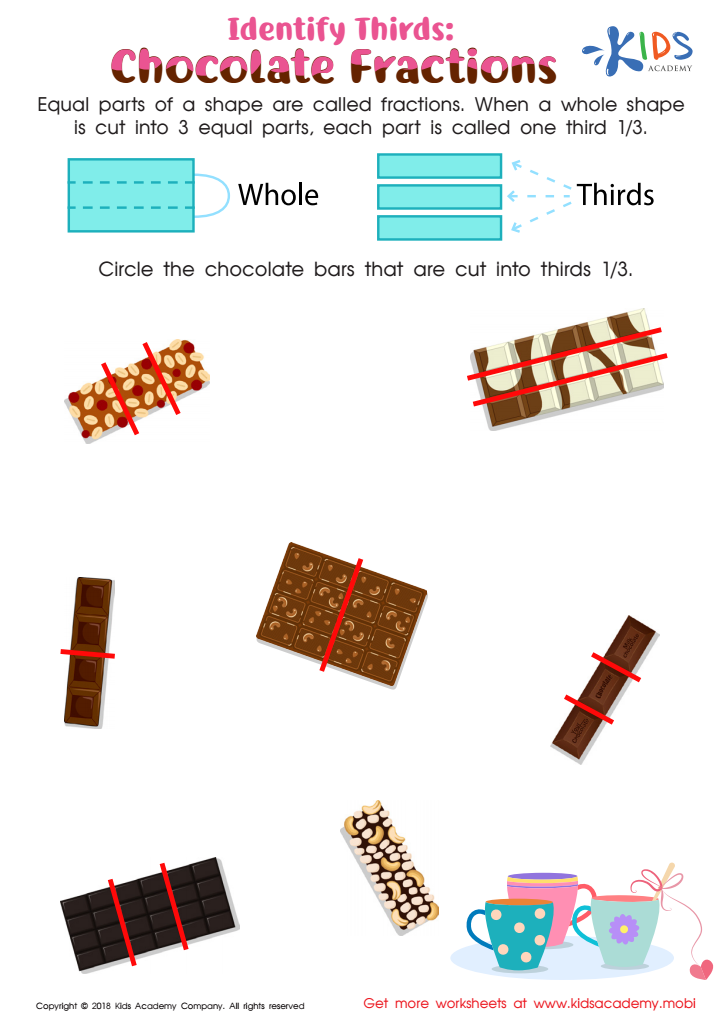
Identify Thirds: Chocolate Fractions Worksheet
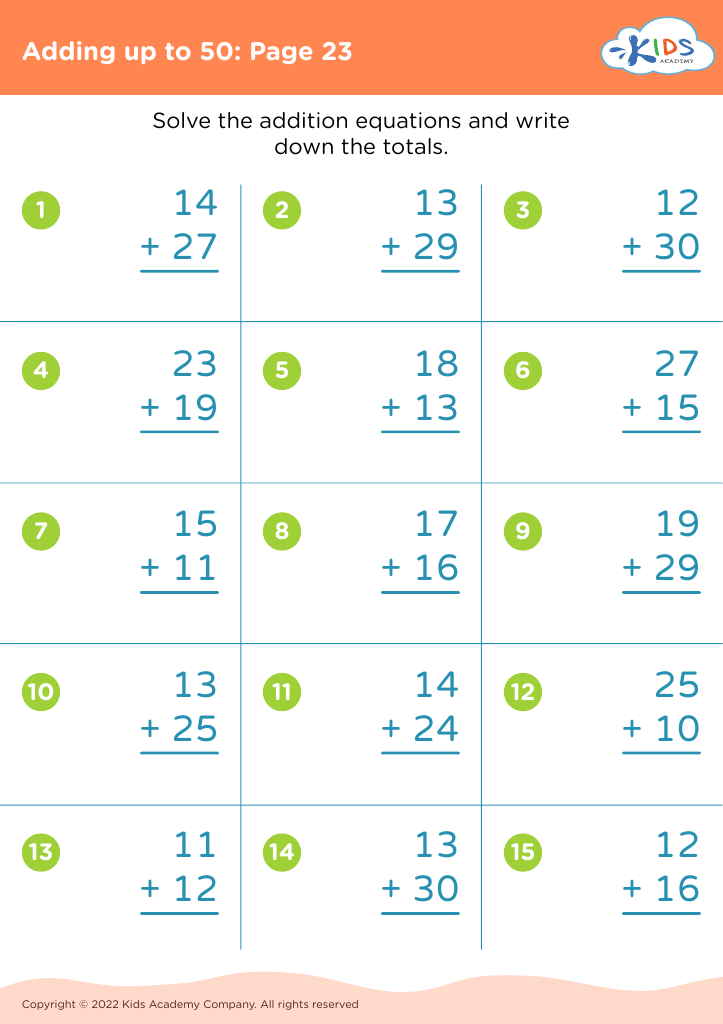
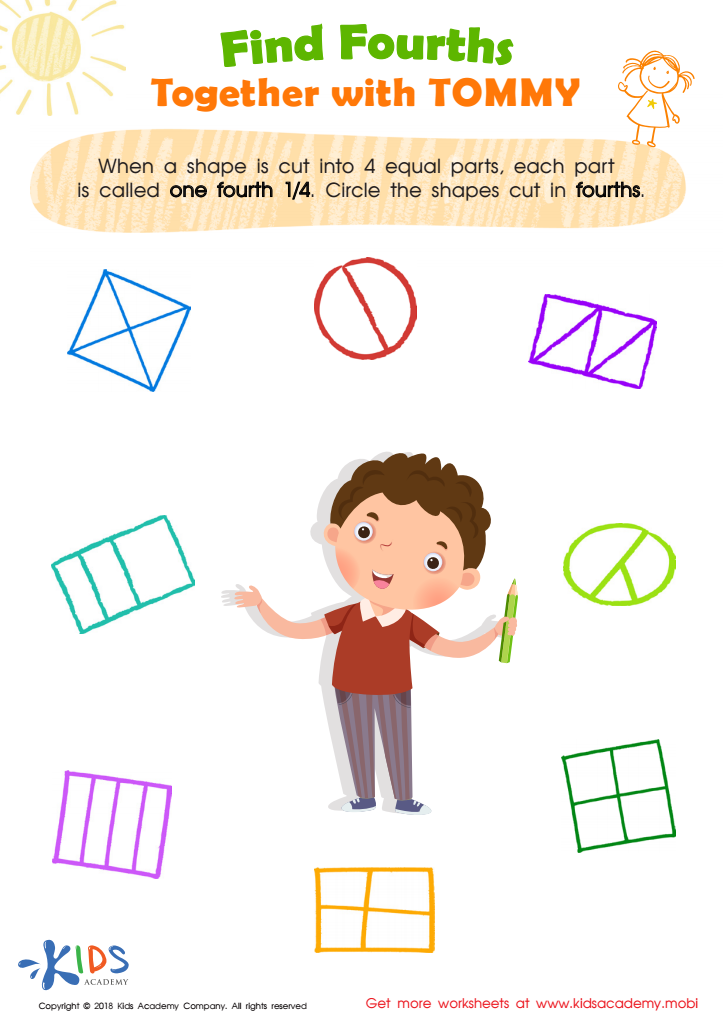
Find Fourths Together with Tommy Worksheet
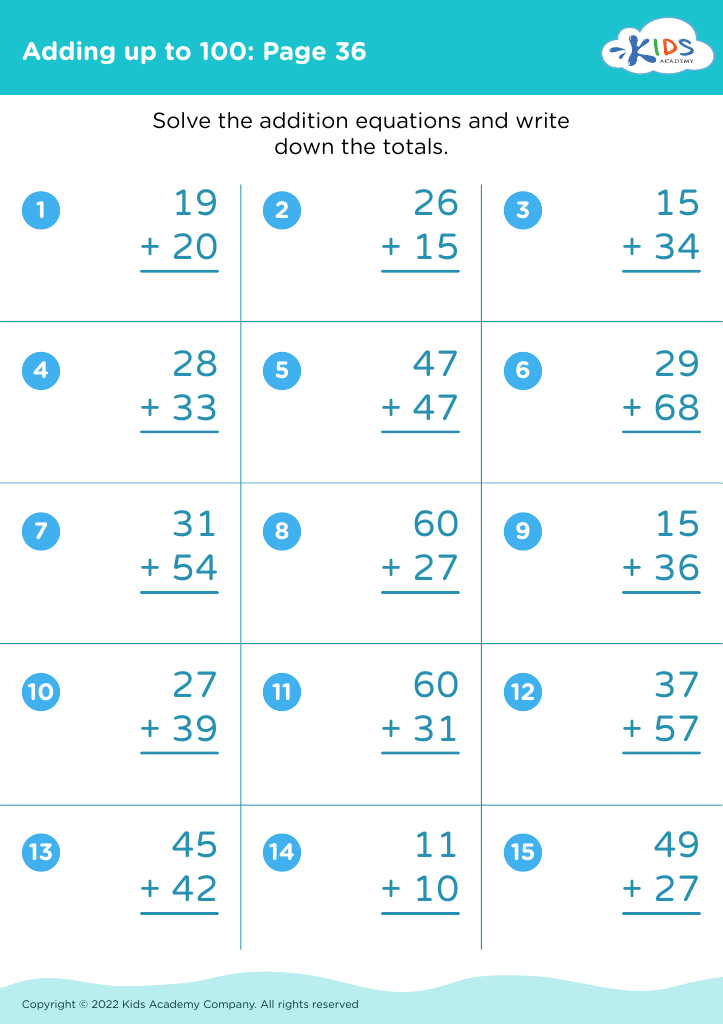





.jpg)

Visual representation comprehension in mathematics is crucial for children aged 3-9 because it forms the foundation for their overall mathematical understanding. At this developmental stage, children are naturally drawn to visual stimuli, making it an effective way to teach complex concepts. When parents and teachers prioritize visual learning, they help students make connections between tangible objects and abstract mathematical ideas, fostering engagement and motivation.
Visual representations, such as diagrams, manipulatives, and charts, assist children in grasping essential mathematical principles like counting, addition, and subtraction. For example, using blocks to illustrate addition helps children visualize the process, reinforcing the concept of combining quantities. Additionally, visual aids can accommodate diverse learning styles, engaging those who may struggle with purely verbal or numeric explanations.
Moreover, fostering strong visual comprehension in mathematics supports critical thinking and problem-solving skills, which are essential for success in later education. As children learn to interpret and analyze visual information, they develop the ability to approach math problems with confidence. By supporting visual representation comprehension, parents and teachers can ensure that children build a solid mathematical foundation, setting the stage for lifelong learning and success in mathematics.








