Practical application Measurement Worksheets for Ages 3-9
3 filtered results
-
From - To
Discover our Practical Application Measurement Worksheets for Ages 3-9, designed to make learning measurements engaging and interactive. These worksheets offer a variety of activities from comparing lengths and weights to understanding volume, tailored to boost your child's measurement skills. Perfect for preschool to early elementary students, our worksheets use hands-on tasks and real-world examples to help children apply concepts of measurement in daily life. Foster a love for math with stimulating exercises that blend play with learning, ensuring a solid grasp of measurement fundamentals. Parents and teachers will find these resources invaluable for nurturing young mathematicians' talents!
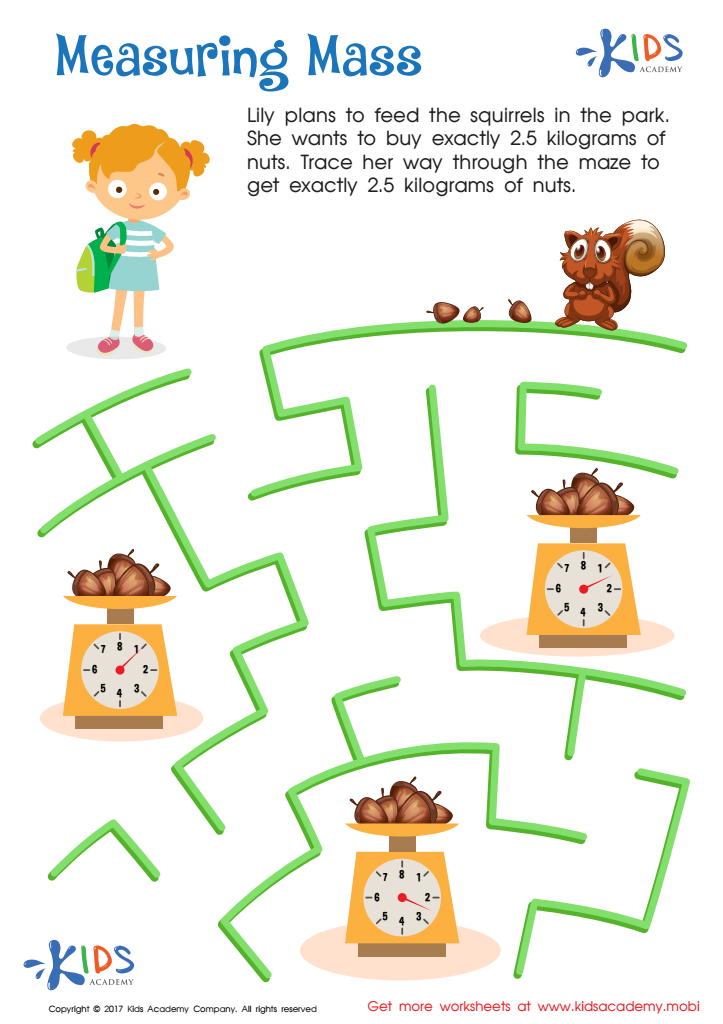
Measuring Mass Worksheet
 Assign to My Students
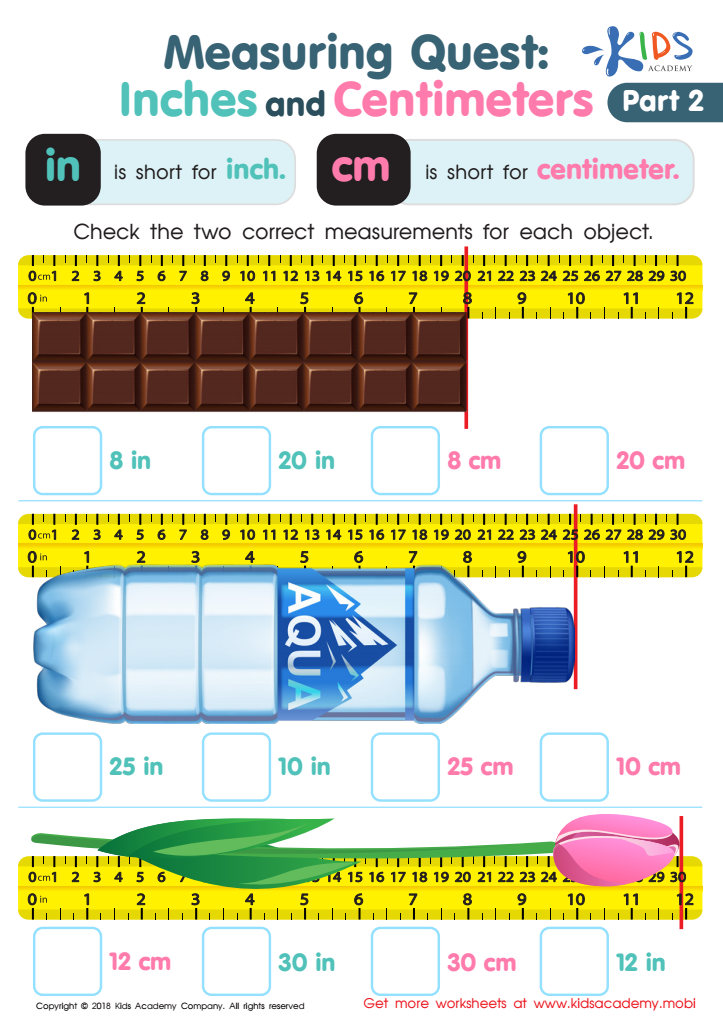
Measuring Quest: Inches and Centimeters - Part 2 Worksheet
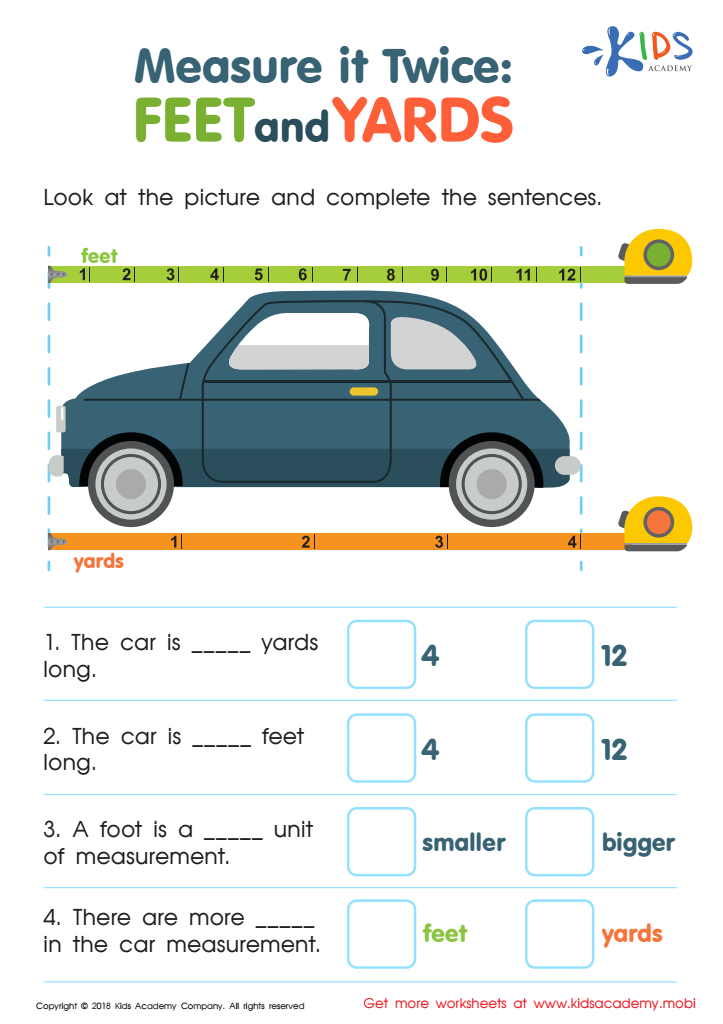
Measure It Twice: Feet and Yards Worksheet








Parents and teachers should care about the practical application of measurement for children aged 3-9 because it provides foundational skills that are crucial for cognitive development and everyday life. At these early ages, engaging in activities that involve measurement such as comparing lengths, weights, and volumes helps children develop spatial awareness and quantitative reasoning. These skills are not only essential for success in mathematics but also transfer to other subjects like science and art.
Introducing measurement through practical, hands-on experiences—like using rulers, measuring cups, or even comparing sizes of objects around the house—makes learning tangible and meaningful. It helps children grasp abstract concepts by connecting them to the real world. For example, asking a child to measure ingredients for a recipe can enhance both their understanding of volume and their procedural knowledge, reinforcing sequencing and following instructions.
Moreover, practical measurement activities foster critical thinking and problem-solving skills. They encourage curiosity and experimentation, leading kids to ask questions about their environment and seeking ways to find answers.
By integrating measurement into daily routines and play, parents and teachers can provide a stimulating learning environment that not only boosts academic achievement but also nurtures a lifelong interest in learning and exploration. Thus, caring about measurement education at this formative stage sets the groundwork for confident, capable thinkers.








