Sorting skills Sorting Worksheets for Ages 3-9
5 filtered results
-
From - To
Welcome to our "Sorting Skills Worksheets" page, designed for children ages 3-9! Our engaging worksheets enhance foundational sorting skills through fun activities that nurture critical thinking and creativity. Children will sort objects by shape, color, size, and other attributes, developing their ability to classify and organize information. These worksheets support early math learning, encourage hands-on practice, and are perfect for both classroom and home environments. Whether you’re looking to reinforce lessons or explore new concepts, our sorting worksheets provide valuable opportunities for young learners to build confidence and competence in sorting skills. Get started today and watch your child thrive!
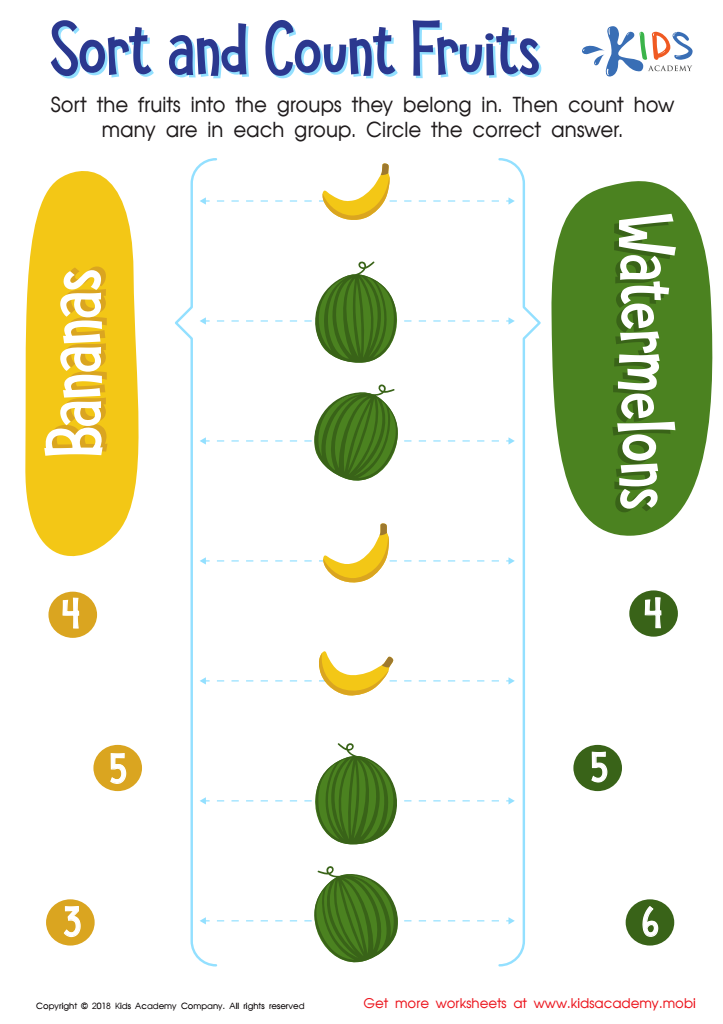
Sort and Count Fruits Worksheet
 Assign to My Students
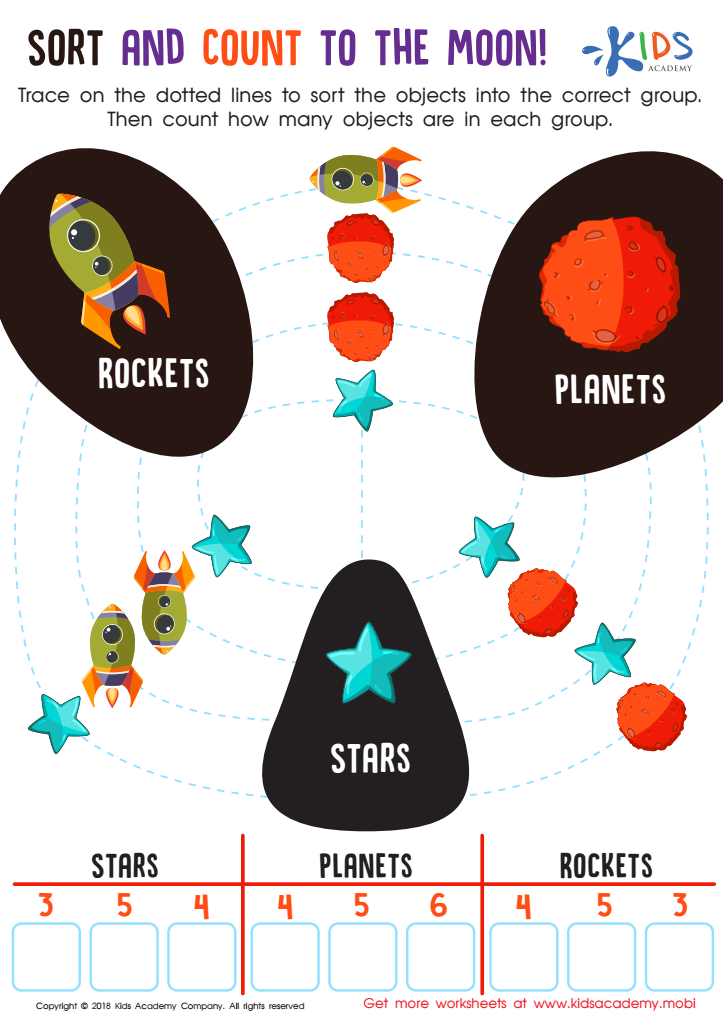
Sort and Count to the Moon Worksheet
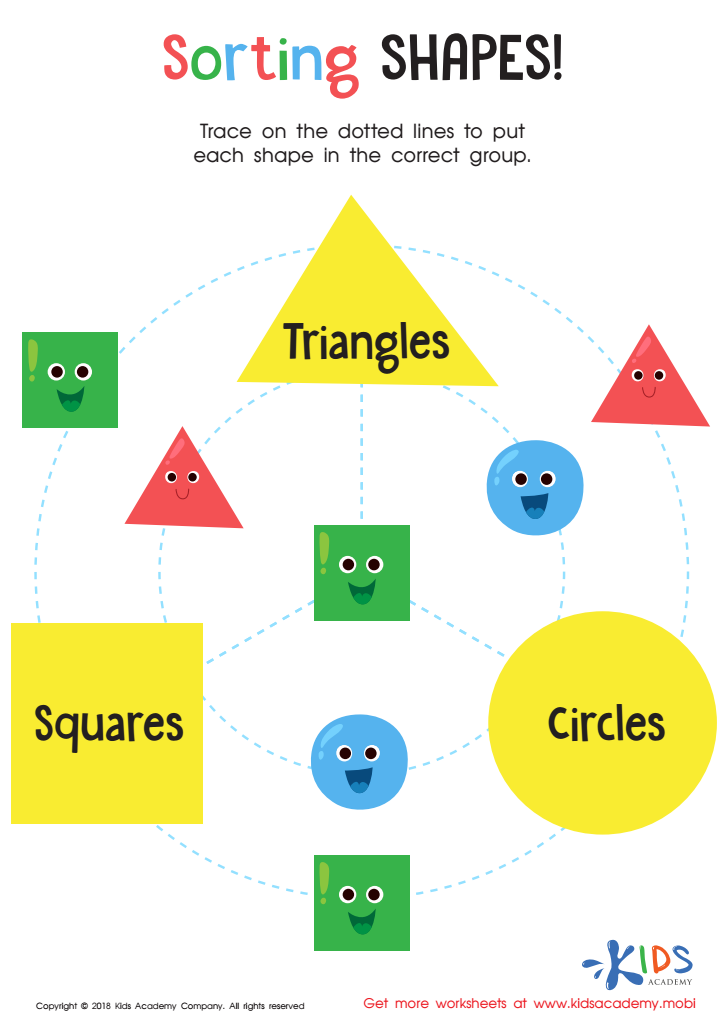
Sorting Shapes - Part 3 Worksheet
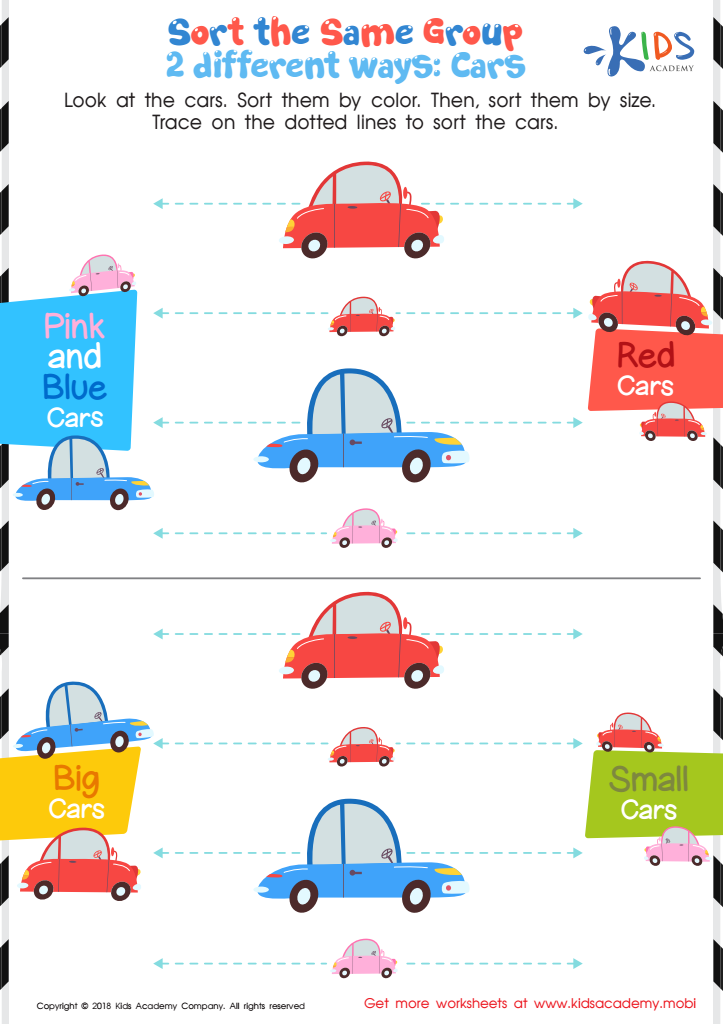
Sort the Same Group 2 Different Ways: Cars Worksheet
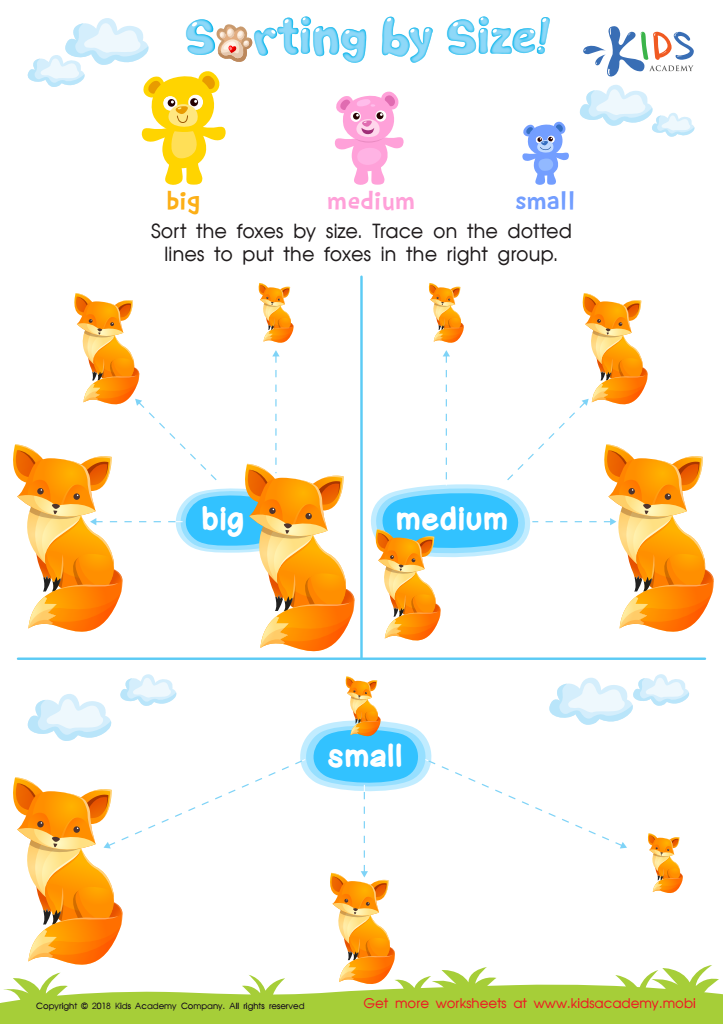
Sorting by Size Worksheet








Sorting skills are fundamental for children's cognitive development and play a crucial role in their early learning. For children aged 3-9, engaging in sorting activities can enhance critical thinking abilities. Sorting helps children identify and categorize objects based on attributes such as size, shape, color, or function, fostering analytical thinking.
These skills are foundational for mathematical concepts, as children learn to recognize patterns and relationships. By sorting, children begin to understand concepts such as similarity and difference, which are vital for later success in mathematics and logic. Moreover, sorting activities promote fine motor skills and hand-eye coordination, as children manipulate small objects.
Additionally, sorting encourages language development; when children discuss their sorting criteria, they expand their vocabulary and improve communication skills. For teachers and parents, incorporating sorting games and activities into daily routines helps cater to diverse learning styles and keeps children engaged and motivated in their learning journey.
Overall, sorting skills not only support academic success but also instill a sense of order and organization that children can apply in various aspects of their lives, preparing them for both personal and social interactions as they grow. It’s an enjoyable and effective way to lay a solid foundation for future learning.








