Cognitive Development Subtraction Worksheets for Ages 3-9
5 filtered results
-
From - To
Discover our engaging Cognitive Development Subtraction Worksheets designed for children ages 3 to 9! These worksheets promote essential skills like problem-solving, critical thinking, and numeracy in a fun and interactive way. Tailored to different ages and learning levels, each activity encourages kids to explore subtraction concepts using visual aids, interactive exercises, and real-life scenarios. Perfect for homeschooling or classroom settings, our worksheets aim to strengthen foundational math abilities while fostering cognitive growth. Let your child build confidence and enjoy learning subtraction through playful practice! Explore our collection to enhance your child’s critical thinking and math skills today!
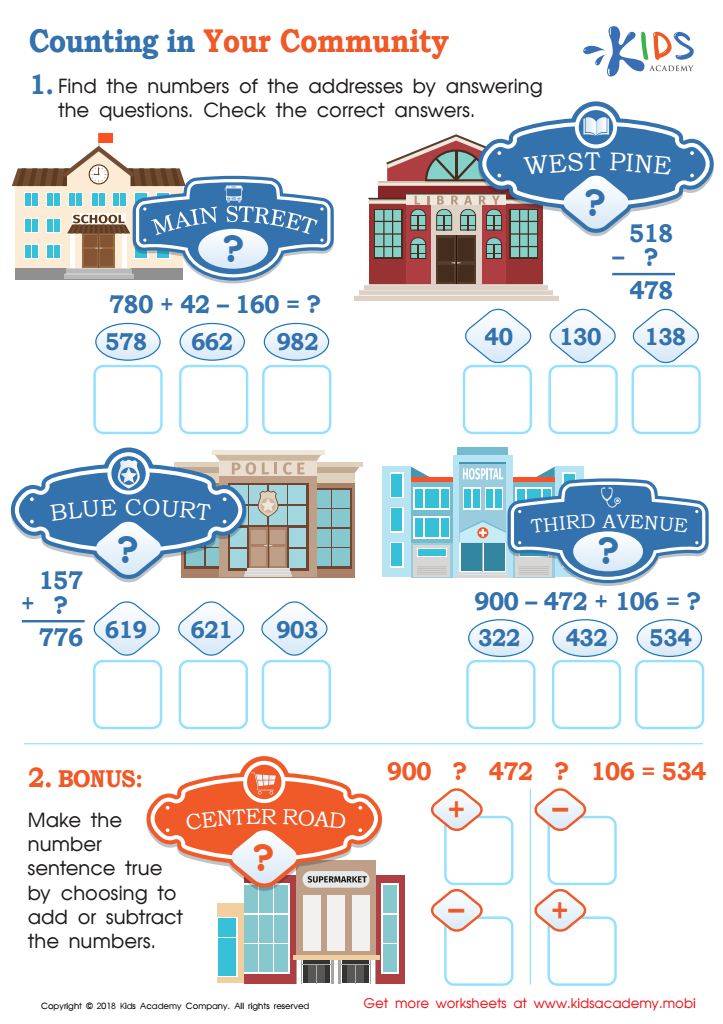
Counting in Your Community Worksheet
 Assign to My Students
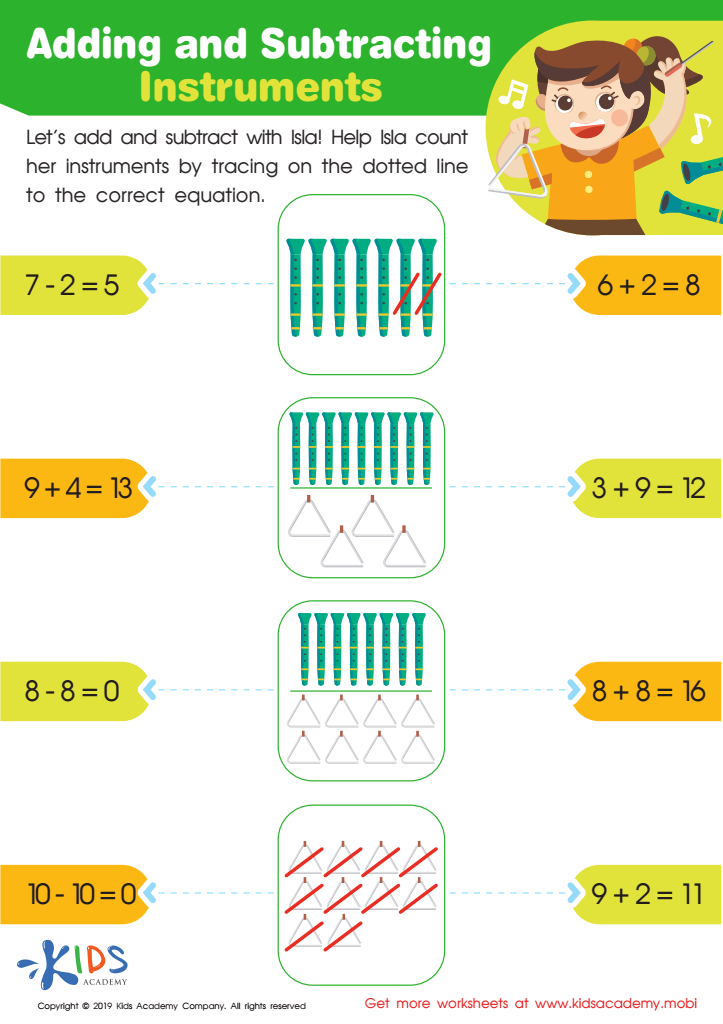
Adding and Subtracting: Instruments Worksheet
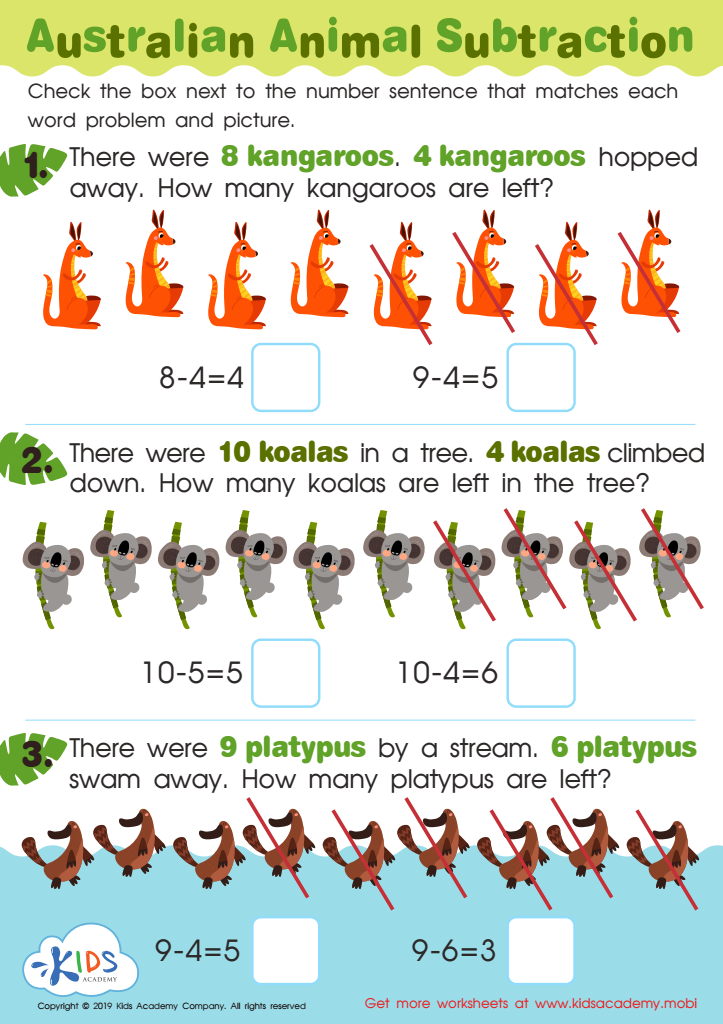
Australian Animal Subtraction Worksheet
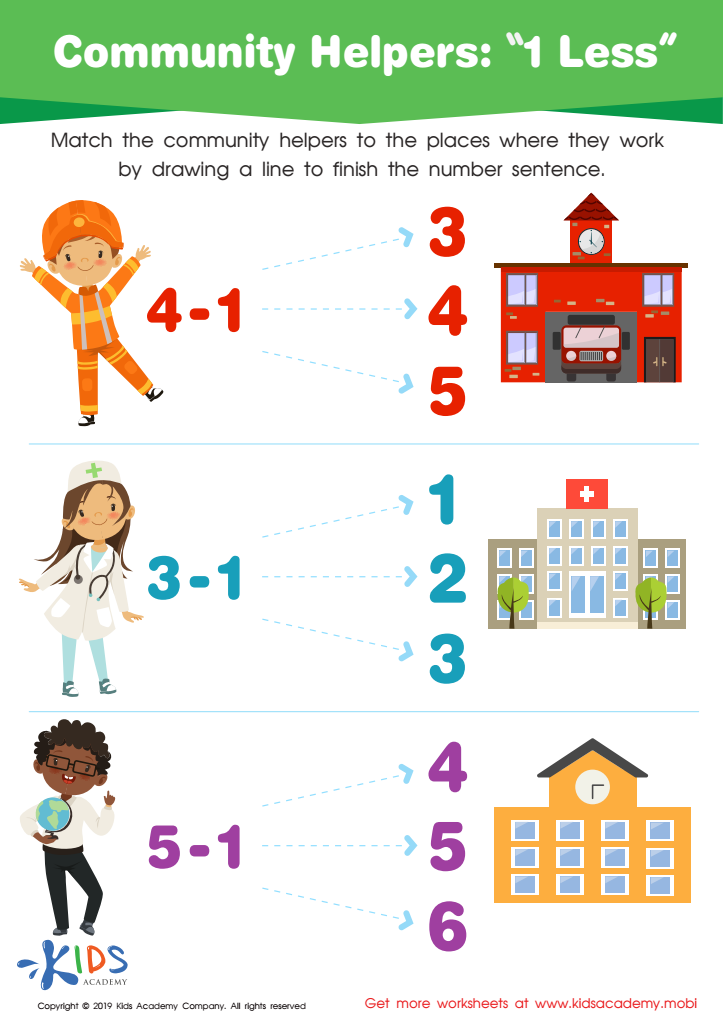
Community Helpers: 1 less Worksheet
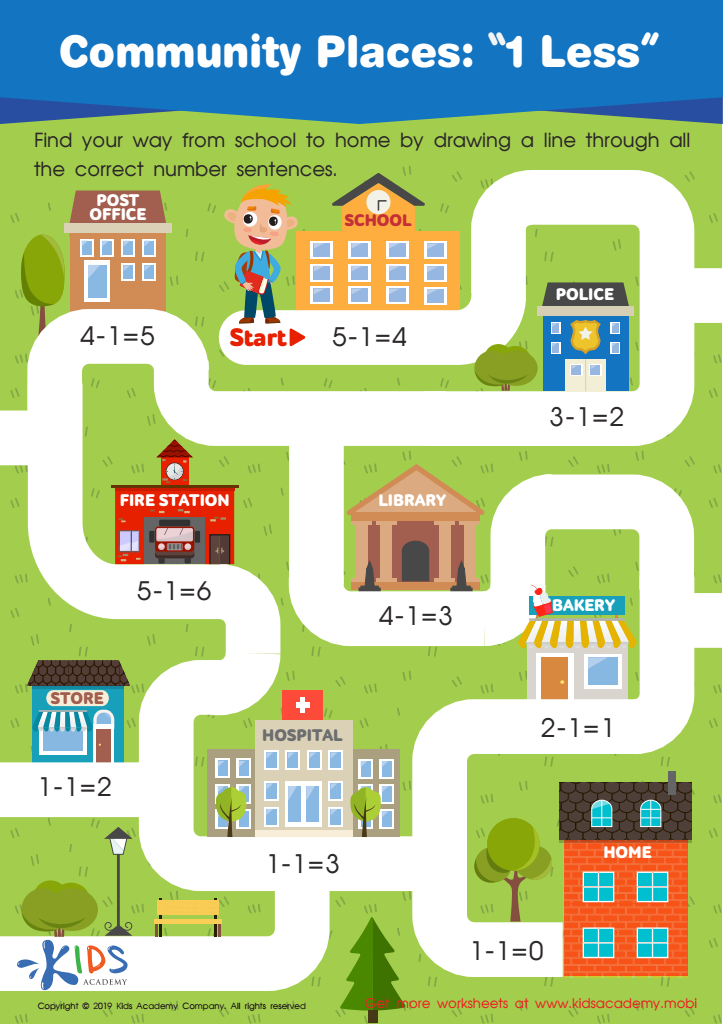
Community Places: 1 Less Worksheet








Cognitive development, particularly in core areas like subtraction, plays a vital role in the early years of a child's education. For parents and teachers, focusing on subtraction for ages 3-9 is essential as it lays the groundwork for a child's mathematical understanding and problem-solving skills. During these formative years, children develop critical cognitive abilities that help them make sense of the world around them.
Subtraction not only fosters numerical skills but also enhances logical reasoning and critical thinking. Understanding subtraction promotes the ability to analyze relationships between numbers, reason through problems, and apply concepts in real-life situations. For example, when children engage with subtraction, they learn about sharing and fairness, which are important social concepts.
Furthermore, early mastery of subtraction contributes to confidence in tackling more complex mathematical concepts later on. As students progress in their education, a strong foundational knowledge in subtraction will facilitate future learning in areas like addition, multiplication, and division. By investing time and resources into supporting cognitive development in subtraction, parents and teachers can ensure that children are well-equipped for academic success, build a positive attitude towards math, and become lifelong learners.








