
Mental arithmetic Subtraction Worksheets for Ages 3-9
3 filtered results
Difficulty Level
Grade
Age
-
From - To
Subject
Activity
Standards
Boost your child's math skills with our Mental Arithmetic Subtraction Worksheets designed for ages 3-9. These engaging activities help kids conquer basic subtraction through fun exercises that enhance memory, focus, and analytical abilities. Tailored to different learning paces, our worksheets ensure a solid foundation in subtraction, paving the way for future math success. Kids will build confidence and speed in solving problems while enjoying colorful and interactive tasks. Perfect for at-home practice or classroom use, our worksheets cater to young learners, making subtraction an enjoyable and rewarding experience. Empower your child’s math journey today!
Favorites
With answer key
Interactive
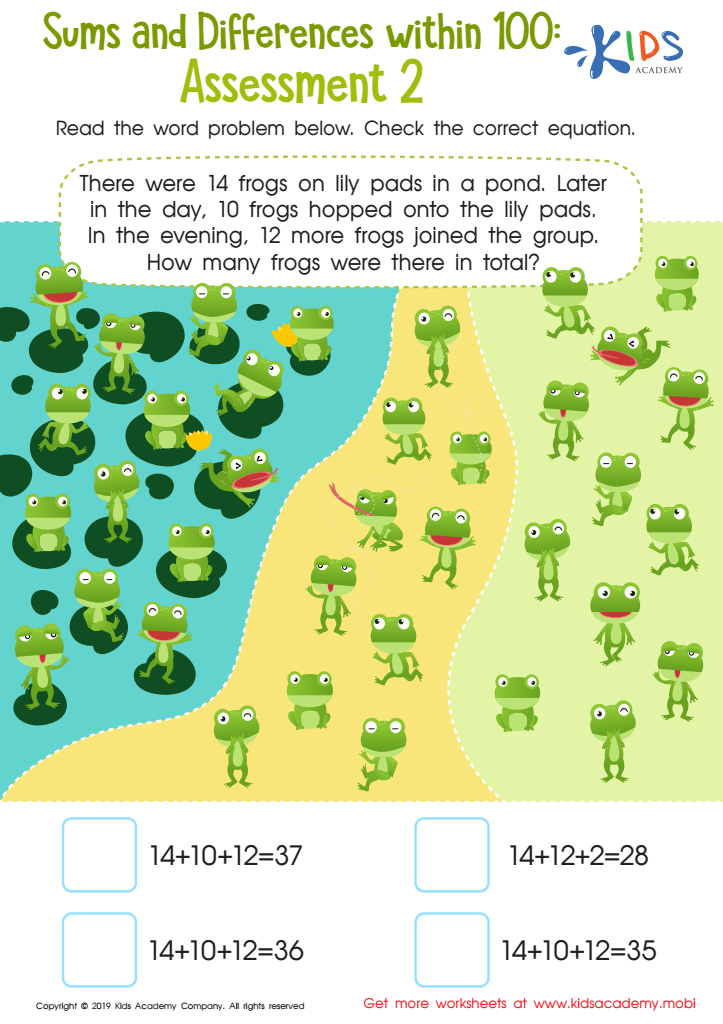
Sums and Differences Within 1 - Assessment 2 Worksheet
Help your kids practice math with these simple word problems. Read the question, discuss with them to form the equation and then check the answer. Give them a chance to sharpen their math skills!
 Assign to My Students
Sums and Differences Within 1 - Assessment 2 Worksheet
Worksheet
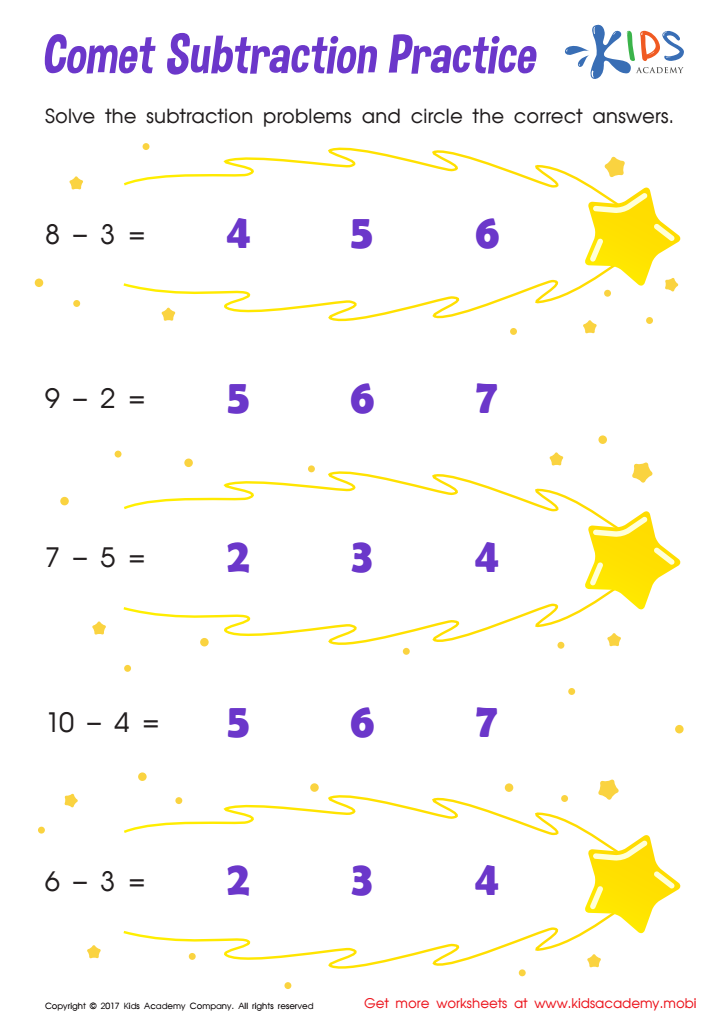
Comet Subtraction Practice Substraction Worksheet
This versatile 2nd grade math worksheet is perfect for parents wanting to get creative! It allows for practicing subtraction using different strategies, such as a number line, and provides answer choices for the child. Enjoy fun pictures in outer space to motivate your child and strengthen their problem-solving skills. It's the perfect way to learn!
Comet Subtraction Practice Substraction Worksheet
Worksheet
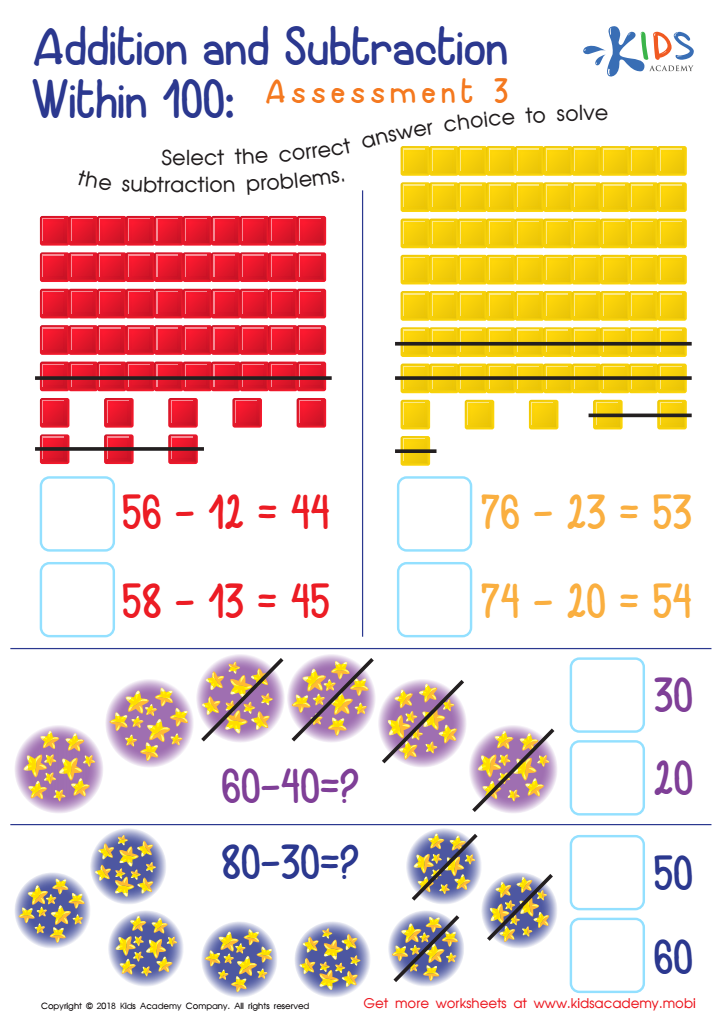
Addition and Subtraction Within 1: Assessment 3 Worksheet
Help your kids count the base ten blocks in the picture. Then, count how many have been marked off. Ask them to select the correct answer choice to solve the subtraction problems based on the blocks counted. 80 words
Addition and Subtraction Within 1: Assessment 3 Worksheet
Worksheet
Join Kids Academy for Free
Who is primarily going to use this learning content?








Parents and teachers should prioritize mental arithmetic subtraction for children aged 3-9 because it is foundational to mathematical proficiency and cognitive development. At this crucial developmental stage, mastering subtraction through mental arithmetic aids in building a strong number sense—crucial for understanding more complex math concepts later on. By developing these skills early, children enhance their memory, attention span, and problem-solving abilities, all essential for overall academic success.
Mentally subtracting numbers requires children to hold numbers in their heads and manipulate them, which enhances working memory and cognitive flexibility. These skills are not limited to math but are transferable to other subjects, improving overall learning and performance. It also boosts confidence and reduces math anxiety, as children become more adept at handling numbers efficiently and accurately.
Additionally, mental arithmetic is practical for everyday situations, fostering a mindset where children can approach real-life problems with logic and ease. For example, simple tasks like understanding money, measuring ingredients while cooking, or sharing items equally with friends become learning moments that reinforce these skills.
Encouraging mental arithmetic from an early age lays a robust foundation for future academic achievements and life skills. Parents and teachers play a vital role in nurturing these abilities, ensuring children develop into capable and confident individuals.








