Filters

6 filtered results

Clear all filters
Favorites
With answer key
Interactive

6 filtered results

Difficulty Level

Grade


Our Basic Addition Word Problems Worksheets for ages 3-9 offer engaging and interactive activities that help young learners strengthen their math skills. Designed to make learning fun, these worksheets feature relatable scenarios to enhance problem-solving abilities and boost confidence in basic addition. Each sheet encourages critical thinking through imaginative stories and diverse exercises, making math both enjoyable and educational. Ideal for parents and teachers, these resources provide an excellent foundation for future math success. Start exploring our delightful and effective addition worksheets today, and watch as your child’s arithmetic skills blossom!

Check out this FREE Trial Lesson on Word Problems for age 3-9!

Drawing it Out Addition

Favorites
With answer key
Interactive
  • 3-9
  • Basic Addition
  • Word Problems
Assessment 2 Math Worksheet

Assessment 2 Math Worksheet

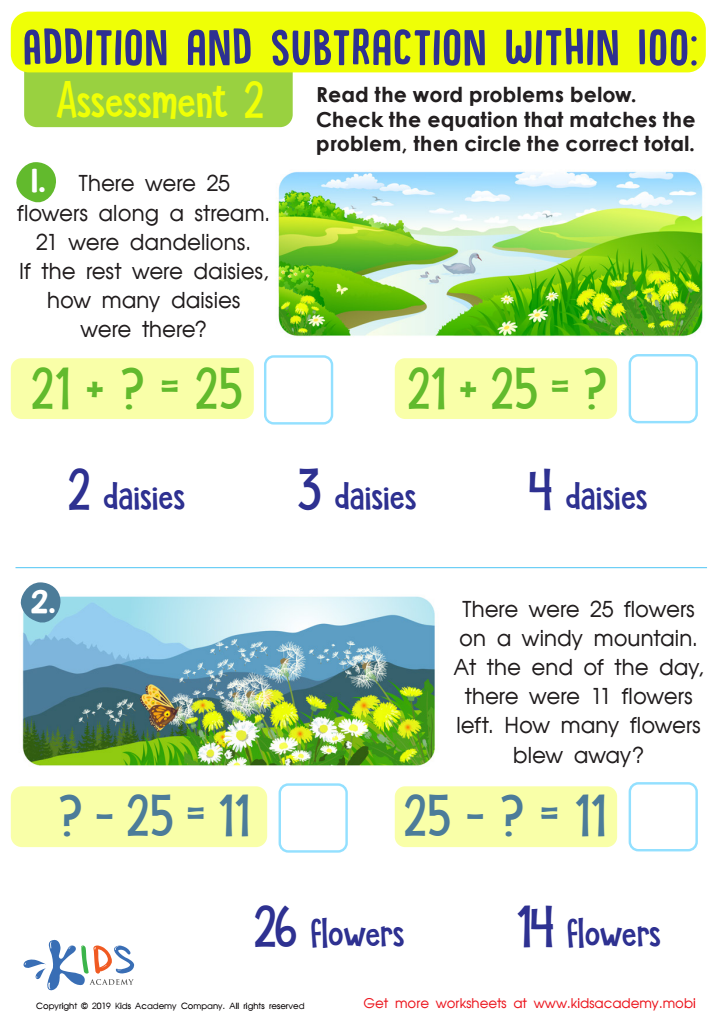
Using fun exercises and pictures, you can get kids excited about math. With practice and reminders of what they've learnt, they'll be solving simple addition and subtraction equations with ease. Read the word problems in the picture to them, then help them check the equation and choose the correct answer.
Assessment 2 Math Worksheet
Worksheet
Going Bananas Worksheet

Going Bananas Worksheet

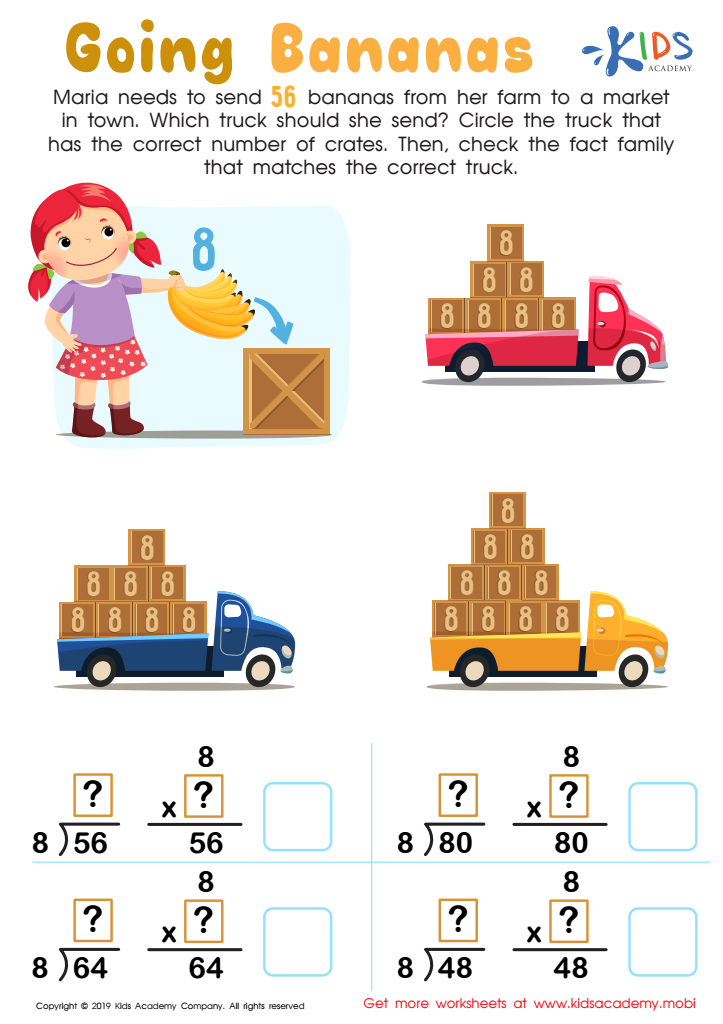
Marla needs to send 56 bananas in batches of 8. Help your child practice division and learn about fact families with this free worksheet. It'll help boost their multiplication skills and increase speed when solving problems.
Going Bananas Worksheet
Worksheet
Sea Math Worksheet
Sea Math Worksheet

Sea Math Worksheet

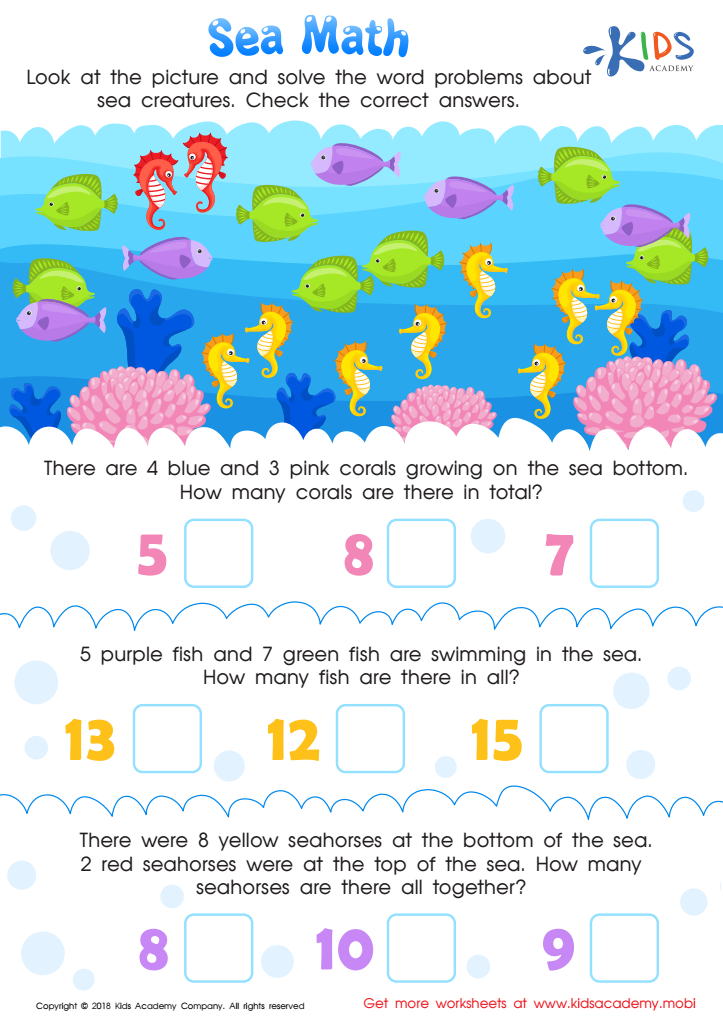
Dive into an ocean of addition with this fun math worksheet! Help your little mathematician count and add colorful coral and fish. Point out phrases like "in total" or "all together" as a reminder to use addition. Watch them add to find the answer and check the boxes to finish!
Sea Math Worksheet
Worksheet
Problem Solving: Tony's Wreath Worksheet

Problem Solving: Tony's Wreath Worksheet

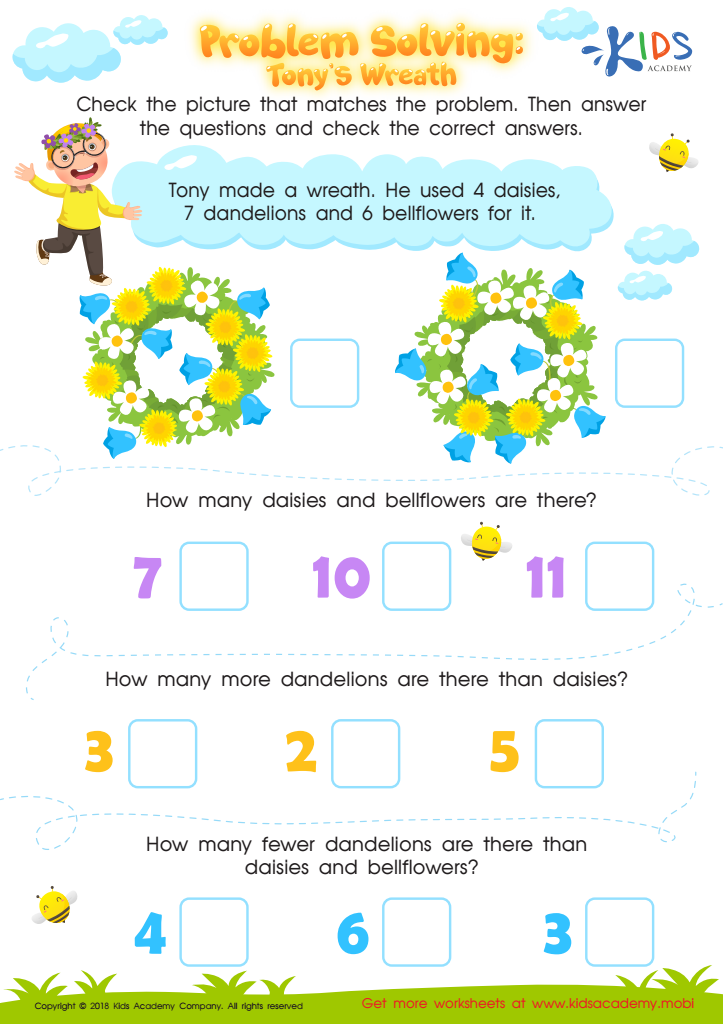
Tony needs help! He's made a beautiful, colorful wreath and needs help counting the flowers. Your math student can read the word problems, match answers to the problems and solve basic addition and subtraction. They'll practice with two and three addends, minuends and subtrahends to find sums and differences and help Tony and his bee friends.
Problem Solving: Tony's Wreath Worksheet
Worksheet
Counting with Drawings:Fruits & Flowers Worksheet

Counting with Drawings:Fruits & Flowers Worksheet

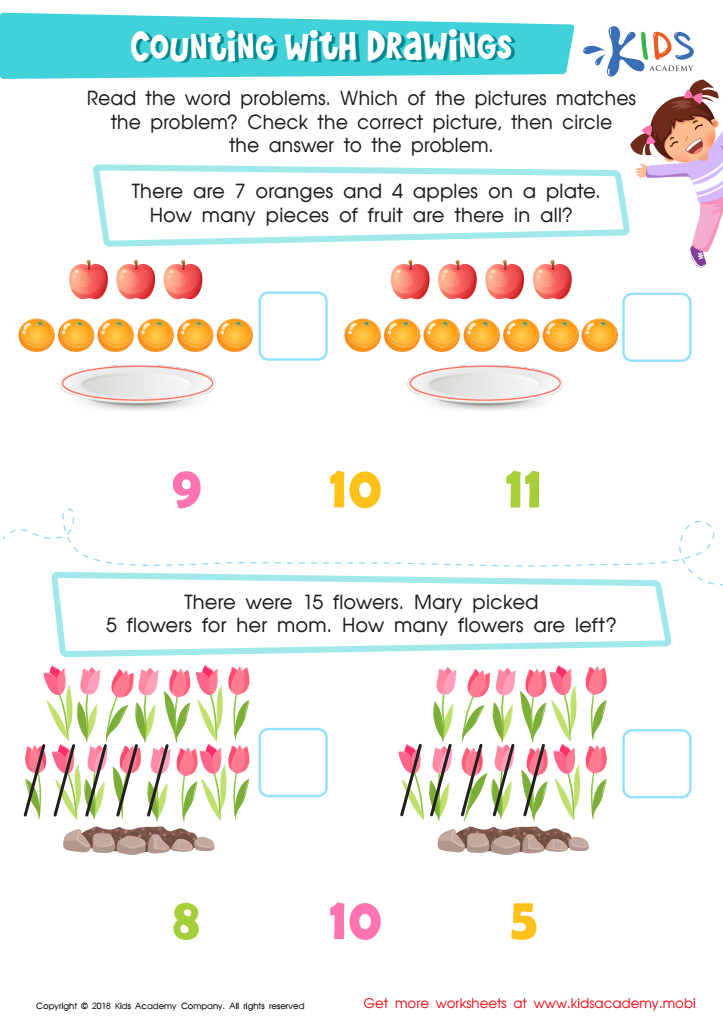
At Kids Academy, we know pictures make math come alive and make sense. This worksheet is perfect for early learners to practice word problems. Kids read each problem and count the images that represent the numbers, then solve the problem with addition or subtraction to get the right answer.
Counting with Drawings:Fruits & Flowers Worksheet
Worksheet
Animal Addition Worksheet

Animal Addition Worksheet

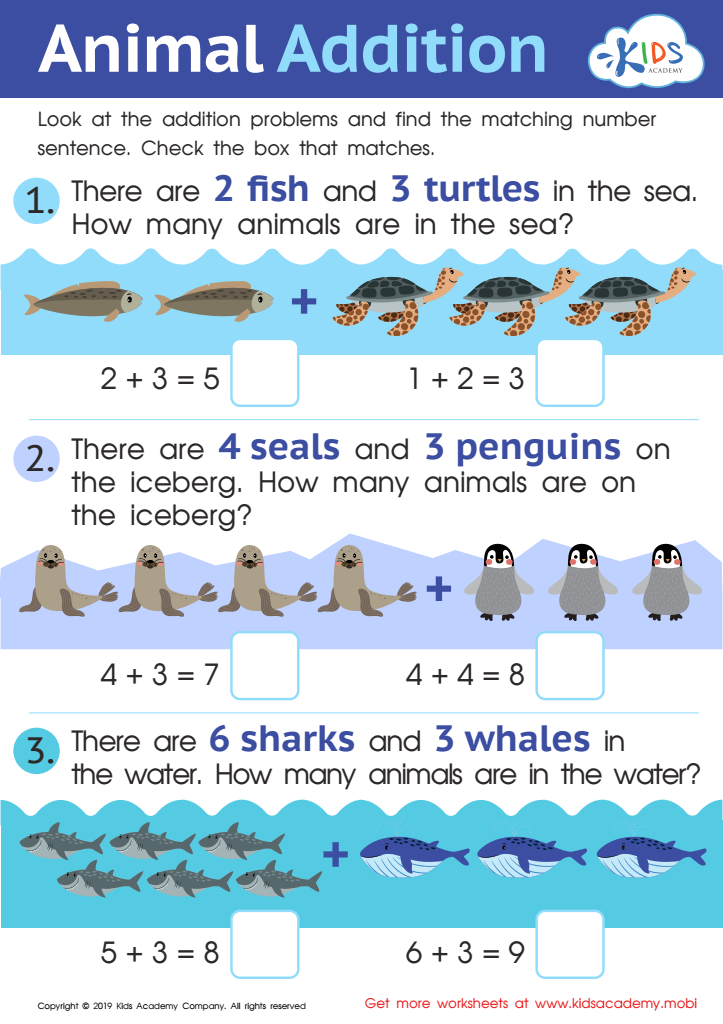
Get your kids learning addition and subtraction with this fun worksheet! Show them that solving equations can be enjoyable and help them match number sentences to the correct boxes. By doing this together, you'll create a positive learning experience that your kids won't forget.
Animal Addition Worksheet
Worksheet


Basic addition word problems are essential for children aged 3-9 because they lay a crucial foundation for mathematical understanding and problem-solving skills. These early math problems help children develop number sense, enabling them to grasp how numbers work and relate to each other in practical contexts. When parents and teachers engage young learners with addition word problems, they promote critical thinking and analytical skills.

Such problems encourage kids to use reasoning rather than mere memorization. Contextual problems can be related to everyday life, making math more enjoyable and relevant. For example, asking how many apples are left after giving some away teaches subtraction alongside addition implicitly. Early mastery of these concepts aids in confidence-building, making tackling more complex math challenges less intimidating as they progress in school.

Moreover, early exposure to word problems enhances reading comprehension and vocabulary. Children learn to parse information, identify key elements, and develop attentive listening and reading skills which are transferable to all subjects. Solving these problems can foster perseverance and patience, qualities invaluable beyond the classroom.

In essence, basic addition word problems form the bedrock of a child's educational journey. Therefore, sparking an interest and proficiency in them sets children up for future success in academics and real-life situations.