Fraction comparison Building Vocabulary Worksheets for Ages 3-9
13 filtered results
-
From - To
Discover our engaging Fraction Comparison Building Vocabulary Worksheets, designed specifically for children aged 3-9! These fun and interactive worksheets help young learners develop their understanding of fractions and enhance their vocabulary. With visually appealing graphics and varied activities, children will practice identifying and comparing fractions in a playful way. Our materials are perfect for reinforcing classroom lessons or supporting home learning. Ideal for early childhood educators and parents alike, these resources create a solid foundation in math while enriching language skills. Empower your child's learning journey with our thoughtfully crafted worksheets that make mastering fractions an enjoyable experience! Explore today!
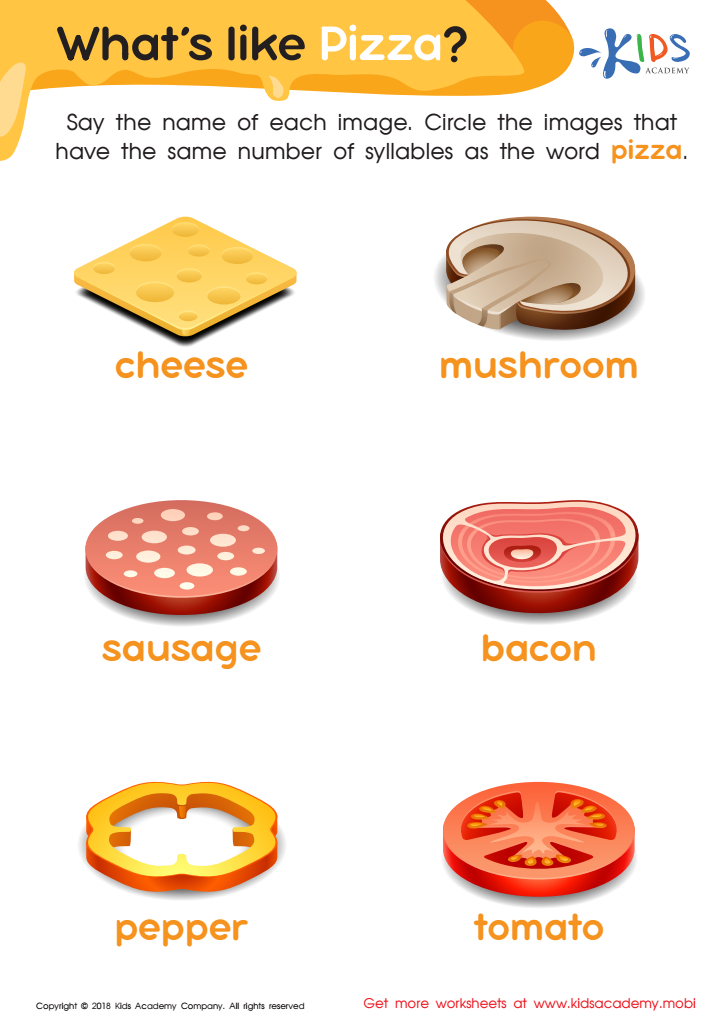
What's Like Pizza? Worksheet
 Assign to My Students


















.jpg)
Parents and teachers should prioritize fraction comparison and building vocabulary for young learners ages 3-9 because these foundational skills significantly influence mathematical understanding and language development. Early exposure to fractions fosters number sense, enabling children to grasp essential mathematical concepts that serve as building blocks for more complex topics later on.
Moreover, enhancing vocabulary in this age group is crucial. Children who can articulate mathematical ideas are better positioned to engage in problem-solving and reasoning activities. Discussing terms like "more than," "less than," "equal," and "half" promotes comprehension and allows children to express comparisons accurately.
Integrating vocabulary-building activities with fraction comparisons makes learning interactive and fun. This can be achieved through games, visual aids, and real-life applications, making abstract concepts more relatable. Additionally, strong vocabulary skills bolster overall communication, enhancing children's ability to ask questions, share ideas, and collaborate with others.
By focusing on these skills, parents and teachers help children develop confidence in their analytical abilities and prepare them for future academic challenges. Ultimately, investing in fraction comparison and vocabulary building creates well-rounded learners equipped to thrive in both math and language arts.








