Logical Reasoning Building Vocabulary Worksheets for Ages 3-9
8 filtered results
-
From - To
Enhance your child's critical thinking and language skills with our Logical Reasoning Building Vocabulary Worksheets for ages 3-9. These engaging worksheets are expertly designed to develop young minds, helping children build a robust vocabulary while honing their logical reasoning abilities. Each printable activity is crafted to be both fun and educational, ensuring learners stay motivated and curious. From word matching to problem-solving exercises, these worksheets provide essential practice that supports cognitive development and language acquisition. Ideal for home or classroom use, give your child the tools they need to succeed with our thoughtfully designed resources. Explore today!
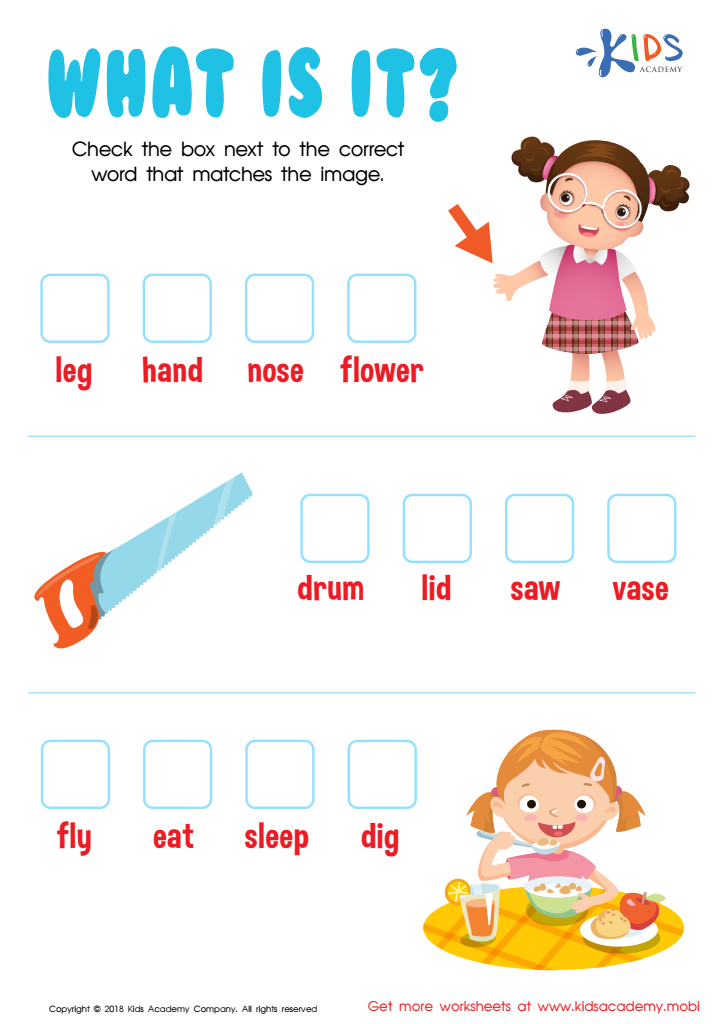
What Is It? Worksheet
 Assign to My Students











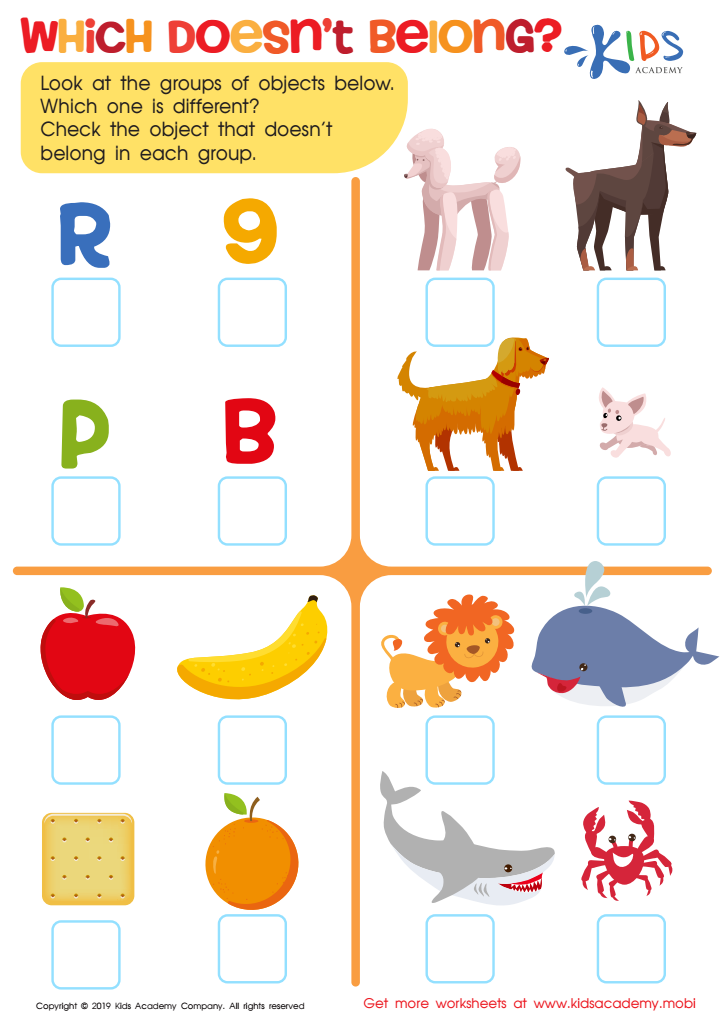
Which Doesn't Belong? Worksheet
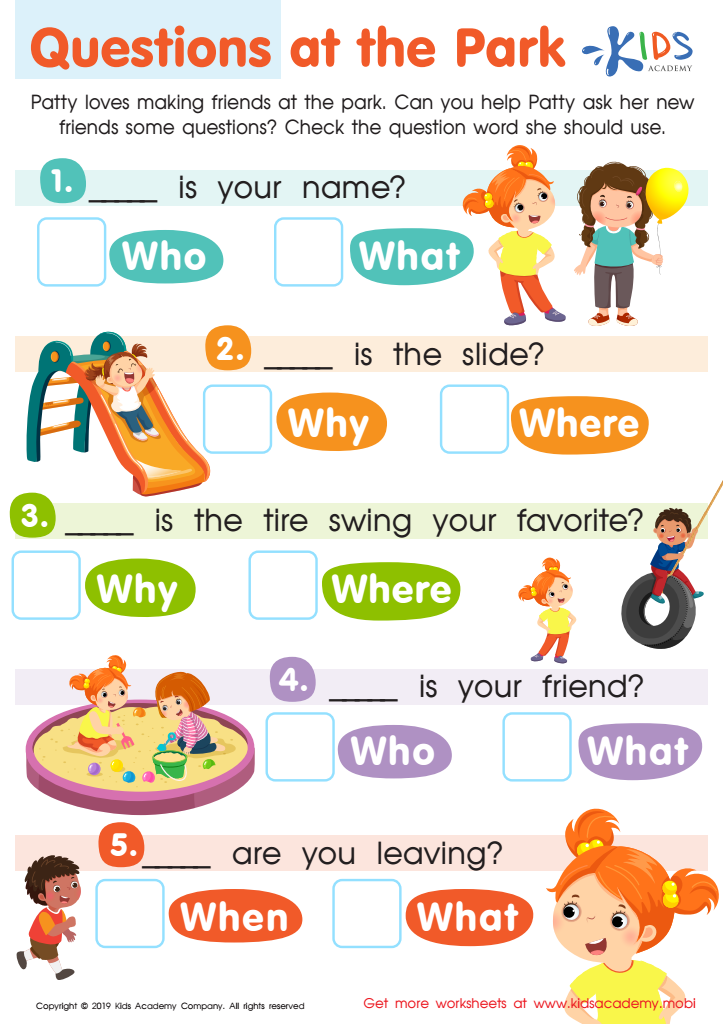
Questions at the Park Worksheet
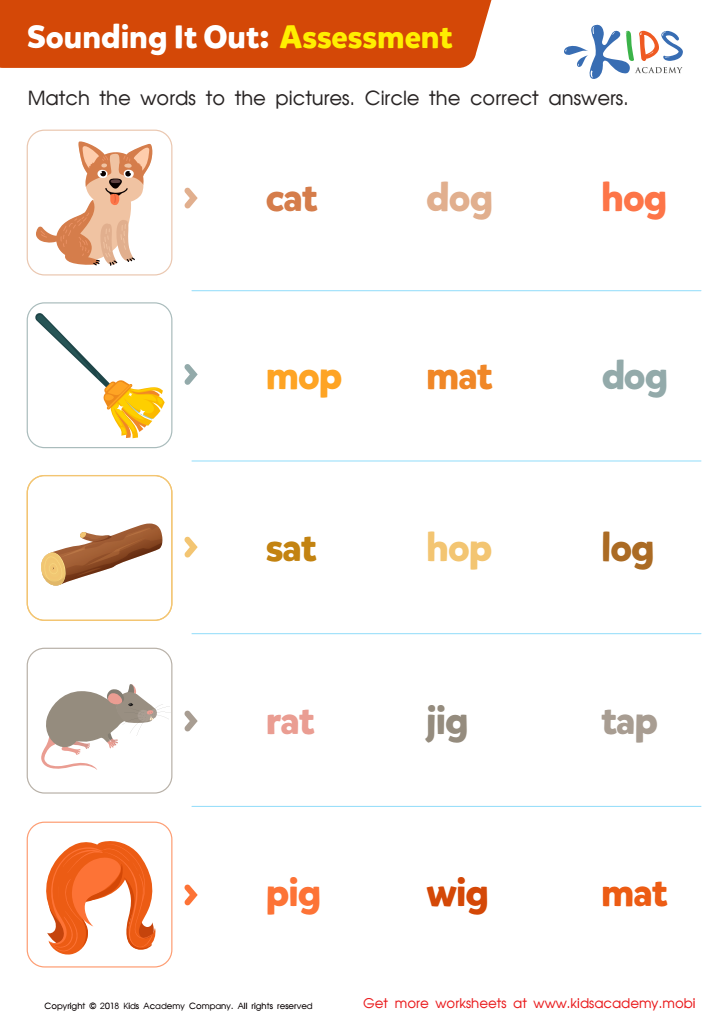
Sounding it Out: Assessment Worksheet
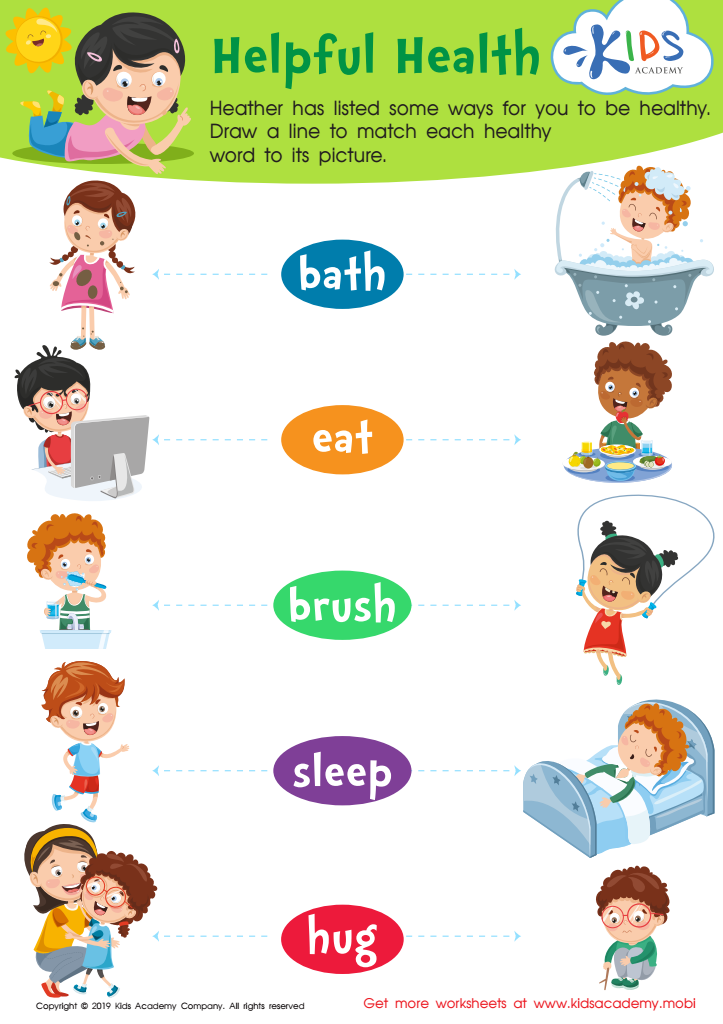
Helpful Health Worksheet
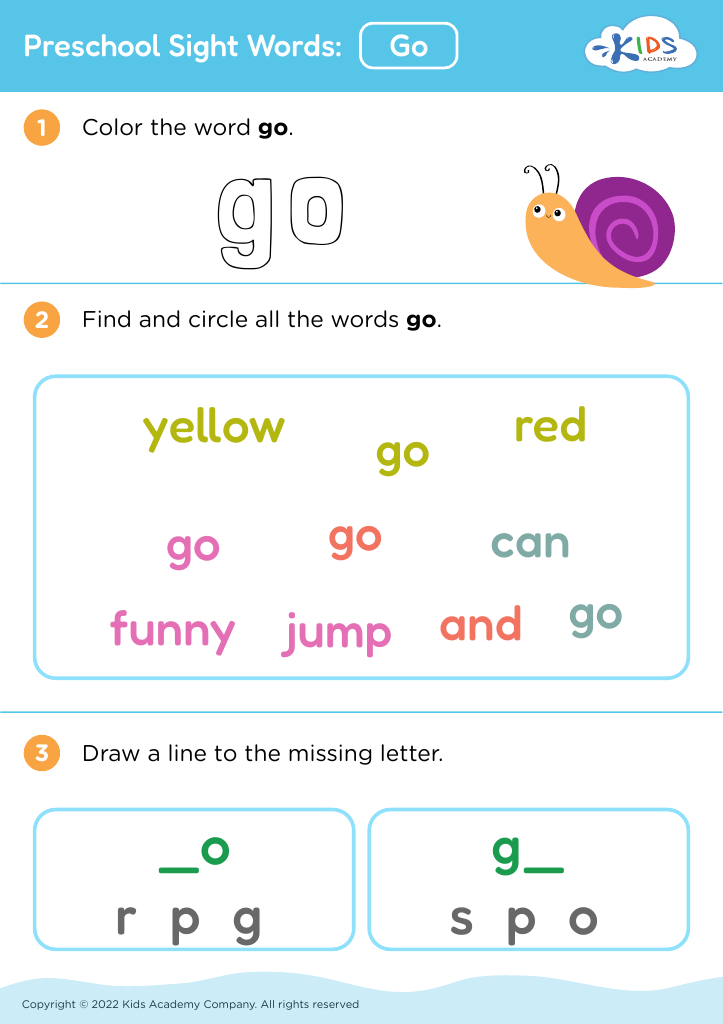
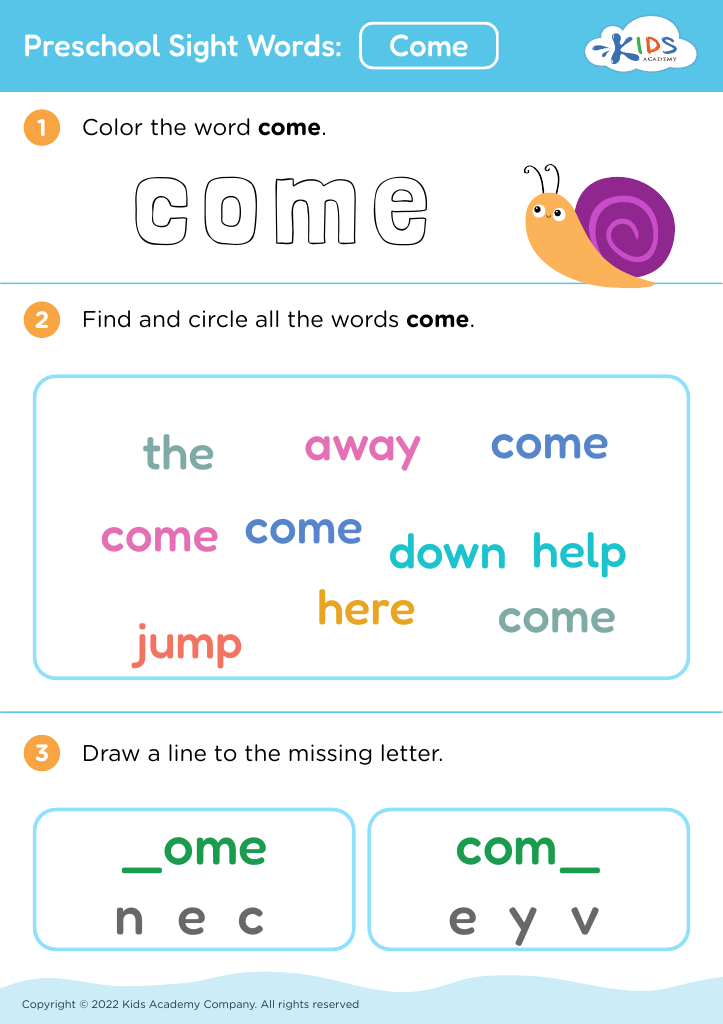
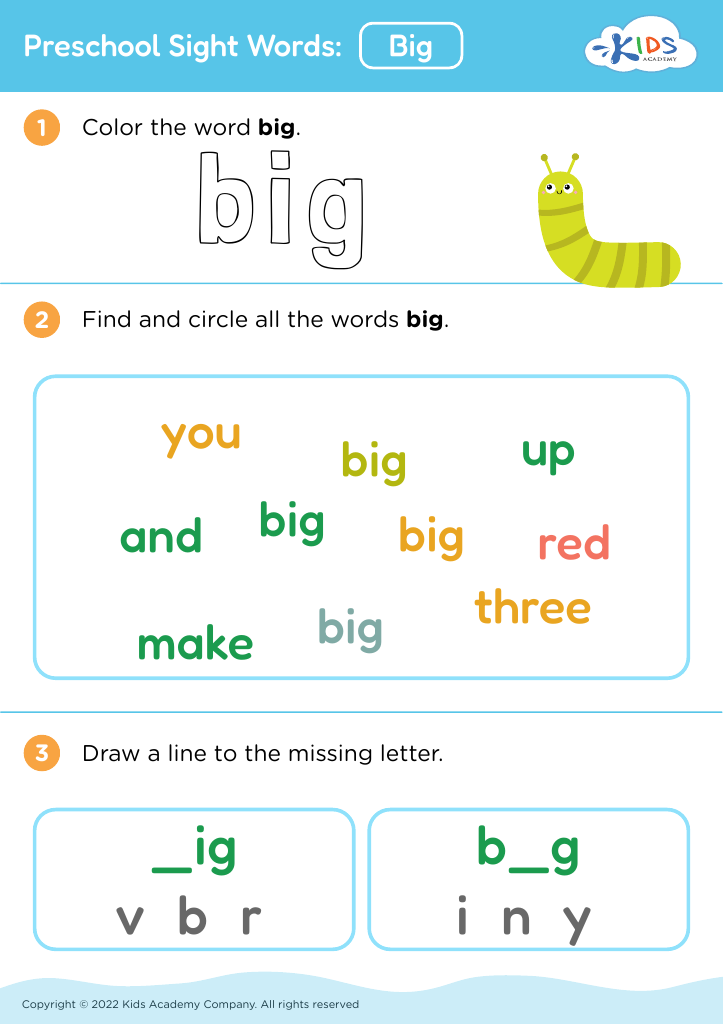








Parents and teachers should place great emphasis on building logical reasoning skills and vocabulary in children aged 3 to 9 because these foundational elements are critical for cognitive development and future academic success. During this developmental stage, children's brains are exceptionally receptive to learning and forming new neural connections.
Logical reasoning allows children to think critically, solve problems, and understand cause-and-effect relationships. When young children engage in activities that require sorting, sequencing, and identifying patterns, they learn to approach challenges methodically, enhancing their problem-solving abilities both in and out of the classroom.
Meanwhile, vocabulary development directly impacts a child's ability to communicate, comprehend new concepts, and succeed academically. A rich vocabulary enables children to understand instructions, express their thoughts clearly, and engage meaningfully in conversations with peers and adults.
Combining logical reasoning with vocabulary building through playful and interactive activities can yield significant benefits. For example, discussing why a certain set of objects belong together (e.g., fruits vs. vegetables) not only enhances their logical reasoning but also expands their vocabulary contextually.
Therefore, investing time and effort in these areas equips children with essential skills, sets a strong foundation for literacy and numeracy, and fosters an inquisitive mindset crucial for lifelong learning and success.








