Sight words recognition Building Vocabulary Worksheets for Ages 3-9
5 filtered results
-
From - To
Welcome to our "Sight Words Recognition Building Vocabulary Worksheets" designed for children ages 3 to 9! These engaging and illustrative worksheets are crafted to enhance early literacy skills through the recognition of essential sight words. By practicing these commonly used words, young learners will build confidence in reading, improve comprehension, and expand their vocabulary. Our colorful worksheets incorporate fun activities that make learning enjoyable, ensuring that children can absorb and retain new vocabulary effortlessly. Ideal for use at home or in the classroom, these resources provide a structured approach to foster a lifelong love for reading. Download and start the adventure today!
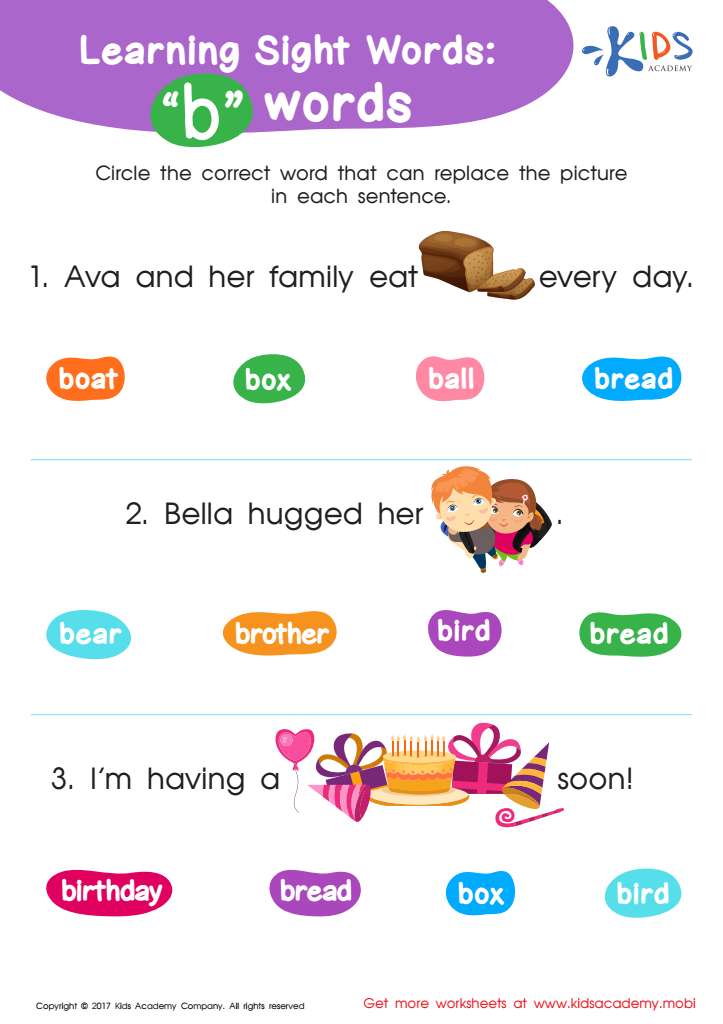
Sight Words Free Worksheet – B Words
 Assign to My Students











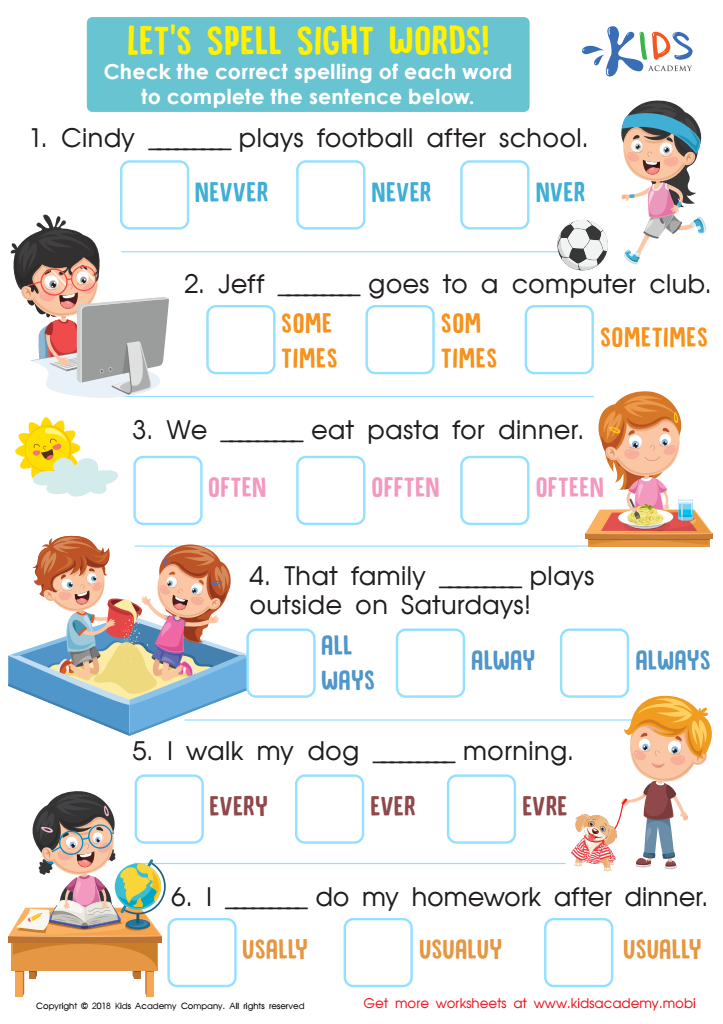
Let's Spell Sight Words Worksheet
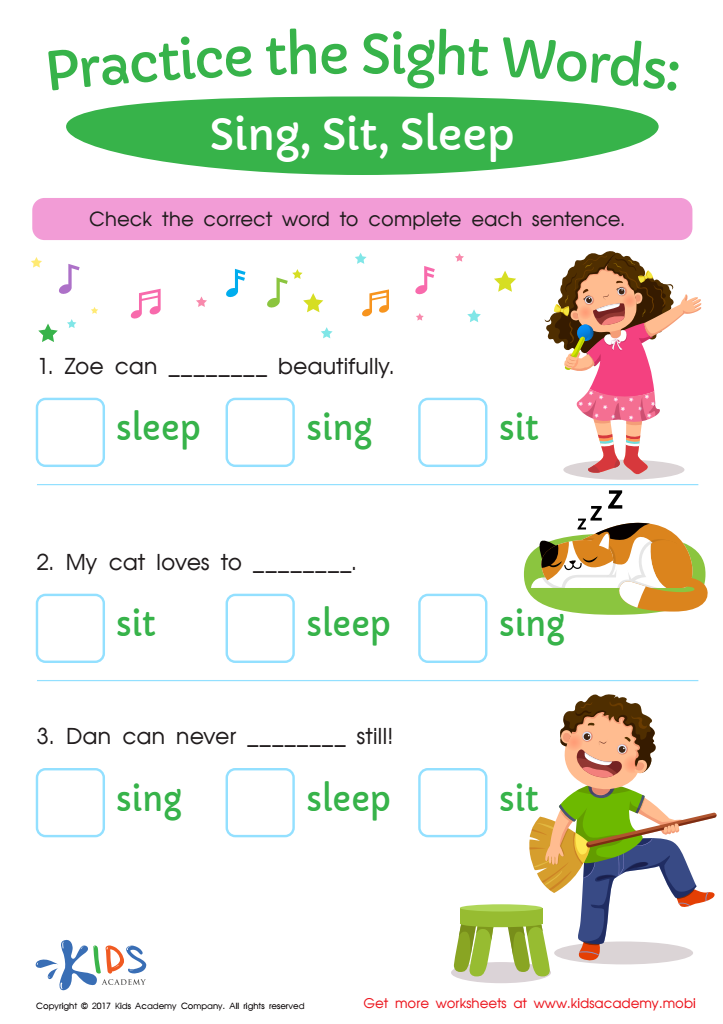
Sing, Sit, Sleep Sight Words Worksheet
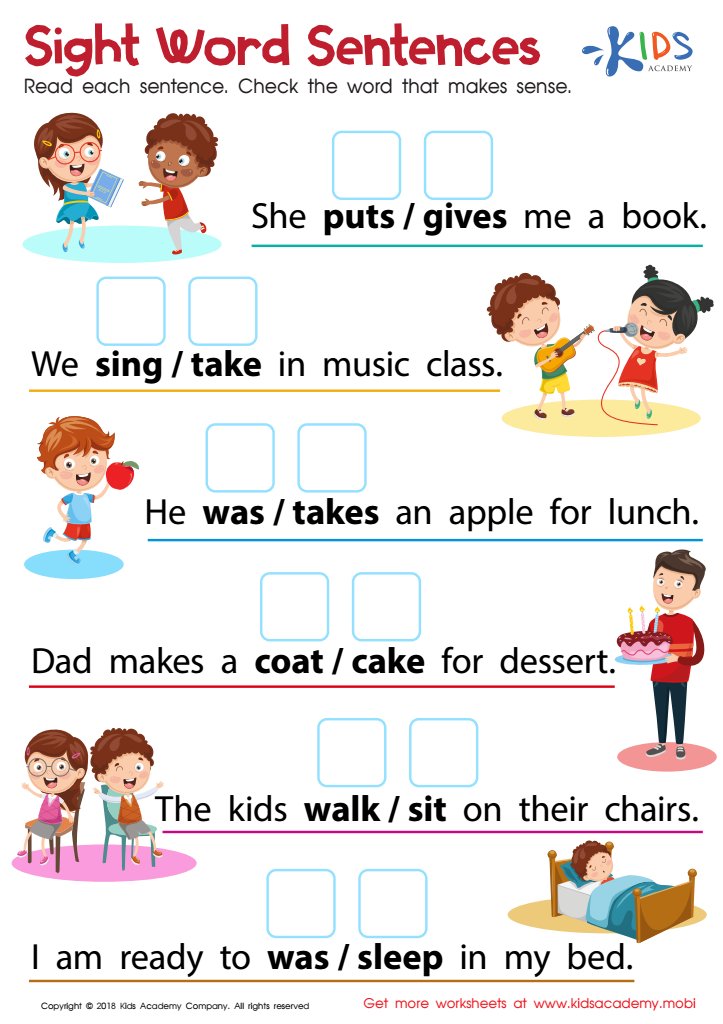
Sight Words Sentences Worksheet
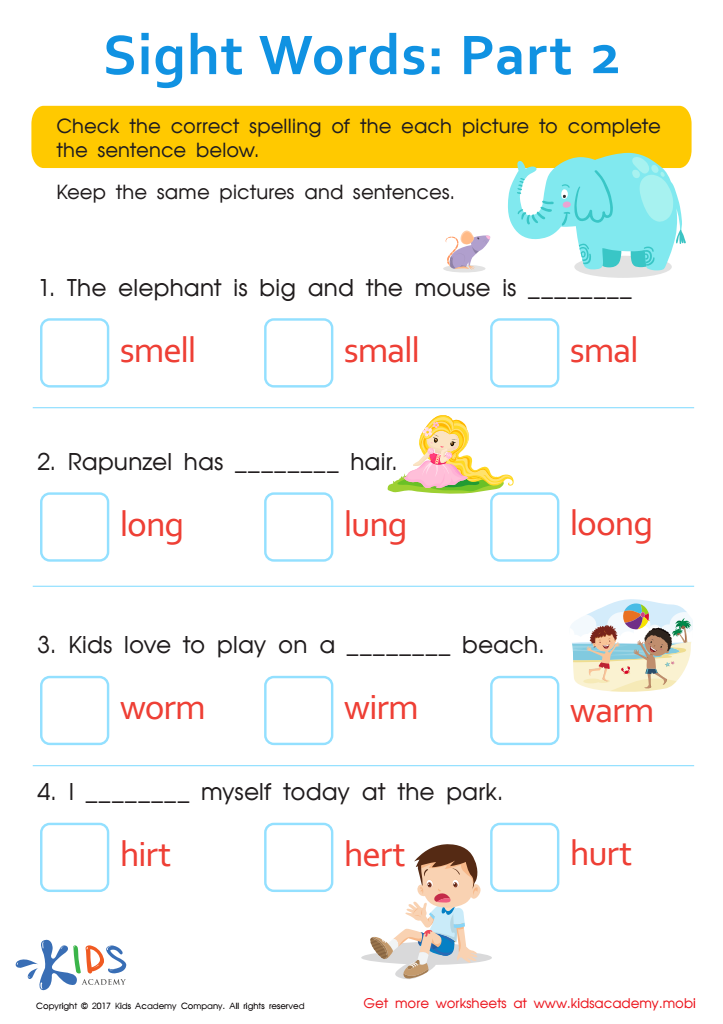
Sight Words Worksheet


.jpg)

.jpg)



Sight word recognition and vocabulary building are crucial components of early literacy for children aged 3-9. Understanding sight words—common words that children recognize immediately—facilitates smoother reading experiences, enabling them to focus on comprehension rather than deciphering text. When children can quickly identify sight words, they gain confidence and fluency, fostering a love for reading.
Furthermore, a strong vocabulary is vital for overall communication skills and cognitive development. It enriches a child’s ability to express themselves, understand complex concepts, and engage in conversations. By nurturing vocabulary through diverse reading materials, conversations, and interactive activities, parents and teachers can enhance a child's academic performance across all subjects.
Additionally, developing these foundational skills at a young age creates a positive feedback loop; children who feel competent in reading are more likely to pursue reading as a pleasurable activity, which further accelerates their learning. Investing time and resources into sight word recognition and vocabulary building sets the stage for lifelong literacy, academic success, and improved critical thinking skills. Engaging young learners in these activities ultimately equips them with the tools they need to navigate their education and develop their identities as confident and capable individuals.








