
Story analysis Building Vocabulary Worksheets for Ages 3-9
4 filtered results
Difficulty Level
Grade
Age
-
From - To
Subject
Activity
Standards
Discover engaging Story Analysis Building Vocabulary Worksheets designed specifically for children ages 3-9. These interactive worksheets help young learners improve their vocabulary while developing critical reading comprehension skills. Through captivating stories and fun activities, children will explore character traits, plot dynamics, and key themes, enhancing their understanding of literature. Our comprehensive resources make it easy to incorporate story analysis into your teaching, fostering a love for reading and learning. Ideal for parents and educators alike, these worksheets promote creativity and critical thinking, setting the foundation for literacy success. Begin your child’s journey to becoming a proficient reader today!
Favorites
With answer key
Interactive
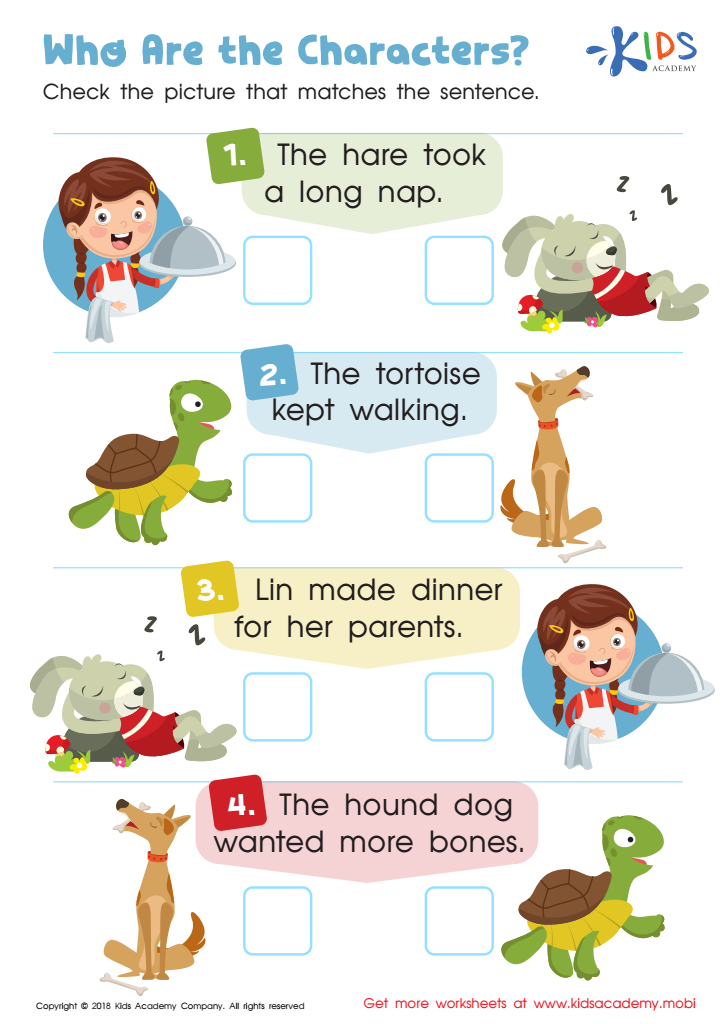
Who Are The Characters Worksheet
This worksheet tests your child's reading skills. Read each sentence out loud with them, then ask which of the two pictures match it. Help them check, then repeat this for the other sentences.
 Assign to My Students
Who Are The Characters Worksheet
Worksheet











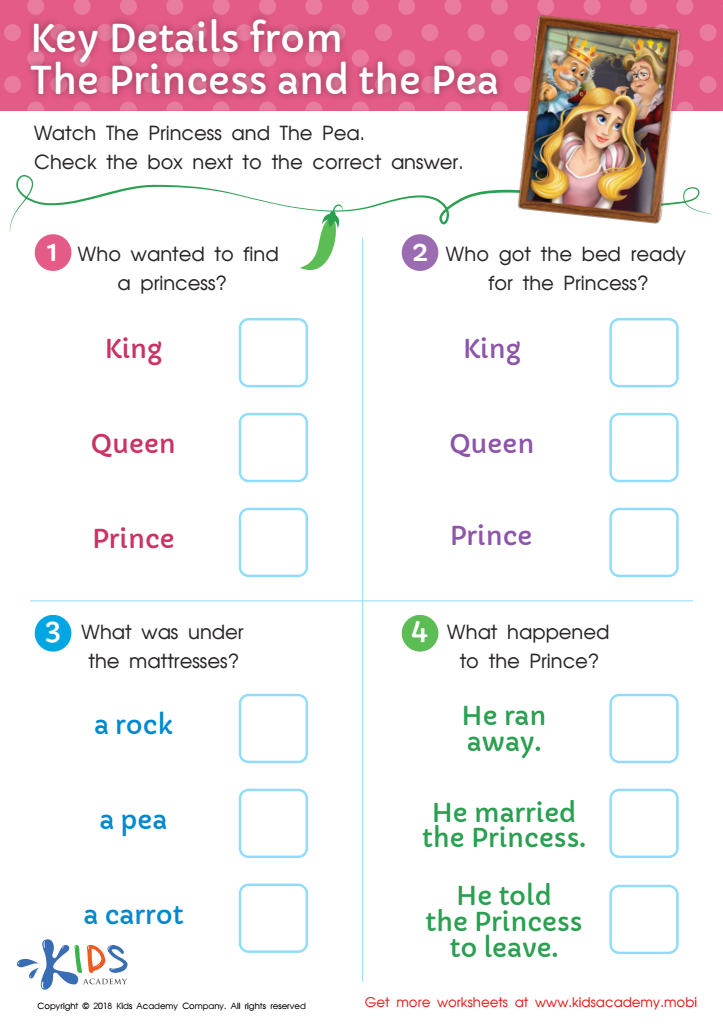
Key Details from the Princess and the Pea Worksheet
After reading The Princess and the Pea, ask your students questions to assess their comprehension of the story. Check their knowledge of key details. This printable can be used to help evaluate their understanding. Encouraging the recall of story events helps build important reading skills.
Key Details from the Princess and the Pea Worksheet
Worksheet
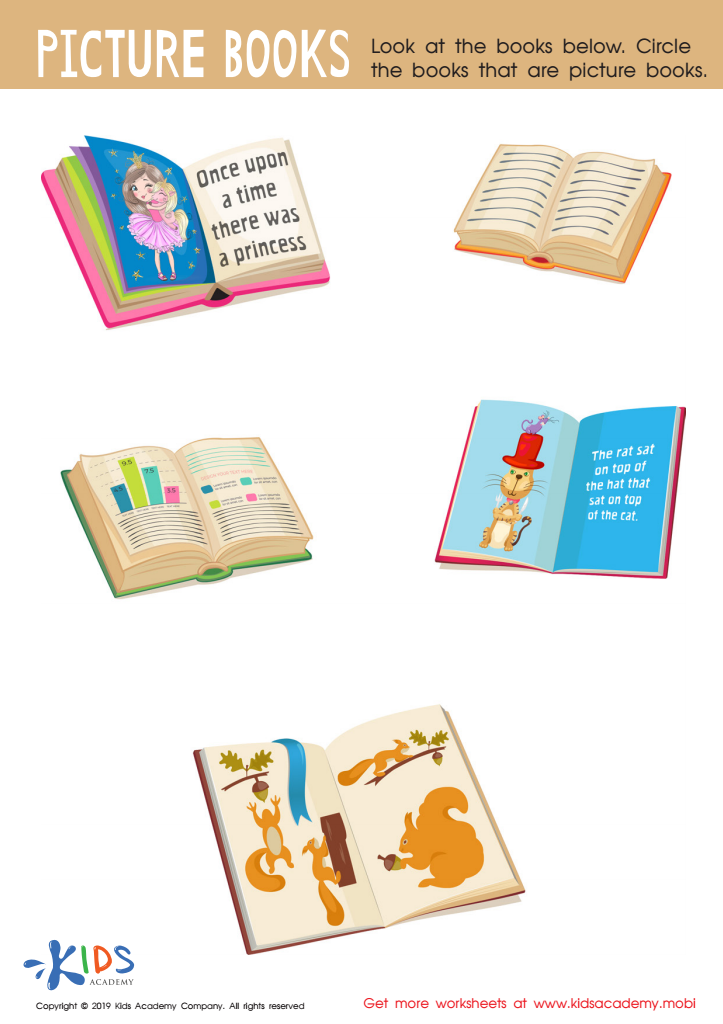
Picture Books Worksheet
Kids will love this exercise! Get their imaginations going with five colorful picture books. Ask them to circle the books that are picture books and have them enjoy the exciting stories, along with the colorful images. Reading can become that much more enjoyable!
Picture Books Worksheet
Worksheet
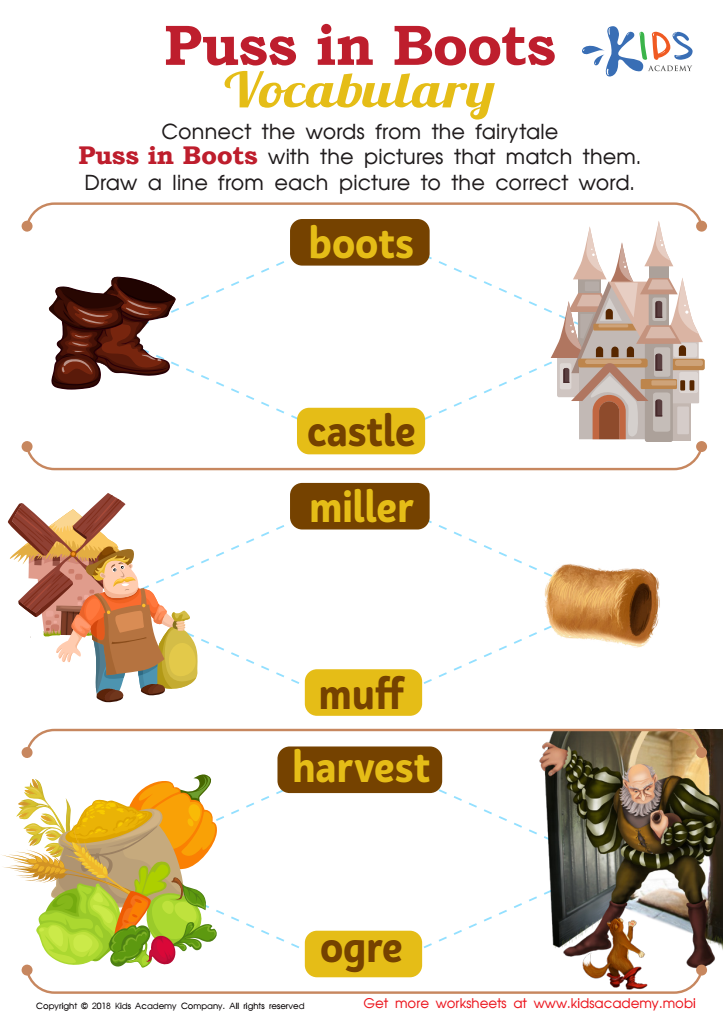
Puss in Boots Vocabulary Worksheet
Let your kids enjoy story-telling while learning at the same time. Help them learn from the fairytale, Puss in Boots, by connecting words from the worksheet with the matching pictures. Ask them to draw a line between each picture and corresponding word to build their vocabulary.
Puss in Boots Vocabulary Worksheet
Worksheet
Join Kids Academy for Free
Who is primarily going to use this learning content?








Parents and teachers should prioritize story analysis and vocabulary building for children ages 3-9 because these skills lay the foundation for reading comprehension and overall academic success. During this critical developmental period, children's brains are highly receptive to language, and engaging them in story analysis enhances their ability to think critically about narratives. By discussing themes, character motivations, and plot structures, children learn to connect ideas and express their thoughts confidently.
Vocabulary building is pivotal during these early years, as it directly influences a child's ability to communicate effectively. A rich vocabulary enables kids to articulate their feelings, comprehend spoken and written language, and engage in conversations. Exposure to new words through stories encourages curiosity and sparks a love for learning.
Moreover, as children analyze stories, they develop important skills such as inference, prediction, and summarization, which are essential for all subjects in school. Finally, shared storytelling experiences foster bonding between adults and children, creating a positive reading culture at home and in the classroom. Therefore, investing time in story analysis and vocabulary activities caters not only to literacy development but also supports emotional and social growth in young learners.








