
Story sequencing Building Vocabulary Worksheets for Ages 3-9
5 filtered results
Difficulty Level
Grade
Age
-
From - To
Subject
Activity
Standards
Discover our Story Sequencing Building Vocabulary Worksheets, perfect for children aged 3-9! These engaging and educational worksheets are designed to strengthen kids' understanding of story structure while expanding their vocabulary. Through fun, interactive activities, young learners practice organizing events in the correct order, enhancing comprehension and narrative skills. Ideal for both classroom and home use, these worksheets support early readers by combining visual storytelling with key vocabulary exercises. Foster creativity, critical thinking, and reading fluency with our expertly crafted materials, tailored to inspire a love for reading and language development in early learners.
Favorites
With answer key
Interactive
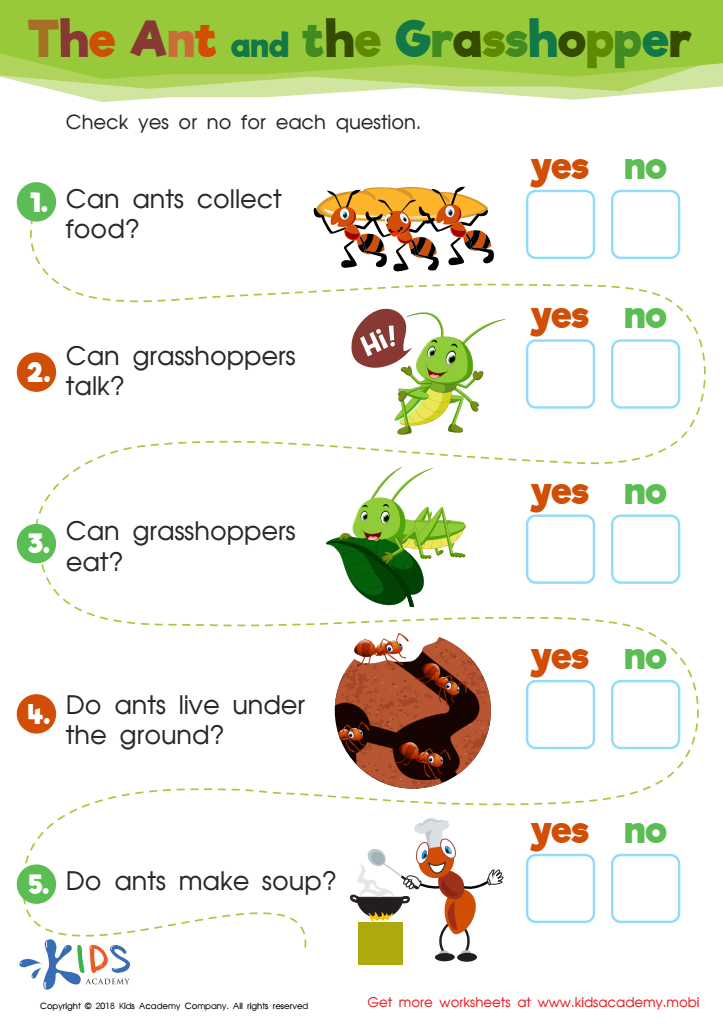
The Ant and The Grasshopper Worksheet
Does your child know about insects? If they're a nature lover or scared of them, use this worksheet to learn more. Read each of the questions and help them fill in the yes or no boxes. This may help them become less scared of insects.
 Assign to My Students
The Ant and The Grasshopper Worksheet
Worksheet











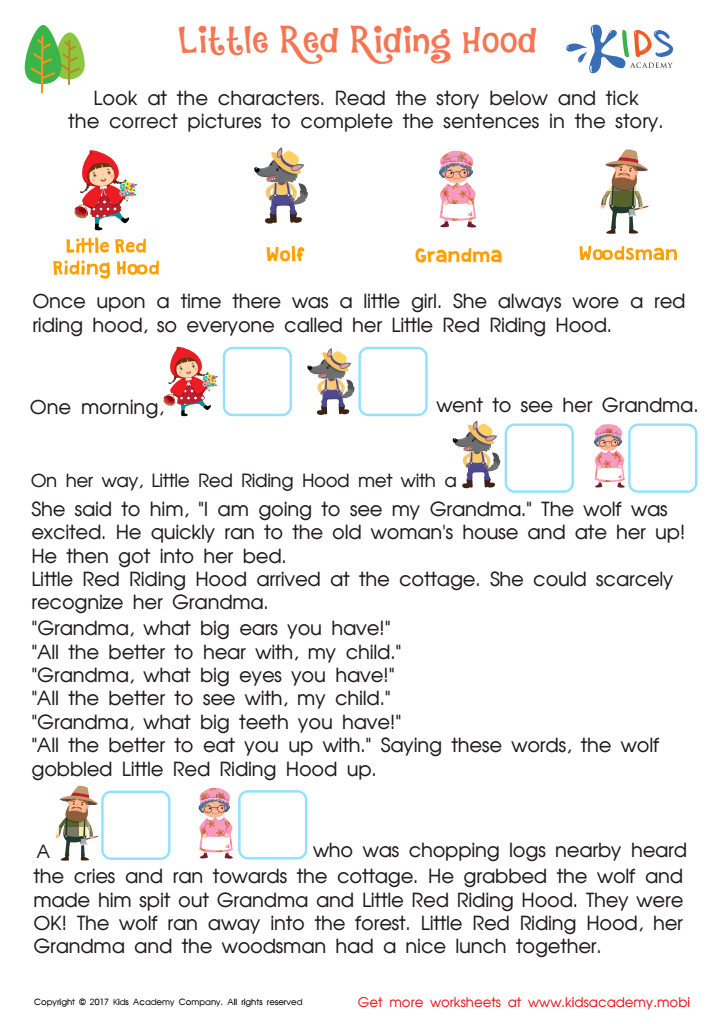
Little Red Riding Hood Printable
Give them this worksheet to practice.
Help your child strengthen their reading skills with this worksheet. It asks them to read Little Red Riding Hood and fill in the missing words using context clues from the text. Encourage your child to look at the surrounding words to determine the answer and get the best results!
Little Red Riding Hood Printable
Worksheet
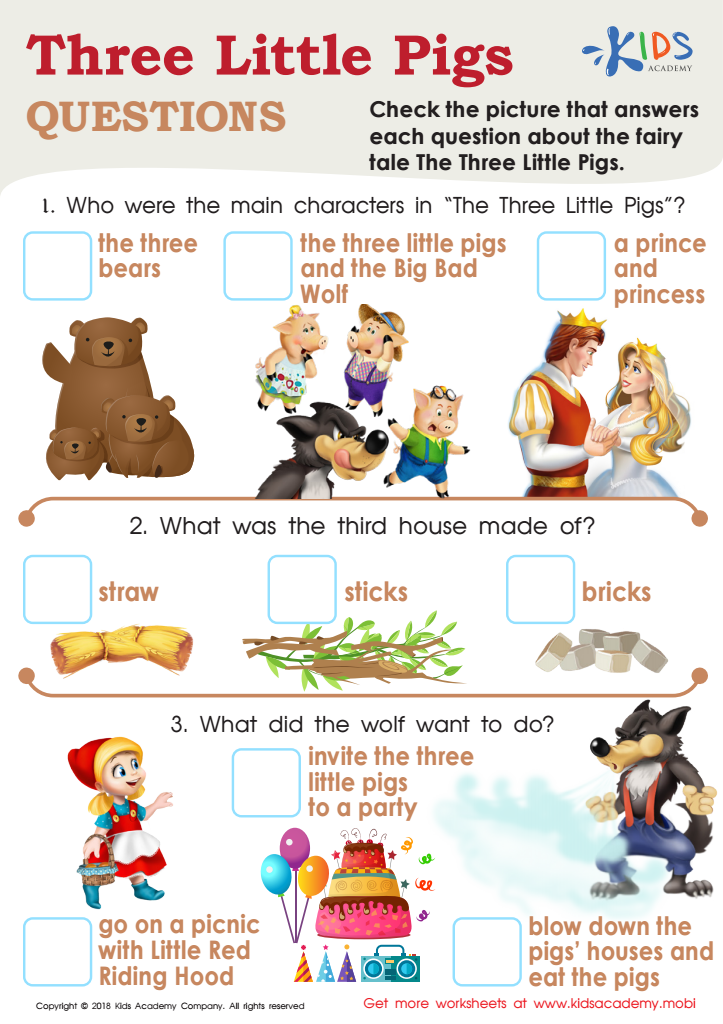
Three Little Pigs Questions Worksheet
Does your kid love bedtime stories? Test their classic fairytale knowledge with this worksheet! If they mention The Three Little Pigs, they're in luck - this pdf has them answering questions based off the classic fairytale. They'll check the picture that answers each question about the story. Is their fairytale knowledge up to scratch?
Three Little Pigs Questions Worksheet
Worksheet
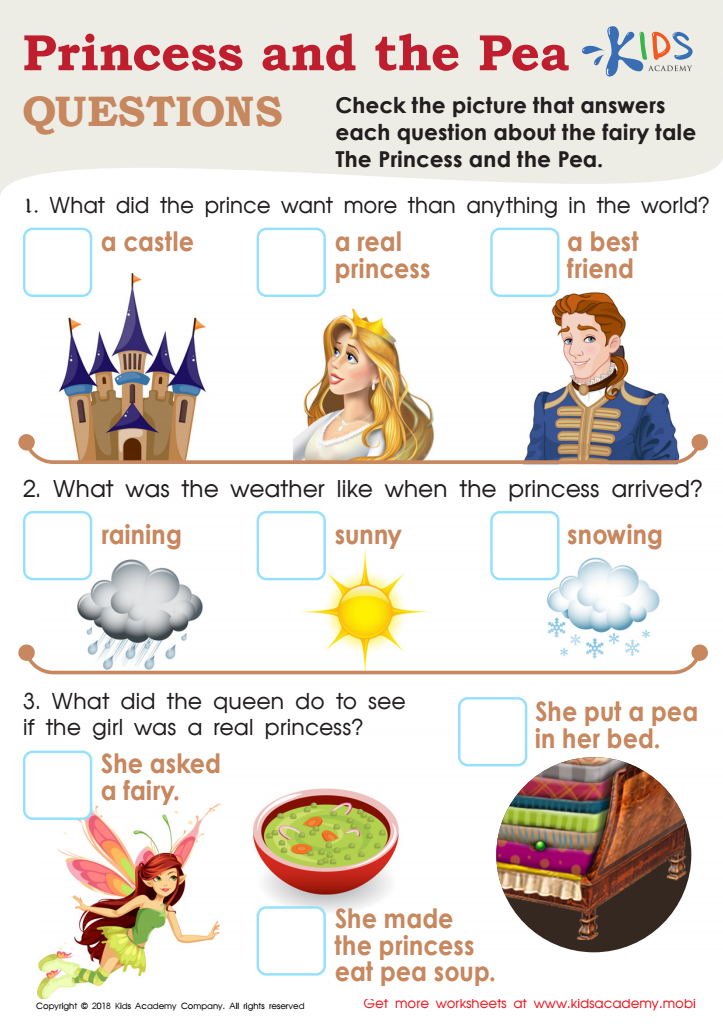
Princess and the Pea Questions Worksheet
Your kid knows The Princess and the Pea inside-out? Test their knowledge with this worksheet. Ask your little one to read the questions and match each one to the picture. It's a fun way to see just how much attention they've paid to their bedtime story.
Princess and the Pea Questions Worksheet
Worksheet
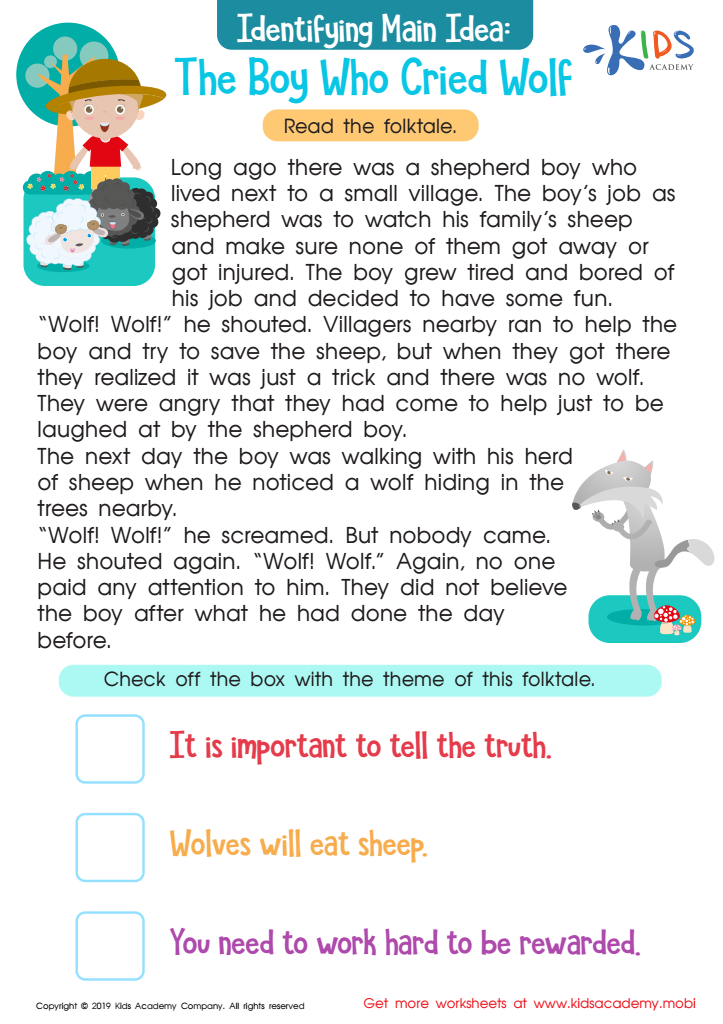
The Boy Who Cried Wolf Part 2 Worksheet
Kids love story time - no doubt they know their favorites! This worksheet tells a story with a theme or main idea. Read it carefully with your kids and ensure they understand every word. Then, help them answer the simple questions at the bottom of the page.
The Boy Who Cried Wolf Part 2 Worksheet
Worksheet
Join Kids Academy for Free
Who is primarily going to use this learning content?






.jpg)

Story sequencing and vocabulary building are essential elements in early childhood education, laying the foundation for a child's overall linguistic development and cognitive abilities. For ages 3-9, mastering these skills is pivotal because they significantly enhance reading comprehension, critical thinking, and communication skills.
Story sequencing, the ability to understand and organize events in a logical order, helps children grasp the beginning, middle, and end of a story. This understanding supports their ability to predict outcomes, understand cause-and-effect relationships, and make connections between events and actions. Teachers and parents who incorporate sequencing activities, such as arranging picture cards or retelling stories, help children develop these vital skills.
Building vocabulary, on the other hand, enriches a child's ability to express thoughts and emotions more accurately and effectively. A robust vocabulary allows children to understand and engage with the world around them more deeply. Simple activities like reading aloud, playing word games, and discussing new words in various contexts can dramatically improve a child's word bank.
Investing time and attention into story sequencing and vocabulary expansion not only boosts academic success but also fosters a lifelong love for reading and learning. As such, parents and teachers play a crucial role in nurturing these skills, setting children on a path for long-term educational and personal achievement.








