Understanding Sequences Reading Worksheets for Ages 3-9
4 filtered results
-
From - To
Welcome to our "Understanding Sequences Reading Worksheets" page, designed for children aged 3-9! Our engaging worksheets help young learners grasp the concept of sequences—a crucial skill for developing reading comprehension and logical thinking. Through fun and interactive activities, children will practice arranging events in order, identifying patterns, and connecting ideas. Perfect for classrooms or at-home learning, these resources foster a deeper understanding of narratives and everyday situations. Enhance your child's vocabulary and critical thinking abilities with our specially designed worksheets, making learning enjoyable and effective! Start nurturing their sequencing skills today.
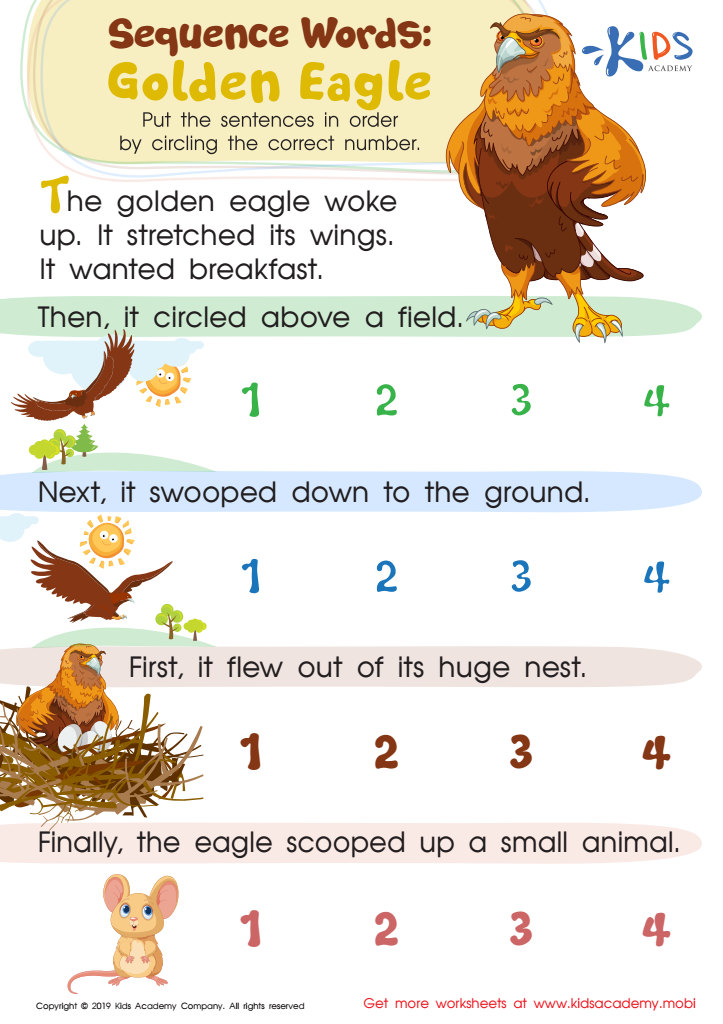
Sequence Word Eagle Worksheet
 Assign to My Students
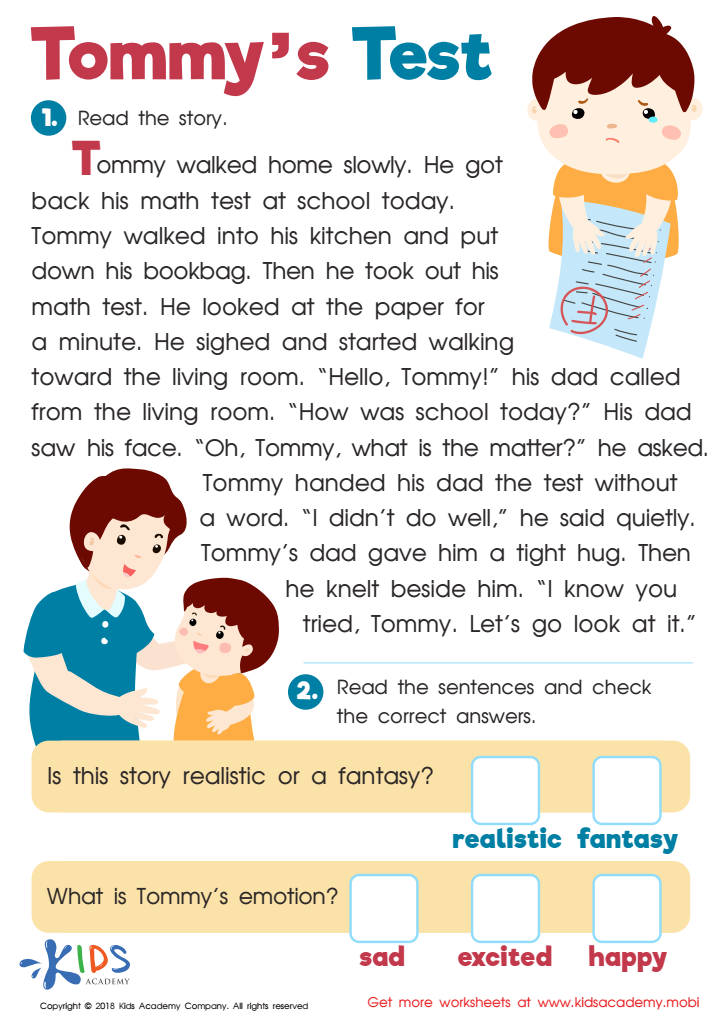
Tommys Test Worksheet
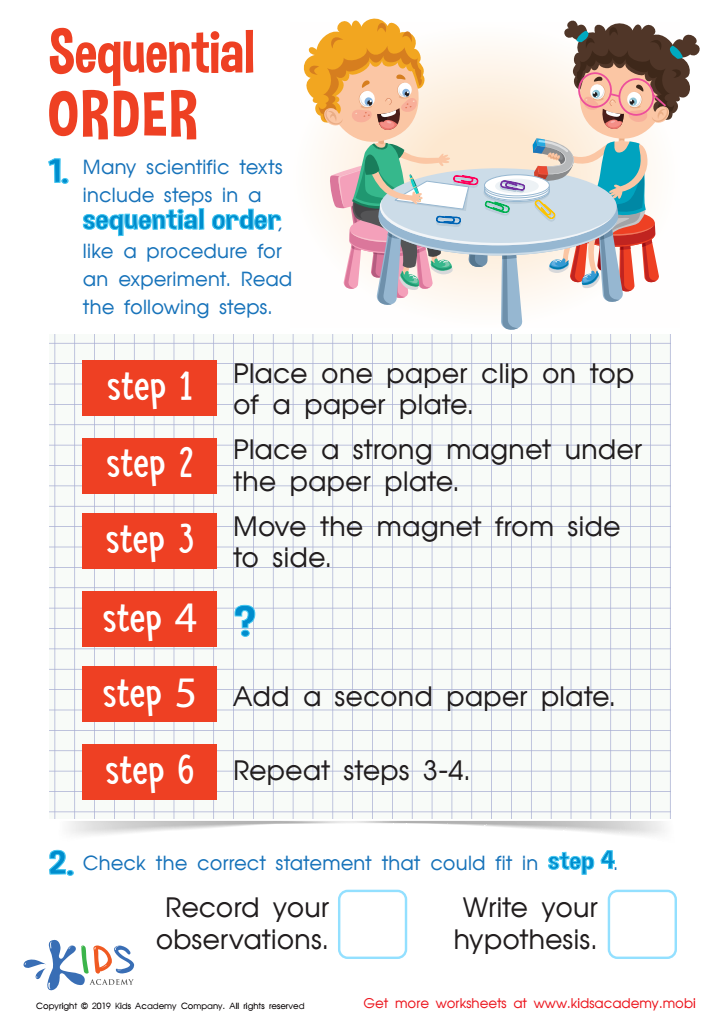
Sequencential Order Worksheet
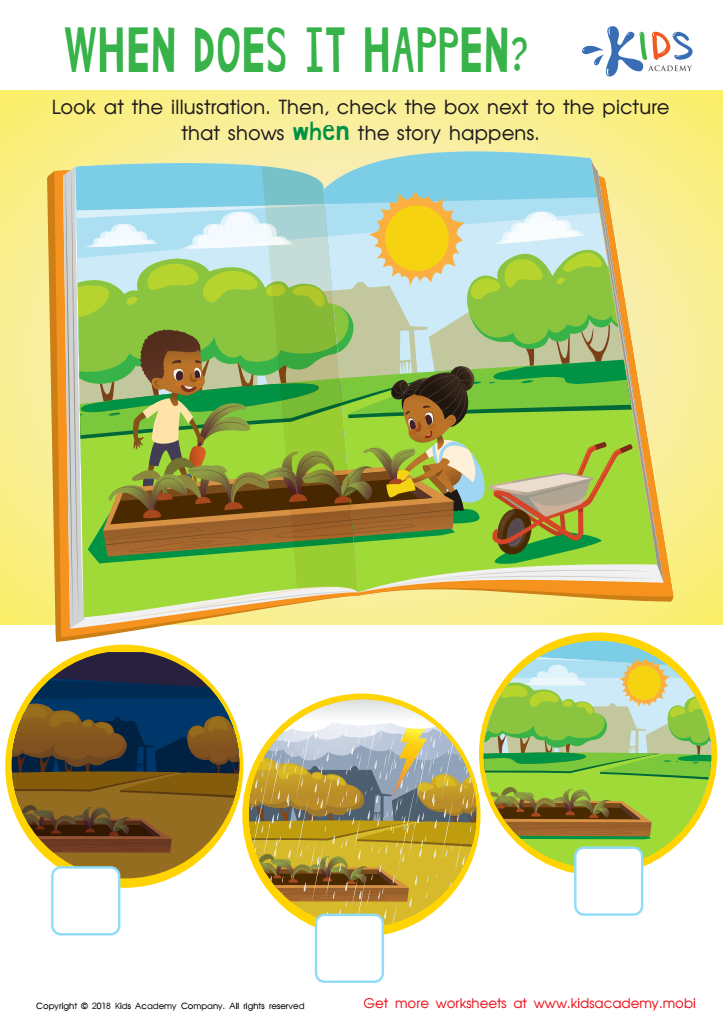
When Does It Happen? Worksheet





Understanding sequences in reading is crucial for children aged 3-9, as it lays the foundation for essential literacy skills. Sequences help young learners make sense of narratives and communicate ideas coherently. Recognizing the order of events enhances comprehension, allowing children to retell stories and grasp new concepts effectively.
For parents and teachers, nurturing sequence understanding fosters critical thinking and organization skills. Children learn to predict what comes next, encouraging engagement with the text and developing their imaginations. This predictive ability also casts a light on reasoning, as children begin to connect causes and effects, recognize patterns, and anticipate outcomes in their reading material.
By prioritizing sequence reading, adults equip children with the tools they need for academic success. Stories with clear beginnings, middles, and ends or step-by-step instructional texts offer practical contexts for practicing these skills. Furthermore, discussions around sequences encourage communication, enhance vocabulary, and promote social interactions as children share their thoughts and interpretations.
Finally, understanding sequences contributes to greater confidence in reading abilities, as children become adept at navigating narratives and non-fiction alike. Overall, promoting sequence understanding in early readers lays the groundwork for a lifetime of learning and literacy development.








