Vocabulary development Reading Worksheets for Ages 3-9 - Page 2
26 filtered results
-
From - To
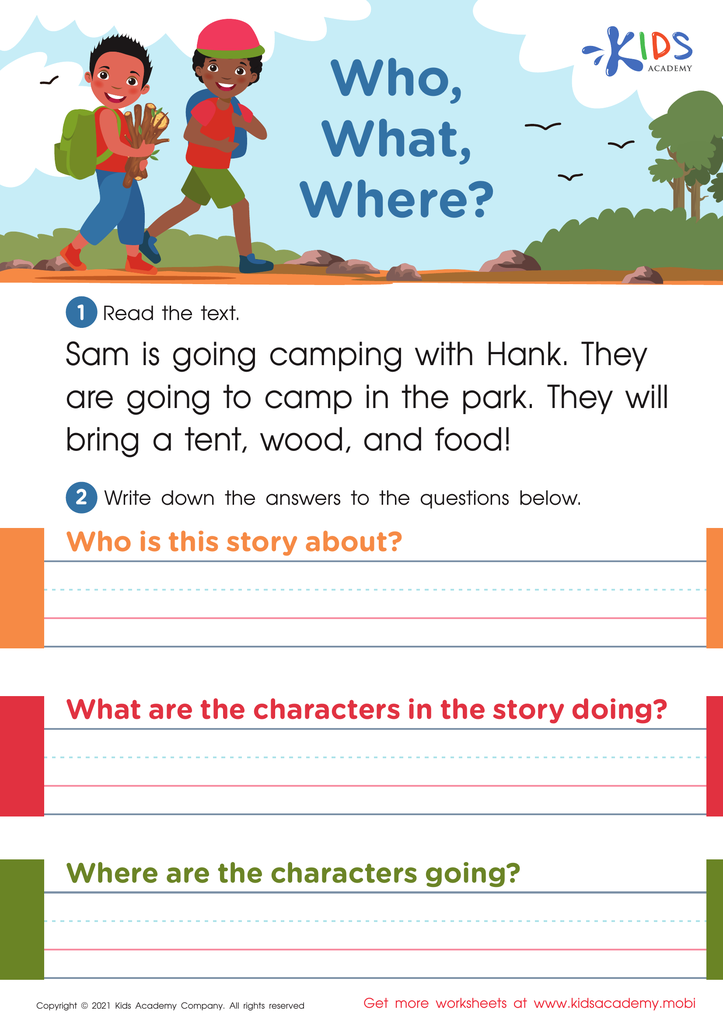
Who, What, Where? Worksheet
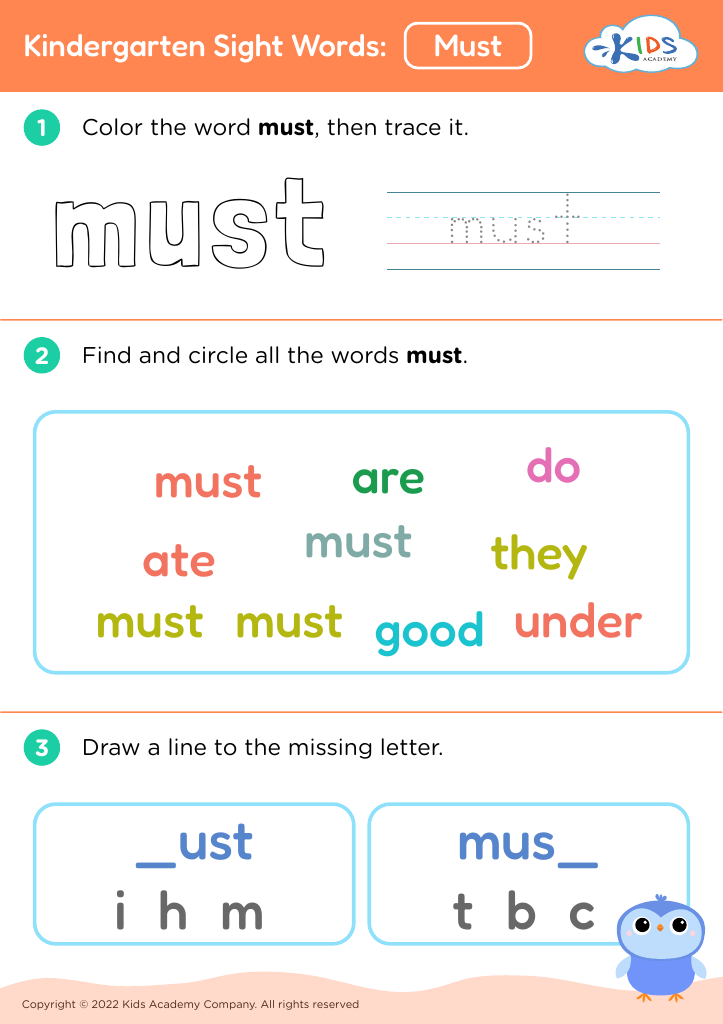








Vocabulary development is crucial for children aged 3-9, as it lays the foundation for their literacy skills and overall academic success. During these formative years, children are naturally curious and eager to learn about the world around them. Exposure to a rich vocabulary helps them express their thoughts, understand complex ideas, and communicate effectively.
Readers who have a strong vocabulary are better equipped to decode texts, comprehend stories, and engage in discussions, which fosters a love for reading. Early engagement with a diverse range of words equips children with essential tools for learning. Additionally, vocabulary development enhances cognitive skills; children learn to categorize and connect concepts, which is vital for critical thinking.
Moreover, children with robust vocabulary skills often experience greater confidence in academic settings, setting a positive precedent for future learning experiences. For teachers and parents, nurturing a child's vocabulary through reading and conversation can significantly influence their educational journey. Establishing strong vocabulary skills means giving children the ability to navigate schooling with ease and fostering a lifelong love for learning. Ultimately, investing time and effort in vocabulary development during these crucial years can profoundly impact children's futures.








