Detail identification Reading Comprehension Worksheets for Ages 3-9
4 filtered results
-
From - To
Enhance your child's reading skills with our Detail Identification Reading Comprehension Worksheets, designed for ages 3-9. These engaging worksheets help young learners practice identifying key details in texts, a foundational skill essential for effective reading comprehension. With a variety of age-appropriate activities, children will build confidence in their ability to analyze stories and passages. Each worksheet fosters critical thinking skills while making learning fun and interactive. From colorful illustrations to captivating stories, our resources cater to early readers at all levels. Explore our collection and watch as your child's understanding and enjoyment of reading grows!
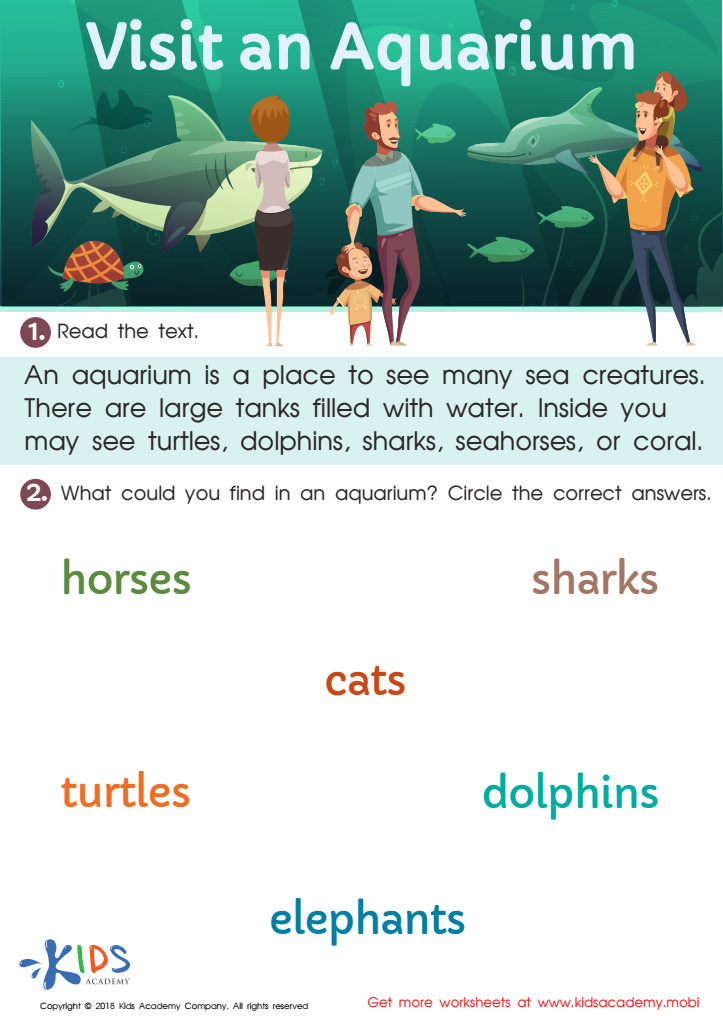
Visit an Aquarium Worksheet
 Assign to My Students
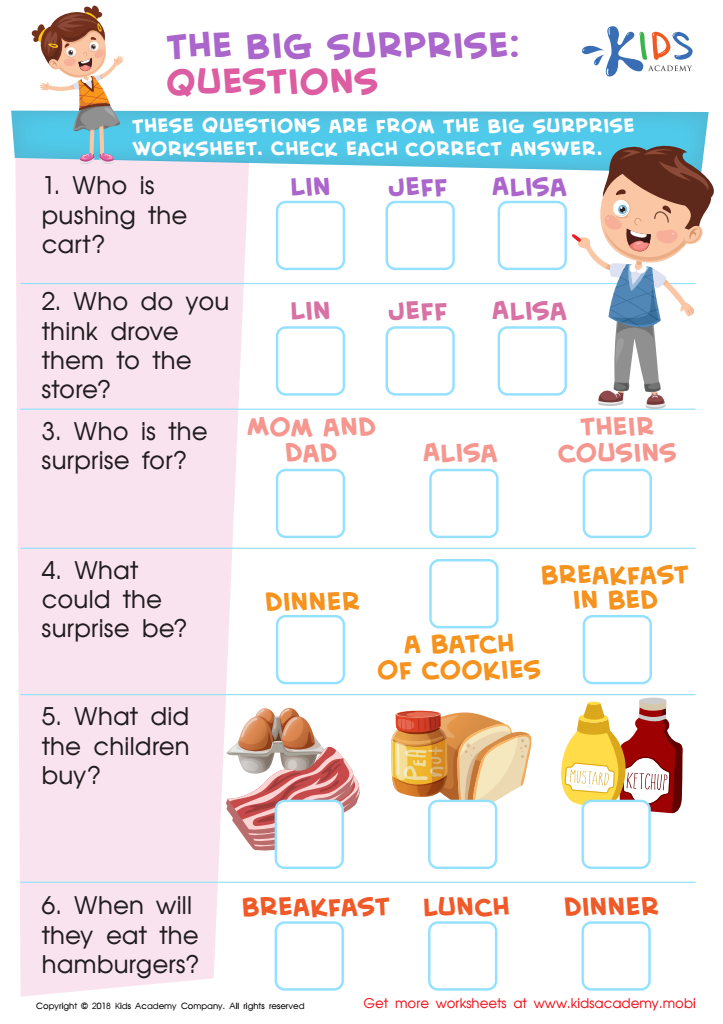
The Big Surprise: Questions Worksheet
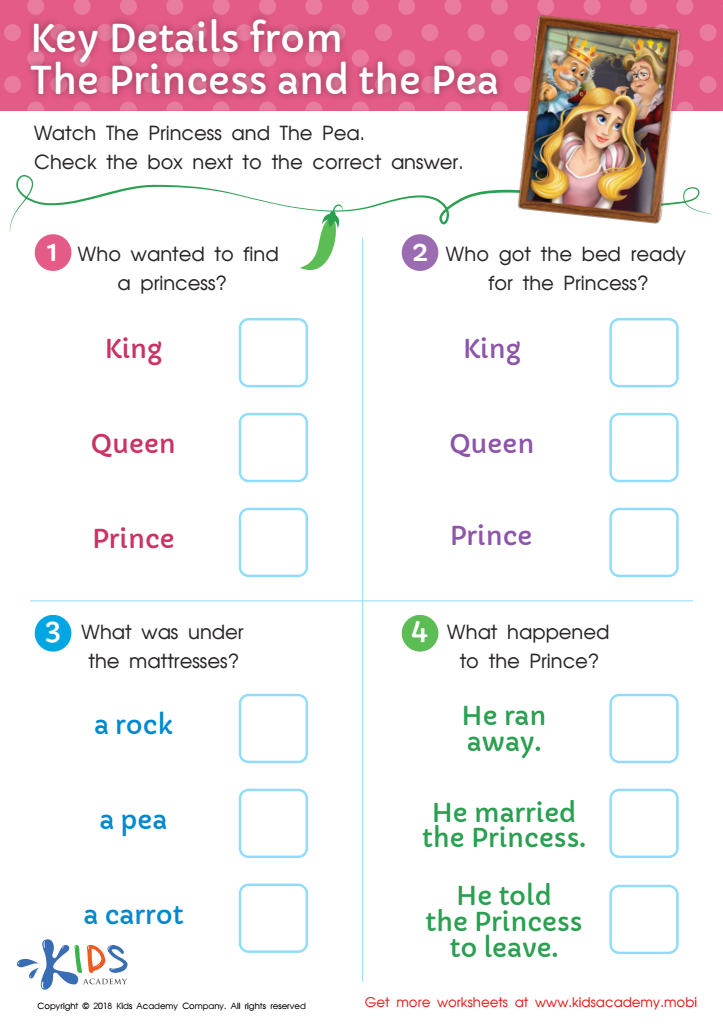
Key Details from the Princess and the Pea Worksheet
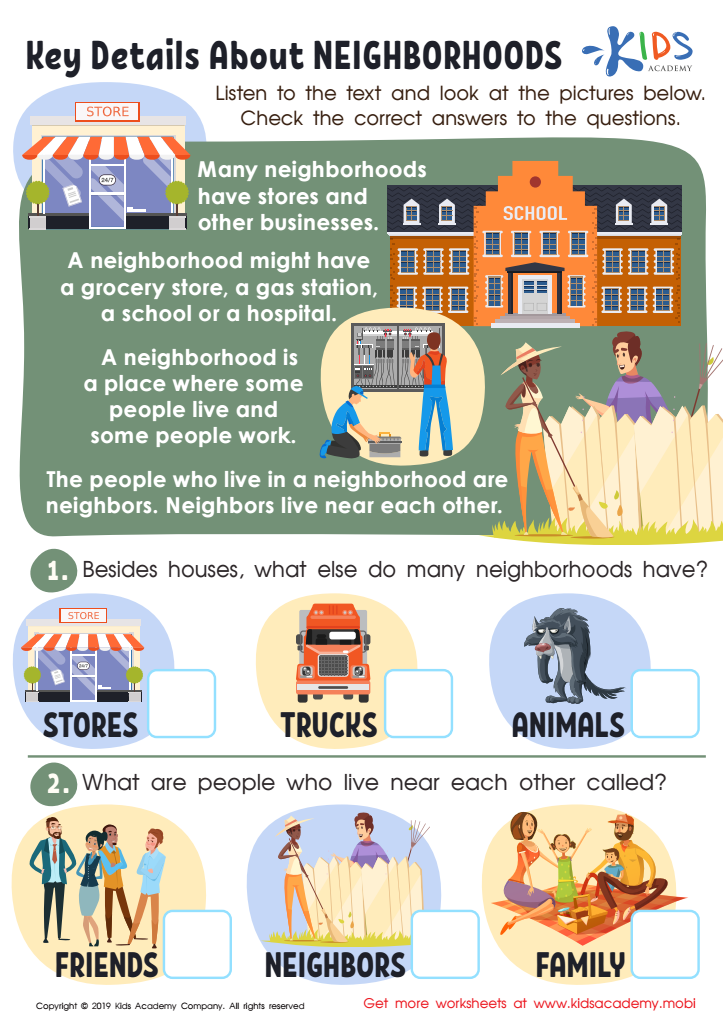
Key Details Neighborhoods Worksheet








Detail identification reading comprehension is crucial for children ages 3-9 as it serves as the foundation for their overall literacy development. At this formative age, children are developing essential cognitive skills, including critical thinking, processing information, and making connections. When parents and teachers emphasize detail identification, they help children learn to extract key information from texts, which enhances their understanding and retention.
Recognizing details fosters the ability to summarize stories, understand characters' motives, and grasp overarching themes. This skill set not only boosts comprehension but also instills a love for reading by making texts more engaging and understandable from an early age.
Moreover, detail identification can support academic success across subjects. It encourages analytical skills that are essential for math problem-solving and science investigations, promoting a holistic approach to learning.
In addition, nurturing reading comprehension at this stage increases children's confidence, motivating them to participate in discussions and express their ideas. As children connect with texts and build comprehension skills, they cultivate a lifelong appreciation for reading, ultimately leading to better educational outcomes. Therefore, parents and teachers should prioritize detail identification reading comprehension as it is instrumental in nurturing well-rounded, literate individuals.








