Analytical thinking Reading Fiction Worksheets for Ages 3-9
4 filtered results
-
From - To
Unlock your child's potential with our Analytical Thinking Reading Fiction Worksheets, designed for ages 3-9! These engaging resources encourage young learners to delve deeper into stories, fostering critical thinking skills as they analyze characters, settings, and plot developments. Each worksheet provides interactive activities that promote comprehension and discussion, helping children make connections within the text. With a variety of fun and educational exercises, your child will develop essential analytical abilities while enjoying captivating stories. Perfect for parents and educators seeking to enrich young readers’ experiences, these worksheets transform reading time into an adventurous journey of discovery and understanding!
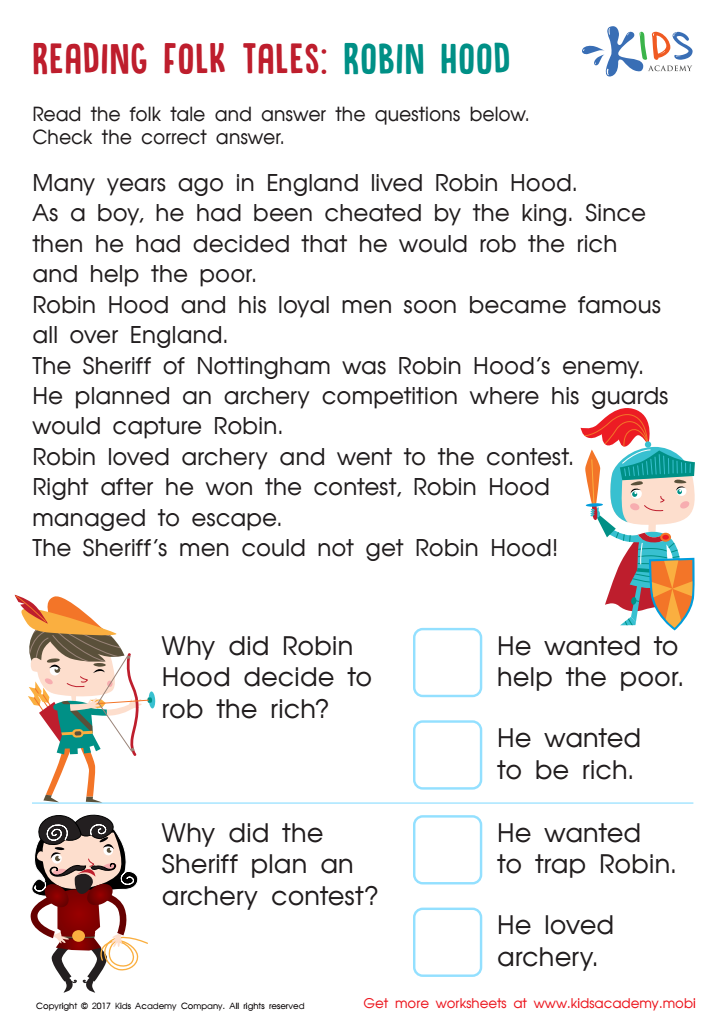
Robin Hood Folktale Worksheet
 Assign to My Students
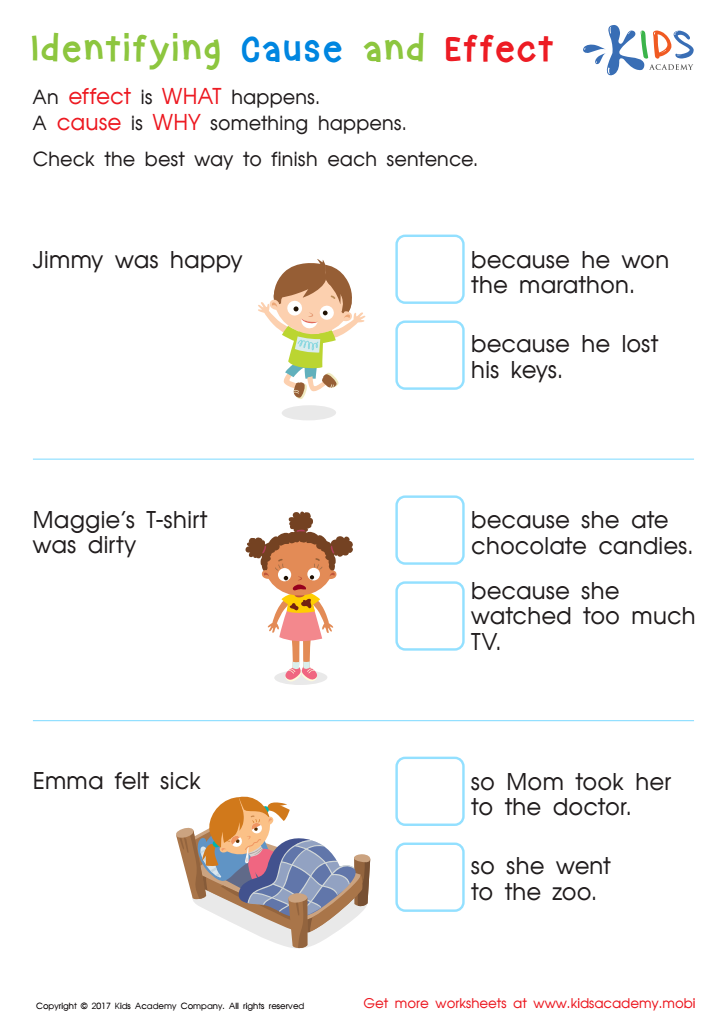
Indentifying Cause and Effect Worksheet
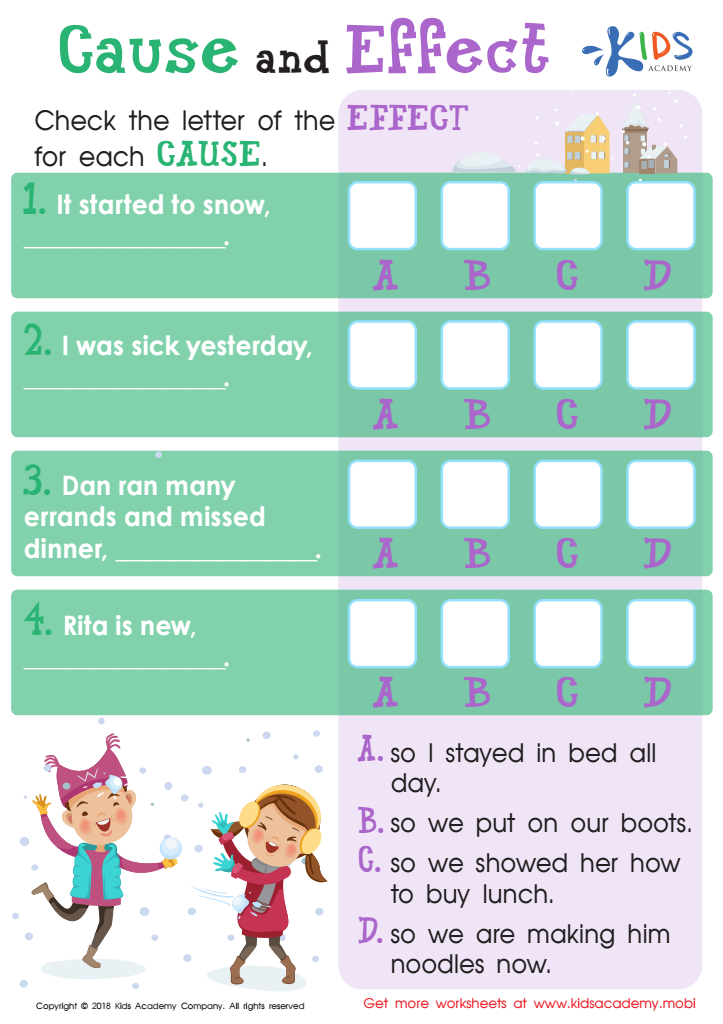
Cause and Effect Worksheet
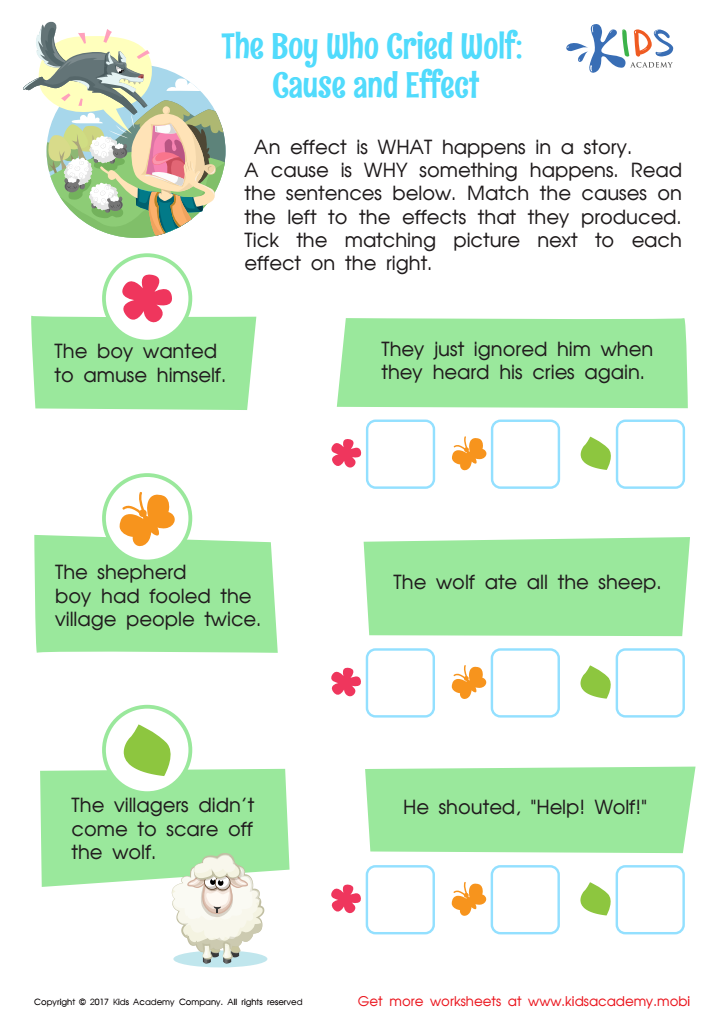
The Boy Who Cried Wolf: Cause and Effect Worksheet








Parents and teachers should prioritize analytical thinking through reading fiction for children ages 3-9 because it fosters essential cognitive skills early in a child's development. Engaging with stories encourages children to analyze characters’ motivations, plot developments, and underlying themes, enabling them to make predictions and draw conclusions. This process of critical evaluation enhances comprehension and analytical abilities, which are foundational for academic success.
Moreover, reading fiction helps to cultivate empathy and emotional intelligence as children explore diverse perspectives and experiences. When they engage with different characters, children learn to recognize and understand emotions—both their own and those of others— preparing them for social interactions in a complex world.
Additionally, fostering analytical thinking through fiction can enhance creativity. As children ponder "what if" scenarios and devise their own narratives, they develop imaginative skills critical for problem-solving later in life.
Every story offers a chance for discussions about decision-making, morality, and consequences, allowing children to practice reasoning about real-life situations. In sum, reading fiction is more than just entertainment; it enriches the mind and builds the analytical framework that supports lifelong learning and social understanding. Therefore, prioritizing analytical thinking in literature should be a key goal for parents and educators alike.








