Critical thinking skills Reading Fiction Worksheets for Ages 3-9
4 filtered results
-
From - To
Enhance your child's critical thinking skills with our engaging Reading Fiction Worksheets designed for ages 3-9! These thoughtfully crafted worksheets encourage young learners to explore stories deeply, promoting comprehension and analysis through fun activities. With a focus on imaginative narratives, kids will build essential skills such as reasoning, interpretation, and problem-solving while improving their reading abilities. Each worksheet incorporates interactive questions and prompts that spark curiosity and creativity, making learning enjoyable. Perfect for classrooms or home learning, our resources help cultivate confident, critical thinkers from an early age. Discover a world of creativity and critical thinking today!
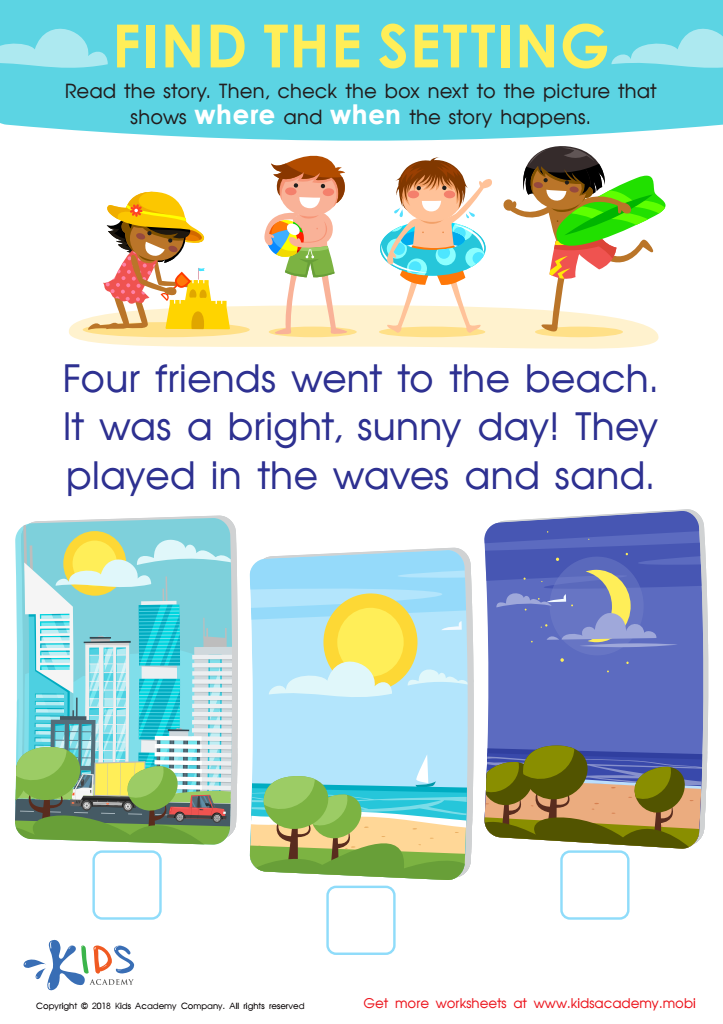
Find the Setting Worksheet
 Assign to My Students
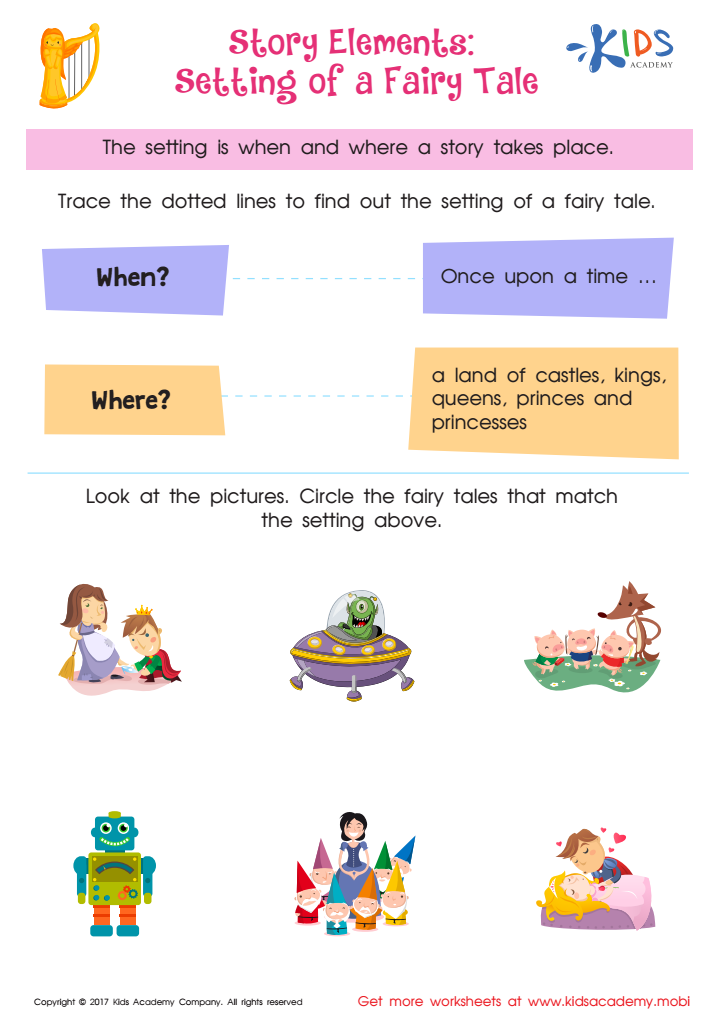
Story Elements: Setting of a Fairy Tale Printable
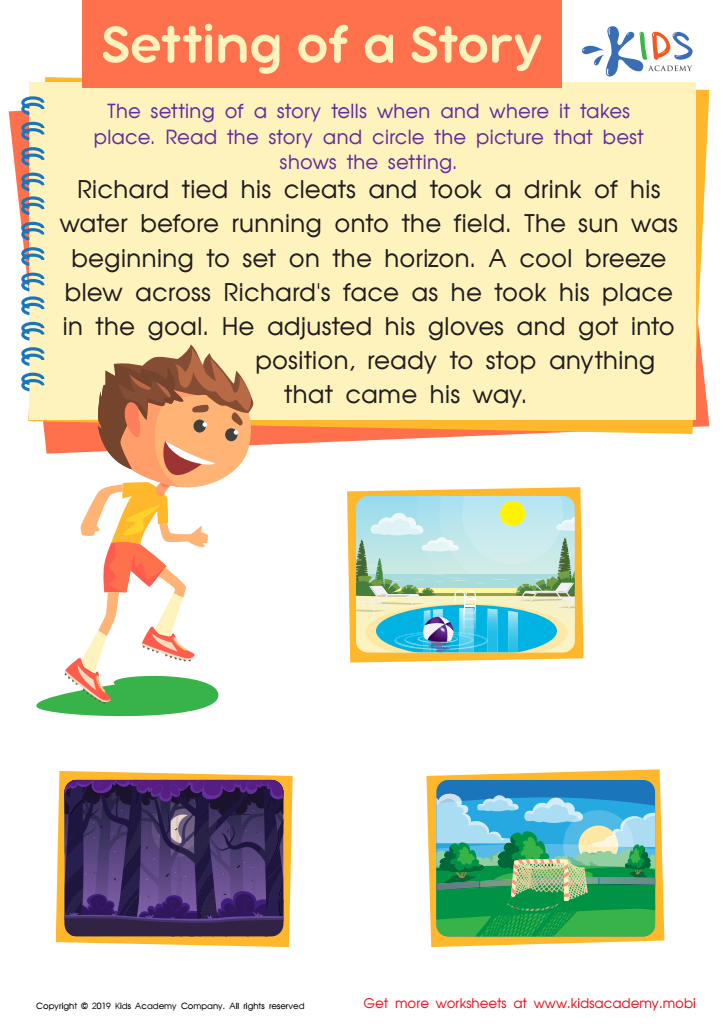
Setting of a Story Worksheet
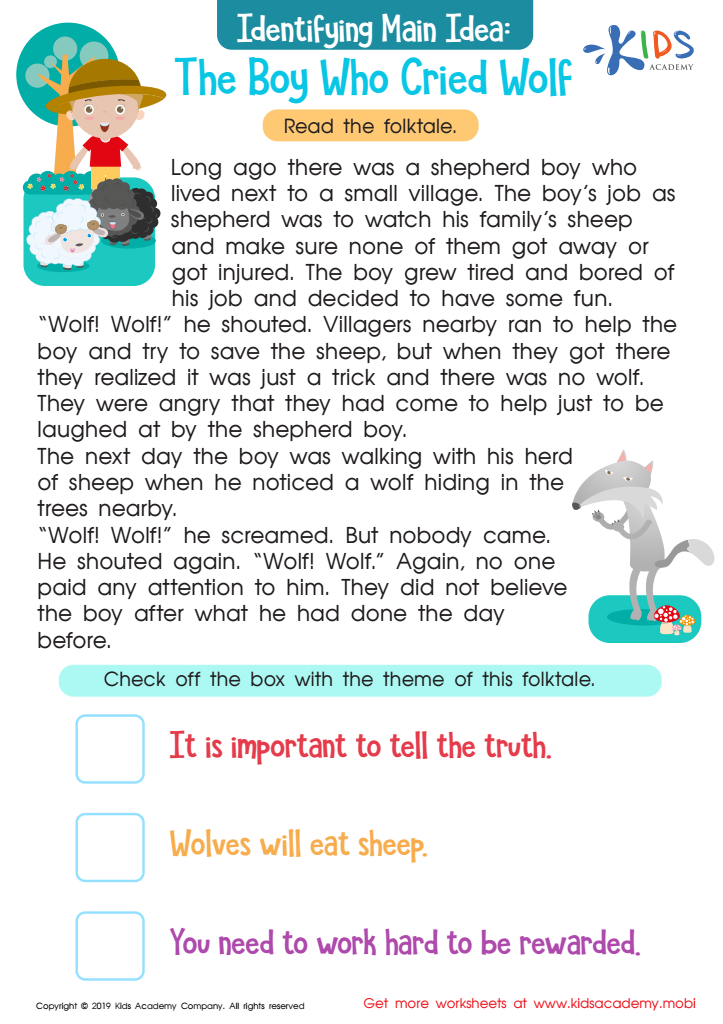
The Boy Who Cried Wolf Part 2 Worksheet



.jpg)



Critical thinking skills are essential for children, especially in the formative ages of 3 to 9. Encouraging critical thinking through reading fiction helps children develop the ability to analyze, evaluate, and synthesize information, fostering deeper comprehension. Fiction often presents complex characters and narratives that challenge young readers to infer motives, consider various perspectives, and predict outcomes. This process teaches them to ask questions, recognize biases, and understand cause and effect, all foundational elements of critical thinking.
Moreover, reading fiction stimulates imagination and creativity, encouraging children to envision possibilities beyond their immediate experiences. This imaginative exercise is crucial for problem-solving and innovation in later life. Parents and teachers can use fiction as a springboard for discussions, prompting children to express their thoughts and reasoning. Such dialogues improve verbal skills and confidence.
In an ever-evolving world driven by information, critical thinking allows children to navigate complexities, make informed decisions, and develop empathy through understanding diverse viewpoints. Fostering these skills through engaging stories cultivates a love for reading while equipping children with the tools they need to thrive both academically and socially. By prioritizing critical thinking in early reading experiences, parents and teachers can significantly impact a child's lifelong learning journey.








