Enhancing vocabulary Reading Fiction Worksheets for Ages 3-9
4 filtered results
-
From - To
Enhancing Vocabulary Reading Fiction Worksheets for Ages 3-9 are curated to boost your child's language skills and imagination simultaneously! These engaging, age-appropriate worksheets focus on enriching vocabulary by immersing young learners in captivating fictional stories. Perfect for kids aged 3-9, each activity fosters a love for reading while introducing new words in a context they can understand and enjoy. By blending fun narratives with thoughtful exercises, our worksheets reinforce understanding and retention of vocabulary, setting a strong foundation for academic success. Boost your child's language development today with our expertly designed reading fiction worksheets.
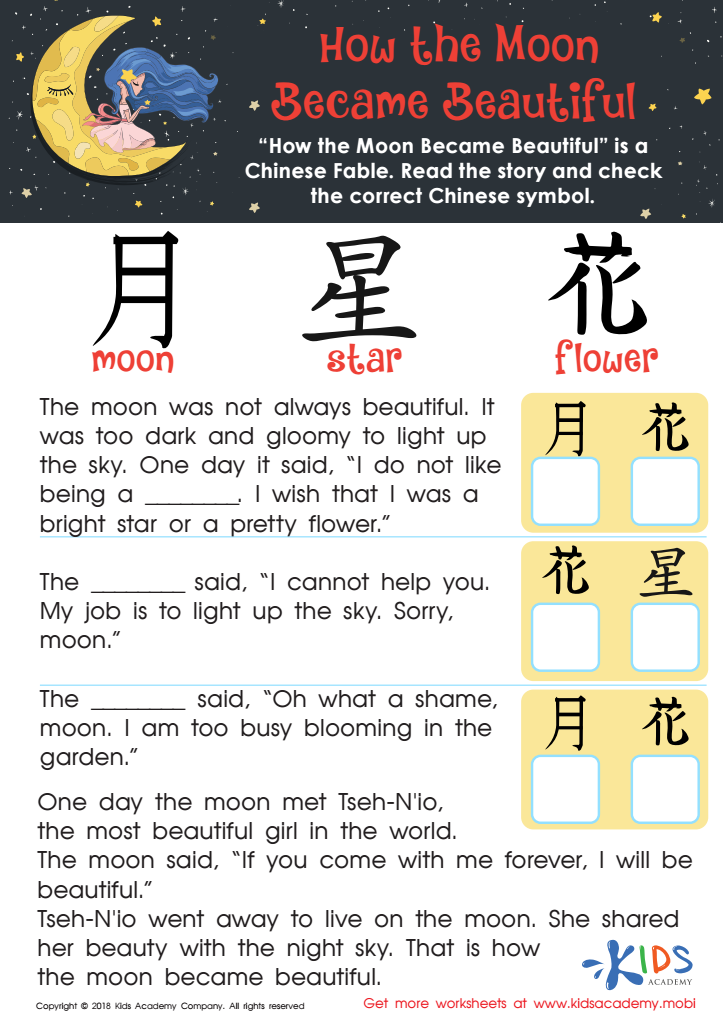
How the Moon Became Beautiful Worksheet
 Assign to My Students
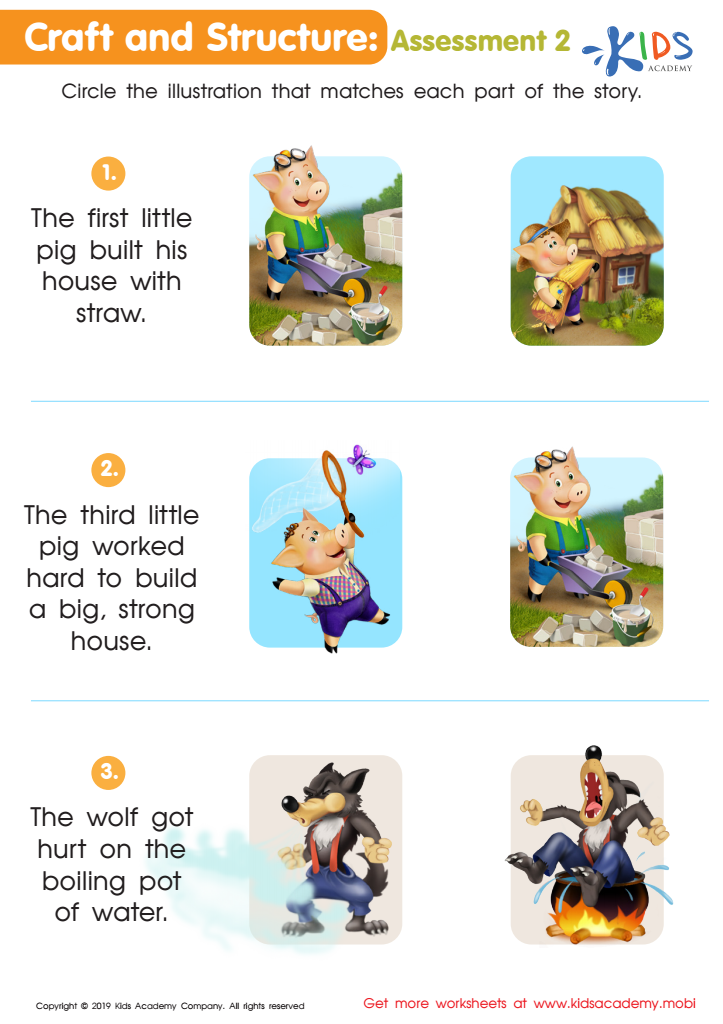
Craft and Structure: Assessment 2 Worksheet 2
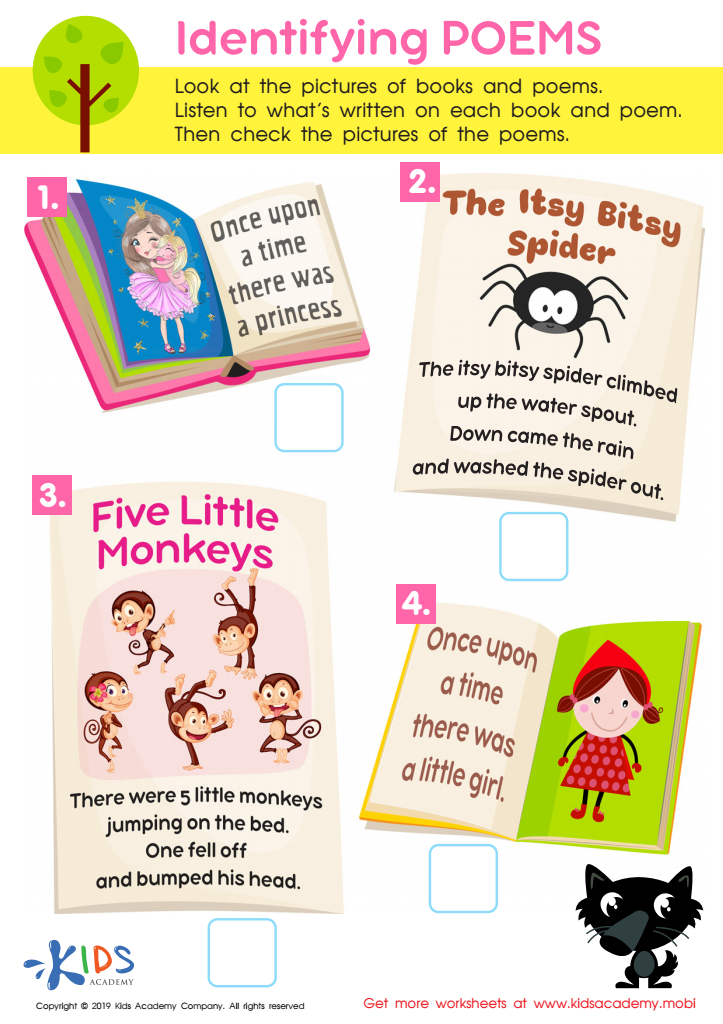
Identifying Poems Worksheet
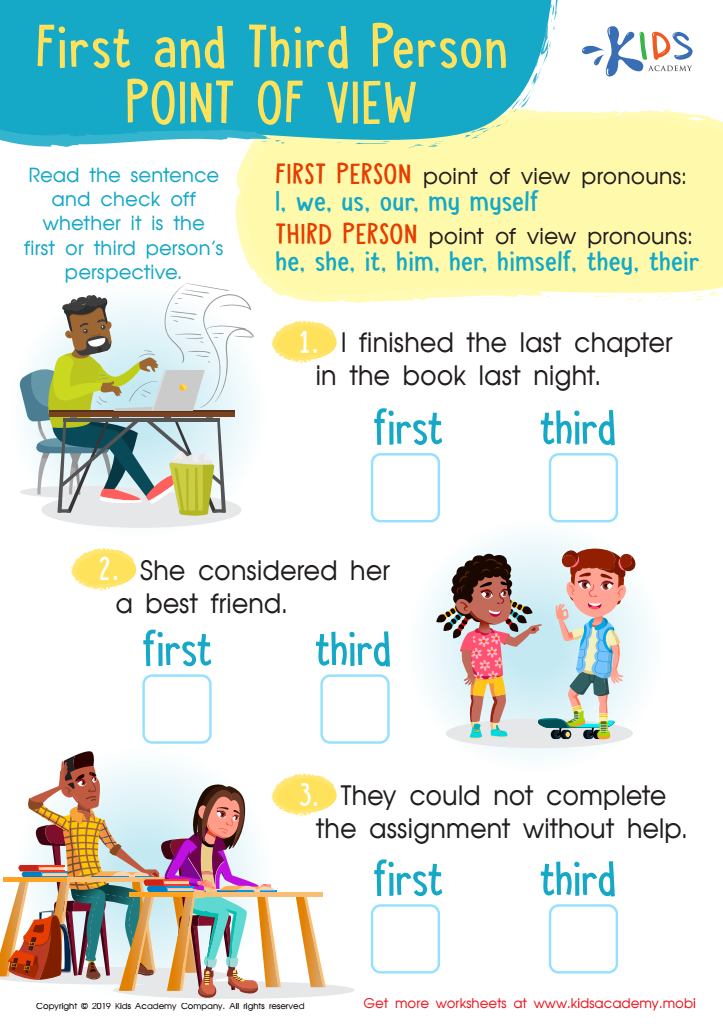
First and Third Person Point of View Worksheet








Enhancing vocabulary through reading fiction for children aged 3-9 is vital for several reasons. During these formative years, a child's brain is highly receptive to new words and ideas, making it an ideal period for language acquisition. Reading fiction introduces them to vocabulary they might not encounter in everyday conversation, thereby broadening their language skills significantly.
Studies show a strong correlation between early vocabulary development and later academic success. Children with rich vocabularies excel in reading comprehension and communication, both critical skills for other learning areas. Stories provide context and usage, which aids memory retention and understanding of new words.
Moreover, fiction stimulates imagination and creativity. It exposes children to diverse experiences, cultures, and viewpoints, enhancing their empathy and social skills. Through engaging narratives, children learn to infer meanings, understand synonyms, and recognize sentence structures, all of which contribute to linguistic sophistication.
Additionally, sharing stories strengthens parent-child or teacher-student bonds, making learning a joyous, shared experience. This engagement is not merely academic but also emotional, as it fosters a love for reading. Consequently, building a robust vocabulary during these early years lays a foundational advantage, setting children on a path towards lifelong learning and success. Ensuring vocabulary enhancement through fiction is thus an investment in a child’s future.








