Identifying story elements Reading Fiction Worksheets for Ages 3-9
4 filtered results
-
From - To
Our "Identifying Story Elements" Reading Fiction Worksheets for Ages 3-9 offer a fun and educational approach to boost your child's reading comprehension. Perfectly designed for young learners, these engaging worksheets help kids identify key story components like characters, setting, and plot. Through colorful activities and guided questions, children will enhance critical thinking and build a strong foundation in literacy. Ideal for both classroom and home use, our worksheets make learning enjoyable with imaginative stories and vivid illustrations. Explore our collection now and watch your child’s reading skills soar!
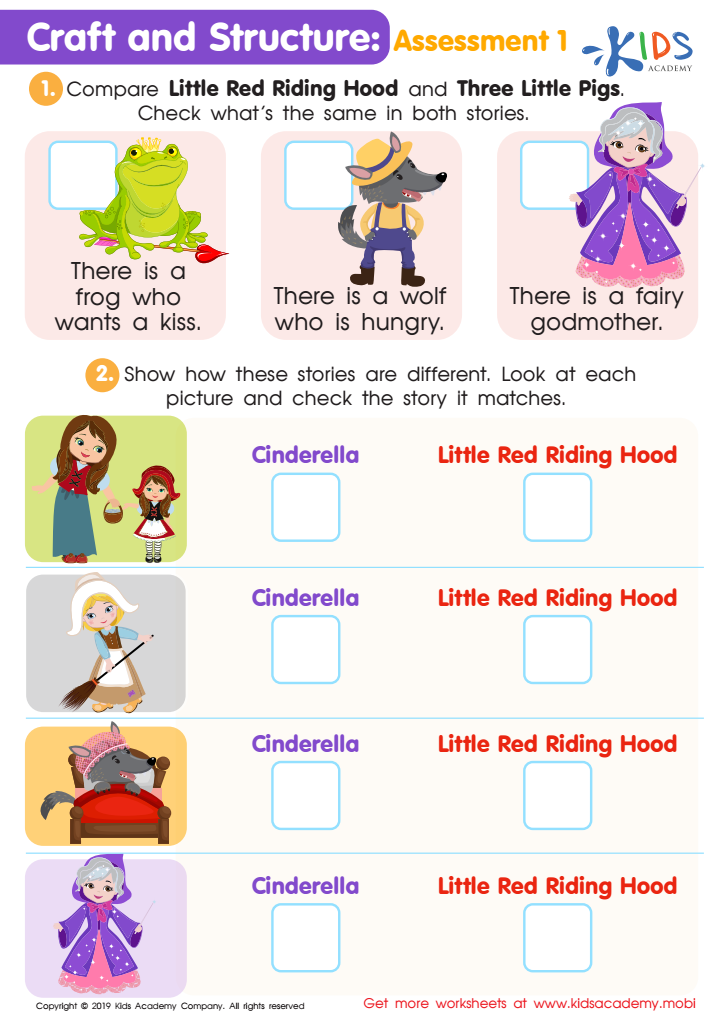
Craft and Structure: Assessment 1 Worksheet
 Assign to My Students
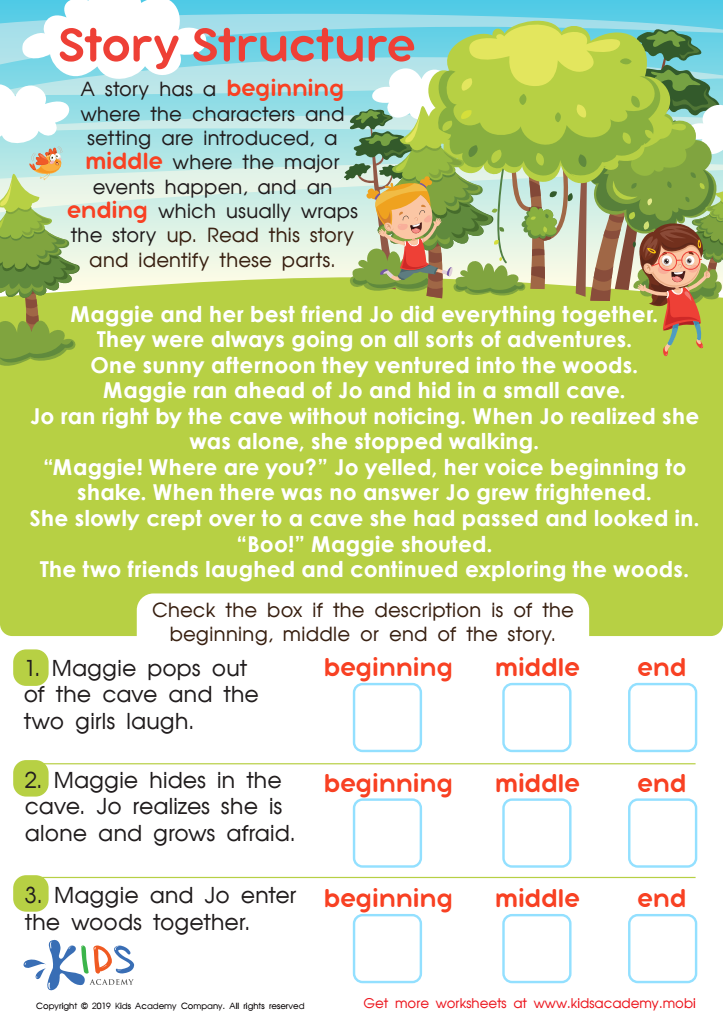
Story Structure Worksheet
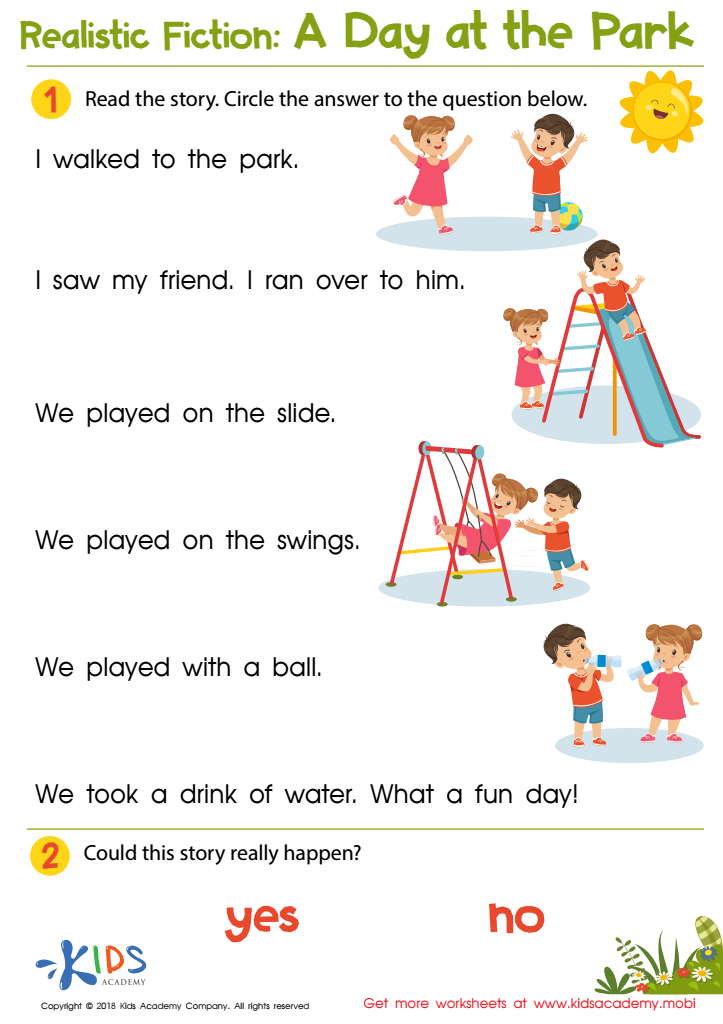
A Day at the Park Worksheet
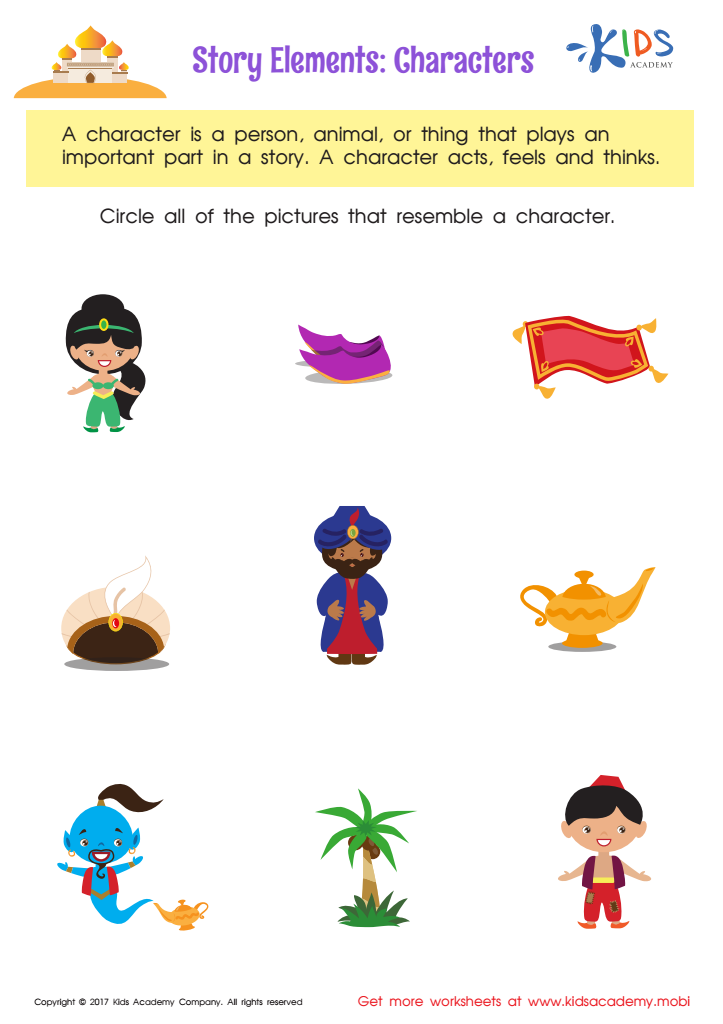
Story Elements Printable


.jpg)



.jpg)

Identifying story elements in fiction such as characters, setting, plot, conflict, and resolution is crucial for young children, aged 3-9, for several reasons. Firstly, it enhances comprehension skills by helping children understand and remember what they've read, leading to a more enjoyable and rewarding reading experience. Recognizing story elements also aids in the development of critical thinking skills. By analyzing the components of a story, children learn to make predictions and connections, and develop the ability to infer and synthesize information.
Moreover, discussing story elements nurtures a child's ability to articulate thoughts and opinions, fostering better communication skills. It encourages active engagement and thoughtful discussion between parents, teachers, and children, promoting language and vocabulary growth. Recognizing and discussing story elements also provide a foundation for writing skills. When children understand how stories are structured, they become better equipped to create their own narratives, leading to improved writing competency.
In the broader sociocultural context, stories serve as a vehicle for children to learn about different people, places, cultures, and perspectives, helping them develop empathy and social intelligence. Consequently, embracing the practice of discussing and identifying story elements from an early age is an investment in a child’s cognitive, linguistic, social, and emotional development.








