Moral understanding Reading Fiction Worksheets for Ages 3-9
5 filtered results
-
From - To
Enhance your child's moral understanding with our engaging Reading Fiction Worksheets designed for ages 3-9! These interactive resources encourage young readers to explore important values and lessons embedded in stories. Through comprehension questions, thought-provoking prompts, and fun activities, children develop critical thinking skills while identifying morals such as empathy, honesty, and cooperation. Our worksheets promote not just reading skills, but also emotional intelligence and character development, making learning both enjoyable and meaningful. Perfect for parents and educators alike, these worksheets will help guide discussions around right and wrong, encouraging children to relate moral themes to their own lives. Dive into our collection today!
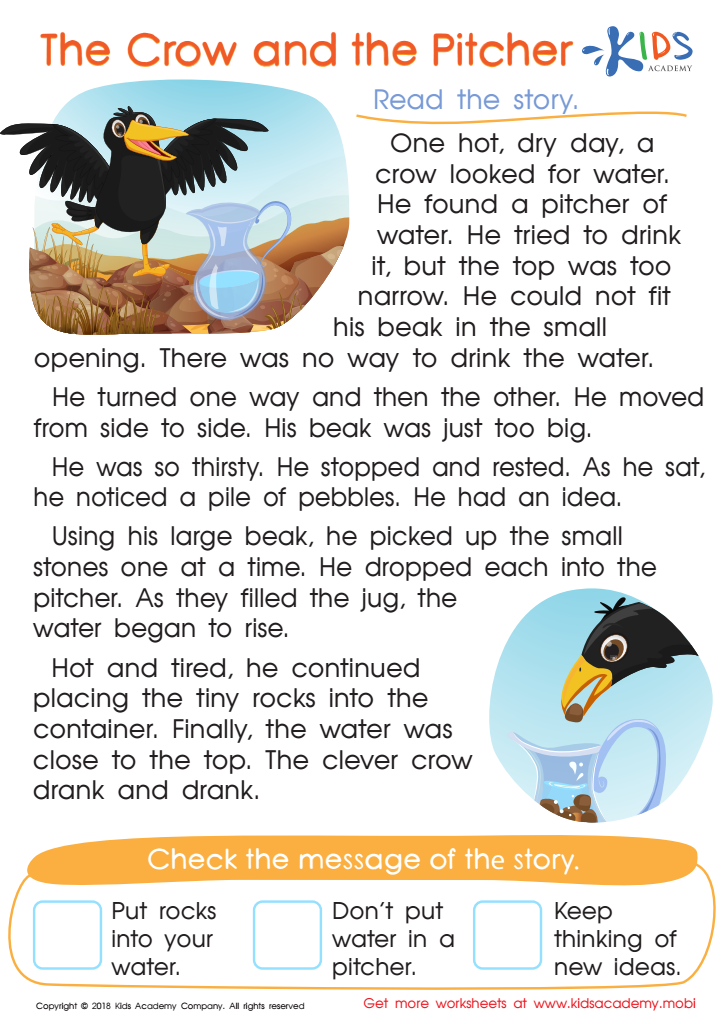
The Crow and the Pitcher Worksheet
 Assign to My Students
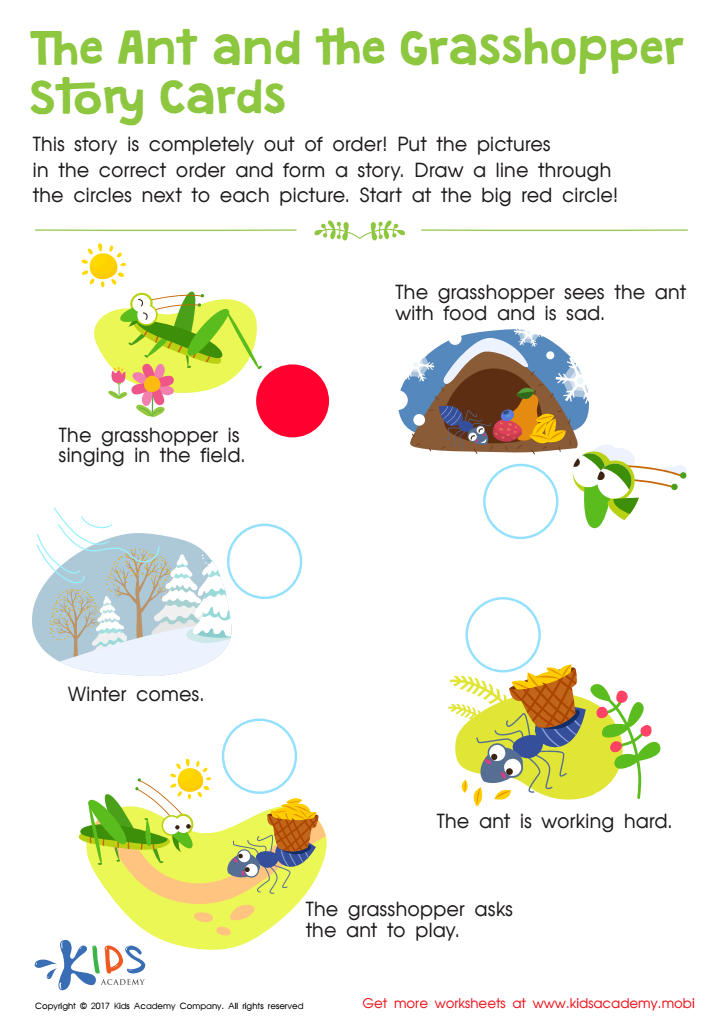
The Ant and The Grasshopper Worksheet
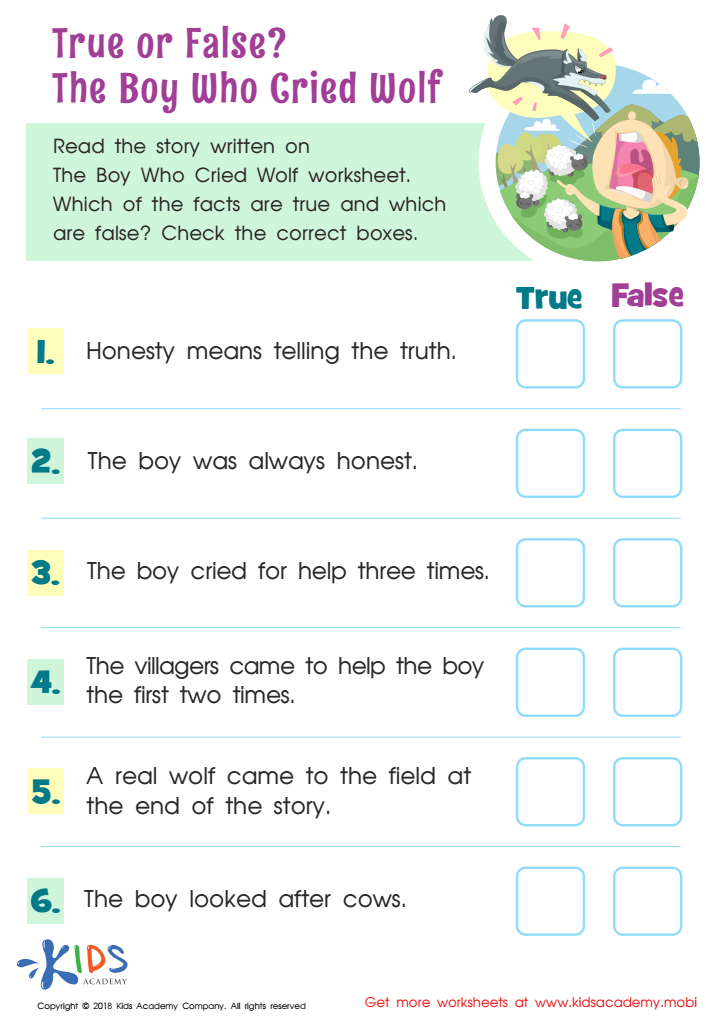
True or False? The Boy Who Cried Wolf Worksheet
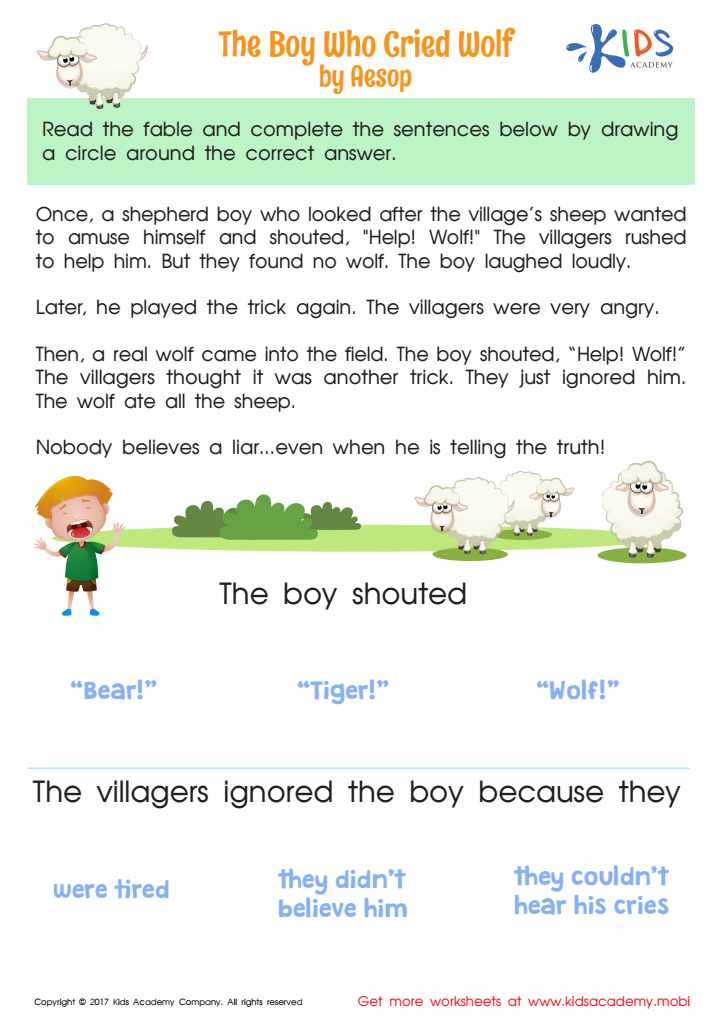
The Boy Who Cried Wolf Worksheet
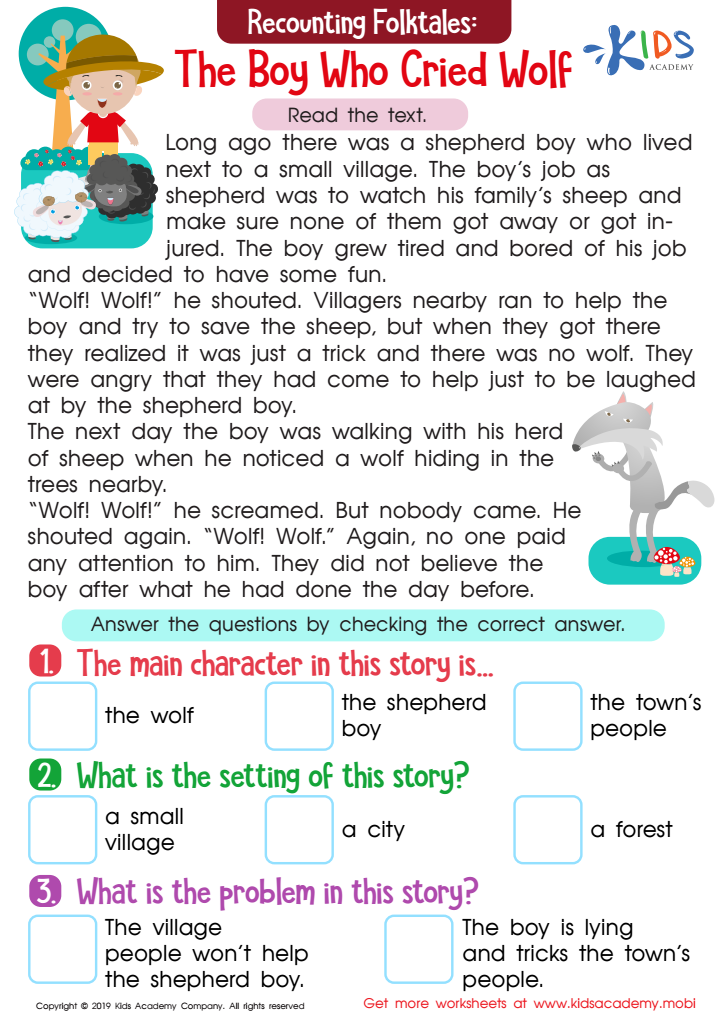
The Boy Who Cried Wolf Part 1 Worksheet







Moral understanding embedded in fiction is crucial for children aged 3-9 as it plays a significant role in their social and emotional development. At this formative stage, children begin to explore complex concepts such as empathy, respect, and friendship. Engaging with stories allows them to assess different perspectives and ethical dilemmas, fostering critical thinking about right and wrong.
Reading fiction exposes children to diverse characters and situations, helping them to appreciate the feelings and experiences of others. This can lead to enhanced compassion and tolerance, vital traits in today’s interconnected world. Furthermore, stories often illustrate the consequences of actions—helping kids understand accountability and the importance of making good choices.
For parents and teachers, providing fiction that incorporates moral lessons can serve as an effective educational tool. It creates opportunities for meaningful discussions about values and ethics in a relatable context, helping students internalize these lessons in real life. Ultimately, cultivating moral understanding through fiction empowers children to develop into thoughtful and conscientious individuals. Therefore, investing time in reading morally enriching stories is a valuable way to nurture children’s character and promote a positive classroom and home environment.








